Quick summary
ExpressLRS (ELRS) is an open-source radio control link. The band you choose—2.4 GHz or 900 MHz—shapes two practical outcomes: how far the link holds and how quickly control packets arrive. In general, 2.4 GHz favors lower latency and smaller antennas, while 900 MHz favors penetration and longer range at the cost of larger antennas and regional band rules. The real answer depends on your venue, your rules, your fleet, and how you manage interference. This article explains the trade-offs without inventing numbers, and gives procurement steps you can verify with your supplier.
Key Takeaways
- 2.4 GHz ELRS typically gives lower latency and smaller antennas; 900 MHz typically gives better penetration and range in obstructed environments.
- Regulatory band availability differs by country; confirm legal use before buying 900 MHz hardware for a team.
- Latency is not a single number—it includes packet rate, processing, and RF conditions. Ask for the full link budget discussion, not a headline figure.
- Antenna choice and placement often matter more than band alone for real-world reliability.
- For school and club fleets, standardize one band per venue and keep spares; mixing bands complicates training and support.
What is ExpressLRS and why does the band matter?
ExpressLRS is a firmware ecosystem for RC transmitters and receivers. It supports multiple frequency bands, most commonly 2.4 GHz and 900 MHz. The band determines the physical radio characteristics: wavelength, antenna size, and how signals behave around obstacles. It also affects regional legality, since 900 MHz allocations vary.
For drone soccer teams, the link must be reliable indoors and outdoors, often with many radios active at once. Understanding band behavior helps you pick gear that matches your venue and rules. If you are new to the ecosystem, start with our overview of ELRS and RF systems.
How does 2.4 GHz ELRS behave in range and latency?
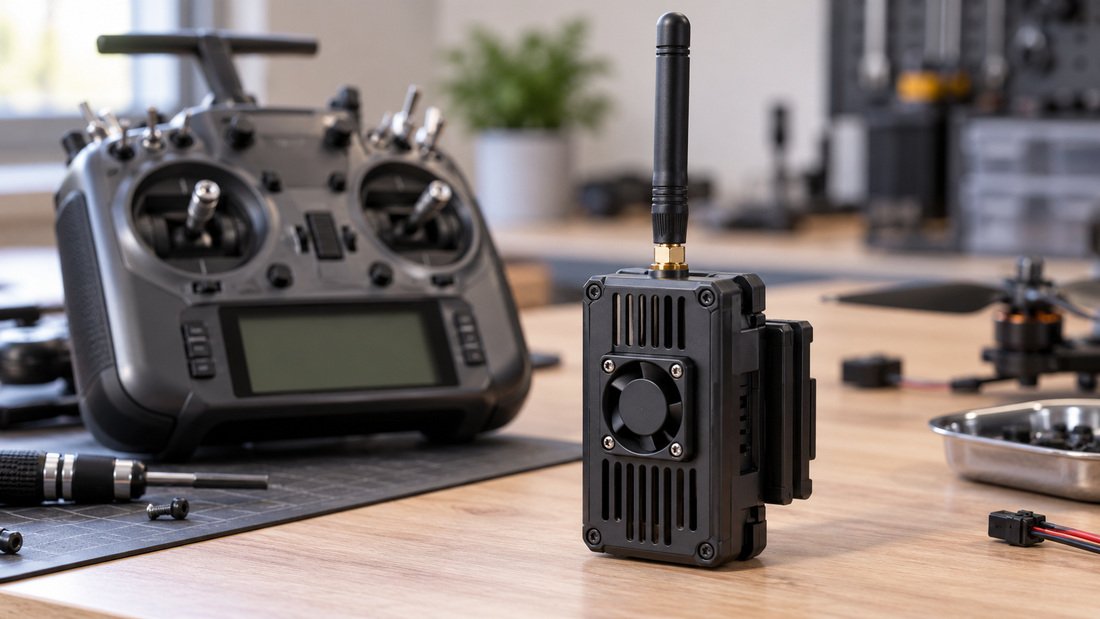
2.4 GHz is the most common band for ELRS. Its shorter wavelength allows compact antennas and typically lower latency at high packet rates. It performs well in line-of-sight and short-range indoor settings, which suits many drone soccer arenas.
However, 2.4 GHz is also crowded by Wi-Fi, Bluetooth, and other devices. In dense venues, congestion can reduce effective range and increase packet loss. Antenna diversity and good placement help, but the band itself has less penetration through walls and bodies than 900 MHz.
How does 900 MHz ELRS behave in range and latency?
900 MHz has a longer wavelength, which generally improves penetration through obstacles and extends range in non-line-of-sight conditions. It is often chosen for long-range FPV or outdoor fields with trees and structures.
Latency at 900 MHz can be competitive, but the band may require larger antennas and is subject to regional regulations. In some countries, 900 MHz is not freely available for RC use. Always verify local rules before purchasing. Larger antennas also add weight and can be more vulnerable to damage in student hands.
Comparison table: 2.4 GHz vs 900 MHz ELRS
The table below summarizes general tendencies. Actual performance depends on power, antennas, environment, and firmware settings. Treat it as a starting point for your own testing.
| Factor | 2.4 GHz ELRS | 900 MHz ELRS |
|---|---|---|
| Typical latency tendency | Lower at high packet rates | Can be low but may depend on packet rate and region |
| Range tendency | Good line-of-sight; shorter through obstacles | Better penetration and longer range in obstructed areas |
| Antenna size | Compact | Larger |
| Regulatory availability | Broadly available in many countries | Varies; verify local rules |
| Interference risk | Higher in Wi-Fi-dense venues | Lower from Wi-Fi, but other users may share band |
| Best for drone soccer | Indoor arenas, short-range, many pilots | Outdoor fields, long-range, obstacle-heavy sites |
Why latency is more than just the band
Latency in an RC link is the time from stick movement to receiver output. It is influenced by packet rate, processing, and RF conditions. A higher packet rate can reduce latency but may reduce range or robustness. The band sets physical limits, but firmware settings and hardware quality matter just as much.
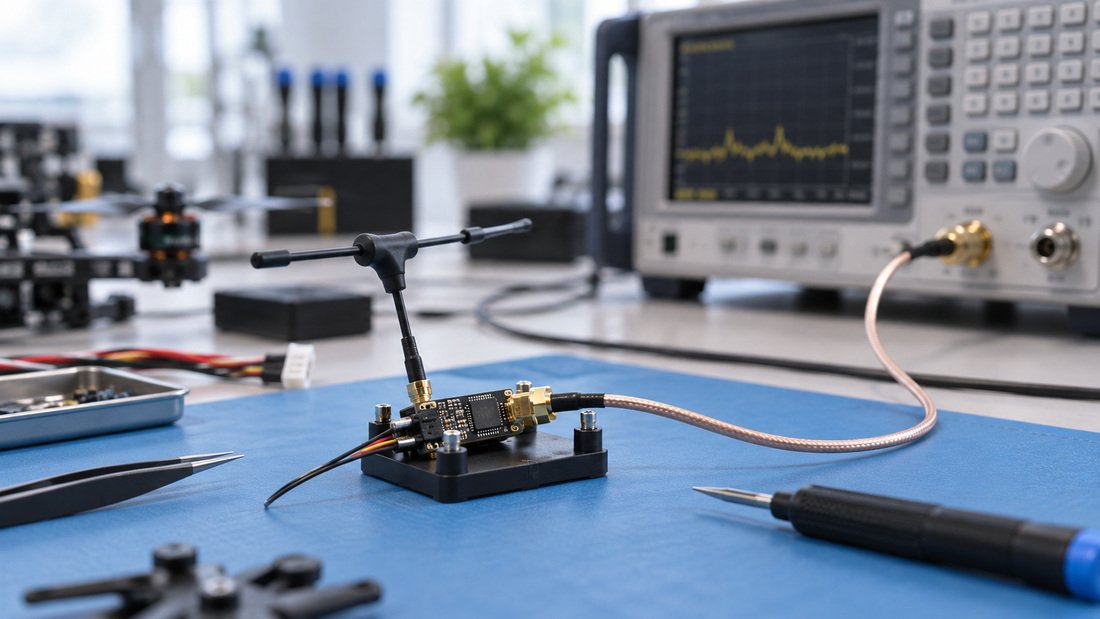
When comparing products, ask for the packet rate options and how they are configured. Do not rely on a single latency number without context. For team use, test in your actual venue with multiple radios active. Our guide to ELRS receivers can help you match receiver capabilities to your needs.
Antennas and placement: the often-overlooked factors
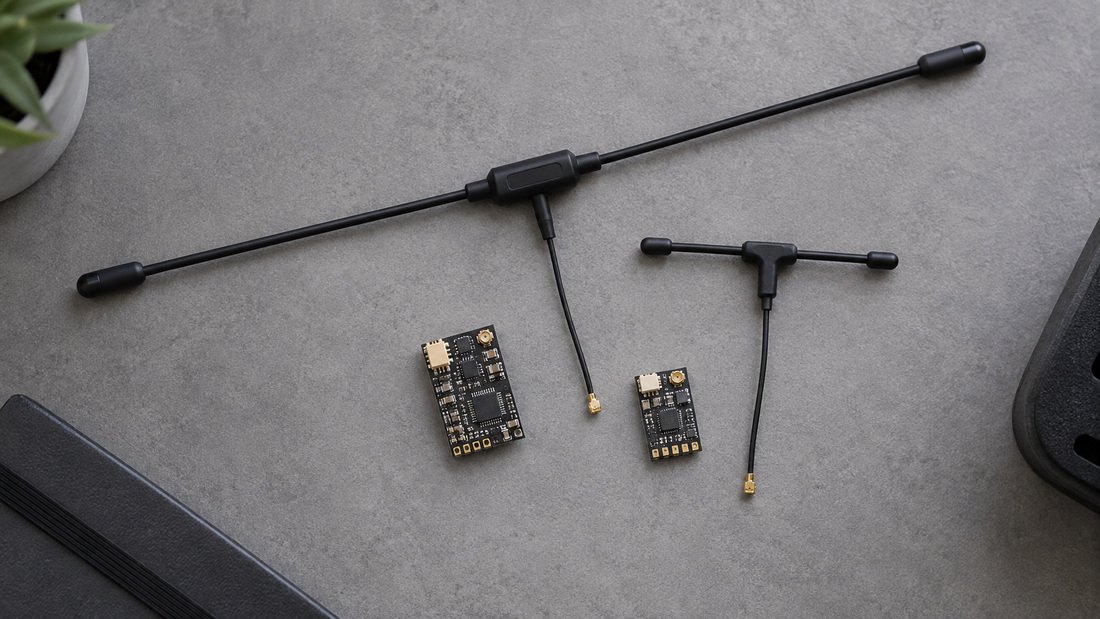
Antenna choice can shift performance more than band selection. A well-matched antenna with proper polarization and placement can improve range and reliability. Conversely, a poor antenna can negate band advantages.
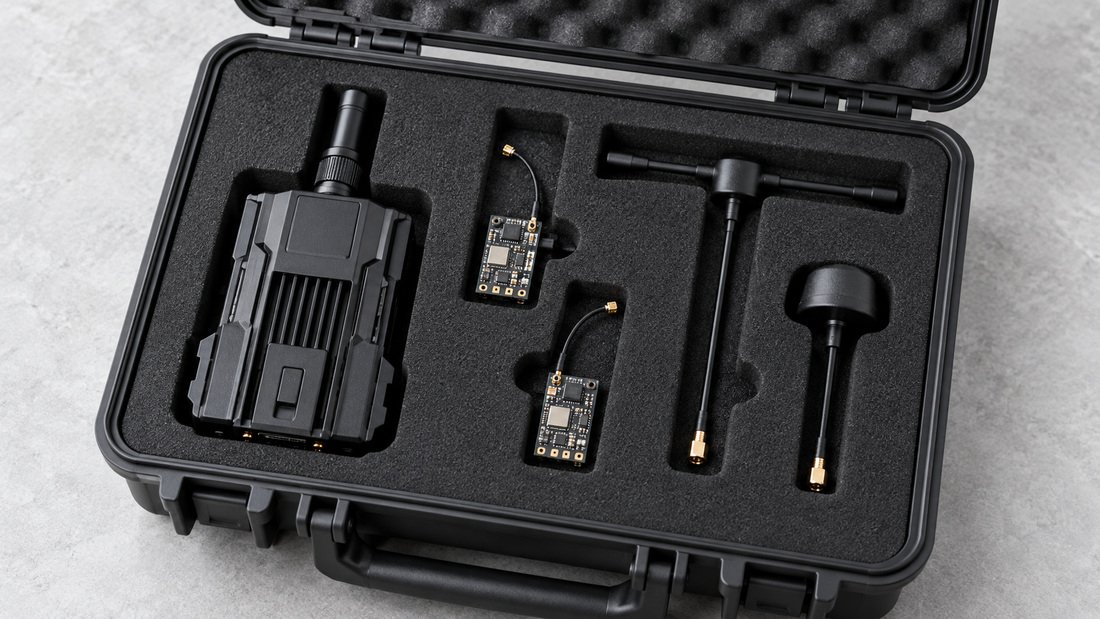
For 2.4 GHz, compact antennas are easy to mount on small drone soccer balls. For 900 MHz, larger antennas need secure mounting to avoid damage. Consider diversity setups if your receiver supports it. Browse RF antennas to see options, and always verify compatibility with your specific receiver.
Regulatory and venue considerations for teams
Radio regulations differ by country. Before standardizing on 900 MHz, confirm that it is legal for your intended use and power levels. Schools and clubs should also check venue rules about radio transmissions. Some indoor arenas may restrict certain bands or require coordination.
If you operate in multiple countries, 2.4 GHz may be simpler because it is more widely allowed. However, always verify with local authorities or a compliance advisor. We cannot provide legal advice, so treat this as a prompt to check.
Practical procurement checklist
- Confirm legal band availability in your country and venue.
- Define typical operating distance and environment (indoor arena vs outdoor field).
- Decide on latency targets based on pilot skill and competition rules.
- Check receiver and transmitter compatibility; use our ELRS receiver compatibility guide.
- Plan antenna types and mounting for durability.
- Request sample units for bench and field testing before bulk orders.
- Ask for documentation on packet rates, firmware version, and regional compliance.
- Consider spare parts and training for student repairs.
For transmitter modules, review options such as ELRS transmitter modules to match your radio ecosystem.
Common mistakes when choosing a band
- Assuming 900 MHz always gives more range without checking regulations.
- Ignoring interference in crowded 2.4 GHz venues.
- Choosing based on marketing claims without testing in the actual venue.
- Mixing bands across a team, complicating training and spares.
- Overlooking antenna quality and placement.
- Not budgeting for spares and repairs.
If you need help selecting components for a team kit, Request a Team Kit Quote and our team can discuss your requirements.
Frequently asked questions
Is 900 MHz ELRS always better for range?
Not always. 900 MHz generally penetrates obstacles better, but range also depends on power, antennas, and environment. In open line-of-sight, differences may be smaller. Always test in your venue.
Does 2.4 GHz ELRS have lower latency than 900 MHz?
2.4 GHz can achieve very low latency at high packet rates, but 900 MHz can also be low. Latency depends on packet rate and processing. Ask for specific configurations rather than assuming.
Can I use both bands in one team?
You can, but it adds complexity. Standardizing on one band per venue simplifies training, spares, and support. If you must mix, ensure clear labeling and separate firmware profiles.
Are 900 MHz antennas larger?
Yes, longer wavelength means larger antennas. This can affect mounting and durability, especially on small drone soccer frames. Plan for secure mounting.
How do I verify compatibility between my transmitter and receiver?
Check the manufacturer’s documentation and our ELRS receiver compatibility page. Confirm firmware versions and band support.
What should I ask a supplier before buying?
Ask for packet rate options, regional compliance information, antenna recommendations, and sample testing. Confirm warranty, lead time, and MOQ in writing. We cannot state specific terms here; request them directly.
Does band choice affect drone soccer gameplay?
Yes. Latency affects control responsiveness, and range/penetration affect reliability. In indoor arenas, 2.4 GHz may suffice; in outdoor fields, 900 MHz may be beneficial. Test with your team.
Conclusion: match the band to your mission
Choosing between 2.4 GHz and 900 MHz ELRS is a balance of range, latency, regulations, and practicality. For many drone soccer teams, 2.4 GHz offers a good mix of low latency and compact hardware, while 900 MHz can help in obstructed outdoor settings. Always verify local rules and test in your actual venue. When you are ready to equip your team, request a quote and we can discuss your specific needs.
Ready to move forward? Request a Team Kit Quote and our team will help you select the right ELRS components for your program.