Why we built BAYCKRC ELRS receivers
BAYCKRC ELRS receivers are ExpressLRS radio receivers designed and built by Drone Parts Factory in Chengdu, China. The range covers 20 models in 7 series: 2.4GHz, 900MHz, dual-band LR1121, Gemini, PWM, racing and USB receivers, from 0.5g to 1W telemetry.
- Models
- 20 receivers in 7 series
- Bands
- 2.4GHz · 868/915MHz · dual-band
- Weight
- From 0.5g
- Telemetry
- 10mW to 1W
You know the moment. The quad is at the far end of the field, the video is clean, and then the link warns you it is fading. Or a batch of receivers arrives and half your customers cannot bind them, because nobody told them which firmware target to flash. Or a drone soccer ball drops out of the match because a heavy receiver and a loose antenna could not survive the first collision.
Whether you fly, teach, compete, resell or build your own brand, you do not need more receivers. You need ELRS receivers you can trust, with clear specifications and a supplier who answers.
From our first days supporting model aircraft builders, one passion has driven our radio work: to take the guesswork out of the control link, and to use our own RF engineering and factory testing to help you fly further, bind faster and sell with confidence.
As a drone parts manufacturer with in-house production in Chengdu, we are committed to one principle: every pilot deserves a link they never have to think about. We help every racer, teacher, club, distributor and brand we work with turn a fragile radio link into a dependable one.
How we started: the link problems you told us about
It all started with the questions on our support desk. When we supplied model aircraft parts, the same messages kept arriving: my receiver will not connect, my range is shorter than expected, my link drops when the plane turns.
We traced each case back to its cause. Again and again, we found that the problem was rarely a broken part. It was the wrong band for the job, a firmware version that did not match the transmitter, a receiver running hot next to the video transmitter, or an antenna hidden behind carbon fiber.
We saw three patterns that no single receiver could solve:
- Racers and drone soccer teams needed the lightest possible receiver with a fast, stable link over short distances.
- Long-range pilots and fixed-wing builders needed sub-GHz penetration, diversity and strong telemetry.
- Distributors needed fewer stock lines, clear firmware targets and receivers their customers could set up without calling them.
That is why we created the BAYCKRC ExpressLRS receiver range. We did not want to just sell another radio board. We wanted to build ELRS receivers that match the way you really fly, teach and sell.
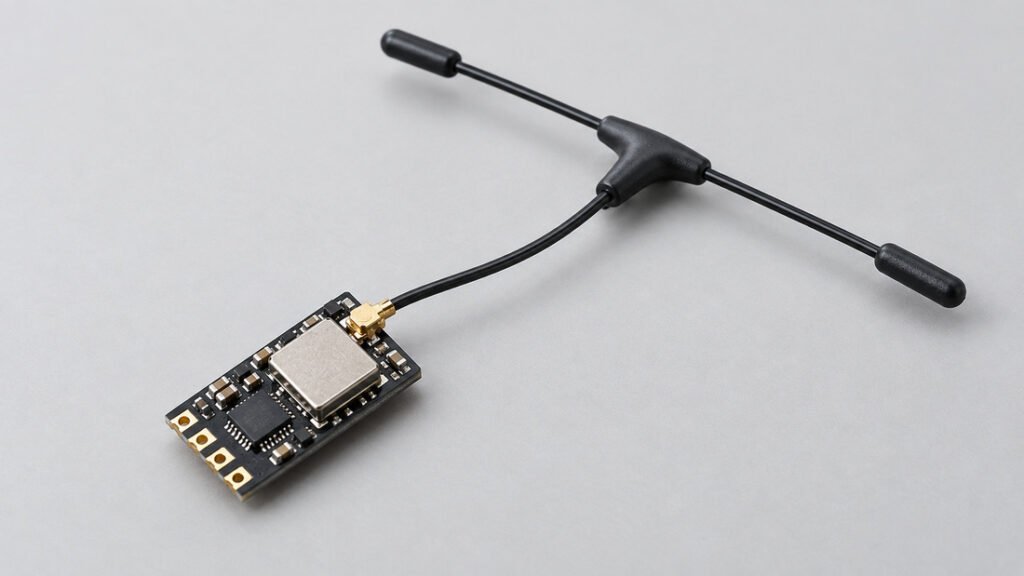
The turning point: drone soccer
The turning point came from drone soccer. Our own FB205L competition ball needed a receiver that was tiny, light and stable through constant impacts. That requirement produced the RR2: 0.5g on an 11 × 13mm board, with a TCXO and the LR1121 radio platform. It now flies inside every FB205L, and racers adopted it just as quickly.
From day one, your feedback has shaped every model we make. The TCXO versions, the dual-band receivers and the USB-flashable UR series all began as customer requests.
How we make ELRS receivers that solve real problems
Every series of our ELRS receivers answers one specific problem. Here is what we did, and what it means for you.
To solve frequency drift in heat and cold, we added a temperature-compensated crystal oscillator (TCXO) to most current models. → Your link stays on frequency next to a hot VTX, inside enclosed fuselages and on cold mornings. See BKR0103 and BKR0104.
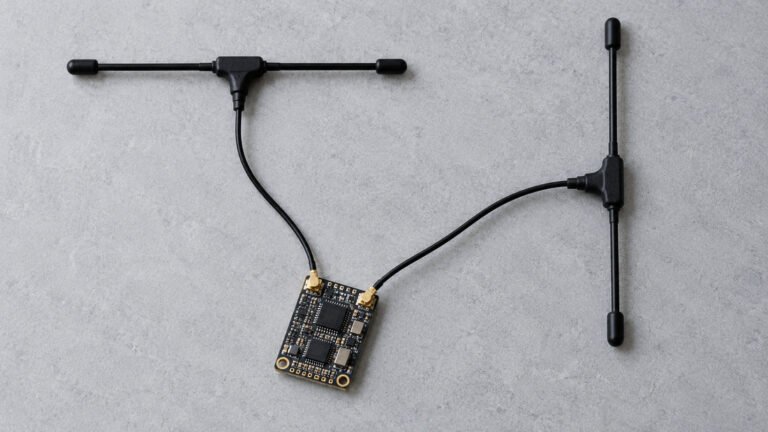
To solve fades when the aircraft turns, we built dual-core receivers with two complete radios and two antennas. → True diversity keeps the link when one antenna is shadowed. See BKR0105, a 2.4GHz ELRS receiver, and BKR0106, a 900MHz ELRS receiver with the same architecture.
To solve the two-stock-line problem, we built dual-band receivers on the Semtech LR1121 radio. → One receiver binds to a 900MHz or a 2.4GHz transmitter, so distributors stock one SKU instead of two. See BKR0107.
To solve the need for maximum robustness, we developed Gemini receivers for ExpressLRS Gemini links. → The same packet arrives on two frequencies at once, so a fade on one band is covered by the other. See BKR0108 and BKR0109.
To solve planes and cars without a flight controller, we built PWM receivers with servo outputs and voltage telemetry. → RC airplanes, boats and vehicles move to ExpressLRS without new electronics. See BKR0110 and the PR6 BKR0111.
To solve weight and space limits, we made the RR2, RR2 ANT and RRD racing receivers. → From 0.5g, with an onboard-antenna option that removes the most common crash failure point. See BKR0113 and BKR0119.
To solve slow servicing, we added a USB upgrade port to the UR series. → Service centres and classrooms can flash many receivers without WiFi or passthrough. See BKR0116, BKR0117 and BKR0118.
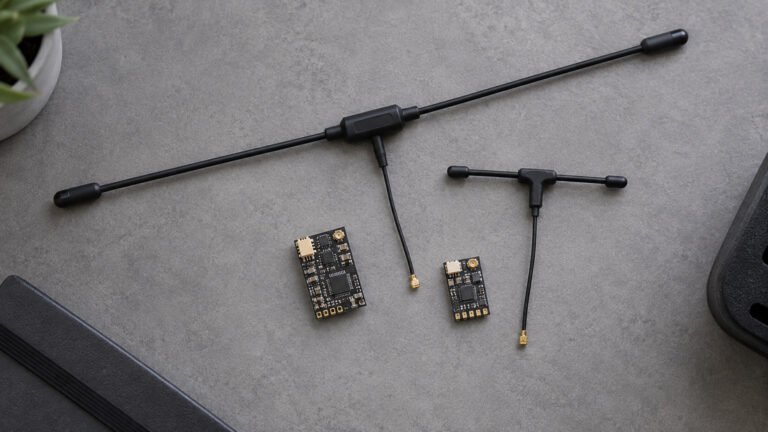
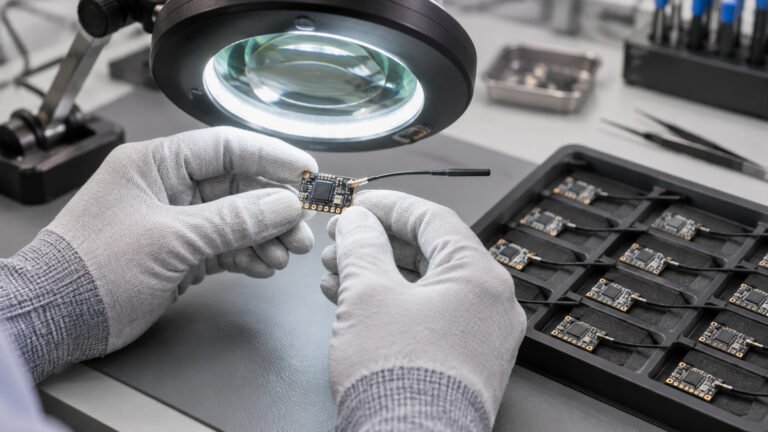
Built and checked in our own factory
Every BAYCKRC ExpressLRS receiver is programmed with its named firmware target and checked before packing: firmware version, binding, link quality and telemetry. Units ship with FCC-domain firmware by default, and OEM or regional orders can be pre-flashed with EU or AU domains and your own binding phrase.
What we have achieved so far
| Milestone | Detail |
|---|---|
| Receiver models | 20 models in 7 series |
| Radio platforms | Semtech SX1276 (900MHz), SX1281 (2.4GHz), LR1121 (dual-band) |
| Lightest receiver | RR2 and RR2 ANT at 0.5g, 11 × 13mm |
| Strongest telemetry | UR1000 at 1W, 6–40V input, MMCX, 20 × 20mm mounting |
| Architectures | Single antenna, true diversity, dual-band and Gemini |
| In the field | RR2 is the standard receiver in our FB205L 4S drone soccer ball |
Compare all 20 ELRS receivers
The table lists the full BAYCKRC range with key data from our catalog (revision 2026-04-29). Open any model for complete specifications, wiring notes and FAQs.
| SKU | Model | Band | Telemetry | Weight | Antenna |
|---|---|---|---|---|---|
| BKR0100 | ELRS 2.4GHz Nano Receiver | 2.4GHz ISM | 100mW (20dBm) | 0.6g (without antenna) | IPEX MHF (U.FL) |
| BKR0101 | ELRS 915MHz Nano Receiver | 915MHz (FCC); 868MHz via EU firmware | 50mW (17dBm) | 0.6g (with antenna) | IPEX MHF (U.FL) |
| BKR0102 | ELRS 915MHz Nano Pro Receiver | 868MHz / 915MHz (selectable) | 500mW | 0.6g (receiver only) | IPEX 1 (U.FL) |
| BKR0103 | 2.4GHz Nano Receiver TCXO | 2.4GHz ISM | 100mW | 0.6g (receiver only) | IPEX 1 (U.FL) |
| BKR0104 | 900MHz Nano Receiver TCXO | 868MHz / 915MHz | 50mW | 0.6g (receiver only) | IPEX 1 (U.FL) |
| BKR0105 | 2.4GHz Dual-Core Diversity Receiver TCXO | 2.4GHz ISM | 2 × 100mW | 1.6g (receiver only) | 2 × IPEX 1 (U.FL) |
| BKR0106 | 900MHz Dual-Core Diversity Receiver TCXO | 868MHz / 915MHz | 2 × 50mW | 1.6g (receiver only) | 2 × IPEX 1 (U.FL) |
| BKR0107 | C3 Dual-Band Nano Receiver (900/2400MHz) | 868MHz / 900MHz / 2.4GHz | 100mW on all bands | 0.8g (receiver only) | IPEX 1 (U.FL) |
| BKR0108 | Dual-Band Gemini Receiver (900/2400MHz) | 900MHz / 2.4GHz | 2 × 100mW | 1.8g (receiver only) | IPEX 1 (U.FL); antenna set confirmed per revision |
| BKR0109 | C3 Dual-Band 100mW Gemini Receiver | 868MHz / 900MHz / 2.4GHz | 2 × 100mW on all bands | 1.6g (receiver only) | 2 × IPEX 1 (U.FL) |
| BKR0110 | 2.4GHz 5-Channel PWM Receiver | 2.4GHz ISM | 12dBm | 4.7g (receiver + antenna) | IPEX 1 (U.FL) |
| BKR0111 | PR6 2.4GHz 6-Channel PWM Receiver | 2.4GHz ISM | 10mW | See datasheet | IPEX 1 (U.FL) |
| BKR0112 | PR6 2.4GHz 6-Channel PWM Receiver | 2.4GHz ISM | 10mW | See datasheet | IPEX 1 (U.FL) |
| BKR0113 | RR2 2.4GHz Racing Receiver | 2.4GHz ISM | 10mW | 0.5g (receiver only) | IPEX 1 (U.FL) |
| BKR0119 | RR2 ANT 2.4GHz Receiver with Onboard Antenna | 2.4GHz ISM | 10mW | 0.5g (receiver only) | Onboard antenna, 3.7dBi |
| BKR0114 | RRD1 2.4GHz Diversity Racing Receiver | 2.4GHz ISM | 2 × 10mW | 0.6g (receiver only) | 2 × IPEX 1 (U.FL) |
| BKR0115 | RRD2 2.4GHz Diversity Racing Receiver (LR1121) | 2.4GHz ISM | 2 × 10mW | 0.6g (receiver only) | 2 × IPEX 1 (U.FL) |
| BKR0116 | UR100 Dual-Band USB Receiver | 868MHz / 900MHz / 2.4GHz | 100mW on all bands | 1.2g (receiver only) | IPEX 1 (U.FL) |
| BKR0117 | UR500 Dual-Band USB Receiver | 868MHz / 900MHz / 2.4GHz | 500mW on all bands | 3.2g (receiver only) | IPEX 1 (U.FL) |
| BKR0118 | UR1000 Dual-Band 1W USB Receiver | 868MHz / 900MHz / 2.4GHz | 1000mW on all bands | 6.2g (receiver only) | MMCX |
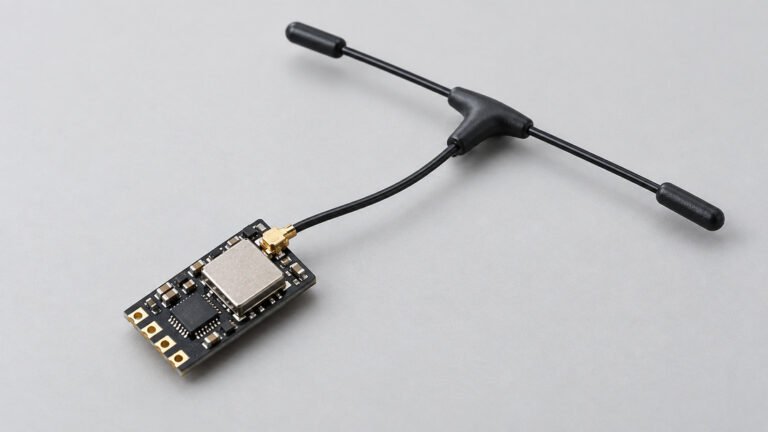
ELRS 2.4GHz Nano Receiver
ELRS 915MHz Nano Receiver
ELRS 915MHz Nano Pro Receiver
2.4GHz Nano Receiver TCXO
900MHz Nano Receiver TCXO
2.4GHz Dual-Core Diversity Receiver TCXO
900MHz Dual-Core Diversity Receiver TCXO
C3 Dual-Band Nano Receiver (900/2400MHz)
Dual-Band Gemini Receiver (900/2400MHz)
C3 Dual-Band 100mW Gemini Receiver
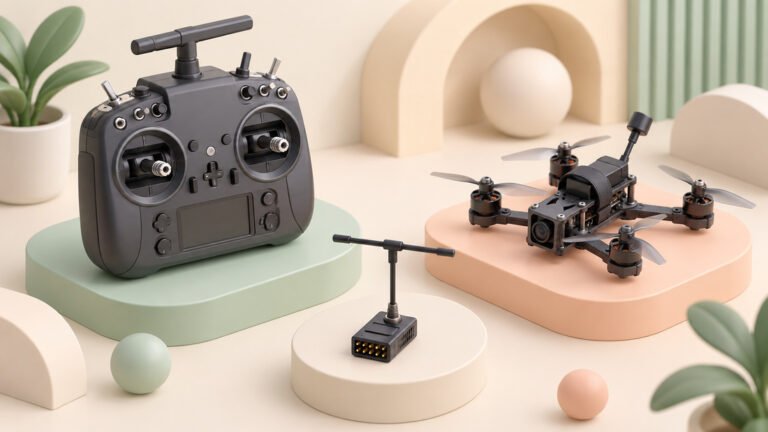
2.4GHz 5-Channel PWM Receiver
PR6 2.4GHz 6-Channel PWM Receiver
PR6 2.4GHz 6-Channel PWM Receiver
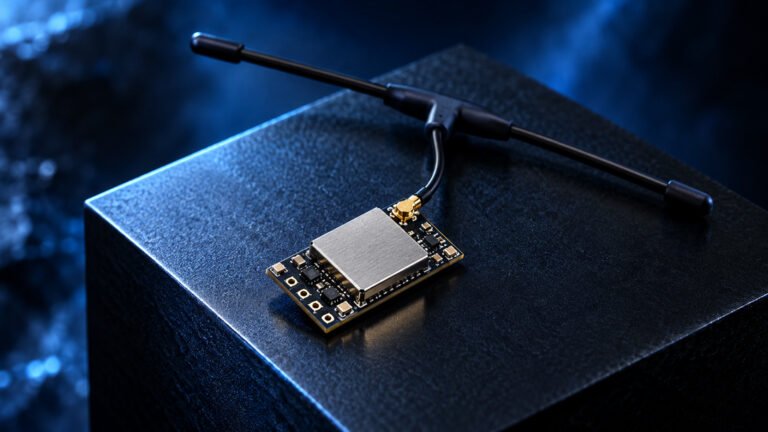
RR2 2.4GHz Racing Receiver
RR2 ANT 2.4GHz Receiver with Onboard Antenna
RRD1 2.4GHz Diversity Racing Receiver
RRD2 2.4GHz Diversity Racing Receiver (LR1121)
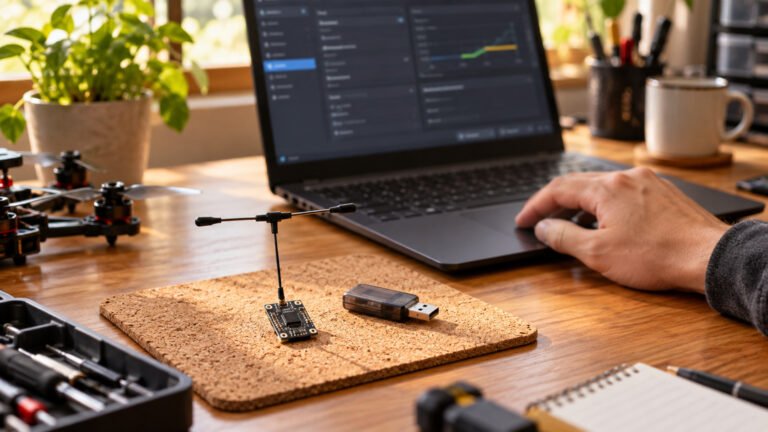
UR100 Dual-Band USB Receiver
UR500 Dual-Band USB Receiver
UR1000 Dual-Band 1W USB Receiver
How to choose the right ELRS receiver
To choose between our ELRS receivers, start with how the aircraft will be used, then match band, architecture and size.
| Your build | Recommended models | Why |
|---|---|---|
| Tiny whoops and drone soccer balls | RR2, RR2 ANT | 0.5g, small board, onboard antenna option |
| 5-inch freestyle | BKR0103, BKR0105 | TCXO stability or true diversity on 2.4GHz |
| FPV racing | RRD1, RRD2 | Diversity at 0.6g for gates and tight turns |
| Long-range quads | BKR0104, BKR0106, BKR0107 | 900MHz penetration, diversity or dual-band |
| Fixed-wing and VTOL | UR500, UR1000, BKR0109 | Strong telemetry, Gemini robustness |
| RC airplanes, boats, cars | BKR0110, PR6 | PWM servo outputs and voltage telemetry |
| Classrooms and service centres | UR100 | USB flashing for many units |
2.4GHz or 900MHz? A 2.4GHz ELRS receiver is the default for most FPV builds. It gives the highest packet rates, small antennas and worldwide ISM-band use, which suits racing, freestyle and drone soccer. A 900MHz ELRS receiver trades packet rate for better penetration and range, which suits long-range flying, fixed-wing and cluttered terrain. If you are unsure, a dual-band ExpressLRS receiver covers both, so you can start on 2.4GHz and move to 900MHz later without replacing it.
TCXO or not? Choose TCXO for fleets, schools, cold climates and receivers installed near hot electronics. It costs little and prevents many unexplained link drops.
For a step-by-step comparison, read our ELRS receiver buying guide.
Installation, firmware and compatibility
BAYCKRC ELRS receivers follow the open-source ExpressLRS standard, so they work with any ExpressLRS transmitter on a matching band, the same major firmware version and the same binding phrase.
- 01Wire the receiver
5V (or the voltage range of your model), ground, receiver TX to a flight-controller RX pad and receiver RX to the matching TX pad.
- 02Configure the flight controller
in Betaflight, INAV or ArduPilot, enable Serial RX on that UART and select the CRSF protocol.
- 03Bind
flash the same binding phrase on the transmitter and receiver, or power-cycle the receiver three times and bind from the radio.
- 04Check the link
confirm channel movement, link quality and telemetry before the first flight.
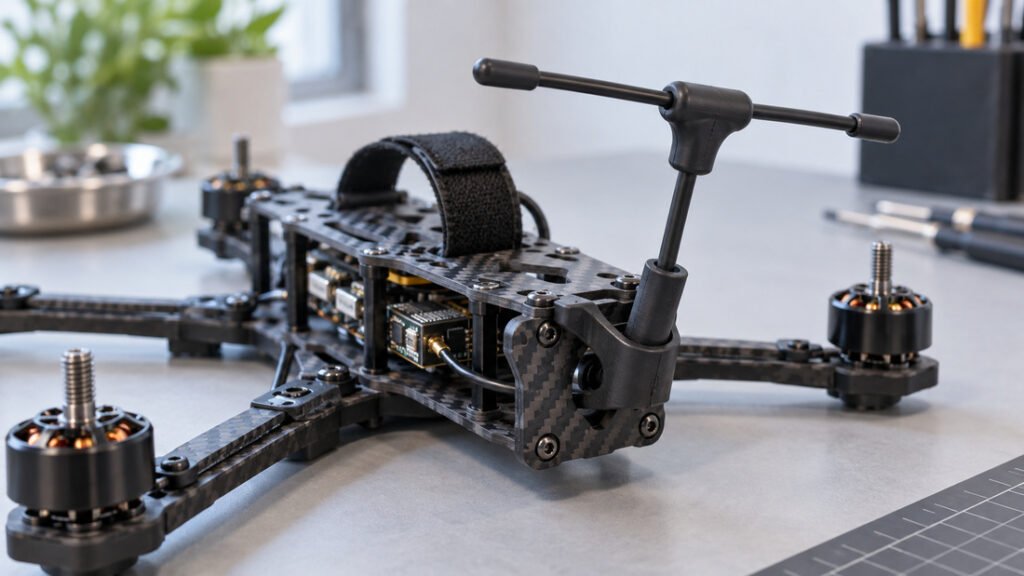
Antenna placement matters. Keep antennas clear of carbon fiber, motors and power leads, and mount diversity antennas at 90° to each other.
Firmware targets. Each product page names its ELRS Configurator target. All our ELRS receivers can be updated through flight-controller passthrough, the receiver WiFi hotspot or, on UR models, USB.
Pair with a transmitter. Our dual-band 1W modules drive 2.4GHz, 900MHz and dual-band receivers from one radio. See ELRS transmitter modules and the ELRS receiver compatibility guide.
Wholesale and OEM ELRS receivers
Distributors, BNF builders and private-label brands buy BAYCKRC ELRS receivers in bulk or under their own name.
- Samples first — test any ExpressLRS receiver in your own system before a volume order. Request samples.
- Private label — your logo, labels, packaging and firmware target name. See custom ELRS receiver development.
- Pre-flashed fleets — regulatory domain, binding phrase and default settings set at the factory.
- Clear warranty — 12 months from delivery unless your quotation states otherwise, with RMA replies normally within 2 working days. See our Warranty & After-Sales Program.
- Documented supply — datasheets for every model and civilian end-use review on every order.
Tell us the models, quantities and target market, and we reply with pricing, MOQ and lead time. Get a quote.
ELRS receivers FAQ
ELRS receivers FAQ
What are ELRS receivers?
ELRS receivers are ExpressLRS radio receivers that connect an FPV drone, plane or vehicle to the pilot's transmitter. They output the CRSF protocol to a flight controller, or PWM to servos, and send telemetry back to the radio.
Which BAYCKRC ELRS receiver is the lightest?
The RR2 (BKR0113) and RR2 ANT (BKR0119) weigh 0.5g on an 11 × 13mm board. RR2 ANT has an onboard 3.7dBi antenna.
Do BAYCKRC receivers work with other ExpressLRS transmitters?
Yes. They work with any ExpressLRS transmitter on a matching band, the same major firmware version and the same binding phrase.
What is the difference between a dual-band and a Gemini receiver?
A dual-band LR1121 receiver works on either 900MHz or 2.4GHz, depending on the transmitter. A Gemini receiver listens to the same packet on two frequencies at the same time and needs a Gemini transmitter for that mode.
Why choose a TCXO ELRS receiver?
A TCXO keeps the radio frequency stable as temperature changes, which reduces link drops in cold weather, hot airframes and narrow-band 900MHz links.
Can I buy ELRS receivers wholesale or under my own brand?
Yes. We supply samples, bulk orders and private-label receivers with your logo, packaging, firmware target name and pre-flashed settings.