Quick summary
Neither 2207 nor 2306 brushless motors is universally better. The 2207 has a wider stator, which usually develops more torque and suits larger or higher-pitch props, heavier frames and thrust-focused drone soccer builds. The 2306 is lighter and typically more efficient when matched to mid-size props and moderate loads. For teams, the practical answer is to match stator size, KV and propeller to the airframe, battery and event rules, then confirm samples and documentation with your supplier before committing to a season order.
Key Takeaways
- The first two digits (22 and 23) indicate stator diameter in millimetres; the last two (07 and 06) indicate stator height. Both are approximate naming conventions, so verify actual specifications.
- 2207 generally favours torque and larger props; 2306 generally favours lighter weight and efficiency on mid-size props.
- KV, propeller size, battery voltage and All-Up Weight (AUW, the total flying weight) matter more than the number alone.
- For clubs, standardising one or two motor options simplifies spares, budgets and coaching.
- Ask for spec sheets, sample units and written confirmation of custom terms before ordering at volume.
What do the numbers 2207 and 2306 actually mean?
The numbers describe the stator, the fixed part of the motor that carries the copper windings. In common FPV and drone soccer naming, the first two digits are stator diameter in millimetres and the last two are stator height (stack) in millimetres. So 2207 suggests roughly 22 mm diameter by 7 mm height, and 2306 suggests roughly 23 mm by 6 mm.
Because the naming is a convention rather than a regulated standard, two motors with the same headline number can differ in magnets, windings, bearings and bell design. Treat the number as a starting point, then review the datasheet.
Stator volume: the underlying variable
A rough stator volume estimate is diameter squared times height. Using the nominal numbers: 22 x 22 x 7 is about 3,388 mm3, while 23 x 23 x 6 is about 3,174 mm3. The 2207 is therefore not simply “bigger”; it is a different shape, trading some height for diameter. In practice this shape difference influences torque delivery and how the motor handles a given propeller load.
How do 2207 and 2306 motors compare?
This table summarises general tendencies. Real behaviour depends on KV, propeller, battery, airframe weight and the specific motor design, so test your own configuration.
| Characteristic | 2207 | 2306 |
|---|---|---|
| Nominal stator shape | Wider, taller stack | Wider diameter, shorter stack |
| Typical strength | Torque, throttle authority under load | Lighter rotating mass, efficiency on mid-size props |
| Propeller tendency | Larger diameter or higher pitch | Mid-size, moderate pitch |
| Typical feel | Strong, responsive low-end | Crisp, efficient, slightly lighter |
| Best fit | Heavier builds, thrust-focused flying | Weight-sensitive builds, endurance-oriented flying |
| Trade-off | May use more current for a given prop; added mass | May reach current or thermal limits on aggressive setups |
Which is better for drone soccer teams?
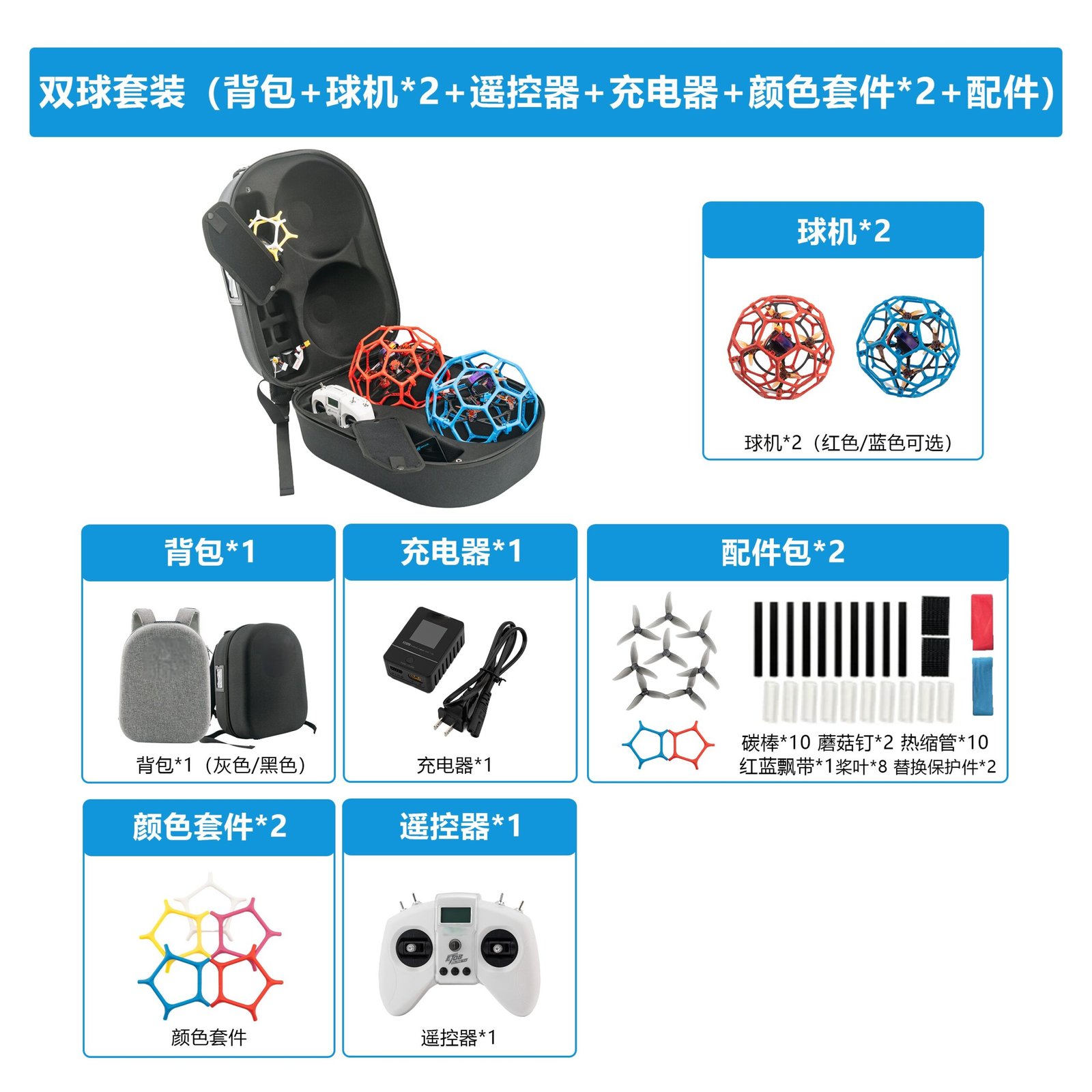
Drone soccer rewards quick changes of direction, reliable acceleration and repeatable flight characteristics across many identical team drones. Because the ball cage and frame add mass and drag, torque matters. A wider-stator motor such as a 2207 can help push a prop through that load, while a lighter motor such as a 2306 can help where weight and battery endurance are the priority.
There is no single correct answer. The right choice depends on your frame, ball size, propeller, battery, event rules and the flying style of your team. Teams often benefit from testing both on identical airframes before standardising.
Why standardisation matters more than the exact number
For a club or association, the operational cost of mixing motor types is real: more spare parts, more confusion at the field, and noisier maintenance data. Standardising on one motor per class makes it easier to track failures, plan replacements and coach consistently. This is a procurement decision as much as a performance one.

The variables that outweigh stator size
Two builds with the same motor number can fly very differently. Before choosing between 2207 and 2306, align the whole power system.
KV rating and battery voltage
KV describes how fast the motor spins per volt with no load, so it interacts directly with battery voltage: a 6S battery can swing a given propeller faster than a 4S pack on the same motor. Higher KV suits smaller, lower-pitch props; lower KV suits larger, higher-pitch props or higher voltage. Select KV and voltage together, not separately.
Propeller matching
Propeller diameter and pitch set the load the motor must turn. Oversizing the prop for a given motor can push current and temperature beyond safe limits, while undersizing wastes the motor’s potential. See our guidance on motor, propeller and battery matching for a structured approach.
All-up weight and airframe
Heavier airframes need more thrust and torque to accelerate and hold attitude, which generally favours a wider-stator motor. Lighter airframes gain little from extra torque and may benefit more from reduced weight and efficiency.
ESC current rating
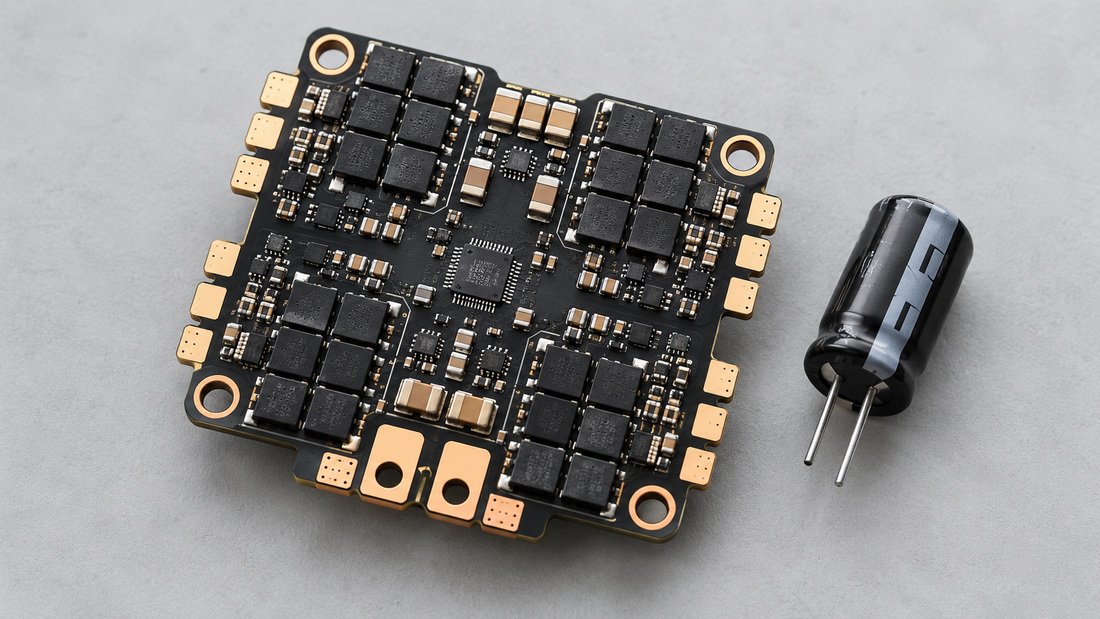
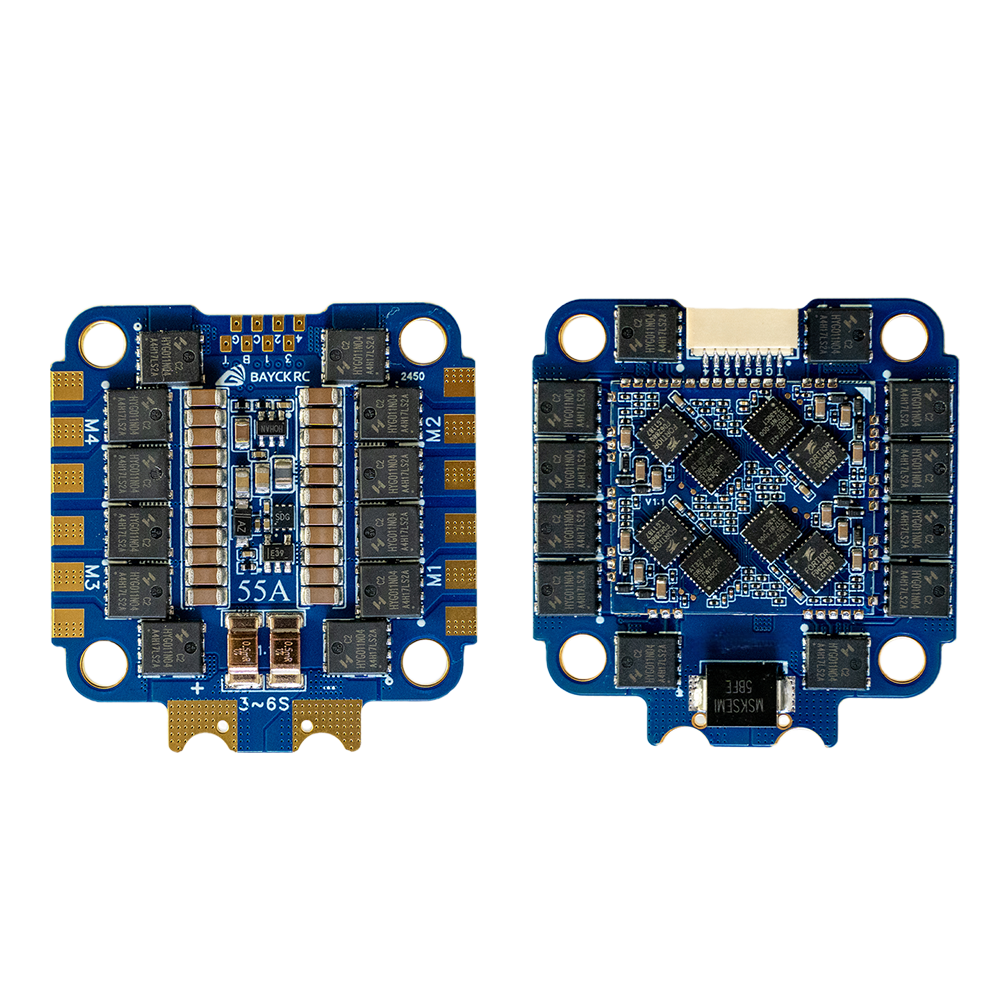
The Electronic Speed Controller (ESC) must handle the current your motor and propeller draw. The four-in-one ESC below is a common layout that keeps wiring compact; confirm continuous current ratings against your measured or supplier-stated setup. A properly sized ESC protects both budget and airframe.
How should clubs test 2207 and 2306 before buying?
Run a controlled comparison on identical airframes so only the motor changes. Keep the propeller, battery, ESC, frame and firmware constant, then compare hover throttle, temperature, current draw and the feel of repeated manoeuvres. Record results so your season decision rests on your own data rather than marketing claims.
- Fly identical drills: acceleration, hard turns and repeated stops.
- Log temperature and current where your equipment supports it.
- Compare battery endurance under the same routine.
- Track any failures by motor type and date.
Ready to compare options for your program? Request a Team Kit Quote to discuss motors, ESCs and spares together.
Common mistakes when choosing between 2207 and 2306
- Choosing by number alone. Stator size is only one input; KV, prop and battery can change the outcome more.
- Ignoring the propeller. The wrong prop can underuse or overload either motor.
- Mixing motor types within one team. This complicates spares, setup sheets and data.
- Skipping sample testing. Trial units on your own airframe reduce season risk.
- Assuming B2B terms match consumer returns. Warranty and returns are contractual; confirm them in writing.
Team procurement checklist
Use this list before raising a purchase order. Where a term is not confirmed in your quote or contract, ask for it in writing rather than assuming.
- Motor specification sheet with stator dimensions, KV, weight, shaft and mounting pattern.
- Recommended propeller and battery range from the supplier.
- ESC current rating matched to the intended setup.
- Sample units for on-airframe testing.
- Written confirmation of warranty terms, spare-part availability and order quantities.
- Documentation for shipping lithium batteries, including safety testing and handling requirements.
- Spare motor, ESC and propeller quantities based on your season schedule.
- Consistent connector and mounting standard across the fleet.
If you are building a complete power system, review our propulsion combo kits and our motor and propulsion matching service as starting points, and browse FPV motors for available options.
Shipping and battery safety
Lithium batteries are regulated in transport. Under US FAA guidance, spare lithium ion batteries are limited to 100 watt hours (Wh) per battery for typical carriage, with limited allowances for larger batteries with airline approval, and terminals must be protected from short circuit. Air carriers may impose stricter limits, and batteries intended for resale are not treated as passenger carry-on. Confirm current requirements with your carrier and supplier before shipping team kits: FAA lithium battery guidance.
FAQ: 2207 vs 2306 brushless motors
Is 2207 more powerful than 2306?
Not automatically. The 2207 has a taller nominal stator stack, which can favour torque, but power depends on KV, propeller, battery and the specific motor design. Compare full specifications and test on your own airframe.
Will a 2306 be more efficient?
It often can be on mid-size props and moderate loads because of its shape and typically lower rotating mass, but efficiency depends on the whole setup. Measure hover throttle and endurance rather than assuming.
Which is better for beginner drone soccer teams?
Beginners usually benefit most from a consistent, well-matched setup with easy spares. Either motor can work if KV, prop and battery suit the training airframe. Standardising one option tends to reduce complexity.
Can I mix 2207 and 2306 motors on one drone?
It is technically possible but not recommended. Mixed motors can behave differently, complicate tuning and make fault tracking harder. Keep all four motors matched.
What KV should I choose?
KV must suit your battery voltage and propeller. Higher KV suits smaller props and lower voltage; lower KV suits larger props or higher voltage. Confirm the recommended range with your supplier.
How many spare motors should a club hold?
Spares depend on fleet size, flying hours and event schedule. A common approach is to hold enough to keep a full team flying through a competition without waiting for delivery; agree the exact figure with your supplier based on your schedule.
What should I confirm in writing before ordering?
Ask for specifications, sample availability, warranty terms, spare-part supply, order and shipping quantities, and battery shipping documentation. Terms vary by supplier and region, so treat them as contract items to verify.
Conclusion: choose for your setup, then standardise
For most drone soccer teams, the 2207 and 2306 question is really a system-matching question. The 2207 tends to suit heavier, torque-hungry builds; the 2306 tends to suit weight-sensitive, efficiency-focused builds. Your frame, propeller, battery, ESC and event rules decide which fits better, and controlled sample testing on your own airframes is the most reliable way to decide.
Once you have chosen, standardise across the team to simplify spares, budgets and coaching, and confirm all commercial terms in writing. To plan motors, ESCs and spares for a full squad, Request a Team Kit Quote.