Quick summary
For most beginners, a 2S (two-cell series) drone soccer ball is the better first purchase. It produces lower propeller speeds and thrust, which means softer collisions, fewer damaged parts and more flight time per charge, making it ideal for schools, new clubs and mixed-age squads. A 4S ball is faster and closer to competition feel, but it suits students who already hover reliably and can accept higher repair costs. Because league rules may fix the cell count, the deciding factor is usually your competition format, not raw speed. Confirm the cell count your team must fly before ordering drone soccer equipment, then match budget, spares and coaching capacity to it.
Key Takeaways
- A 2S drone soccer ball is usually the better starting point for beginners: lower speed, gentler impacts and cheaper, more frequent practice.
- A 4S ball delivers more speed and thrust, which helps advanced players and may be required by a given league class.
- Two-cell and four-cell equipment generally should not be mixed in the same match, so check your rulebook before bulk purchasing.
- Budget for a reasonable spares ratio rather than assuming a ball lasts a full season, and ask suppliers to quote propellers, motors and ESCs (electronic speed controllers) separately.
- For school programs, safety coverage, charging discipline and battery storage often matter more than the headline cell count.
What 2S and 4S Actually Mean
S refers to cells wired in series. A 2S lithium-polymer battery has a nominal 7.4 V, while a 4S pack has a nominal 14.8 V. In simple terms, more cells mean higher voltage and, with the same motor and propeller, more RPM (revolutions per minute) and thrust.
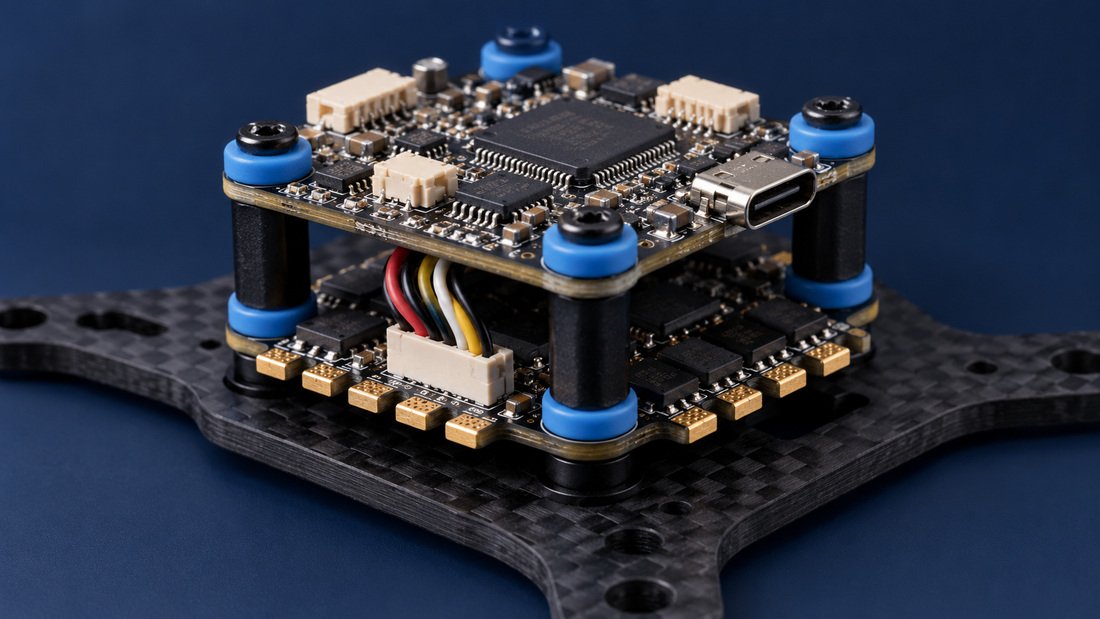
Drone soccer uses an enclosed ball: a lightweight cage surrounds the drone so it can be bumped, rolled and knocked around without exposing bare propellers. The propulsion electronics, including the ESC stack, are packaged inside that frame. Higher voltage raises both performance and the energy available to damage parts on impact, so the cell count is a safety and cost decision as much as a speed decision.
How the Cell Count Changes the Beginner Experience
The cell count affects everything a coach notices in the first month: how forgiving the ball feels, how quickly parts wear, and how many students can practise on the batteries you own.
Speed, control and learning curve
A 2S ball accelerates more slowly and reacts less violently to stick input. Beginners get more time to think, which shortens the hover-learning phase. A 4S ball responds faster and reaches the goal frame sooner, but small input errors become larger errors, so it is typically introduced after basic control is stable.
Impact energy and breakage
Impact damage scales with speed and mass. Keeping beginner flights on 2S reduces the energy involved in wall and goal-frame collisions, which tends to reduce bent motors, cracked frames and cracked propellers.
Battery handling and cost
Voltage is only part of the story; capacity and cell quality decide flight time. No single figure fits every ball, so ask the supplier for expected flight time under your battery and ball configuration. What you can compare is discipline: whichever pack you choose, buy batteries in matched sets so students charge, store and swap them consistently.
2S vs 4S Drone Soccer Ball Comparison
| Factor | 2S (7.4 V nominal) | 4S (14.8 V nominal) |
|---|---|---|
| Typical learner fit | Strong for first-time flyers and mixed-age groups | Better after basic control is reliable |
| Flight feel | Slower, more forgiving, easier to correct | Faster, sharper, closer to advanced play |
| Impact energy | Lower | Higher |
| Wear on props and motors | Generally lower per hour flown | Generally higher per hour flown |
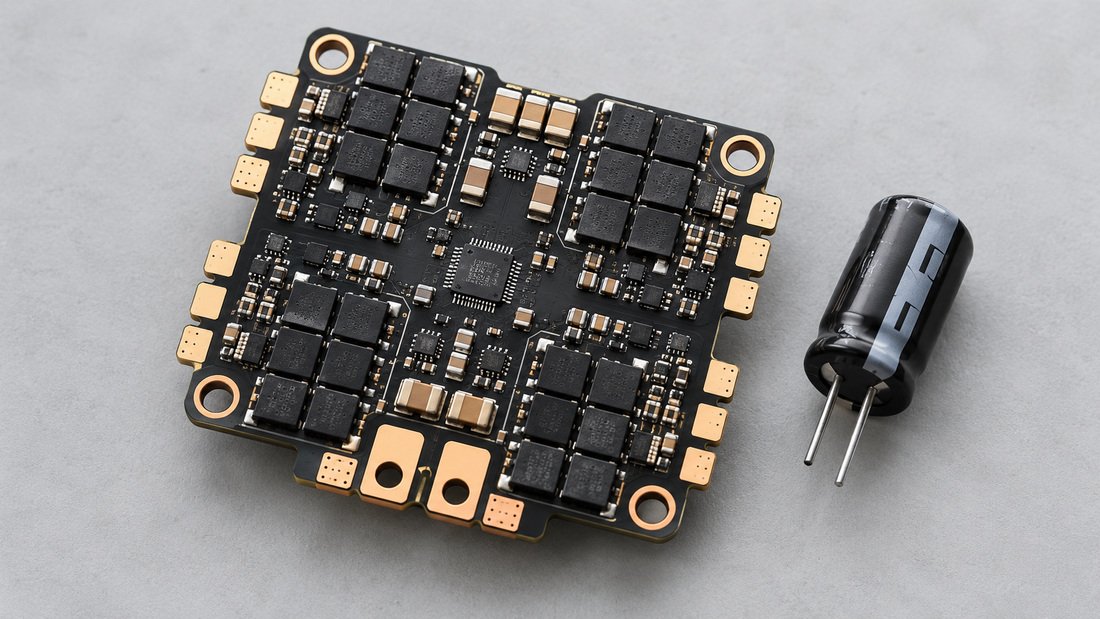
| Voltage-related component stress | Lower | Higher, so ESCs and motors must be rated for it |
| Best use | Training, club onboarding, PE and STEM sessions | Advanced drills and competition classes that specify 4S |
This table is general guidance. Actual speed and durability depend on motor KV, propeller pitch, ball weight and tuning, so treat the cell count as one variable in a system, not a standalone specification.
What the Rules Require Comes First
Before debating performance, confirm which class your team will enter. Many leagues define ball classes by cell count or by a performance envelope, and mixed 2S and 4S matches are generally avoided. Your national body or tournament organiser is the authority here; ask them in writing which configuration is legal for your age group and division.
Procurement teams should also separate two questions: what students learn on, and what they compete with. A club can train on 2S balls and compete on 4S balls, but that doubles the battery, charger and spares inventory you must manage. Many clubs start with one configuration and expand later. If you are building a programme across several sites, see our notes on drone soccer competitions for how event formats shape equipment lists.
Where 2S Makes Sense
Choose 2S if your priority is getting more students flying safely with fewer mid-session repairs. It fits school clubs, after-school programmes and new teams where the coach is also managing paperwork and logistics.
Typical signals that 2S is the right first buy:
- Most participants have never flown any multirotor before.
- Sessions are short and shared across rotating groups.
- Your repair bench is limited and you want predictable, low-cost spares consumption.
- You are running introductory STEM drone education and training rather than a competitive squad.
Explore how programmes are structured at our STEM drone education and training page.
Where 4S Makes Sense
Choose 4S when the rulebook requires it, when players already fly confidently, or when you are preparing for higher-level play and want the ball to respond at competition pace.
Typical signals that 4S is appropriate:
- Students can hover, turn and land without instructor intervention.
- Your league class specifies a 4S configuration.
- You have a stocked spares drawer and a student repair workflow.
- You have enough charging capacity to keep 4S packs in rotation safely.
Planning a season of drone soccer equipment? Share your age group, squad size and competition class, and our team can help you scope balls, motors, ESCs and spares as one kit. Request a Team Kit Quote.
Common Beginner Mistakes
- Buying on speed alone. Fastest is not best for a first season; control and uptime win more matches at beginner level.
- Ignoring the rulebook. A perfectly good ball can be ineligible in your division.
- Under-buying spares. New flyers break propellers and motors; plan a spares ratio with your supplier rather than assuming one ball covers a term.
- Mixing battery types informally. Keep 2S and 4S packs clearly labelled, charged and stored separately so students cannot confuse them.
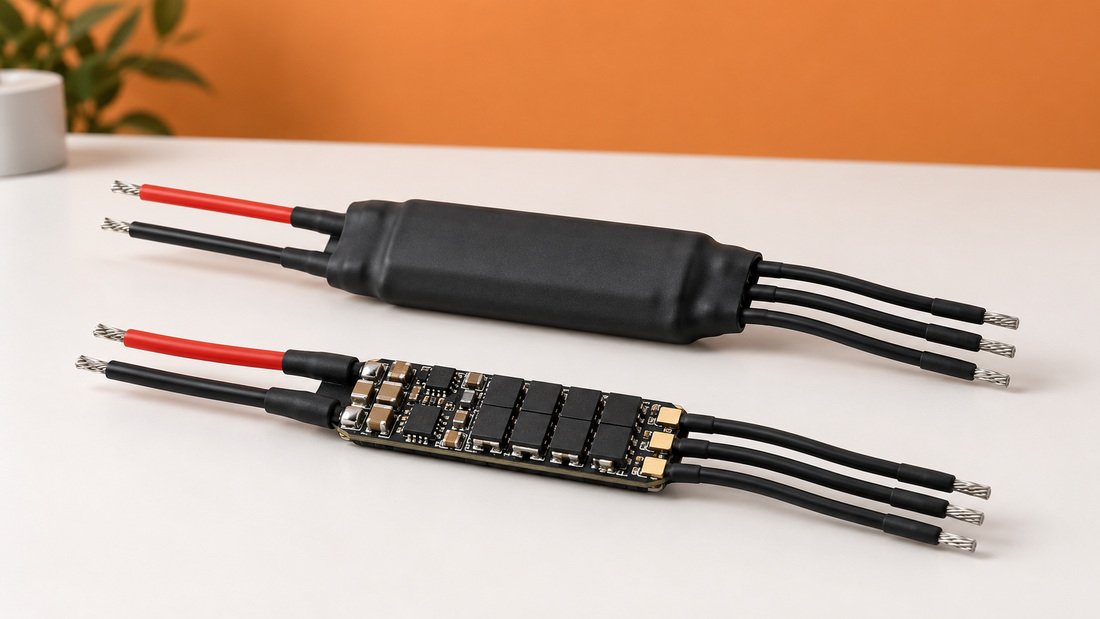
- Treating the ESC as an afterthought. The speed controller must be matched to the cell count and motor; see the component notes below.
- Skipping local flight rules. Educational flying may fall under different rules than recreational flying depending on your organisation.
A Note on Educational Flight Rules
In the United States, the FAA states that drones flown for educational purposes are regulated either under the Exception for Limited Recreational Operations of Unmanned Aircraft (49 U.S.C. § 44809) or under the Small Unmanned Aircraft Systems Rule, Part 107. The FAA notes that certain qualifying educational organisations may operate under § 44809, while others must operate under Part 107, and that eligible educational institutions can request a FAA-Recognized Identification Area (FRIA) where drones may be flown without Remote ID. Rules and eligibility vary, so verify your own situation with the FAA and your local authority. Source: FAA educational users guidance.