Quick summary
For most 4S drone soccer balls used in school, club and competition play, the practical answer is a 4S LiPo (lithium polymer) battery with a nominal voltage of 14.8 V, a capacity sized to the ball’s weight and flight-time target, and a discharge rating that comfortably covers the motor and ESC current draw. The exact capacity, C-rating, connector type and physical dimensions must match the specific BKZ ball, cage and ruleset — confirm them in writing with your supplier before ordering a team kit.
Key Takeaways
- “4S” means four lithium cells in series, giving a nominal 14.8 V and a full-charge voltage of about 16.8 V — never treat a 4S pack as a generic “drone battery.”
- The ball’s flying weight, cage geometry and target flight time determine the usable capacity window; pushing capacity up usually pushes weight up too.
- Discharge rating (C-rating) and connector type must match the ESC and motor demand; an undersized connector or rating can cause voltage sag, heat and shutdowns.
- Battery safety, charging routines and storage are part of your program’s duty of care, not just a maintenance detail.
- For clubs and schools buying drone soccer equipment at volume, standardise on one battery specification and request written confirmation of dimensions, connector and compliance.
What does “4S” actually mean on a drone soccer ball?
A 4S battery connects four lithium cells in series. Each cell has a nominal voltage of 3.7 V, so the pack is rated at 14.8 V nominal, charges to about 16.8 V, and should not be run below roughly 3.5 V per cell under load in normal use. The “S” count is the single most important compatibility number.
Drone soccer balls are enclosed, impact-prone aircraft. Their battery bay is small, their electronics are packed tightly, and their weight budget is tight. That is why a battery that works in a freestyle quad may be completely unsuitable inside a soccer ball — even if both are 4S.
Voltage, capacity and C-rating in plain terms
Voltage (V) sets the electrical pressure the motors and ESC see. Capacity (mAh) is the size of the fuel tank and strongly influences flight time and weight. C-rating describes how fast the pack can deliver current safely, and it is multiplied by capacity to estimate usable discharge current. A 1,000 mAh pack rated at 30C, for example, is nominally rated for around 30 A continuous.
These three numbers interact. A larger pack gives longer flights but adds weight, which increases current draw and can reduce agility. A higher C-rating adds capability but often adds weight and cost. The right answer is the smallest, lightest pack that still meets your flight-time and current-draw targets.
Why the ball’s weight budget matters more than raw specs
Adding battery capacity in a drone soccer ball is not free. Every extra gram must be lifted, accelerated and stopped — repeatedly, during matches. A heavier ball responds more slowly to stick input and can put more stress on the cage and motors during collisions. Competition rulesets may also specify weight or size limits, so an oversized pack can make a ball non-compliant even if it flies.
How to match a 4S battery to a drone soccer ball
Work through the ball’s requirements in a fixed order: voltage first, then current demand, then capacity and weight, and finally connector and physical fit. Changing the order usually leads to returns, rewiring or unsafe improvisation.
Step 1 — Confirm the ball is genuinely 4S
Check the product documentation, the label on the existing pack, or the ESC’s rated input voltage. If the ball was supplied with a 3S pack, do not assume 4S is an upgrade: the motors, ESC and propeller combination may be tuned for 3S. Ask the manufacturer or your supplier to confirm the supported cell count in writing.
Step 2 — Estimate the current the ball will draw
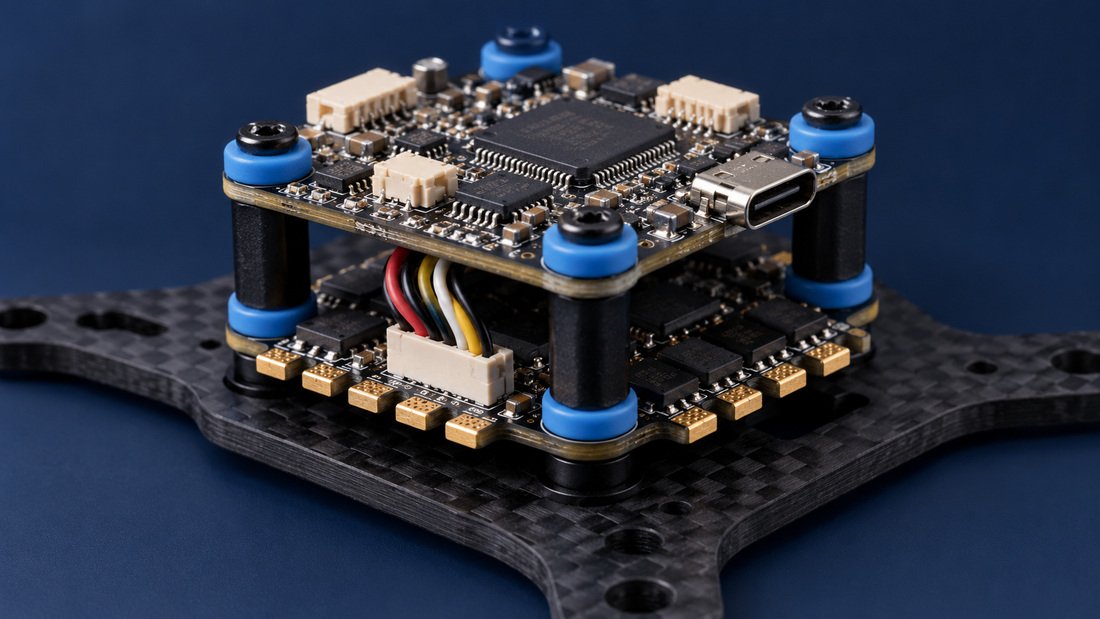
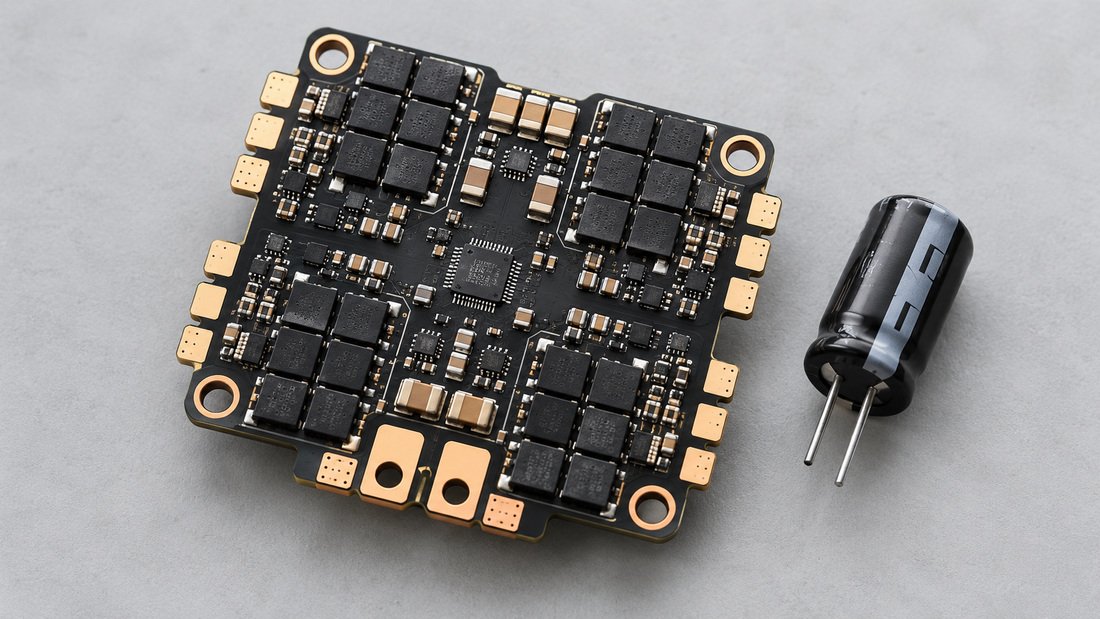
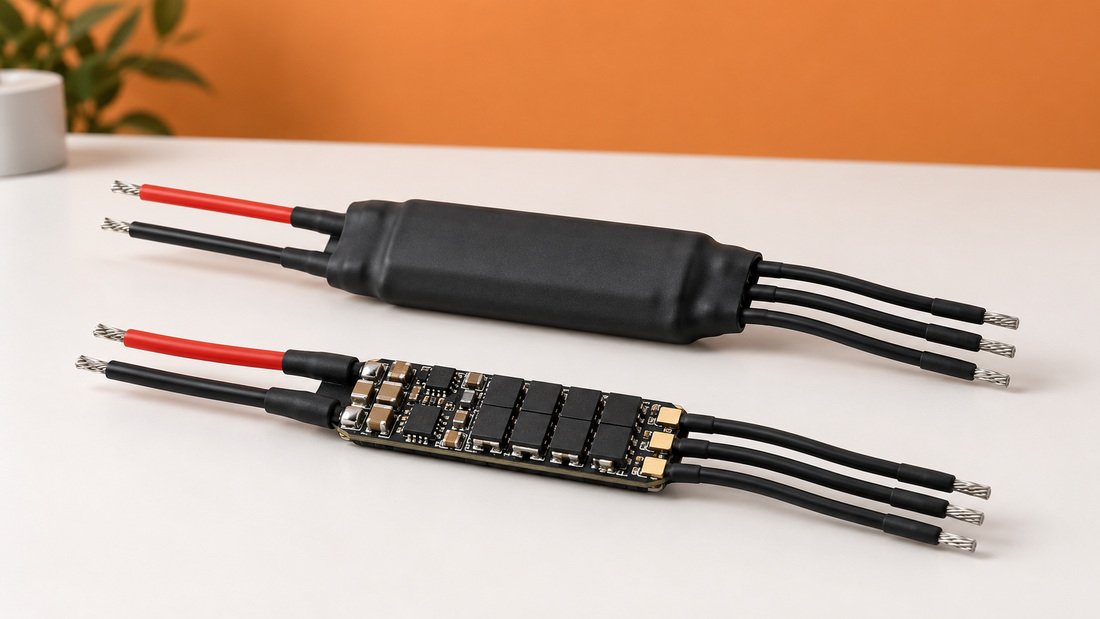
Current draw depends on motor size, propeller load and how aggressively the ball is flown. Motors and four-in-one or single ESC modules are rated for specific continuous and burst currents. Your battery’s continuous discharge capability should exceed the ball’s realistic peak draw with a margin, so the pack is not the weakest link. If you do not have measured data, ask the ball manufacturer for a recommended battery specification rather than guessing.
Step 3 — Pick capacity for flight time and weight
Use the ball manufacturer’s recommended capacity range as your starting point. Many drone soccer programs run short, repeated matches, so two or three smaller packs can be more useful than one large pack — you swap quickly and keep the ball light. If your program needs longer practice sessions, consider more packs rather than heavier packs.
Step 4 — Match connector, dimensions and mounting
The connector must match the ball’s power lead: common small-format connectors include XT30 and XT60, but this varies by design. Physical length, width, height and mounting orientation must also fit the ball’s bay and keep the centre of gravity where the designer intended. A pack that fits electrically but not physically is still the wrong pack.
4S battery types compared for drone soccer use
The table below compares common 4S pack options at a general level. Specific capacity, C-rating, weight and connector availability vary by supplier and must be confirmed for your ball model.
| Battery type | Typical strength | Typical trade-off | Best suited to |
|---|---|---|---|
| 4S LiPo, low capacity | Light, agile, quick to swap | Shorter flight time per pack | Match play and rapid rotation |
| 4S LiPo, mid capacity | Balanced flight time and weight | Needs careful fit check | General club and school sessions |
| 4S LiPo, high capacity | Longer single flights | Heavier, slower response, more stress | Training endurance where rules allow |
| 4S LiHV | Higher charged voltage | Requires compatible charger and care | Only where the ball maker approves it |
| 4S Li-ion pack | Energy-dense, stable | Lower peak current for its size | Non-ball accessories and ground gear |
Treat the table as orientation, not approval. The authority on what a given ball can accept is the ball manufacturer’s specification, and your supplier should confirm compatibility in writing before you buy in bulk.
Common mistakes when buying 4S batteries for drone soccer equipment
- Buying on capacity alone. Capacity without checking connector, dimensions and C-rating leads to packs that do not fit or cannot deliver enough current.
- Mixing cell counts across a fleet. If some balls are 3S and some are 4S, batteries get swapped onto the wrong airframe during busy sessions.
- Ignoring connector standards. Mixed connectors force adapters, which add resistance and failure points.
- Overlooking charging infrastructure. A club that buys 40 packs but two chargers will run out of charged batteries before it runs out of players.
- No labelling or rotation system. Untracked packs hide damage and make warranty conversations impossible.
- Skipping storage voltage. Packs stored fully charged or fully flat tend to age faster and become less predictable.
Battery practice is also a safety and compliance topic. In the United States, the FAA explains that drones flown for educational purposes are regulated either under the Exception for Limited Recreational Operations of Unmanned Aircraft (49 U.S.C. § 44809) or under the Small Unmanned Aircraft Systems Rule (14 CFR Part 107), with qualifying educational organizations covered by specific provisions. See the FAA educational users page for the current position: https://www.faa.gov/uas/educational_users. Always confirm the rules that apply in your own jurisdiction and to your specific program.
Fleet procurement checklist for clubs and schools
Use this checklist when you are specifying batteries as part of a larger drone soccer equipment order. It works whether you are buying for one team or a district-wide program.
- One battery specification. Agree on cell count, capacity range, C-rating, connector and maximum dimensions across the whole fleet.
- Written compatibility confirmation. Ask your supplier to confirm in writing that the pack is compatible with your ball model, ESC and motors.
- Packs per ball ratio. Decide how many packs each ball needs for a typical session, plus spares.
- Charging and storage plan. Confirm charger quantity, power supply, safe charging area and storage-voltage routine.
- Labelling system. Number every pack and log charge cycles so you can retire weak packs before they fail mid-match.
- Documentation request. Ask for the battery datasheet, safety instructions and any available compliance documents for your region.
- Sample evaluation. Run a small sample batch through real sessions before committing to a full fleet order.
- Commercial terms in writing. Request prices, lead times, minimum order quantities, warranty terms and shipping details in writing — do not rely on assumptions.
If you are building a program from scratch, it helps to align battery choices with your broader drone soccer systems plan, your STEM drone education and training curriculum, and the age group you are teaching. Battery safety and charging discipline are teachable skills, and they are often part of the learning objectives for schools and training organizations.
Planning a multi-team rollout? Talk to our team about specifying batteries alongside balls, motors and ESCs so the whole kit is compatible from day one.
Trade-offs to discuss before you standardise
Every fleet decision trades something away. Discuss these openly with your supplier and your coaching staff.
- Flight time vs agility. Bigger packs fly longer but make the ball heavier and less responsive.
- Cost vs convenience. More small packs cost more up front but reduce downtime between matches.
- Standardisation vs optimisation. One battery type simplifies training and inventory but may not be ideal for every ball in a mixed fleet.
- Peak performance vs longevity. Pushing packs hard on every flight shortens their usable life.
Where the trade-off affects competition legality, the ruleset wins. Where it affects safety, safety wins. Commercial flexibility comes last.
Frequently asked questions
Can I use a 3S battery in a 4S drone soccer ball?
Usually not as a direct substitute. A 3S pack delivers lower voltage, so the ball will feel underpowered, and the ESC may not operate as designed at that input. Some electronics tolerate a range of cell counts, but you must confirm the supported range with the ball manufacturer before trying it.
What capacity is best for a 4S drone soccer ball?
There is no universal number. The best capacity is the one the ball manufacturer recommends for your model, balanced against your required flight time and the ball’s weight limit. Ask your supplier for the recommended capacity window and confirm it in writing.
What C-rating should I look for?
Choose a pack whose continuous discharge capability comfortably exceeds the ball’s realistic peak current draw, based on the motor and ESC ratings. If you cannot obtain measured data, ask the ball manufacturer for a battery recommendation rather than estimating from marketing numbers.
Which connector should the battery have?
It must match the ball’s power lead and be rated for the current involved. XT30 and XT60 are common in small FPV-style airframes, but the correct choice depends on your ball’s design. Avoid adapters where possible, and confirm the connector type with your supplier before ordering.
How many batteries should a team buy?
A common approach is several packs per ball so players can rotate without waiting on chargers. The exact number depends on session length, charger count and how many balls are active at once. Build the ratio around your schedule, not a round number.
How should batteries be stored between sessions?
Store packs at the storage voltage recommended by the battery manufacturer, in a safe, fire-resistant location, away from heat and out of the reach of younger students. Follow the manufacturer’s charging and disposal instructions, and include this routine in your program’s safety policy.
Are there regulations about flying drone soccer balls at school?
Rules vary by country and by the nature of the program. In the United States, the FAA describes educational drone operations under either the Exception for Limited Recreational Operations of Unmanned Aircraft or the Small Unmanned Aircraft Systems Rule, depending on the circumstances, and notes special provisions for qualifying educational organizations. Review the FAA educational users guidance at https://www.faa.gov/uas/educational_users and confirm what applies to your school or club.
Conclusion and next procurement step
The short answer to the title question is straightforward: use a 4S LiPo of the capacity, C-rating and connector that the specific drone soccer ball was designed for, and confirm those details in writing rather than assuming. Getting this right protects flight performance, keeps the ball within competition rules and reduces avoidable battery failures across a fleet.
For clubs, associations and programs, the bigger win is standardisation. One battery specification, a documented charging routine and a labelled rotation system make coaching easier and procurement far more predictable. If you are sourcing balls, motors, ESCs and batteries together, our drone soccer clubs and drone soccer competitions support pages explain how the components fit together. To specify a fleet with compatible batteries from the start, Request a Team Kit Quote and include your ball model, fleet size and charging plans.