Quick summary
The difference between 2-blade and 3-blade drone propellers is how they move air: a 2-blade propeller has less blade area and lower drag, so it is typically more efficient in forward flight, while a 3-blade propeller has more blade area, so it usually produces smoother, stronger thrust and quicker throttle response. For drone soccer teams, that trade-off decides acceleration, braking, flight time and crash survivability, not just top speed.
Key Takeaways
- Blade count changes blade area, disc loading per blade, drag and rotational inertia, which together affect thrust, efficiency, response and durability (not a single metric).
- Three-blade propellers are often the default starting point for drone soccer and FPV because they balance punchy thrust with acceptable flight time.
- Two-blade propellers can suit efficiency and high-speed forward flight, but they may feel less crisp during rapid direction changes.
- Propeller choice must be matched with motor KV, battery voltage/capacity and ESC capability — never chosen in isolation.
- Because propellers are wear items in school and club use, order standardization plus spare supply usually matters more than chasing a marginal specification.
What 2-blade and 3-blade drone propellers actually change
A propeller turns motor torque into thrust by accelerating air downward. Blade count alters how much blade area sweeps the air and how that work is distributed. More blades mean more surface contact per revolution; fewer blades mean each blade works in cleaner, less disturbed air. That is the physical core of the 2-blade vs 3-blade question.
Two other variables usually matter as much as blade count: diameter and pitch. Diameter is the circle the propeller sweeps; pitch is the theoretical forward distance per revolution. A 2-blade and a 3-blade propeller of the same diameter and pitch can still behave differently because blade area, blade shape and material differ.
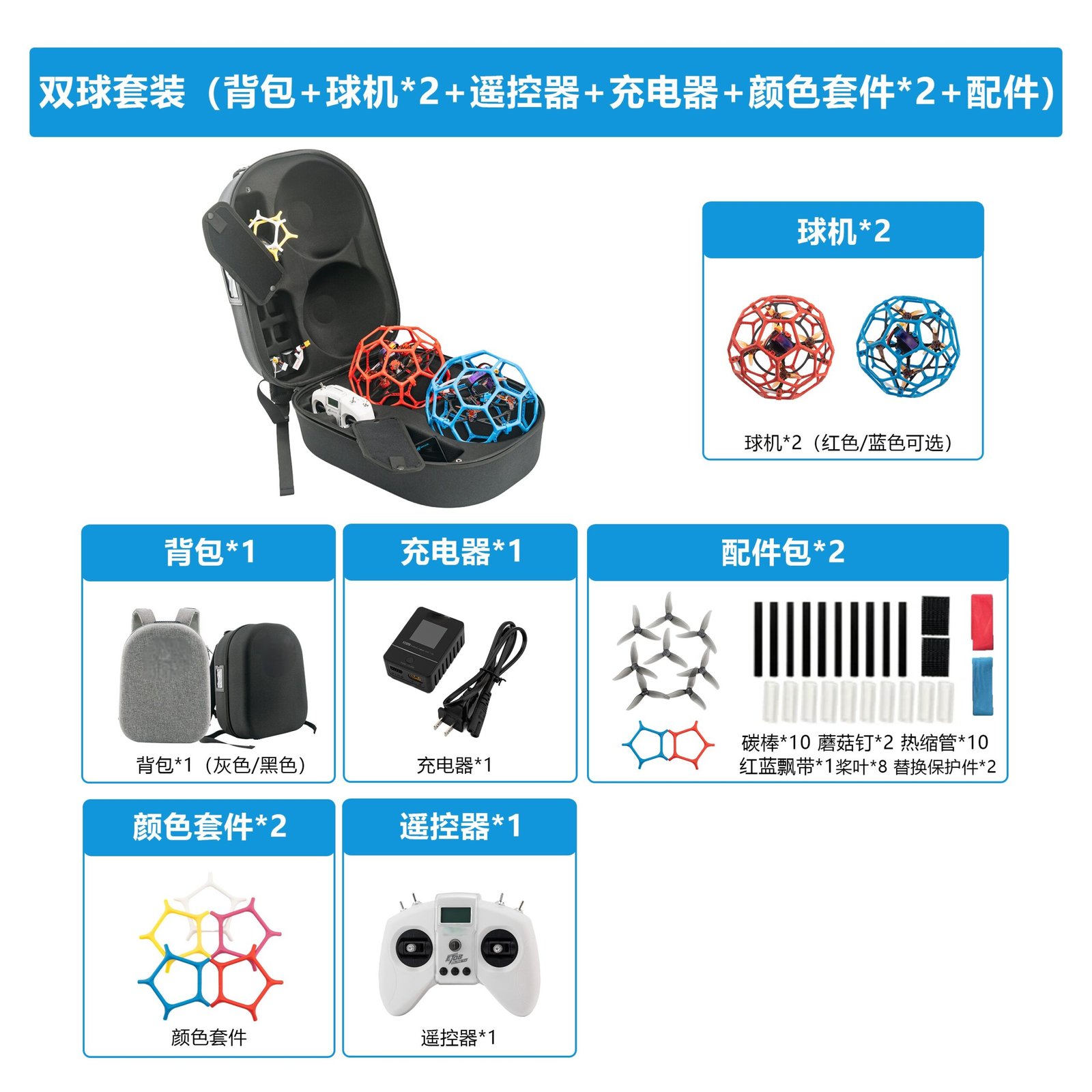
Two-blade vs three-blade propellers: comparison table
Treat the table below as a general guide, not a guarantee for a specific airframe. Real numbers depend on the exact propeller, motor, battery, ESC and firmware configuration.
| Characteristic | 2-blade propeller (general tendency) | 3-blade propeller (general tendency) |
|---|---|---|
| Blade area | Lower | Higher |
| Thrust at a given RPM | Usually lower per revolution | Usually higher per revolution |
| Efficiency for a given thrust (forward flight) | Often higher | Often lower due to more blade interference |
| Throttle response and punch | Moderate | Typically crisper |
| Rotational inertia | Lower | Higher |
| Vibration and smoothness | Can be higher if unbalanced | Often perceived as smoother |
| Noise character | Different, not automatically quieter | Different, not automatically louder |
| Crash behaviour | Fewer blades to damage; one blade strike may unbalance the whole prop | More blades to damage, but thrust may degrade more gradually |
| Typical use | Efficiency-focused or high-speed cruise builds | Drone soccer, freestyle FPV, all-round sport flying |
Why drone soccer teams usually start with 3-blade propellers
Drone soccer (often referenced as BKZ class) is a short-burst sport: take off, accelerate, change direction, brake, collide, recover. That profile rewards thrust and control authority more than long-range efficiency. A 3-blade propeller generally gives the pilot more bite at low and mid throttle, which helps with rapid climb and quick stops.
Three-blade propellers also tend to distribute load across more blades, which can feel smoother and more predictable in tight indoor spaces. For teams standardizing on one propeller across a fleet, that predictability is valuable: every pilot learns the same handling characteristics.
This is not a rule that “3-blade is always better.” A lightweight 2-blade propeller may hold or exceed a heavy 3-blade propeller in some regimes. The right test is always the specific combination of motor, propeller, battery and ESC.
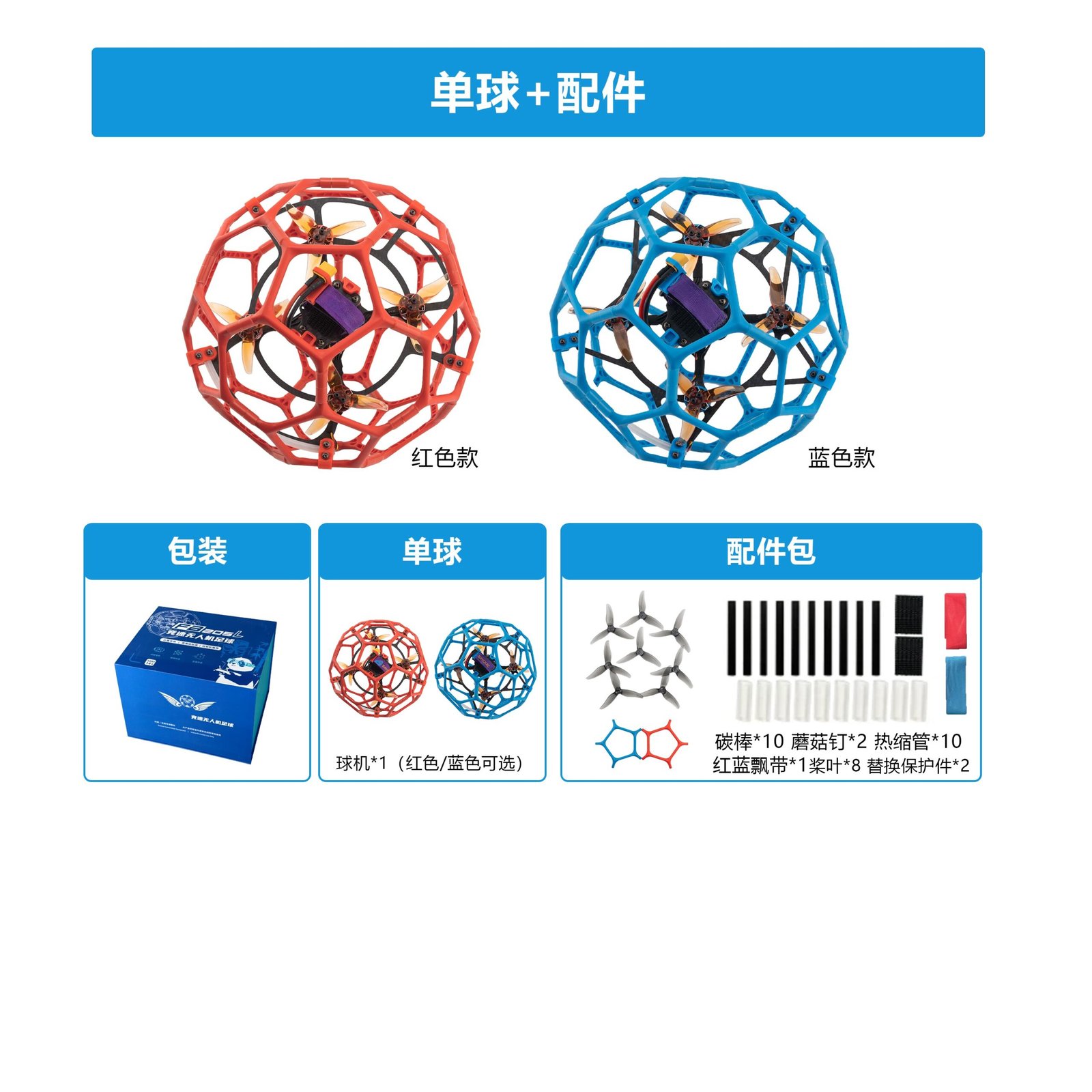
Where 2-blade propellers make sense
Two-blade propellers can be attractive when endurance, cruise efficiency or lower rotational inertia matter more than instant punch. In forward flight, fewer blades can reduce interference between blades, which often supports efficiency at a given thrust level.
They are also lighter and can be simpler to balance. Some builders report quicker motor response because there is less rotating mass to accelerate and decelerate — a point worth verifying with your own thrust and current measurements rather than assuming.
Practical trade-offs to weigh
- Acceleration vs endurance: more blade area often means stronger thrust and higher current draw, which can reduce flight time.
- Braking feel: blade area and inertia both influence how quickly a motor can change RPM, so prop choice affects control feel.
- Crash cost: a bent or cracked propeller must be replaced regardless of blade count; inspect after every hard impact.
- Standardization: mixing 2-blade and 3-blade propellers across one team’s fleet complicates tuning, spares and fair competition.
Matching blade count to the rest of the propulsion system
Blade count is one variable in a system. Changing propellers without checking motor KV, battery voltage and ESC headroom can cause overheating, poor efficiency or unacceptable handling. A propeller that pulls too much current can stress an undersized ESC.
Use structured matching resources rather than guesswork. DPF publishes guidance on motor, propeller and battery matching and offers motor and propulsion matching support for teams and integrators. For component-level choices, review the FPV motors range and propulsion combo kits that keep motor, propeller and ESC aligned.

Planning a fleet for a school or club season? Tell us your drone soccer class, motor KV, battery configuration and expected number of pilots, and we will help you shortlist propeller and propulsion options. Request a Team Kit Quote.
Battery and ESC considerations that affect propeller choice
Propeller load and battery capability are linked. A higher-thrust propeller setup draws more current, so battery C-rating, capacity and connector quality all matter. Lithium batteries are capable of overheating and entering thermal runaway if damaged, overheated, short-circuited or overcharged, and they carry specific transport restrictions in the US aviation context described by the FAA, including limits on spare batteries in checked baggage and requirements to protect terminals from short circuit (FAA: PackSafe – Lithium batteries).
Those FAA rules are US aviation passenger guidance, not a global or B2B shipping standard. For team travel and shipping, confirm the current rules that apply to your jurisdiction, carrier and event organizer in writing before departure.
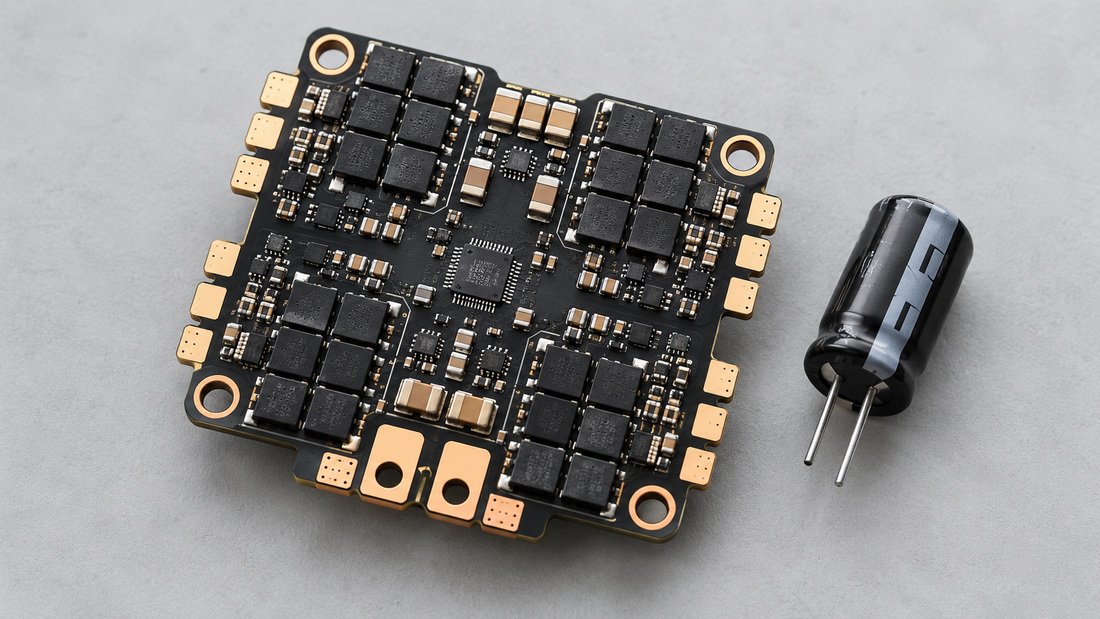
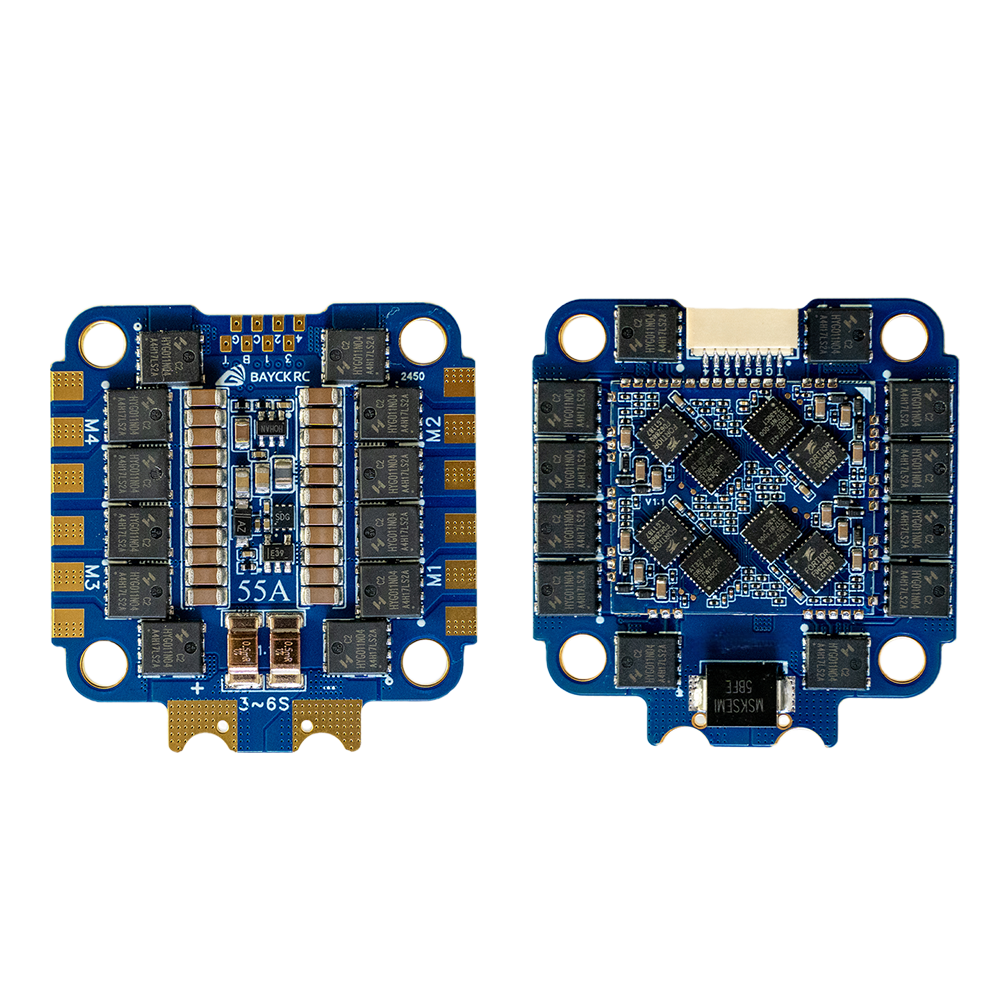
The ESC must also be able to handle the current the propeller demands. DPF articles such as the FPV four-in-one ESC power board and SWORDFISH 55A 4-in-1 ESC power adjustment illustrate the kind of hardware where current headroom is decided.
Common mistakes when choosing between 2-blade and 3-blade propeller
- Changing propeller count alone: swapping 2-blade for 3-blade without checking motor KV, ESC current and battery can cause overheating or poor tuning.
- Assuming more blades always equals more speed: blade count affects thrust and efficiency differently; top speed also depends on pitch, motor and aerodynamic drag.
- Ignoring rotational inertia: heavier or higher blade-count propellers can change response feel, especially in tight indoor courses.
- Mixing brands and blade counts across one team: inconsistent handling complicates coaching, tuning and fair play.
- Neglecting inspection: a cracked or unbalanced propeller causes vibration and can damage motors or mounts; replace damaged propellers immediately.
- Assuming one propeller is “best”: the correct choice depends on the airframe, class rules and the pilot’s flying style.
Procurement checklist for schools, clubs and teams
Before ordering, confirm these points in writing with your supplier and, where applicable, with your event organizer:
- Exact propeller specification: diameter, pitch, blade count, material and mounting pattern.
- Compatibility with your motor shaft and mounting screws.
- Recommended current draw and whether your ESC and battery can support it.
- Class or competition rules that restrict propeller size, material or blade count.
- Spare quantity per pilot and per event — propellers are consumables.
- Packing method and terminal protection if batteries or spares will be transported or shipped.
- Sample availability so you can test before committing to a full fleet order.
- OEM/ODM options if you need team branding, custom packaging or a specific configuration.
Ask for written confirmation of lead times, MOQs, warranty terms and customization options; do not rely on verbal estimates.
Frequently asked questions
Is a 3-blade propeller always better than a 2-blade propeller?
No. Three-blade propellers often offer more thrust and smoother response, while 2-blade propellers often favor efficiency and lower inertia. The better choice depends on the airframe, motor, battery and flying style.
Do 3-blade propellers reduce flight time?
They can, because more blade area usually increases current draw at a given throttle setting. However, the actual effect depends on the specific propeller, motor and how the aircraft is flown. Measure current and flight time with your own setup before standardizing.
Are 2-blade propellers quieter?
Noise depends on blade shape, tip design, RPM and airframe resonance, not simply blade count. Do not assume a 2-blade propeller is quieter; compare specific models under real conditions.
Can I mix 2-blade and 3-blade propellers on the same drone?
Mixing blade counts or propeller models on one airframe usually causes unbalanced thrust and erratic handling, and is generally not recommended. Keep all four positions identical.
Which blade count is better for drone soccer?
Many drone soccer setups favor 3-blade propellers for thrust and control in short, aggressive maneuvers. Confirm what your class rules permit, and test before committing a full team fleet.
How often should teams replace propellers?
Replace any propeller that is cracked, chipped, bent or unbalanced, and inspect after every hard impact or collision. Carry spares per pilot; frequency of replacement varies with crash rate and handling.
What should I confirm before ordering 100+ propellers for a club?
Confirm the exact specification, compatibility with your motors and ESCs, class rules, spare ratios, sample testing, packaging, and written terms for lead time, MOQ, warranty and OEM/ODM customization.
Conclusion
Two-blade propellers generally favor efficiency and lower rotational inertia, while 3-blade propellers generally favor thrust, punch and smoother control. For drone soccer teams, the decision should follow class rules, motor KV, ESC headroom, battery capability and pilot preference — not a blanket rule.
Standardize on one tested propeller per fleet, keep adequate spares, and inspect after impacts. If you are equipping a school, club or association for a season, share your propulsion details with DPF and Request a Team Kit Quote to align propellers, motors, ESCs and batteries in one order.