Quick summary
To choose an FPV camera, start with the system, not the sensor. Decide whether your club will run analog or digital FPV video, confirm your FPV video receiver (VRx) and DVR inputs, then match the camera signal format and latency to your flight controllers and training environment. Only after that should you compare image sensors, lens field of view (FOV), resolution and low-light performance. This order prevents clubs from buying cameras that look good on paper but will not connect cleanly to the rest of the kit.
Key Takeaways
- Choose the video system first: analog or digital determines which cameras, VRx and DVRs are compatible.
- Match camera output to your FPV video receiver and DVR input; a mismatch is the most common and avoidable failure.
- Latency and consistency matter more than raw resolution for drone soccer and youth training.
- Confirm OSD support early so voltage, timer and mode warnings appear on the pilot’s goggles.
- Buy one small sample set, test it with your actual goggles and DVR, then standardise a team kit.
What does a club actually need from an FPV camera?
Clubs, schools and associations need repeatable, repairable cameras, not the single best image. A drone soccer team may operate dozens of airframes across a season, so a camera that is easy to swap, wired consistently and available in volume is more valuable than a fragile high-end unit. The camera is one part of a chain: lens and sensor, video transmitter (VTX), receiver, goggles or monitor, and recorder.
That is why the first question is not “which camera?” but “which video system does our club standardise on?” Once the system is fixed, the shortlist of cameras narrows sharply. For an overview of the parts involved, see our range of FPV electronics.
Analog vs digital: which FPV video system should your team choose?
Analog FPV video remains the default for many clubs because it is simple, low-latency and forgiving of marginal signal. Digital systems offer a cleaner image but often add cost, weight and different wiring. Neither is universally better; the right answer depends on your training goals and budget.
Analog FPV video in practice
Analog cameras output a composite signal that a standard analog VTX can carry and an analog VRx can decode. Diversity receivers, which combine two antennas, help manage signal dropouts in gyms and on outdoor fields. A typical club setup pairs a small analog camera with a diversity receiver and an inexpensive recorder.
Analog is usually the lowest-latency, lowest-cost path and the easiest to repair. Its trade-off is image quality: noise, colour shift and lower detail, especially in low light. For drone soccer, where pilots react to a ball and other aircraft, predictable latency can outweigh a prettier picture.
Digital FPV video in practice
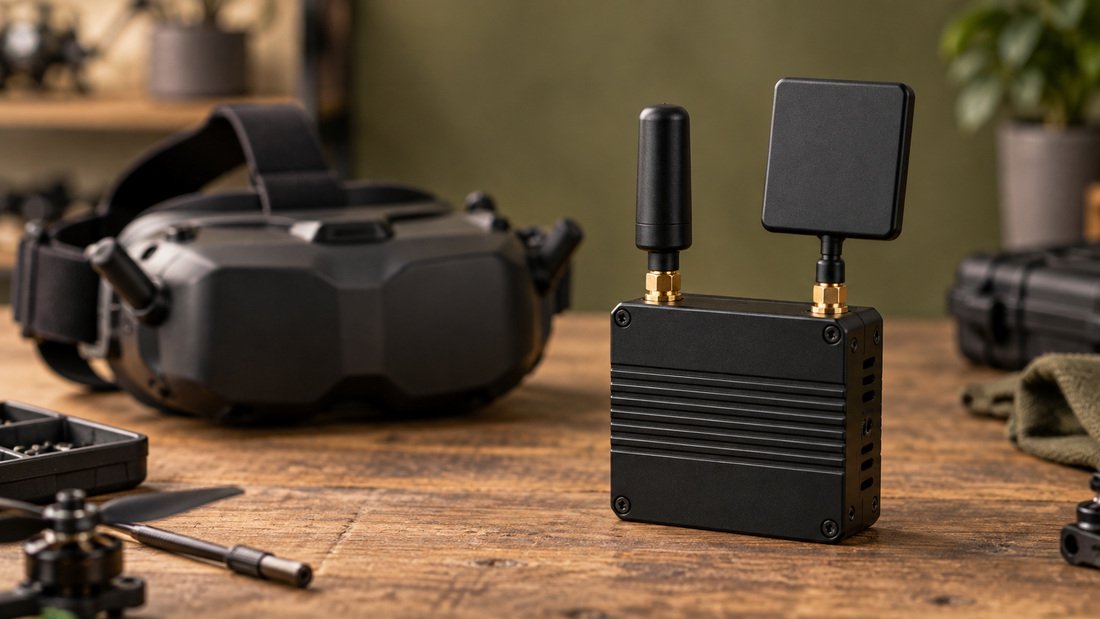
Digital systems compress and transmit video, then decode it in compatible goggles. They can produce a sharper, more stable image, but they lock you into a specific ecosystem of camera, VTX and goggles. That reduces mix-and-match flexibility, which matters when a club wants to standardise across many pilots and spares.
Before committing a team to digital, confirm the total cost per pilot, spare-part availability and whether your existing goggles and FPV video receivers are compatible.
How FPV video, OSD and DVR fit together
Think of three layers. FPV video is the live image path from camera to goggles. On-screen display (OSD) is the text and graphics overlaid on that live image, such as battery voltage, flight timer and warnings. A DVR (digital video recorder) records the video, usually to a microSD card, for coaching, incident review and event evidence.
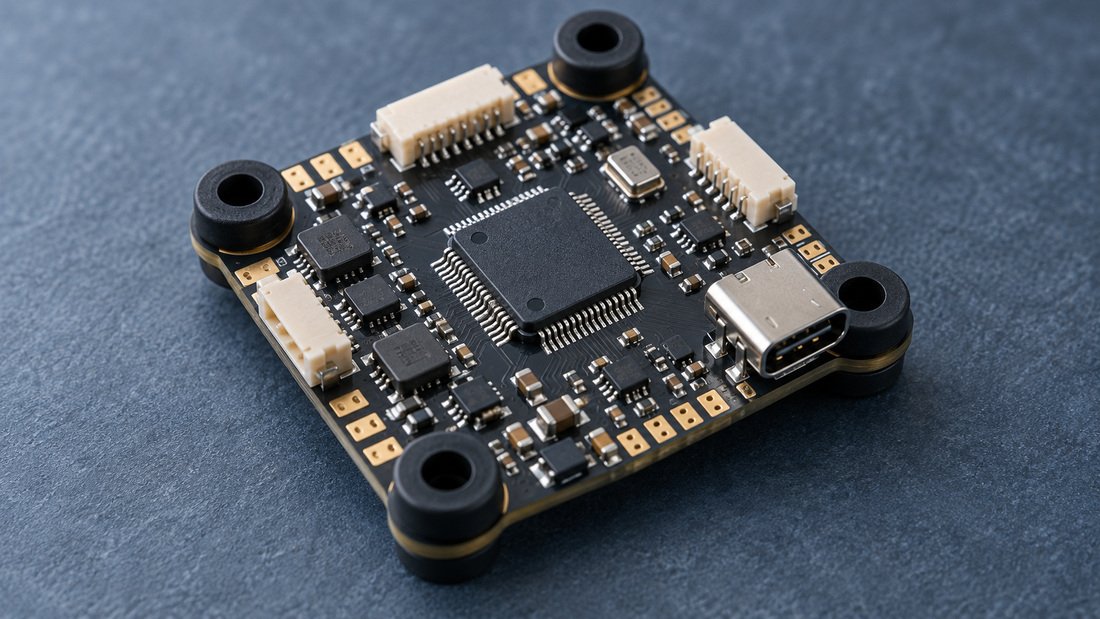
Many flight controllers generate the OSD overlay. As Betaflight documentation explains, the flight controller is essentially a computer that reads sensors, computes commands, sends them to the electronic speed controllers (ESCs) to drive the motors, and can also control peripherals such as the VTX (Betaflight, Getting Started). The same source notes that Betaflight supports on-screen display for analog and digital video systems, showing items such as battery voltage, current draw, GPS coordinates, speed, flight timers and artificial horizons.
That matters for camera choice because the camera feeds the overlay chain. If your OSD is generated by the flight controller, the camera does not need to draw text itself; it must simply deliver a clean, correctly formatted signal. See our flight controllers for compatible boards.
Why OSD support changes your camera shortlist
If the flight controller draws the OSD, choose a camera that outputs a standard signal your VTX and VRx expect, and confirm the OSD is visible through that path. If a club instead wants an all-in-one camera with built-in OSD, verify exactly which data it can display and how it is configured; built-in OSD is often less flexible than flight-controller OSD.
DVR: recording for coaching and events
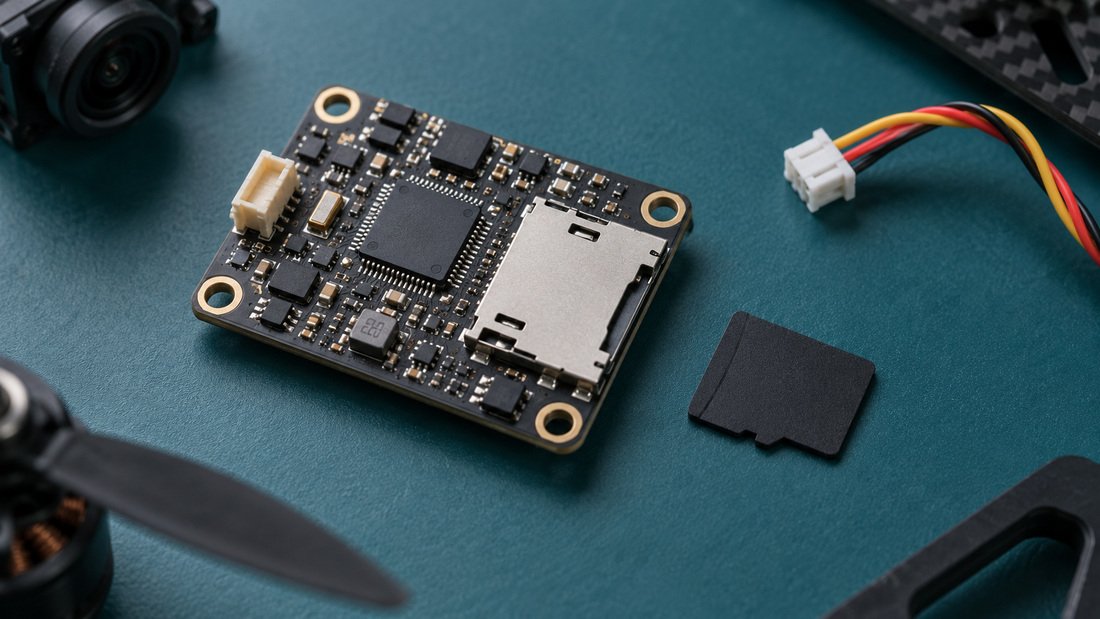
A DVR records what the pilot sees. For schools and clubs it supports coaching, appeals and highlight clips. Check the recording resolution, storage format, power input and whether it accepts the same video standard as your cameras. A recorder that only accepts one format will not help a mixed fleet. Our FPV DVR options are a starting point for specification questions.
Camera specification comparison table
The table below summarises the trade-offs clubs most often weigh. It is general guidance, not a product ranking.
| Consideration | Analog FPV video | Digital FPV video |
|---|---|---|
| Latency | Typically lowest | Depends on system; verify per product |
| Image quality | Basic; noise in low light | Often sharper and more stable |
| Cost per pilot | Usually lower | Usually higher |
| Ecosystem flexibility | High; many compatible parts | Lower; brand-specific chain |
| Repair and spares | Simple, often field-replaceable | Depends on vendor support |
| Best fit | Drone soccer, youth training, large fleets | Coaching video, media, smaller fleets |
Camera hardware: sensor, lens and low light
Once the system is fixed, compare camera hardware. The image sensor sets low-light sensitivity and dynamic range; the lens sets field of view and distortion. A wider FOV helps drone soccer pilots see the ball and nearby aircraft, but it also shrinks distant detail and can exaggerate barrel distortion. Coach-friendly setups often favour a moderate FOV over the widest available.
Ask suppliers for the sensor type, lens angle and minimum illumination, and then test in your actual gym or field. Marketing claims about low-light performance are difficult to compare across brands without a controlled test, so treat them as a starting point for sampling, not a final decision.
Common mistakes when choosing FPV cameras
- Buying cameras before choosing a video system. This creates incompatible kits and wasted budget.
- Ignoring the VRx and DVR. A camera is only as good as the receiver and recorder it feeds.
- Chasing resolution over latency. For drone soccer, reaction time and consistency usually matter more.
- Assuming OSD comes from the camera. In many builds the flight controller draws the OSD; confirm where yours is generated.
- Standardising on one unit without sampling. Always test a small batch with real goggles before a bulk order.
- Overlooking power and wiring. Voltage range and connector type must match your airframe and power distribution.
Procurement checklist for clubs and associations
- Confirm the club’s chosen video system: analog or digital.
- List every pilot’s goggles, VRx and any DVR, with exact video input formats.
- Check camera output format, voltage range and connector type against your airframe.
- Verify where the OSD is generated and how it is configured.
- Confirm the DVR records the same video standard your cameras output.
- Request a sample unit and test it with your real goggles and DVR before ordering in volume.
- Ask for written confirmation of warranty, lead time, minimum order quantity and returns policy.
- Plan spares: cameras, lenses, cables and connectors for a full season.
- Document a standard build so new members can replicate it.
For clubs that want to evaluate cameras, receivers and recorders as one system, discuss your requirements with our team through the contact page. We can help you frame the right specification questions before you commit to a bulk order.
Questions to ask before you commit
Commercial terms vary by supplier and region. The following are questions to put in writing, not assumptions to make:
- What video formats and voltages does this camera support?
- Which VRx and DVR models are confirmed compatible?
- How is OSD generated in this build, and what data can be displayed?
- What are the warranty terms, spare-part availability and typical lead time?
- What is the minimum order quantity for a team kit?
- Can we receive a sample for testing before a full order?
Frequently asked questions
Do I need a digital FPV camera for drone soccer?
Not necessarily. Many clubs use analog FPV video for its low latency, low cost and easy repair. Digital can improve image quality, but verify compatibility and total cost per pilot before switching.
How does OSD relate to my camera choice?
OSD is often generated by the flight controller, not the camera. Choose a camera that delivers a clean signal your VTX and VRx expect, and confirm the OSD remains visible through that chain. Betaflight supports OSD for analog and digital systems (Betaflight, Getting Started).
Can I use one DVR for a whole team?
Often yes, if it accepts your video standard and records reliably. Check inputs, storage and power. Some clubs prefer per-pilot DVRs for individual coaching records.
Does a wider lens always help?
No. A wider FOV helps situational awareness but reduces distant detail and can add distortion. Test moderate and wide lenses in your actual venue.
What should I confirm before a bulk order?
Confirm compatibility, warranty, lead time, minimum order quantity, returns policy and spare-part availability in writing. Terms differ by supplier and region, so do not rely on assumptions.
How do flight controllers and ESCs affect camera performance?
They do not change image quality directly, but they shape the OSD and control chain. A flight controller reads sensors and commands ESCs to control motors, and can also manage VTX control and telemetry (Betaflight, Getting Started). See our electronic speed controllers for related parts.
Is analog or digital better for training new pilots?
Analog is often easier and cheaper for large beginner groups because of its simplicity and repairability. Digital can suit smaller groups focused on video review. Match the choice to your coaching goals.
Conclusion: a repeatable way to choose FPV cameras
Choose the video system first, then confirm VRx, DVR and OSD compatibility, then compare camera hardware and sample it in your own venue. This sequence keeps clubs from buying equipment that cannot work together and helps associations standardise a kit that is easy to repair and repeat season after season.
Ready to equip your team? Request a Team Kit Quote and tell us your video system, fleet size and training goals so we can help you shortlist the right parts.