Quick summary
A practical drone repair toolkit covers four jobs: inspection, mechanical fixes, wiring, and configuration. You need hex and screwdrivers, nut drivers, tweezers, side cutters, a soldering iron with fine tips, a smoke stopper, a multimeter, a LiPo safety bag, a PC with Betaflight Configurator, and a stock of repair and spare parts such as props, motors, arms, frames and ESCs. Match every tool to the hardware your program actually flies, then confirm spare-part compatibility with your supplier in writing before ordering.
Key Takeaways
- Most school repair jobs are mechanical or wiring failures, not firmware failures — so hand tools and a soldering iron matter more than software.
- Betaflight is the open-source flight controller software used on most FPV quadcopters, and a laptop with Betaflight Configurator is a standard diagnostic tool (Betaflight getting started).
- Buy tools in a shared “repair station” set, then issue each team a small prop-and-screw kit.
- Spare-part compatibility (motor mount pattern, ESC current rating, prop size, connector type) is the most common procurement mistake.
- Ask suppliers for written confirmation of part numbers, connector types and minimum order terms before you commit a school budget.
What tools does a drone repair station need?
A complete repair station needs hand tools, a soldering setup, electrical test gear, battery-safety equipment, and a configuration computer. For schools, the practical approach is one shared toolbox per lab, classroom or club, plus a small per-team kit for field repairs at practice and competition.
Think about the repair workflow rather than a single shopping list. A student notices a fault, a coach or technician diagnoses it, someone repairs it, and a pilot tests it. Each stage needs different tools, and skipping a stage is how small faults become broken airframes.
Hand tools
Hex drivers are the workhorse of any quadcopter repair. Most airframes use small hex fasteners, and cheap keys round out screw heads quickly. A quality driver set with replaceable bits lasts far longer in a school environment than a loose bag of keys.
- Screwdrivers: hex drivers in the sizes your airframes use, plus Phillips and flat-head for accessories.
- Nut drivers or a small adjustable wrench for prop nuts and motor hardware.
- Precision tweezers, straight and curved, for connectors and small wires.
- Side cutters for trimming cable ties and wire; long-nose pliers for hard-to-reach nuts.
- Small brush and isopropyl alcohol for cleaning boards and optical sensors.
Soldering and wiring tools
Soldering is where school programs often hesitate, but motor and ESC replacement usually involves desoldering and resoldering pads. A temperature-controlled iron with fine chisel and conical tips handles both board pads and thicker power leads.
- Temperature-controlled soldering iron and a stand.
- Solder suitable for electronics work, plus flux or flux-cored solder.
- Desoldering pump or braid for removing old joints.
- Silicone wire in the gauges your power system uses, plus heat-shrink tubing in several diameters.
- Helping hands or a small PCB vise to hold work steady.
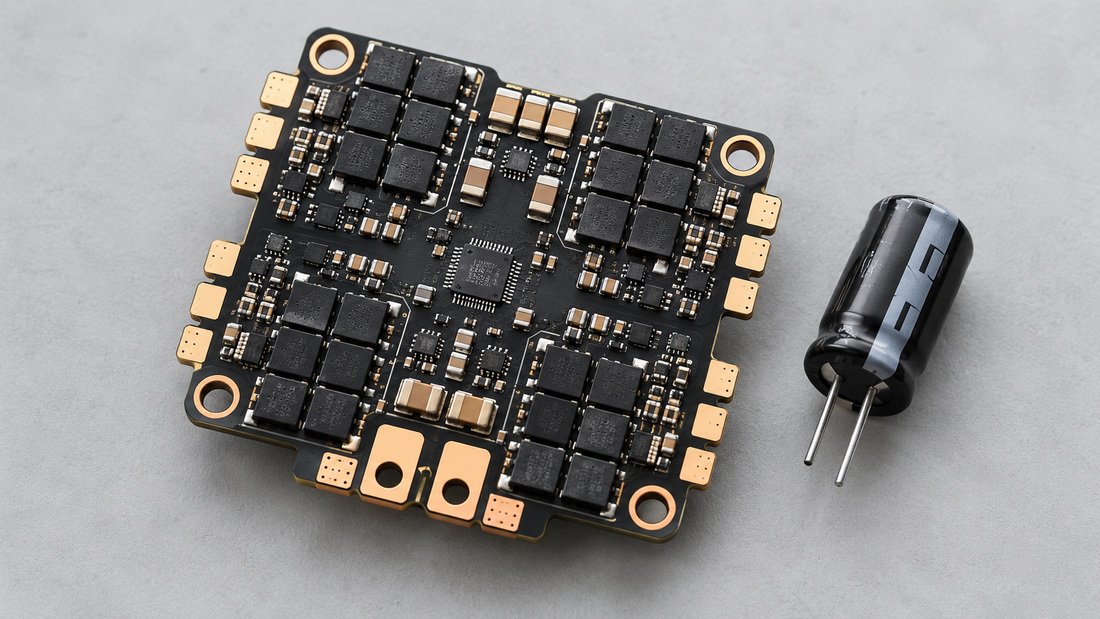
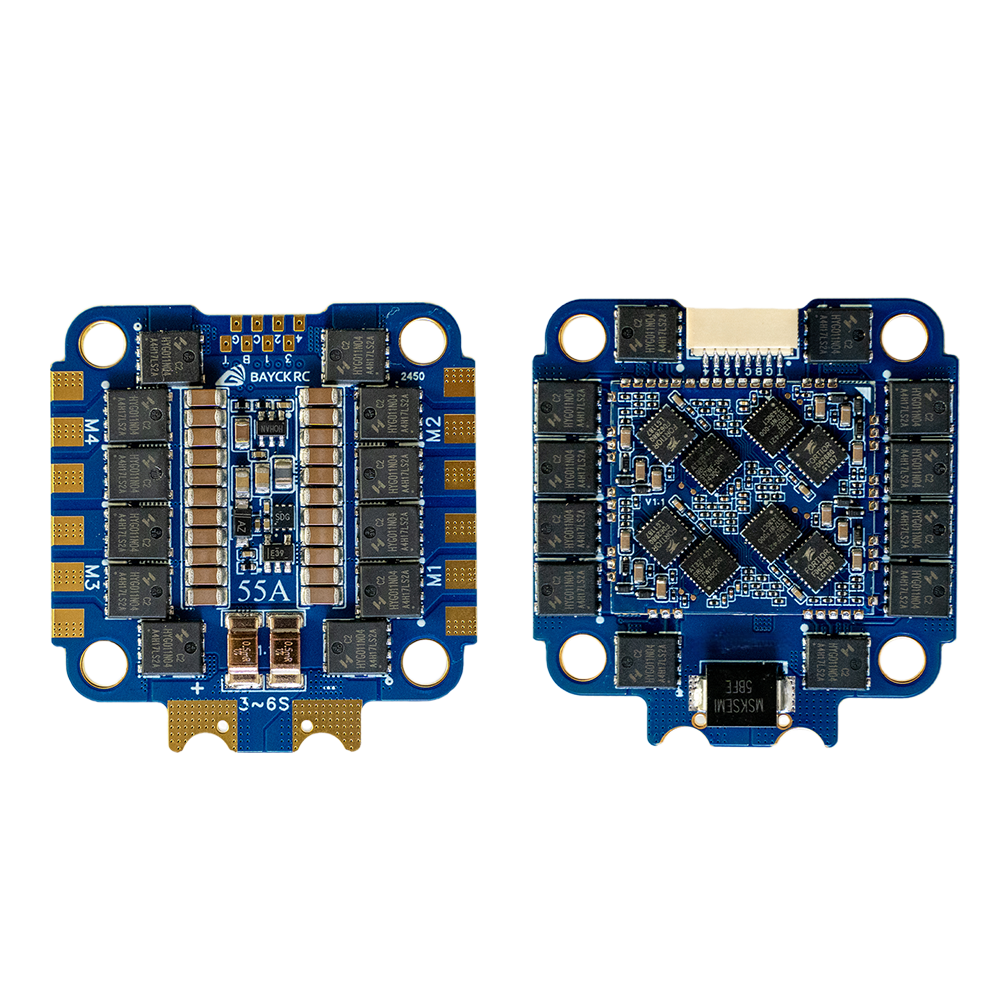
Power distribution hardware is a common failure point in student builds. A four-in-one ESC combines four motor outputs onto one board, which reduces wiring but means the whole board is replaced if one channel fails — a trade-off worth explaining to whoever holds the budget.
Electrical test and safety equipment
Test gear protects both people and hardware. A multimeter checks continuity and voltage before power-up, and a smoke stopper limits current on a newly built or freshly repaired craft so a wiring error does not destroy electronics.
- Digital multimeter with continuity, voltage and resistance ranges.
- Smoke stopper or current-limited test lead.
- LiPo balance charger, storage bags and a fire-resistant charging surface.
- Battery voltage checker for pre-flight checks.
- Safety glasses and a well-ventilated soldering area.
What is the standard repair and spare parts stock for a school?
A school spare-parts stock should mirror the failure points of the aircraft the program flies. For FPV quadcopters and drone soccer platforms, that means propellers, motors, arms, frame plates, ESCs, receivers, antennas, battery connectors and fasteners. The exact mix depends on fleet size and how hard the students fly, so track what you actually replace for a term before setting a standard kit.
The propulsion combo kits route is convenient for programs that want matched motors, ESCs and props rather than sourcing each item separately. Compatibility is the reason: a matched combo removes guesswork about thrust, current draw and mounting pattern.
Consumables versus durable spares
- Consumables, replaced often: propellers, cable ties, rubber bands, heat-shrink, double-sided tape, battery straps.
- Wear items, replaced occasionally: motors, arms, landing feet, camera mounts, antennas.
- Durable spares, replaced rarely: drone frames, flight controllers, ESCs, receivers, power boards.
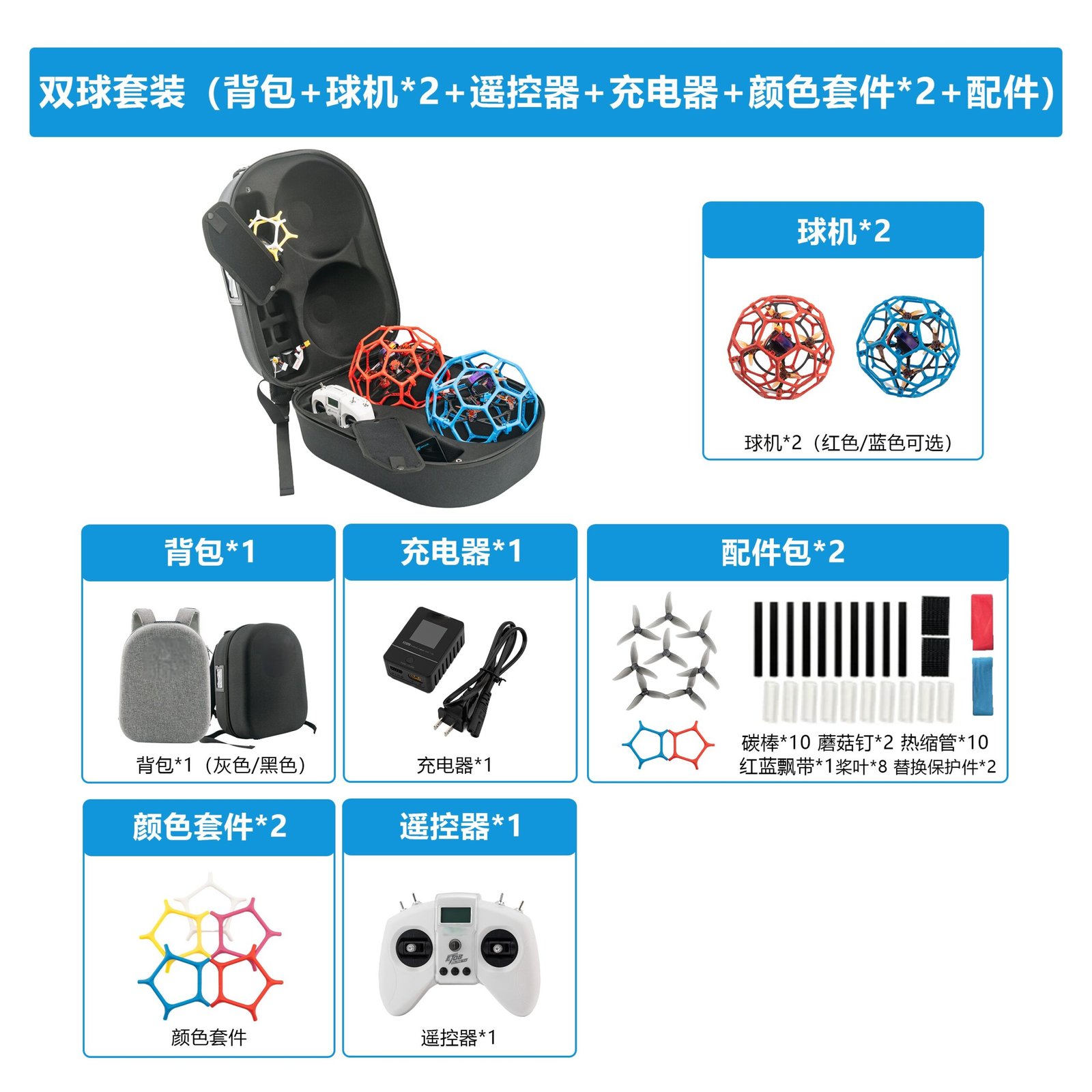
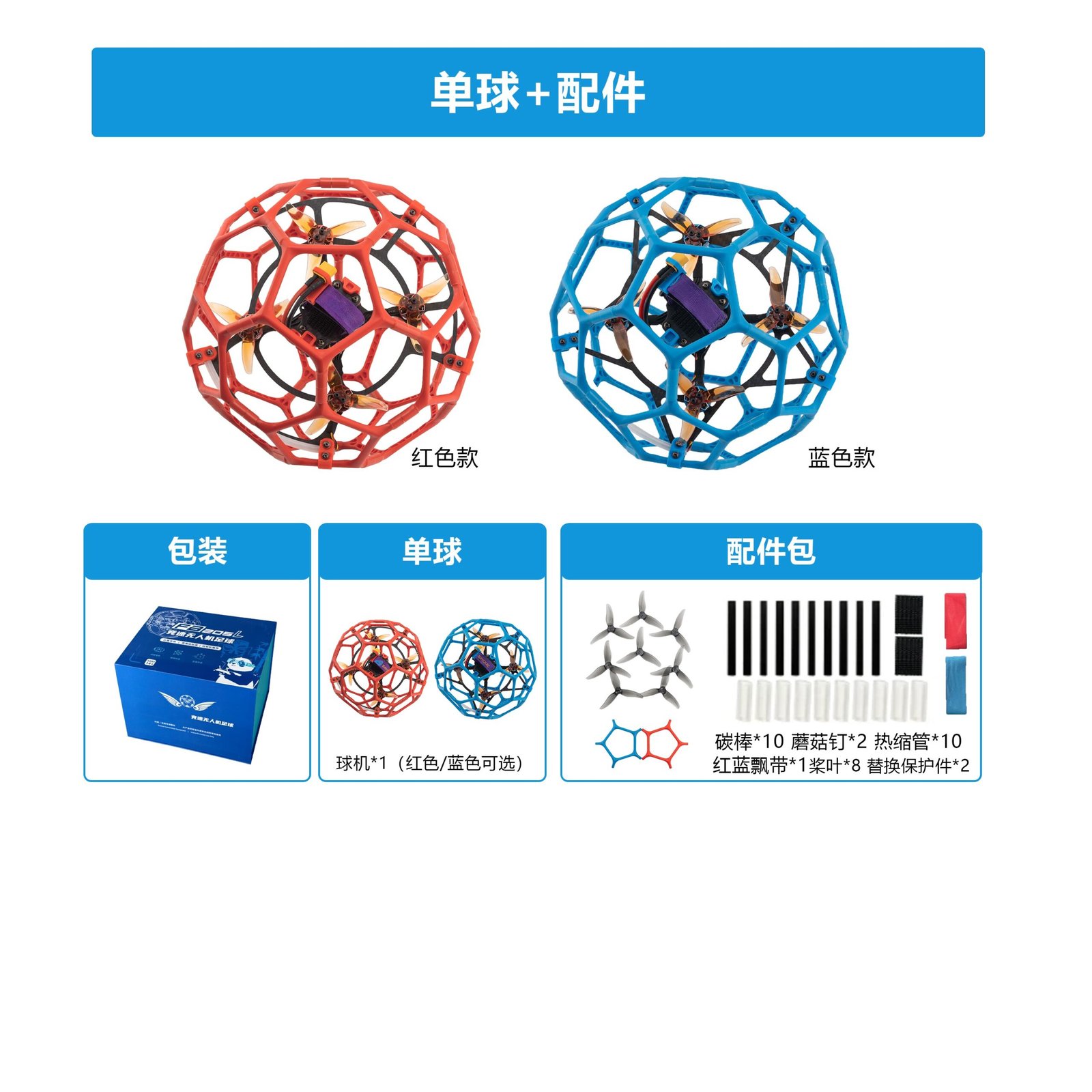
For drone soccer, drone soccer replacement parts include ball-cage and shell components that take repeated impact. Programs running indoor leagues should treat these as scheduled replacements, not emergency purchases.
Which configuration and diagnostic tools are needed?
Every FPV repair should end with a configuration check. Betaflight is free, open-source flight control software used across racing, freestyle, cinematic and other FPV craft, and it runs on the flight controller — the board that reads sensors such as the gyro and accelerometer, computes commands and sends them to the ESC to control motor thrust (Betaflight documentation).
In practice, that means one laptop per program (not per student) with the configurator installed, plus the cables to connect to the flight controller. After any motor, ESC or receiver replacement, verify motor order and direction, check that the receiver is responding, and confirm the failsafe behavior before the aircraft flies again.
- Laptop or desktop with the flight controller configurator installed and internet access for updates.
- USB data cables compatible with your flight controllers.
- Radio transmitter for range and channel checks.
- Optional: a bench power supply for testing without a flight battery.
Where Betaflight fits — and where it does not
Betaflight’s own documentation notes that manufacturers support their own hardware, and that the project maintains the software. It supports many receiver protocols, including CRSF, Ghost, FPort, SBUS and Spektrum, and ESC protocols such as DShot alongside Oneshot, Multishot and PWM where needed (Betaflight getting started).
This matters for procurement because it tells you where to send a question. Firmware behavior is a software-community issue; a cracked arm or a failed motor is a hardware-supplier issue. Schools that separate the two get faster resolutions.

Planning a repair station for a whole district, club network or league? Tell us about your program and we can help you scope tools and spares around the aircraft you fly.
Tool and spare-part comparison table
The table below groups the same toolkit by budget priority. Treat the cost column as a planning aid, not a price list — request current quotations for your region.
| Category | Essential items | Why it matters | Priority for schools |
|---|---|---|---|
| Inspection | Tweezers, small brush, magnifier or phone camera | Finds cracked arms, loose screws and damaged wires before flight | High |
| Mechanical | Hex drivers, screwdrivers, nut drivers, pliers, side cutters | Handles most arm, frame, motor and mount repairs | High |
| Wiring | Soldering iron, solder, flux, desoldering tool, wire, heat-shrink | Required for motor, ESC and power-lead replacement | High for FPV and drone soccer |
| Electrical test | Multimeter, smoke stopper | Prevents damaged electronics on first power-up | High |
| Battery safety | Balance charger, LiPo bags, fire-resistant surface, voltage checker | Protects students and facilities | Mandatory |
| Configuration | Laptop, configurator software, USB cables, transmitter | Confirms motor order, receiver response and failsafe | Medium to high |
| Spares | Props, motors, arms, frames, ESCs, receivers, antennas, fasteners | Keeps the fleet flying without long downtime | High |
| Storage | Labeled bins, parts trays, logbook | Turns spare parts into a managed inventory | Medium |
Common mistakes in school drone repair programs
Most program-level problems are organizational rather than technical. These are the recurring ones.
- Buying spares before tracking failures. Programs order parts they never use and run out of the ones they do. Log replacements for one term first.
- Ignoring connector and mount compatibility. Motor mount patterns, prop sizes, battery connectors and ESC current ratings vary. Confirm before purchase.
- One toolkit for the whole school. Central tools plus per-team field kits reduces queueing and lost tools.
- No soldering policy. Decide who may solder, where, and under what supervision. Untrained soldering destroys boards.
- Skipping the post-repair check. A craft that flies after a repair still needs motor order and failsafe verification.
- Assuming one supplier covers everything. Some parts may come from different sources; consolidate where it reduces administrative burden.
- Treating impact parts as durable. Shells and guards on indoor drone soccer platforms are consumables in heavy use.
Buyer checklist for tools and repair and spare parts
Use this checklist when specifying a repair station or reordering spares. Items marked as confirm-in-writing are commercial terms that vary by supplier and region.
- List every aircraft model in the fleet and its fastener sizes, motor mount pattern, prop size, battery connector and ESC rating.
- Set a per-team field kit and a shared lab toolkit, then count how many of each you need.
- Choose a soldering iron with adjustable temperature and at least two tip shapes.
- Include a smoke stopper and multimeter — these prevent the most expensive student mistakes.
- Standardize battery connectors across the fleet where possible to reduce adapter clutter.
- Decide whether to buy matched propulsion combo kits or individual motors, ESCs and props.
- For indoor leagues, include protective shells and cage parts in the recurring spares budget.
- Confirm in writing: exact part numbers, compatibility with your airframes, lead time, minimum order quantity, shipping terms, returns policy and any warranty.
- Ask whether the supplier provides documentation suitable for a school purchasing process, such as invoices and packing lists.
- Set a simple inventory log and a reorder threshold for consumables like propellers.
Frequently asked questions
Do I really need a soldering iron for school drone repairs?
For FPV quadcopters and drone soccer platforms, yes in most cases. Motor, ESC and power-lead replacement typically requires desoldering and resoldering. If your program only flies aircraft with plug-in modules, you can defer the soldering kit — but confirm your airframe design before deciding.
What is the single most useful diagnostic tool?
A multimeter. Continuity and voltage checks catch shorts and reversed polarity before they damage electronics. A smoke stopper pairs well with it on first power-up after a repair.
Is Betaflight needed for repairs?
Betaflight is the software running on the flight controller of most FPV quadcopters, and it is free and open source (Betaflight documentation). A laptop with the configurator is useful after replacing a motor, ESC or receiver because it lets you verify motor order, direction and failsafe settings. It is a configuration tool, not a physical repair tool.
How many spare propellers should a school keep?
There is no universal number. Track how many you break per team per term, then keep roughly one term’s usage in stock plus a buffer. Propellers are inexpensive compared with the cost of cancelling a session.
Are drone soccer spare parts different from standard FPV parts?
Some are. Drone soccer platforms use protective shells, cages and ball components that standard FPV builds do not. Motors, ESCs and frames may be shared or specific depending on the platform, so confirm part numbers with your supplier.
Can students do the repairs themselves?
Supervised student repair is a strong learning activity, but soldering and battery handling need clear rules and adult oversight. Many programs split tasks: students handle props, screws and inspection; trained staff or older students handle soldering and battery work.
What should I confirm in writing before ordering?
Part numbers and compatibility, lead time, minimum order quantity, shipping and returns terms, warranty if any, and whether the supplier can support repeat orders for a school term. These vary by supplier and region, so get them in writing rather than assuming.
Conclusion and next step
A workable drone repair program needs four things: a shared toolkit, a soldering and test setup, a laptop for configuration, and a managed stock of repair and spare parts matched to your fleet. Start by listing your aircraft and their failure points, then buy tools once and spares on a schedule.
If you are equipping a school, club or league program, share your fleet list and expected student numbers with us so we can help you scope the right tools and spares. Request a School Program Quote to get started.