Quick summary
A drone soccer ball connects to its remote controller through a paired radio link: the transmitter (the handheld controller) and the receiver inside the ball operate on the same protocol and frequency band, then are “bound” so they recognise each other’s unique ID. Most trainer setups use 2.4 GHz; some clubs use 900 MHz or 868 MHz for longer range or better penetration. Binding is a one-time pairing step, repeated when you swap a receiver, transmitter, or complete drone ball. The ball’s flight controller (the board that stabilises and commands the motors) relays the receiver’s commands to the electronic speed controllers (ESCs) that drive each motor.
Key Takeaways
- The connection is a radio link between a transmitter and a receiver, not a Wi-Fi or Bluetooth pairing in most competition-grade drone soccer equipment.
- Protocol matters more than brand: transmitter and receiver must speak the same protocol to bind at all.
- Binding is a pairing routine, usually triggered by a bind button, a bind plug, or a menu command; exact steps vary by model.
- A correct failsafe setting is part of the connection, not an optional extra: if the link drops, the ball should cut throttle rather than fly on.
- For clubs, standardising one protocol across the fleet saves bench time, spare parts, and coach training.
What actually happens when a drone soccer ball connects to a controller
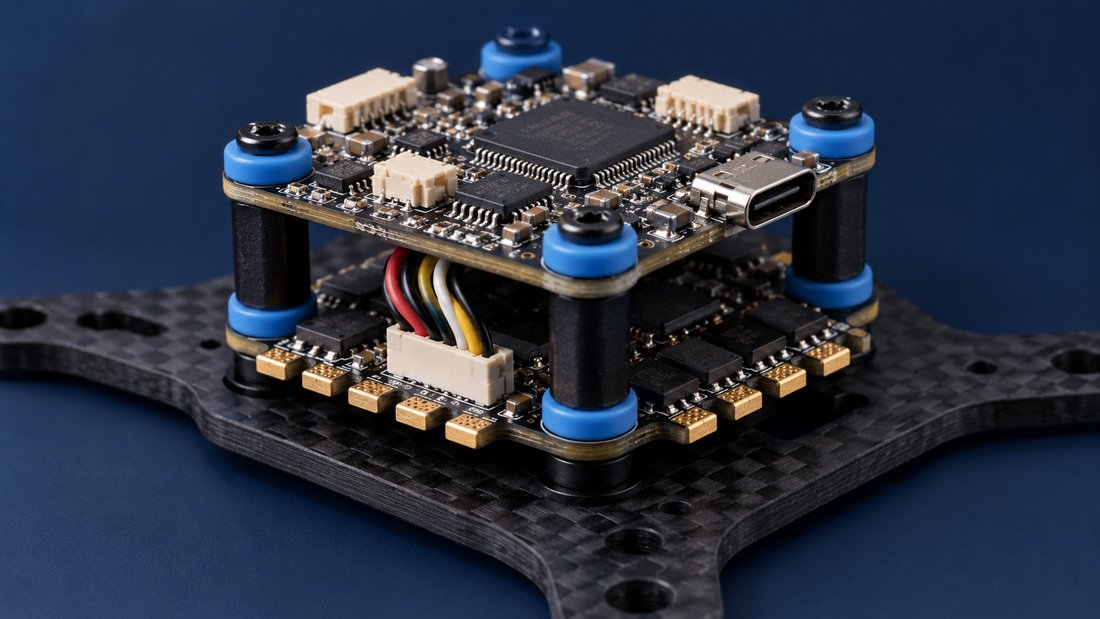
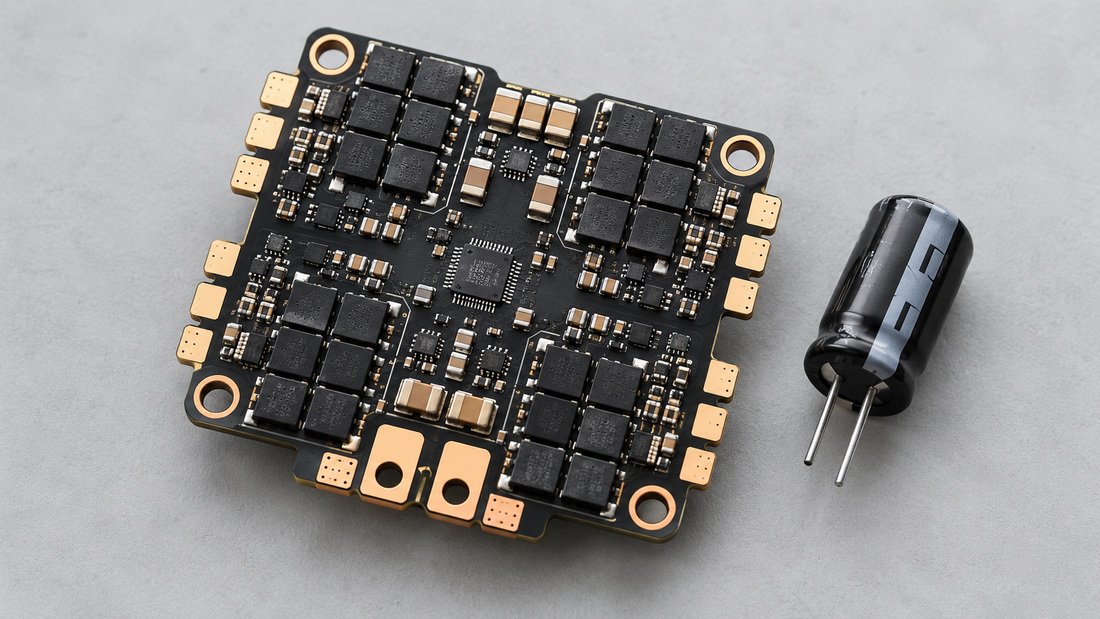
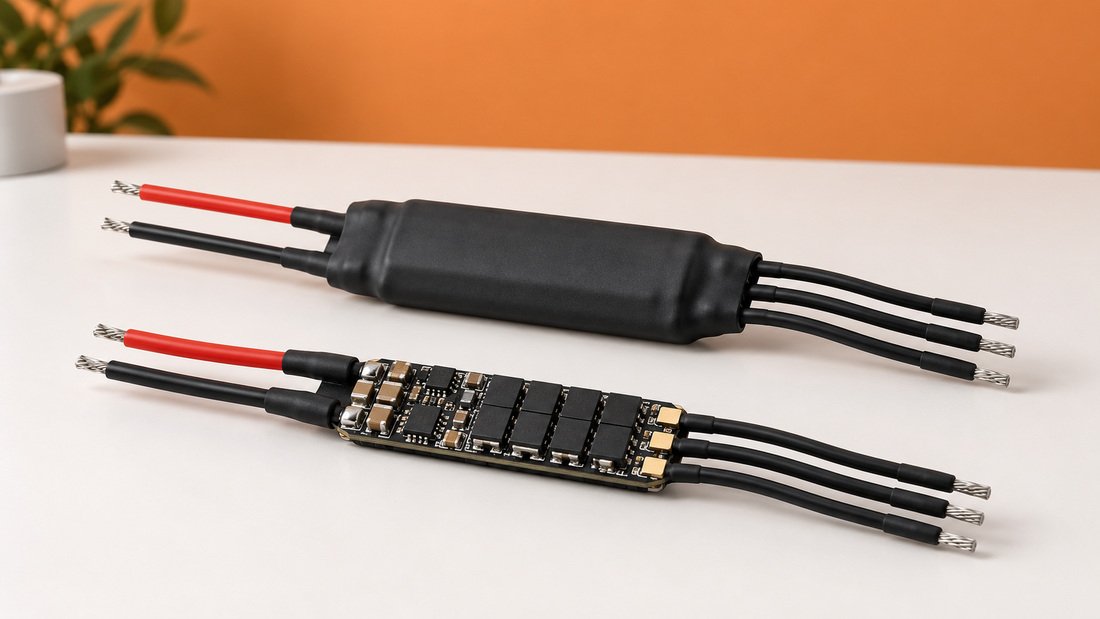
Think of the link as a short conversation between two radios. The controller sends channel data — throttle, roll, pitch, yaw, and auxiliary switches for arm, mode, and sometimes a “goal” or LED command. The receiver in the ball receives that stream and passes it to the flight controller over a wired protocol such as SBUS, CRSF, or a similar serial link. The flight controller then mixes the commands into motor outputs and passes them to the ESCs.
Two layers matter for reliability. The first is the radio layer: frequency band, protocol, and antenna placement. The second is the firmware layer: the flight controller must be configured to read that receiver correctly. A ball that binds but does not respond usually has a firmware or channel-mapping issue, not a broken radio.
Radio protocol, frequency band, and range in practice
Most indoor drone soccer equipment runs on 2.4 GHz because the band is licence-exempt in many countries, hardware is cheap, and latency is low. The trade-off is congestion: gyms full of spectators, school Wi-Fi, and dozens of transmitters can all share that band. Longer-wavelength bands such as 900 MHz or 868 MHz generally penetrate obstacles better but may need different hardware and may be regulated differently by country.
For a typical indoor pitch, range is rarely the limiting factor. Antenna orientation, receiver placement inside the ball’s shell, and local interference usually matter more. Ask suppliers which band and protocol their drone soccer systems use, and whether the receiver supports telemetry back to the controller, which helps coaches see signal quality.
Step-by-step: how the ball and controller are bound
The exact sequence is model-specific, but the logic is consistent across most drone soccer equipment. Always follow the manufacturer’s manual for your specific transmitter and receiver; the steps below are an illustrative framework, not a universal procedure.
- Power the transmitter first and select the correct model memory for that ball.
- Put the receiver into bind mode. This is often a button held during power-up, a bind plug on a spare channel, or a menu command that pulses the receiver.
- Power the ball and watch for a solid indicator light, which usually means the link is established. Some receivers use a slow blink for bind mode and solid for bound.
- Verify channel direction and endpoints in the flight controller configurator. A reversed channel on a drone soccer ball can cause an immediate crash on arming.
- Set failsafe. Configure the receiver and flight controller so that loss of signal produces a safe motor stop.
- Test at low throttle with props off if the ball design allows, then in a netted area with a spotter.
Repeat the bind only when you change a receiver, transmitter, or flight controller, or when a ball stops responding after a firmware update. If a previously bound ball stops linking, check power, antenna damage, and whether another transmitter in the gym is on the same model memory.
Comparison: connection types used in and around drone soccer
The table below compares the link options clubs commonly encounter. It is general guidance; confirm the exact hardware your supplier ships.
| Connection type | Typical use | Latency | Reliability on a busy pitch | What to confirm |
|---|---|---|---|---|
| 2.4 GHz proprietary protocol | Most drone soccer transmitters and receivers | Low | Good, but can suffer in crowded venues | Whether transmitter and receiver are the same protocol family |
| 900 MHz / 868 MHz | Longer range or obstacle-heavy environments | Low to moderate | Often better penetration | Local radio regulations and antenna size |
| Wi-Fi or Bluetooth app control | Setup, configuration, some toy-grade balls | Higher and variable | Poor for live competition | Whether it is control or configuration only |
| Wired USB/serial | Firmware updates, binding configuration | Not applicable | Bench only | Required cable and software version |
Why binding fails, and how to fix it without guesswork
Most binding problems fall into five categories. Working through them in order saves time and avoids replacing parts that are fine.
- Protocol mismatch: the transmitter and receiver do not speak the same protocol. Fix by matching the receiver to the transmitter family, or by using an external module that supports it.
- Power and boot order: some receivers need the transmitter already transmitting; others prefer the reverse. Check the manual.
- Firmware mismatch: a receiver firmware version may not be compatible with the flight controller’s configured input protocol.
- Physical damage: a cracked antenna, a bent connector, or a damaged receiver after a hard impact.
- Interference or model-memory conflict: too many active transmitters, or two balls accidentally on the same model memory.
For clubs, keep a simple bind log: ball number, receiver type, transmitter model memory, date, and who bound it. That single habit prevents most “mystery” failures at events. If you are standardising a fleet, it also helps to discuss your radio choices with suppliers who understand drone soccer competitions rather than general FPV only.
Common mistakes when connecting drone soccer equipment
- Skipping failsafe. A ball that keeps spinning after signal loss is a safety problem and a competition problem.
- Binding in a crowded gym. Do bind checks before spectators arrive, or in a separate room.
- Mixing protocols across a fleet. It forces coaches to learn multiple routines and complicates spares.
- Ignoring antenna placement. Burying an antenna against carbon or metal parts reduces range and link quality.
- Assuming a bind problem is a hardware failure. Most cases are configuration, not broken parts.
Procurement checklist for clubs and programme buyers
Use this checklist when specifying or reordering drone soccer equipment. It separates what you should decide internally from what you must confirm with the supplier in writing.
- Which radio protocol and frequency band does the fleet use, and is it consistent across balls and controllers?
- Does each ball ship pre-bound, or is binding part of your setup labour?
- What is the documented failsafe behaviour on signal loss?
- Are receivers available as separate spare parts, and are they the same revision as the originals?
- What firmware and configurator software are required, and on which operating systems?
- Will the supplier provide a written binding and firmware procedure for your exact model?
- Are spare antennas, receivers, and ESCs available in the same protocol for future seasons?
- For schools, does the supplier provide teacher-facing setup documentation suitable for STEM drone education and training?
Request the binding procedure, firmware version notes, and spare-parts list in writing before you commit to a fleet purchase. Terms such as warranty length, lead time, and minimum order quantity vary by supplier and product line; if they are not confirmed in your quotation, treat them as unverified.
Planning a fleet or a season? Tell us how many balls and controllers you need, which protocols you already run, and whether you need school-ready documentation. Request a Team Kit Quote and we will scope the kit around your programme.
How this fits into a broader drone soccer programme
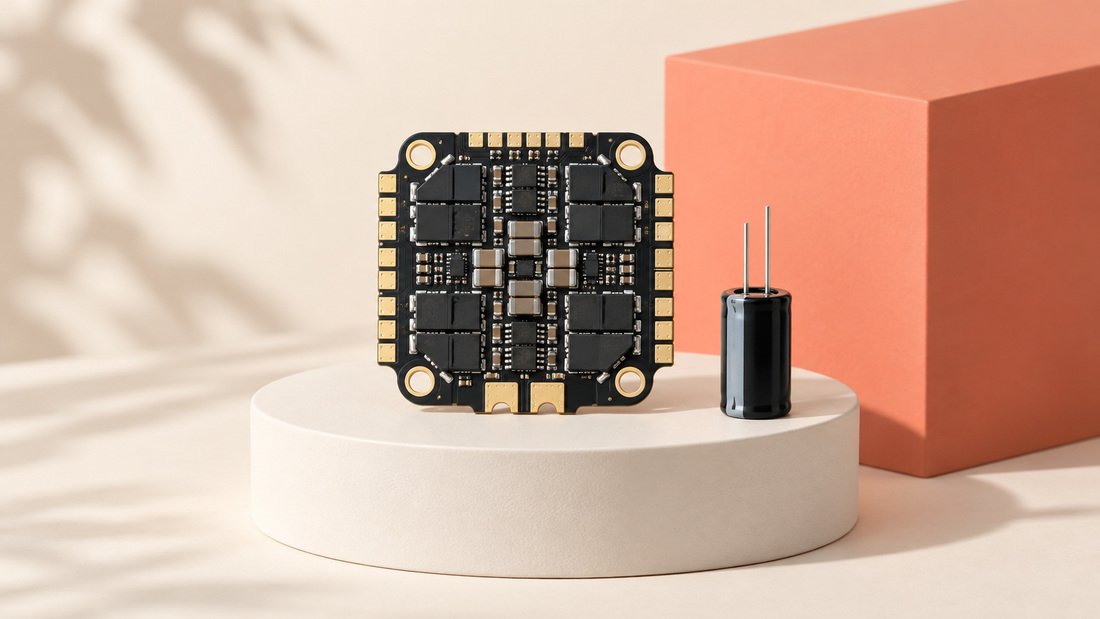
The radio link is one subsystem in a larger chain: ball, motors, ESCs, flight controller, receiver, transmitter, batteries, and safety netting. Clubs that treat the connection as a system rather than a single pairing step tend to have fewer event-day failures. It also makes coaching easier, because students learn why a ball responds, not just which button to press.
For organisations building a programme from scratch, it helps to align equipment choices with the way the programme will run. Reviewing options for drone soccer clubs, schools and training organizations, and broader drone soccer systems early avoids buying mismatched transmitters and receivers later.
Regulatory and safety context
Radio rules and flight rules are separate concerns, and both affect how you run a club. On the aviation side, in the United States the FAA explains that drones flown for educational purposes are regulated either under the Exception for Limited Recreational Operations of Unmanned Aircraft (49 U.S.C. § 44809) or under the Small Unmanned Aircraft Systems Rule (Part 107). The FAA notes that a statutory provision (P.L. 116-283, Section 10002) clarifies that drones flown for educational and research purposes may be operated under § 44809 for qualifying educational organizations, which include institutions of higher education, Junior Reserve Officers’ Training Corps (JROTC) programs, and educational programs chartered by an FAA-recognised Community Based Organization; organisations that do not qualify must operate under Part 107. The FAA also states that FAA-Recognised Identification Areas (FRIAs) are locations where drones can be flown without Remote ID, and that educational institutions including primary and secondary schools, trade schools, colleges, and universities are eligible to request a FRIA. See the FAA’s educational users page at https://www.faa.gov/uas/educational_users for the full scope and current details.
Those US rules do not automatically define requirements in other countries. For radio transmission specifically, confirm the permitted frequency band and power limits with your local regulator or a qualified adviser, because 2.4 GHz, 900 MHz, and 868 MHz devices are not treated identically everywhere.
FAQ
Does a drone soccer ball connect by Wi-Fi or Bluetooth?
Usually no. Competition-oriented drone soccer equipment typically uses a dedicated radio protocol on 2.4 GHz or a longer-wavelength band. Wi-Fi and Bluetooth appear mainly in configuration apps or toy-grade products, where latency and reliability are less critical.
Can one controller operate several balls?
Often yes, if the transmitter supports multiple model memories and each ball is bound separately. In practice, clubs usually assign one controller per ball for competition clarity, and use a separate setup transmitter for bench work.
Why does my ball stop responding mid-session?
Common causes include interference in a crowded band, a low transmitter or ball battery, antenna damage from a previous impact, or two balls sharing a model memory. Check these before replacing the receiver.
Do I need to rebind after a firmware update?
Sometimes. A firmware update can reset receiver or flight controller settings. Follow the manufacturer’s update notes and re-verify channel mapping and failsafe afterwards.
Is binding the same as calibrating?
No. Binding establishes the radio link. Calibration — such as accelerometer or gyro calibration — tells the flight controller how the ball is oriented and how it should respond. Both are needed, but they are different procedures.
What should a coach check before every session?
Link indicator on each ball, failsafe behaviour, battery voltage, antenna condition, channel direction, and a quick throttle test in a netted area. A written pre-flight checklist reduces avoidable damage.
Can students perform the binding themselves?
Older students can often learn the routine with supervision, which is part of the educational value. Keep a written procedure and a bind log, and require an adult check before flight.
Conclusion: treat the connection as a system
A drone soccer ball connects to its controller through a matched radio protocol, a bind routine, and a correctly configured flight controller with failsafe. The technical step is short; the operational discipline around it — consistent protocols, spare receivers, a bind log, and documented procedures — is what keeps a club flying week after week.
Before your next purchase, define your protocol standard and ask your supplier for the binding procedure, firmware notes, spare-parts list, and any school-facing setup documentation in writing. When you are ready to equip a team, Request a Team Kit Quote and share your fleet size, protocols, and training context.