Quick summary
Sourcing brushless motors for OEM drone production means matching a defined motor specification to a factory that can hold that specification across repeat batches, then controlling the commercial and quality terms in writing. The process has four phases: define the motor requirement around your airframe, shortlist suppliers and verify their production control, run samples and small-batch validation, then lock a supply agreement with agreed inspection criteria, traceability, and change notification. Most sourcing failures come from vague specifications or unverified supplier claims, not from a shortage of motor factories.
Key Takeaways
- Start from the airframe and thrust requirement, not from a motor part number you found online.
- Write a specification sheet that includes electrical, mechanical, and environmental parameters, plus labeling and packaging needs.
- Ask every supplier how they control winding consistency, magnet grade, bearing choice, and balance.
- Validate with samples and a small pilot batch before committing to production volumes.
- Put inspection criteria, change notification, and traceability in the purchase agreement.
- Confirm all commercial terms, lead times, and MOQs in writing; do not rely on verbal quotes.
What does OEM brushless motor sourcing actually involve?
It is a specification-driven procurement process, not a catalog purchase. In OEM drone production, the motor is a structural and performance component: its thrust, weight, and mounting pattern determine the airframe design, flight time, and payload capability. That means the sourcing decision starts with your engineering requirement and ends with a factory that can reproduce it consistently.
The workflow usually runs through four gates: requirement definition, supplier qualification, sample and pilot validation, and production supply agreement. Skipping a gate shifts risk into mass production, where a winding or bearing change can cause field failures across an entire fleet.
Motors, ESCs, flight controllers, and radio links are one system
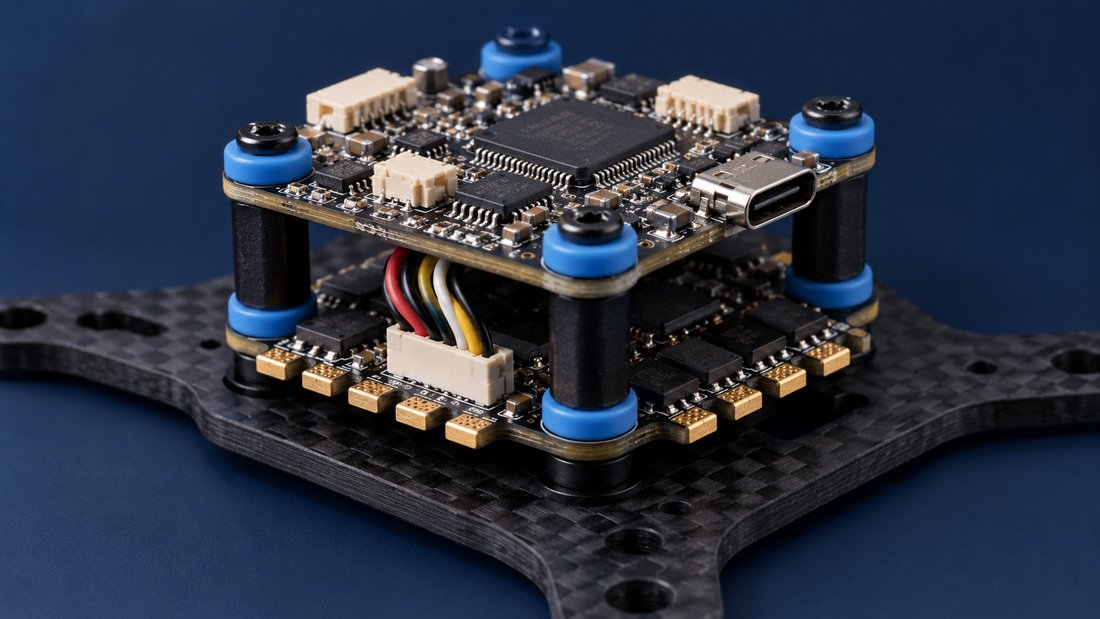
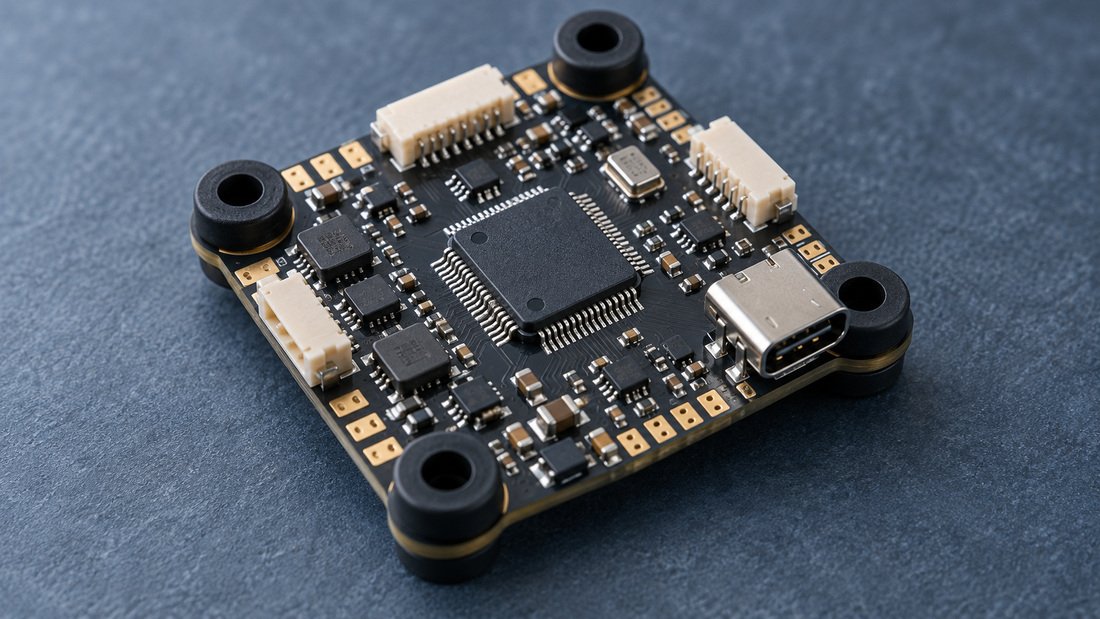
Motor sourcing cannot be separated from the rest of the propulsion and control stack. The electronic speed controller (ESC) must match the motor’s current draw and timing requirements. The flight controller (FC) sets the control loop that the motor responds to. For FPV and drone soccer platforms, the radio link and TX module also affect how the pilot commands the motor. If your program covers a complete platform, it helps to source these parts as a coordinated set rather than independently.
DPF’s related product lines include Motors (BKM), ESC (BKE), Flight controller (BKF), and ELRS TX modules (BKT), so a single sourcing conversation can cover the propulsion and control stack. That does not remove the need for your own engineering validation, but it reduces the number of separate supplier relationships you have to manage.
How do you write a motor specification that suppliers can quote against?
A quotable specification answers four questions: what the motor must do, how it mounts, what environment it operates in, and how it must be labeled and packed. If any of these are missing, suppliers will quote against their own assumptions, and the quotes will not be comparable.
Electrical and performance parameters
- KV rating and intended battery cell count (for example, 4S or 6S). State the tolerance you will accept.
- Maximum continuous current and burst current, with the duration of the burst.
- Target thrust at a defined voltage and propeller, ideally with a thrust table by throttle point.
- Efficiency target or acceptable efficiency range at cruise throttle.
- Internal resistance or winding resistance range if it matters for your ESC pairing.
- Idle current and no-load current if your application is sensitive to standby draw.
Mechanical and environmental parameters
- Stator size and motor dimensions, including shaft diameter and length.
- Mounting hole pattern and thread type; confirm they match your frame or arm design.
- Weight with and without connectors, prop nut, and wires.
- Connector type, wire gauge, and wire length.
- Operating temperature range and expected duty cycle.
- Ingress protection expectation if the drone operates outdoors, in dust, or in light rain.
- Bearing type and lubrication expectation, since this drives service life.
Labeling, packaging, and customization
For OEM programs, the motor is often a branded part. Specify whether you need your logo on the bell, custom laser marking, serialized labels, or retail-ready packaging. If you plan to sell under your own brand, review the available private label drone parts options and confirm which markings are technically feasible on a brushless motor. Packaging and logo requirements belong in the RFQ, not in a later email thread, because they affect tooling and unit cost. See logo and packaging customization for the general scope of these services.
How should you compare motor suppliers?
Compare suppliers on production control and communication, not only on unit price. A low quote from a factory that cannot document winding or balance control will cost more in returns, rework, and field failures. Build a comparison scorecard and ask each supplier the same questions in writing.
| Comparison area | What to request | Why it matters |
|---|---|---|
| Manufacturing control | Winding method, magnet grade and source, bearing brand or grade, dynamic balancing process | These drive thrust consistency, vibration, and service life. |
| Incoming material control | How magnets, laminations, bearings, and wire are inspected on receipt | Prevents batch-to-batch performance drift. |
| Process documentation | Work instructions, traveler records, and lot traceability | Lets you trace a field failure back to a production lot. |
| Testing capability | Thrust stand, no-load current test, resistance test, vibration or balance check | Shows whether claims can be verified before shipment. |
| Change notification | Written commitment to notify you before any material, process, or sub-supplier change | Protects your type approval and fielded units. |
| Sample and pilot support | Sample quantities, sample lead time, and pilot batch terms | Confirms the factory can ramp without quality loss. |
| Commercial terms | Unit price tiers, MOQ, tooling or setup fees, payment terms, Incoterms, lead time | Makes quotes comparable and avoids post-award surprises. |
Ask for evidence, not assurances
Any supplier can say their motors are balanced and consistent. Ask for the specific test method and the record that proves it. If a supplier cannot describe how they measure thrust or no-load current, treat the performance claim as unverified and plan your own incoming inspection accordingly.
What does a practical RFQ process look like?
A structured RFQ keeps quotes comparable and shortens the evaluation cycle. The sequence below is a general procurement framework; adapt the timelines and document names to your own quality system.
- Prepare the RFQ package. Include the motor specification sheet, a reference sample or reference motor if available, expected annual volume, first-order volume, packaging and labeling requirements, and the delivery destination.
- State your evaluation criteria. Tell suppliers that price, sample performance, production control, and lead time will all be scored.
- Request a sample with test data. Ask for the sample’s measured thrust, current, and weight against your target values.
- Run your own validation. Test samples on your thrust stand and in your airframe, and compare against your baseline motor.
- Order a pilot batch. Validate batch consistency, packaging, and incoming inspection before committing to full volume.
- Lock the supply agreement. Confirm inspection criteria, AQL (acceptable quality limit) or your own sampling plan, traceability, change notification, warranty terms, and spare parts or repair policy.
For a general view of how DPF structures OEM and ODM engagement, see the OEM/ODM service overview. When you are ready to move from sourcing to ordering, the how to place an order page describes the ordering steps.
Common mistakes in brushless motor sourcing
- Quoting from a part number instead of a specification. Two motors with the same KV can differ in stator size, magnet grade, and weight. The KV alone does not define performance.
- Comparing unit price without comparing scope. Confirm whether the quote includes connectors, wire length, prop nut, labeling, and packaging.
- Skipping the pilot batch. A good sample does not guarantee a good production batch. Validate consistency before volume.
- Ignoring ESC and FC compatibility. A motor that performs well on a test stand can behave differently with your chosen ESC timing and FC firmware. Test the stack together.
- Accepting verbal change notification. Material and sub-supplier changes must be controlled in writing and tied to your approval.
- Leaving MOQ and lead time to the end. These terms affect cash flow and launch timing, so confirm them before you finalize the design.
Buyer checklist before you commit to a motor supplier
- Motor specification sheet is complete and signed off by engineering.
- Sample test data matches your target thrust, current, and weight.
- Supplier can describe incoming material control for magnets, bearings, and wire.
- Supplier can describe dynamic balancing and winding consistency controls.
- Traceability exists from finished motor back to production lot.
- Written change notification process is agreed.
- Inspection criteria and sampling plan are documented.
- Packaging and labeling requirements are quoted, not assumed.
- MOQ, lead time, payment terms, and Incoterms are confirmed in writing.
- Warranty and failure-handling process is defined.
- ESC, FC, and radio compatibility has been tested as a system.
- A pilot batch plan is in place before full production.
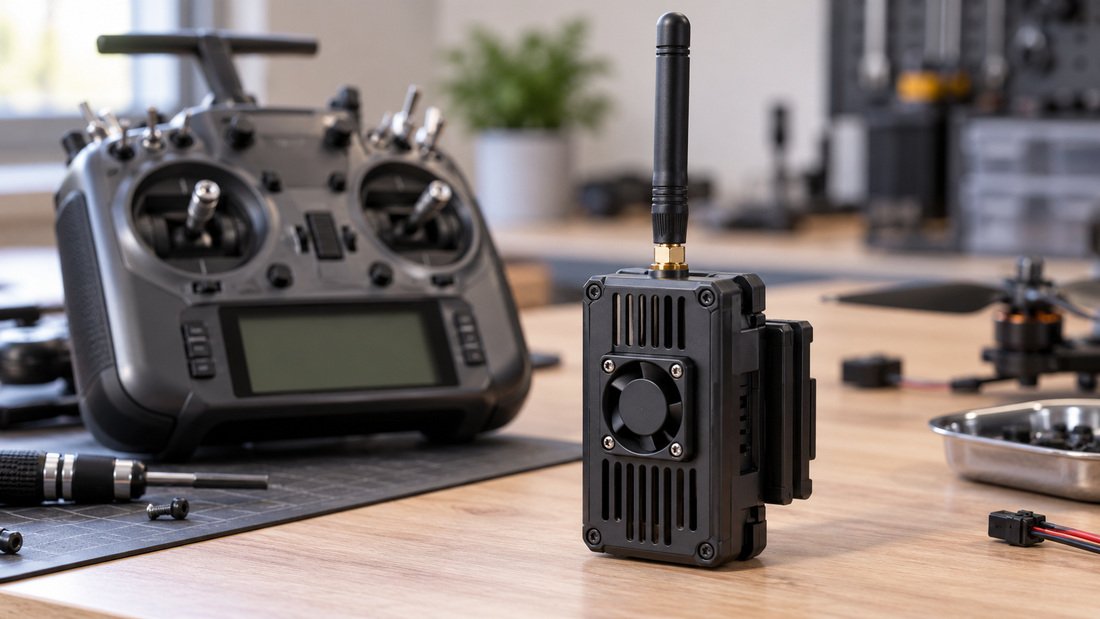
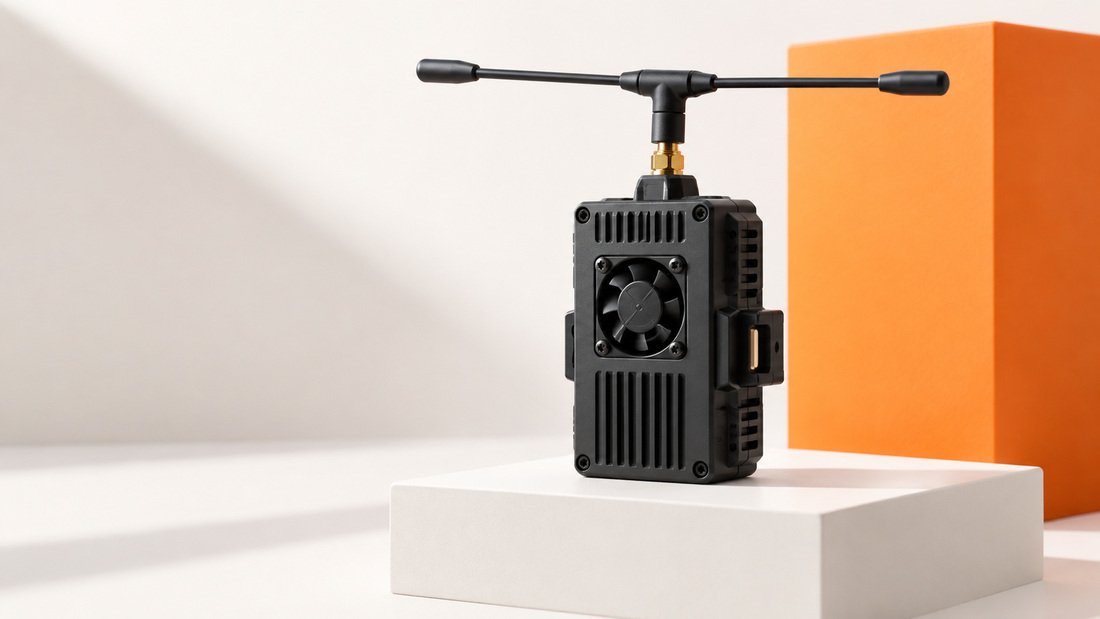
If your program also covers radio control, motor sourcing often runs alongside TX module sourcing. The same RFQ discipline applies: define the specification, verify the supplier’s control process, and validate samples before volume. ELRS TX modules are one of the related DPF product lines that can be quoted together with motors and ESCs.
How do you control quality after production starts?
Quality control does not end at the pilot batch. Once volume production begins, define incoming inspection at your own facility and agree on the supplier’s outgoing inspection. Typical incoming checks for brushless motors include visual inspection, weight, no-load current, winding resistance, and a functional spin test. Thrust testing is usually done on a sample basis because it requires a test stand and propeller.
Keep a record of each lot you receive. If a field failure occurs, lot traceability lets you isolate the affected batch and decide whether to quarantine, rework, or return. Ask the supplier what their process is for handling a confirmed nonconformance, and confirm whether replacement units are shipped before or after the failed units are returned.
What should you confirm in writing about bulk production?
Before scaling, confirm capacity, tooling or fixture availability, and the production schedule. If you are planning a multi-batch program, review the general bulk production process so you know what information the factory needs from you. Specific capacity numbers, lead times, and MOQs for your motor should be confirmed by DPF in writing for your project.
Frequently asked questions
1. Should I source motors before or after finalizing the airframe?
Motor and airframe design are interdependent. Start motor specification once you have a target thrust, propeller, battery voltage, and weight budget. Finalize the motor before freezing the mounting pattern, because changing the motor later usually means changing the arm or frame.
2. Can I use the same motor for drone soccer and general FPV?
Possibly, but the requirements differ. Drone soccer frames have specific cage and mounting constraints, while freestyle FPV prioritizes thrust-to-weight and durability. Define the operating profile for each use case before assuming one motor covers both.
3. How many samples should I test?
There is no single correct number. Test enough samples to see variation, not just one good unit. At minimum, test samples from more than one production run if the supplier can provide them, and record the spread in thrust, current, and weight.
4. What is the most common cause of motor performance drift between batches?
Changes in magnet grade or source, winding inconsistencies, and bearing substitutions are common causes. This is why incoming material control and written change notification matter more than a one-time sample test.
5. Does a higher price guarantee better quality?
No. Price reflects material, labor, overhead, and margin, not a quality guarantee. Evaluate the supplier’s process controls and sample data, and use price as one factor among several.
6. What commercial terms should I confirm before placing a production order?
Confirm unit price and price validity period, MOQ, tooling or setup fees, payment terms, Incoterms, production lead time, shipping method, packaging cost, and warranty terms. Ask for all of these in the written quotation.
7. Can DPF supply motors, ESCs, flight controllers, and TX modules together?
DPF’s related product lines include Motors (BKM), ESC (BKE), Flight controller (BKF), and ELRS TX modules (BKT). Whether a specific combination is available for your project, and on what terms, should be confirmed with DPF directly.
Conclusion
Sourcing brushless motors for OEM drone production is a specification and verification exercise. Define the motor around your airframe, ask suppliers to prove how they control winding, magnets, bearings, and balance, validate with samples and a pilot batch, and lock inspection criteria and change notification into the supply agreement. The suppliers who communicate clearly during the RFQ stage are usually the ones who communicate clearly during production.
If you are sourcing a propulsion and control stack for an OEM program, start with a written requirement and a sample request. DPF can quote motors, ESCs, flight controllers, and ELRS TX modules together for OEM and wholesale programs. Confirm your specification, target volumes, and packaging requirements, then Request an OEM / Wholesale Quote to begin the sourcing conversation.