Quick summary
Stock a small, disciplined set of drone propellers matched to your actual airframes: the OEM size and pitch for each drone soccer or FPV model you fly, one or two proven materials, and enough spares to cover race-day breakage plus a reserve. Most teams need a few primary SKUs, not dozens. The right range is defined by your fleet list, your competition calendar and your breakage data, then confirmed with the supplier on size, balance, mounting and batch consistency.
Key Takeaways
- Start from your fleet list, not from a parts catalogue. Every propeller SKU you stock should map to a drone you actually operate.
- Separate training propellers from competition propellers if the tolerance and durability requirements differ.
- Standardise on one or two materials and one mounting pattern per class to cut mistakes during fast repairs.
- Calculate spare ratios from your own breakage record; do not assume a universal number.
- Confirm size, pitch, balance method and batch consistency with the supplier in writing before committing to a season order.
Why propeller stocking is a fleet decision, not a shopping decision
The direct answer is that teams should stock propellers by matching them to each aircraft class they operate, then adding a breakage-based spare buffer. Purchasing is the last step, not the first. If you order propellers before you have a clean fleet list, you will buy duplicates, incompatible mounts and sizes that never fly.
Propellers are a wear item. They are also the component most likely to be replaced trackside, often by a student under time pressure. That combination makes them a logistics problem as much as an engineering one.
Step 1: Build a fleet-based propeller matrix
List every drone model in service, grouped by class. Give each class its own row: airframe model, motor, propeller size and pitch, mounting type, and who flies it. This becomes your stocking matrix. Two or three classes usually cover an entire club.
Keep the matrix in one shared file. When a coach orders parts, they order against a row, not from memory.
| Fleet class | Typical use | What to stock | What to verify with supplier |
|---|---|---|---|
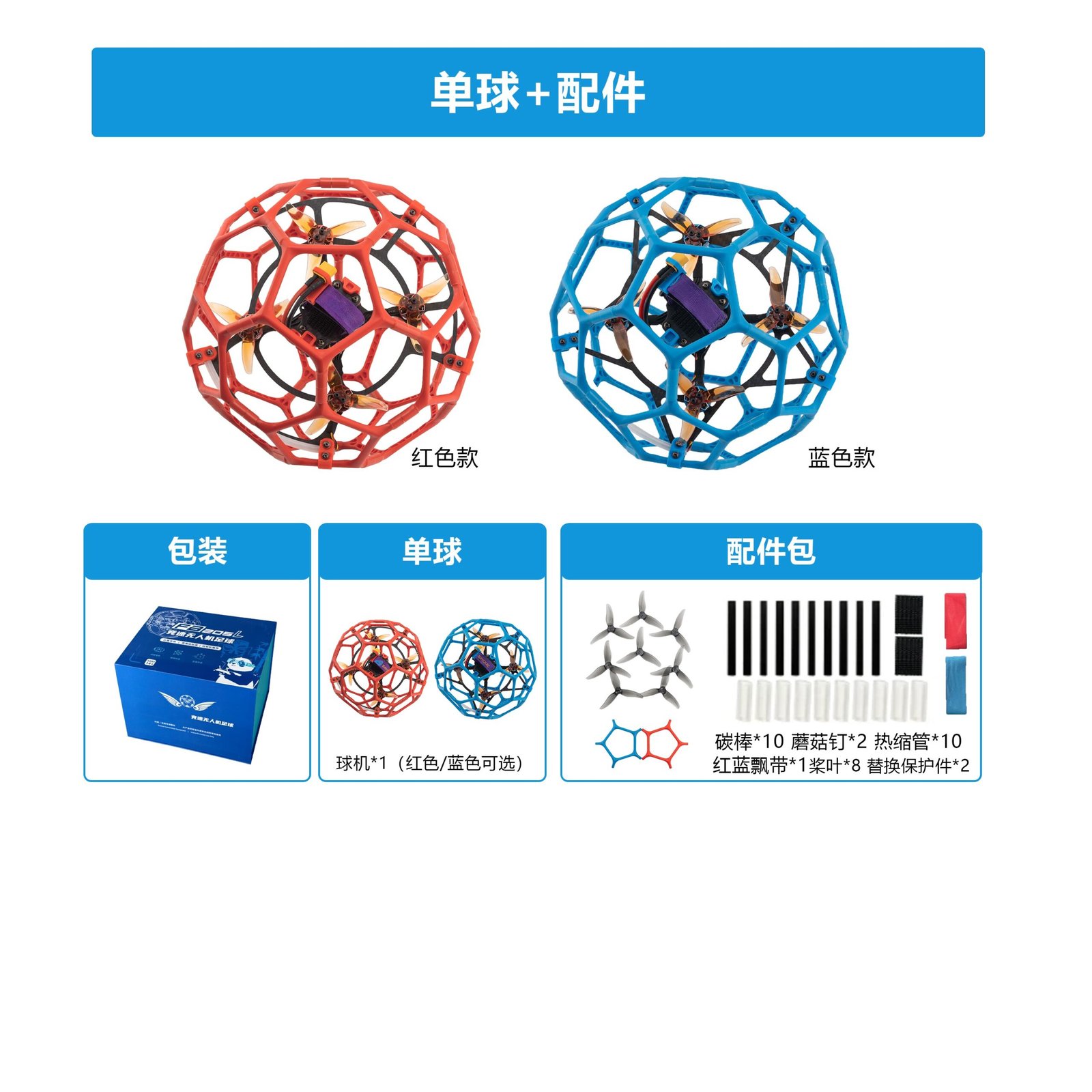
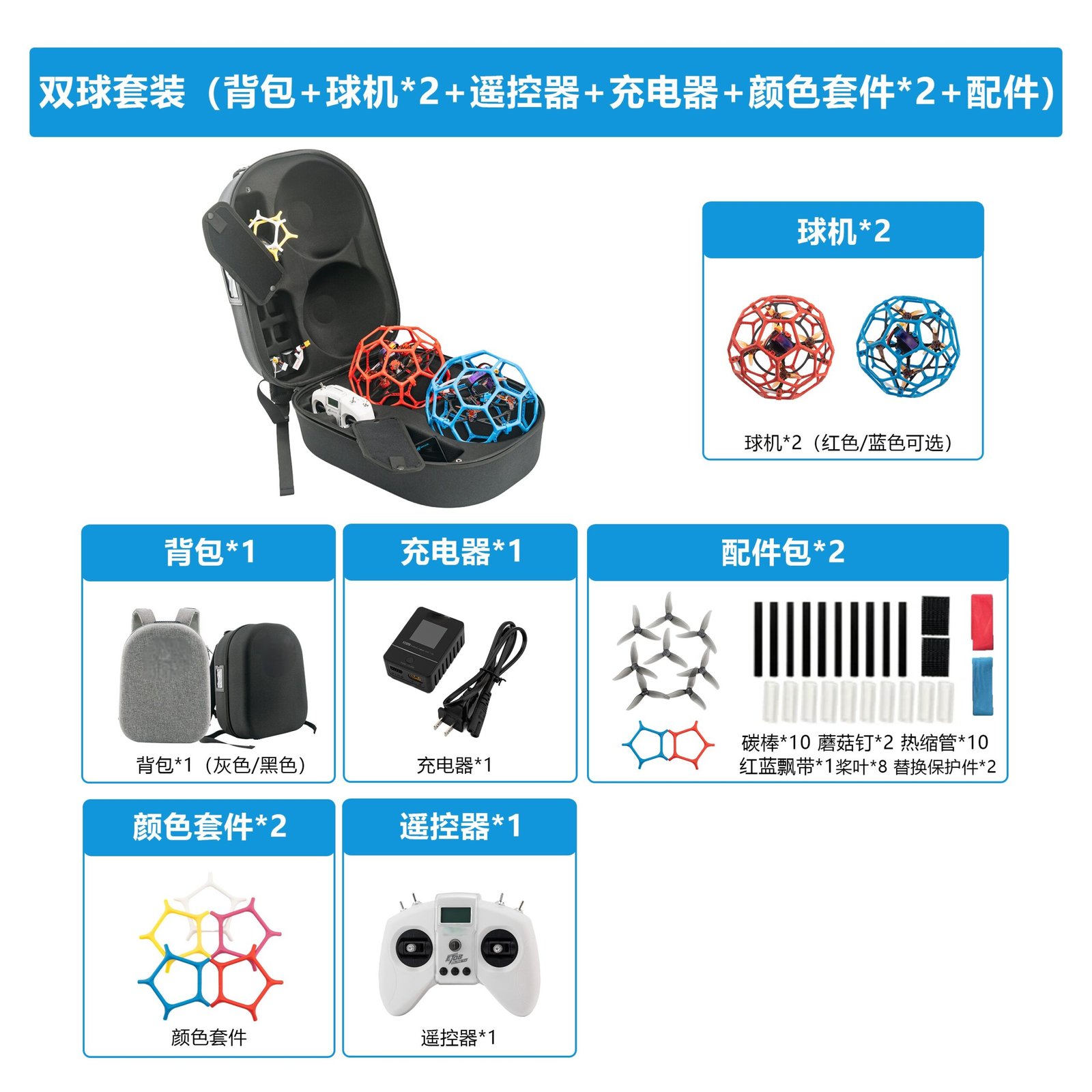
| Drone soccer (BKZ-type) airframes | Training and league matches | OEM-fit propeller SKUs for each airframe version in service | Exact diameter, pitch, blade count, hub and mounting pattern |
| Small FPV trainers | Skills practice, indoor sessions | Durable propellers suited to frequent contact | Motor shaft fit and thrust behaviour at your operating weight |
| Competition FPV builds | Timed events | Matched sets in the exact spec used for tuning | Batch consistency and balance from lot to lot |
| Loan / demo units | Tryouts, outreach | A single generic SKU kept separate | Compatibility with your loaner motors |
If you are still choosing motors, resolve that first. Propeller selection follows motor selection, because thrust, current draw and tune all depend on the pair. DPF covers this in its guidance on motor and propulsion matching and in FPV motors.
Step 2: Decide how many SKUs you actually need
A single-class club can run on one propeller SKU plus one backup SKU. A multi-class programme typically needs one primary SKU per class and one alternative. Beyond that, complexity grows faster than benefit: more bins, more mis-picks, more mismatched sets.
Two is usually the practical ceiling per class: the competition spec, and a training spec if your training airframes differ. If you find yourself needing four or five SKUs in one class, the real issue is fleet standardisation, not stocking.
Step 3: Choose materials for the job, not for the spec sheet alone
Propeller materials trade stiffness against impact tolerance. Stiffer propellers generally hold tune and efficiency better; more flexible ones tend to survive contact better. Neither is universally correct.
- Training: prioritise survivability and low replacement cost.
- Competition: prioritise the exact spec your aircraft was tuned around.
- Mixed programmes: keep the two clearly labelled so a competition set never migrates into a training bin.
Ask the supplier to describe the material and manufacturing process in writing. If a claim cannot be documented, treat it as unverified and plan around it.
Step 4: Set a spare ratio from your own data
There is no universal spare ratio. Breakage depends on cage design, pilot skill, session intensity and how often propellers are removed and refitted. Build your own number:
- Record propellers consumed per airframe per month for one term.
- Separate practice losses from competition losses.
- Set your season order at recorded usage plus a reserve you can justify.
- Review after each competition and adjust.
A reserve is not padding. It is the buffer that keeps a match running when a student breaks a propeller in the warm-up round.
Step 5: Match propellers to the whole power system
Propellers do not work alone. Motor, propeller and battery interact, and a propeller change can shift current draw, heat and flight time. Any substitution should be re-checked against your tune.
DPF’s motor, propeller and battery matching guide is a useful starting point for that check. Teams standardising whole classes often simplify this by ordering propulsion combo kits, which keep matched components together.

What to standardise across the team
Standardisation is what turns a parts cupboard into a managed inventory. Fix these variables per class:
- Diameter, pitch and blade count.
- Mounting type and hub geometry.
- Rotation marking convention, so clockwise and counter-clockwise pairs are never confused.
- Label and bin colour per class.
- One approved supplier and one documented specification.
Common Mistakes
- Buying on price alone. Cheap propellers with inconsistent balance cost more in tuning time than they save.
- Mixing rotation pairs. Unlabelled bins are the most common cause of a drone that will not fly straight.
- Stocking by guesswork. Ordering two seasons of one SKU locks you into a specification you may outgrow.
- Ignoring batch drift. A replacement batch that differs from the original changes how the aircraft behaves.
- Over-standardising too early. Freeze a specification only after it has survived a full competition cycle.
- Treating storage as an afterthought. Deformation and contamination from poor storage affect balance.
Buyer Checklist before you place a season order
- Fleet matrix is current and lists every airframe in service.
- Each class has a documented propeller specification, including diameter, pitch, blade count and mounting.
- Rotation pairs are labelled and stored as sets.
- Spare ratio is based on recorded consumption, not habit.
- Supplier has confirmed exact specification, balance method and packaging in writing.
- Sample units have been flown and inspected before the bulk order.
- Price, quantity breaks, lead time, shipping terms, payment terms, MOQ and warranty are confirmed in writing for your specific order.
- Battery handling and transport documentation is understood if you ship spares. Lithium batteries are regulated in air transport; see the FAA lithium battery guidance for the US rules on spare batteries in carry-on baggage and terminal protection.
Need help scoping a team order? Share your fleet list and we can come back with a stocking structure — request a team kit quote.
FAQ
How many propeller SKUs should a school team stock?
Usually one primary SKU per airframe class, plus one alternative if training and competition airframes differ. Multi-class programmes scale by adding one row per class, not by adding many variants within a class.
Should training and competition propellers be the same?
Only if the airframes are identical and durability is acceptable in both settings. If competition aircraft are tuned to a specific specification, keep competition sets separate and reserve them for events.
How do I set a spare ratio?
Record consumption per airframe over a full term, separate practice from competition losses, and set the season order at recorded usage plus a reserve you can justify. Review after every competition.
Can we substitute a propeller from another brand?
Only after re-checking the whole power system. Diameter, pitch, blade count and stiffness all affect thrust and current draw. Re-tune and test before using a substitute in competition.
What should we confirm with a supplier before ordering?
Exact specification, balance method, batch consistency, packaging, price, quantity breaks, lead time, shipping and payment terms, MOQ and warranty. Get all of it in writing for your specific order.
How should propellers be stored?
Flat, dry, out of direct sun, in labelled sets that keep rotation pairs together. Poor storage can deform blades and disturb balance.
Do propeller rules differ for drone soccer and FPV?
Class rules and event technical regulations may constrain what you can fit. Check your league or event documentation, since requirements vary by organisation and season.
Conclusion
Stock drone propellers by mapping them to your fleet, standardising one or two SKUs per class, and sizing your order from recorded breakage rather than assumption. Confirm every commercial and technical detail in writing before you commit to a season.
Next step: send your fleet list and competition calendar to DPF and ask for a stocking structure and a team kit quote. Request a Team Kit Quote.