Quick summary
Yes, but only within limits. Standard drone soccer balls are designed for indoor use, where air is still. Outdoors, wind pushes the cage, reduces control authority and drains battery faster. Many school leagues and competitions specify indoor play for this reason. If your club wants outdoor sessions, treat them as a separate, carefully managed activity: check local rules first, test in low wind, and cap wind speed well below what a typical indoor ball can tolerate. Do not assume any drone soccer equipment is automatically safe or legal outdoors. drone soccer systems built for indoor play may need different tuning or hardware for outdoor flight.
Key Takeaways
- Drone soccer balls are primarily indoor products; wind is the main reason outdoor flight becomes difficult.
- Wind affects control authority, battery life, and crash risk more than it affects the ball’s ability to lift off.
- Check national aviation rules before flying outdoors; in the US, educational flights fall under specific FAA pathways. See the FAA’s educational users page: https://www.faa.gov/uas/educational_users.
- Use a stepwise test plan: still air, light breeze, then stop if the ball drifts or loses altitude control.
- Ask suppliers in writing about motor, ESC, propeller and frame wind tolerances; do not rely on marketing claims.
Why wind is the main problem for drone soccer balls
Direct answer: wind pushes the ball off its intended path, and the flight controller has to work harder to correct it. A drone soccer ball is a caged, roughly spherical drone. The cage protects the propellers and allows safe contact, but it also adds surface area. More surface area means more wind load.
When wind hits the cage, the ball is pushed sideways. The flight controller responds by increasing thrust on one side. That uses more battery current, so flight time drops. In stronger gusts, the controller may not be able to correct fast enough, and the ball drifts or stalls.
For players, this feels like the ball is “not listening.” For coaches and program managers, it means unpredictable behavior, more collisions, and higher risk of damage.
What actually changes in wind: a comparison
Direct answer: the biggest changes are control feel, battery consumption and recovery difficulty. The table below compares typical indoor conditions with outdoor wind conditions. These are general patterns, not measured test results.
| Factor | Indoor (still air) | Outdoor with light wind | Outdoor with moderate wind |
|---|---|---|---|
| Control feel | Predictable | Slightly delayed | Drifty, hard to hold position |
| Battery drain | Baseline | Moderately higher | Much higher |
| Altitude hold | Stable | Small variations | Frequent corrections |
| Crash risk | Low | Medium | High |
| Session suitability | Standard training and matches | Short drills only, with caution | Not recommended for standard indoor balls |
How to decide whether your club can fly outdoors
1. Check the rules and venue first
Direct answer: outdoor flight may be restricted by league rules, school policy or national aviation regulations. Drone soccer competitions and school programs often require indoor venues. Check your league rulebook and your school’s risk policy before any outdoor session.
In the United States, the FAA explains that drones flown for educational purposes are regulated under either the Exception for Limited Recreational Operations (49 U.S.C. § 44809) or the Small Unmanned Aircraft Systems Rule (Part 107). Qualifying educational organizations include institutions of higher education, JROTC programs, and educational programs chartered by an FAA-recognized Community Based Organization. Organizations that do not qualify must operate under Part 107. See https://www.faa.gov/uas/educational_users for the official description. This is US-specific guidance; other countries have their own rules.
The FAA also notes that FAA-Recognized Identification Areas (FRIAs) are locations where drones can be flown without Remote ID, and that educational institutions are eligible to request a FRIA. If your club is planning regular outdoor sessions, a FRIA may be worth discussing with your administrators.
2. Inspect your equipment’s wind-related specs
Direct answer: ask for the numbers that actually matter — maximum recommended wind speed, motor thrust margin, ESC current rating and propeller size. Many drone soccer products are sold without a published wind rating. Do not invent one; ask the supplier to confirm in writing.
Key parts that influence wind behavior:
- Motors (BKM): available thrust above hover weight determines how much wind the ball can fight.
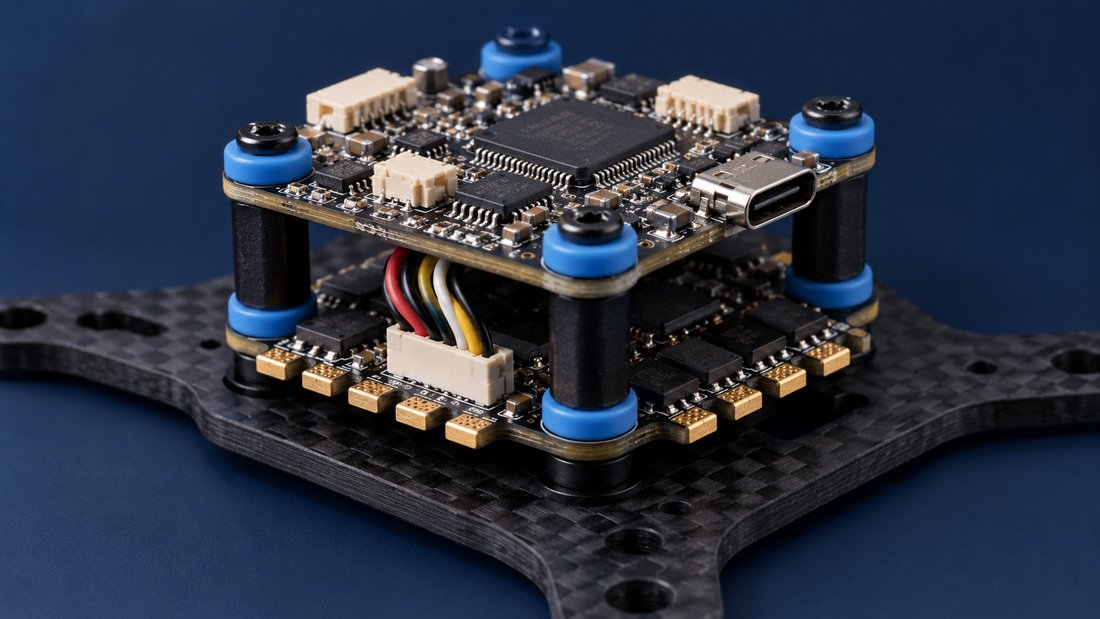
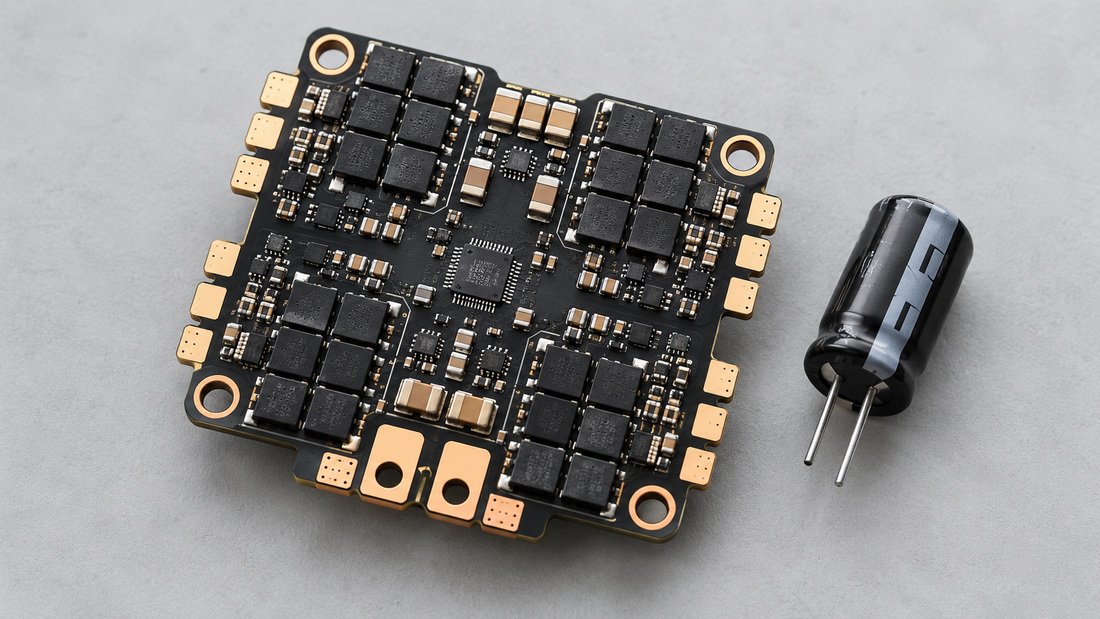
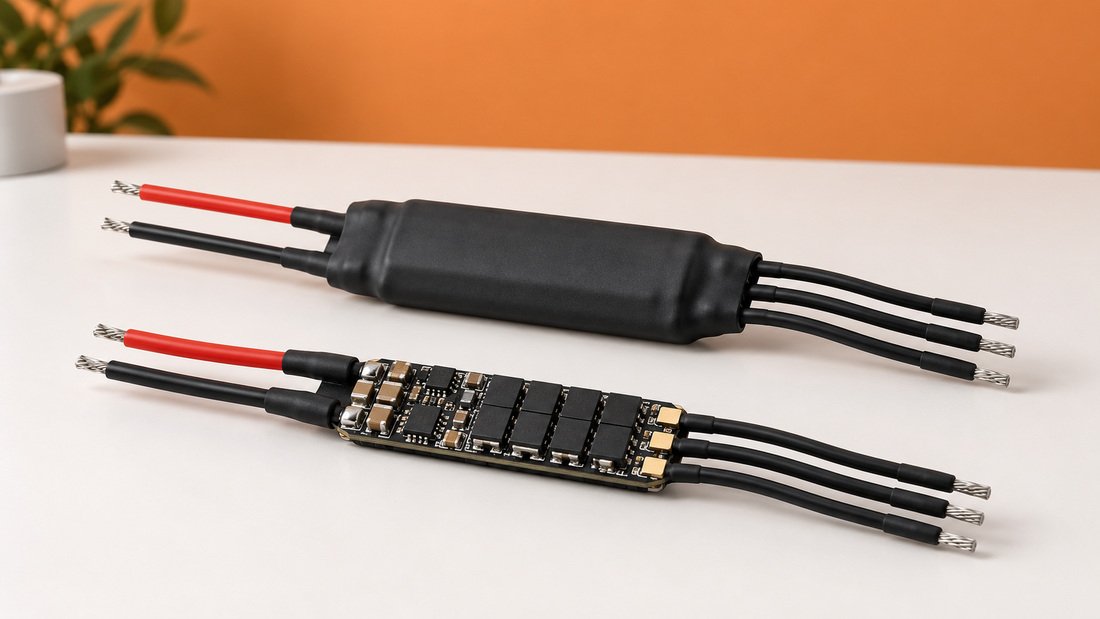
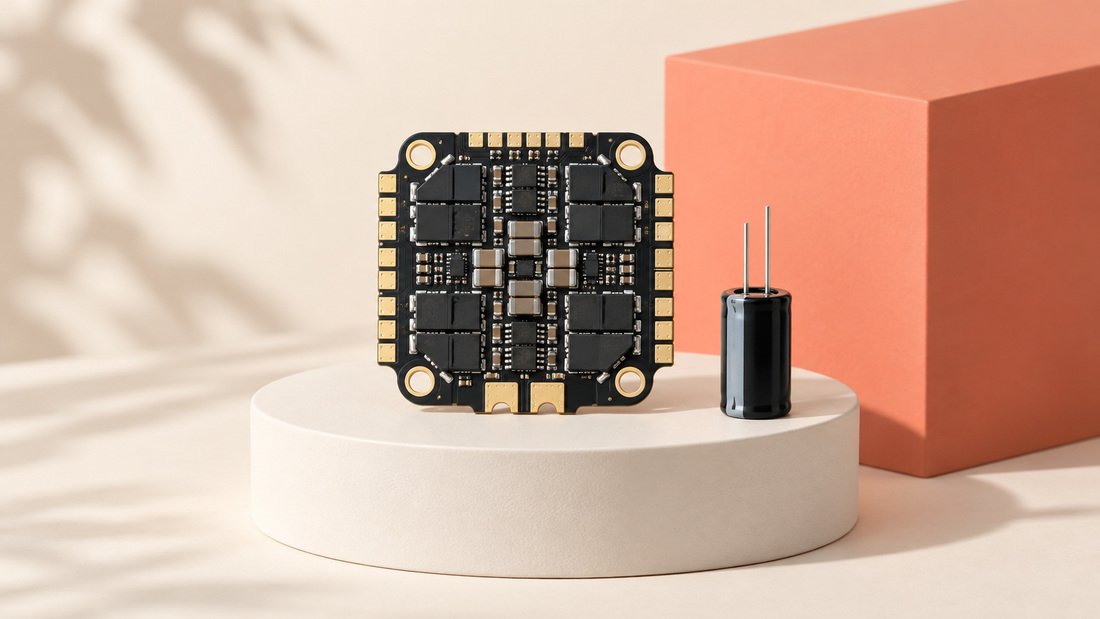
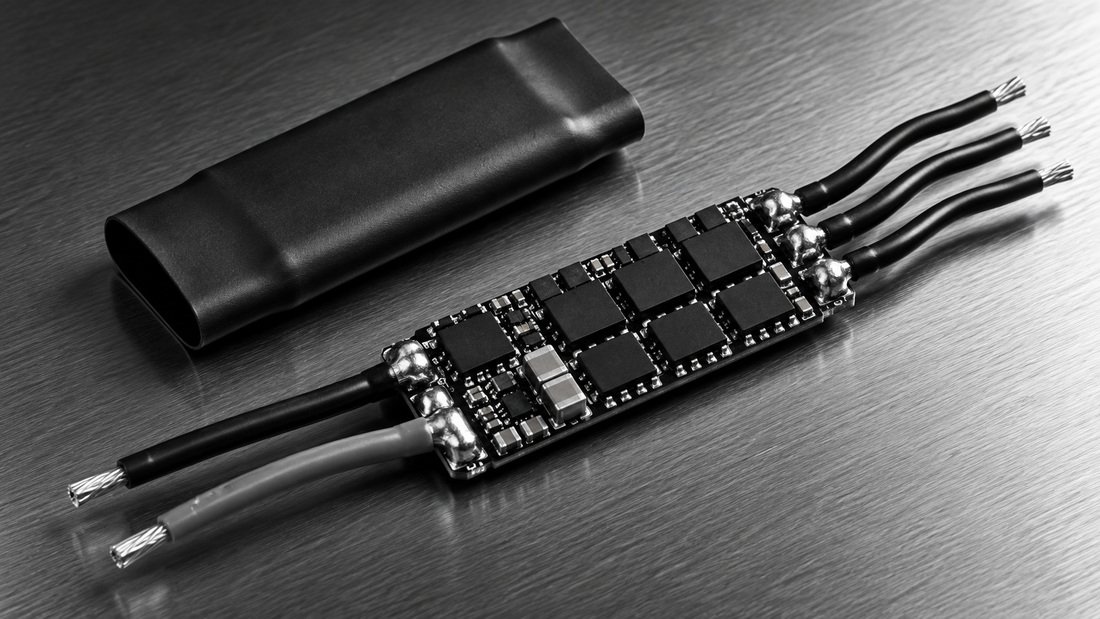
- ESC (BKE): must handle the higher current spikes caused by constant corrections.
- Propellers: size and pitch affect responsiveness and efficiency.
- Flight controller tuning: poorly tuned controllers overcorrect in gusts.
If you are evaluating parts for outdoor-capable builds, review ESC options such as the ones described in DronePartsFactory’s drone soccer systems range. Ask for written confirmation of current ratings and thermal behavior.
3. Run a stepwise outdoor test plan
Direct answer: never start with a full match outdoors. Test in increasing wind, and stop at the first sign of instability.
- Start in completely still air, ideally indoors, and confirm normal behavior.
- Move to a sheltered outdoor area with almost no wind. Fly a short hover and slow circuits.
- If the ball drifts, oscillates or loses altitude control, stop. Do not “push through” the session.
- Record what happened: wind speed if you can measure it, symptoms, battery used, and any damage.
- Repeat only after checking with your supplier whether the behavior is expected.
Use a simple handheld anemometer if available. Even without one, a flag or a light ribbon can give a rough sense of wind.
4. Adjust for safety and battery management
Direct answer: outdoors, shorten sessions and increase inspection frequency. Higher current draw from wind corrections drains batteries faster and heats motors and ESCs.
- Land earlier than you would indoors; do not fly to low-voltage cutoff.
- Check motor and ESC temperatures after each flight.
- Keep players and spectators further back; outdoor drift increases the safety perimeter.
- Use only the flight modes your team has practiced.
Common mistakes clubs make outdoors
- Assuming indoor performance equals outdoor performance. It does not. Wind changes everything.
- Ignoring regulations. Outdoor flight may move your program from a recreational pathway to a different regulatory category. Check the FAA’s educational users page or your national authority before flying outdoors.
- Overlooking battery and thermal limits. Wind corrections increase current draw. ESCs and motors may run hotter than expected.
- Flying in gusty conditions because the average wind seemed low. Gusts matter more than average wind speed.
- Not asking suppliers for written specs. If a supplier cannot state a wind rating or thrust margin, treat outdoor use as unverified.
Buyer checklist: what to confirm before buying outdoor-capable drone soccer equipment
Use this checklist when discussing drone soccer equipment with any supplier, including DronePartsFactory. For terms we have not confirmed publicly, ask us to confirm in writing.
- Is the product described as indoor-only, or is an outdoor wind rating published?
- What is the motor (BKM) thrust margin above all-up weight?
- What is the ESC (BKE) continuous and burst current rating?
- Is the flight controller tune documented or adjustable?
- What propeller size and pitch does the ball use?
- What battery capacity and discharge rating is recommended?
- Are spare parts (motors, ESCs, propellers, cages) available for clubs?
- What written warranty and support terms apply to club or school purchases?
- Can the supplier provide a sample unit for a controlled outdoor test?
- What documentation is provided for school procurement and safety reviews?
How this affects schools, clubs and distributors differently
Schools and training organizations
Schools usually have the strictest rules and the least tolerance for unpredictable equipment. If you are building a curriculum around STEM drone education and training, plan your syllabus around indoor flight and treat outdoor sessions as supervised demonstrations only after checking policy.
Drone soccer clubs and teams
Clubs may want outdoor practice for space reasons. If your venue is outdoors, consider a dedicated outdoor configuration rather than using indoor match balls. Talk to your supplier about motor, ESC and tuning changes.
Distributors and OEM/ODM buyers
If you are sourcing for a market where outdoor play is expected, ask for documented wind behavior and clear labeling. Indoor-only products should be labeled as such to reduce returns and safety incidents.
For more on competitive structures and venue expectations, see drone soccer competitions and drone soccer clubs.
Planning an outdoor trial or a new club kit? Request a Team Kit Quote and tell us your venue, expected conditions and team size so we can discuss suitable configurations.
Frequently asked questions
Can any drone soccer ball fly outdoors?
Most standard drone soccer balls are designed for indoor use. Some may handle very light wind in a sheltered area, but this should be confirmed with the supplier. Do not assume outdoor capability without written guidance.
What wind speed is safe for drone soccer outside?
There is no universal number. It depends on the ball’s thrust-to-weight ratio, cage design, tuning and battery. Ask your supplier for a written recommendation, and test incrementally.
Do we need a license or permit to fly drone soccer outdoors at a school?
Rules vary by country. In the US, the FAA explains that educational drone flights operate under either 49 U.S.C. § 44809 (for qualifying educational organizations) or Part 107. See https://www.faa.gov/uas/educational_users. Check your national authority outside the US.
Will wind damage the motors or ESCs?
Wind itself does not damage motors or ESCs, but the extra current draw from constant corrections can raise temperatures. Check parts after each flight and land before batteries are deeply discharged.
Can we tune the drone for better wind performance?
Tuning can help, but it cannot overcome insufficient thrust margin. Ask your supplier whether tuning changes are supported and whether they affect warranty.
Are outdoor drone soccer competitions common?
Many leagues and school programs run indoor events because of wind and safety. For outdoor events, organizers should check venue rules, insurance and aviation regulations in advance.
What should we ask a supplier before buying for outdoor use?
Ask for a written wind rating or explicit indoor-only labeling, motor thrust margin, ESC current rating, recommended battery, spare parts availability and warranty terms. Get answers in writing before ordering.
Conclusion
Drone soccer balls can fly outdoors only in very limited conditions, and most standard equipment is optimized for indoor play. Wind reduces control authority, increases battery consumption and raises crash risk. Before any outdoor session, check local rules and aviation guidance, confirm equipment limits in writing, and test step by step. For schools and clubs, keeping matches indoors remains the safest and most predictable choice.
If you are sourcing drone soccer equipment for a club, school or distribution program, start with a clear brief. Request a Team Kit Quote and ask us to confirm motor, ESC, tuning and support details in writing for your specific venue and conditions.