Quick summary
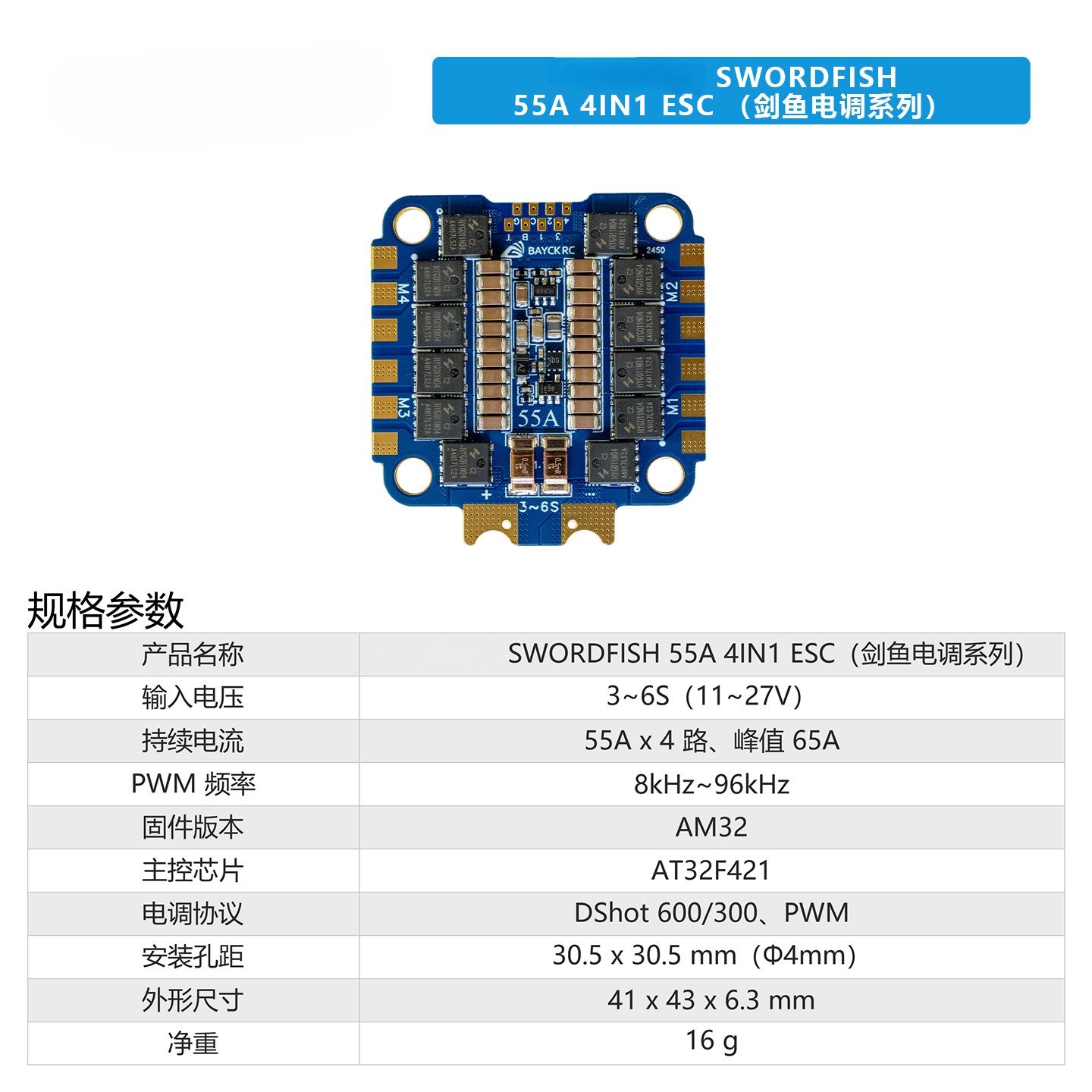
If you are building or repairing a drone that uses a 30.5 mm stack, you need a 4-in-1 ESC with a 30.5 x 30.5 mm mounting pattern. This size is the de facto standard for 5-inch FPV drones and most drone soccer balls. The ESC’s hole spacing must match the stack, and its current rating must suit your motors and battery. For drone soccer teams and clubs, the safest choice is a 4-in-1 ESC rated for at least 45–60A continuous, with firmware that matches your flight controller. Always confirm the exact mounting pattern, hole diameter, and current rating with your supplier before ordering.
Key Takeaways
- 30.5 x 30.5 mm is the standard mounting pattern for 4-in-1 ESCs used in 5-inch FPV drones and drone soccer.
- Current rating matters more than physical size. Match the ESC’s continuous current to your motor and battery combination.
- Firmware compatibility is critical. Ensure the ESC supports BLHeli_S, BLHeli_32, AM32, or the protocol your flight controller uses.
- For clubs and teams, standardize on one ESC size and connector to simplify spares and repairs.
- Always verify mounting pattern, hole diameter, and current rating in writing before placing a bulk order.
What does “30.5 mm stack” actually mean?
A 30.5 mm stack refers to the mounting hole spacing on the flight controller (FC) and ESC. The holes form a square with 30.5 mm between centers. This is often written as 30.5 x 30.5 mm. The ESC mounts underneath the flight controller, and both boards share the same hole pattern. The screws pass through both boards into soft-mount grommets or standoffs. The hole diameter is typically M3 (3 mm), but some boards use M2 or slotted holes. Always check the hole diameter, not just the spacing. A 30.5 mm stack is distinct from a 20 x 20 mm stack (used in smaller builds) or a 25.5 x 25.5 mm pattern (less common). For drone soccer, 30.5 mm is the dominant size because it accommodates the current ratings needed for 5-inch props and high-kV motors.
Which drone ESCs fit a 30.5 mm stack?
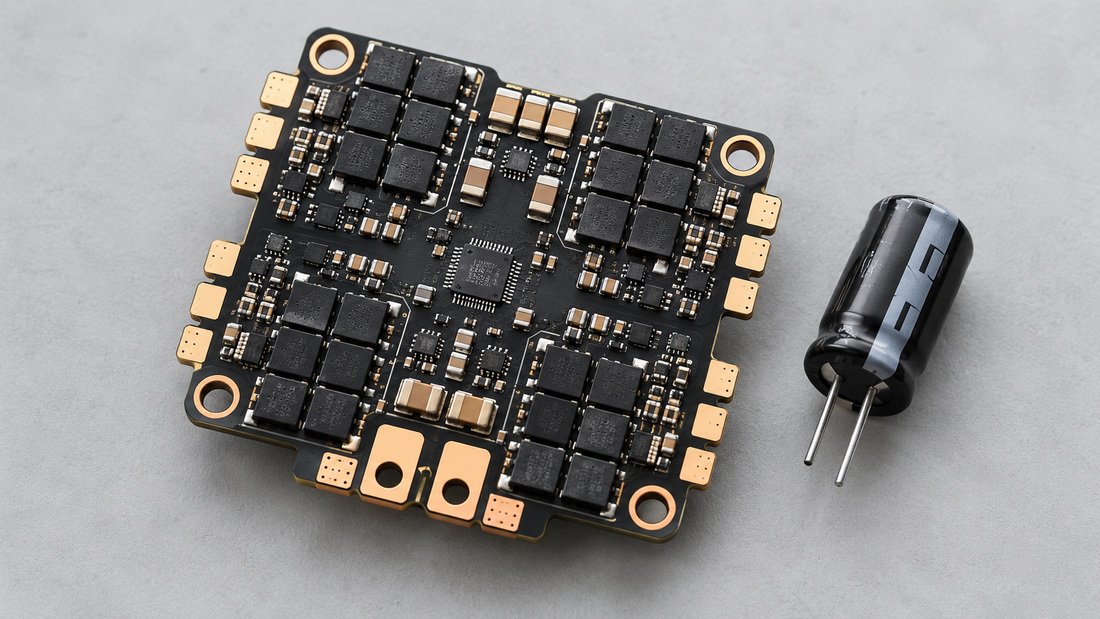
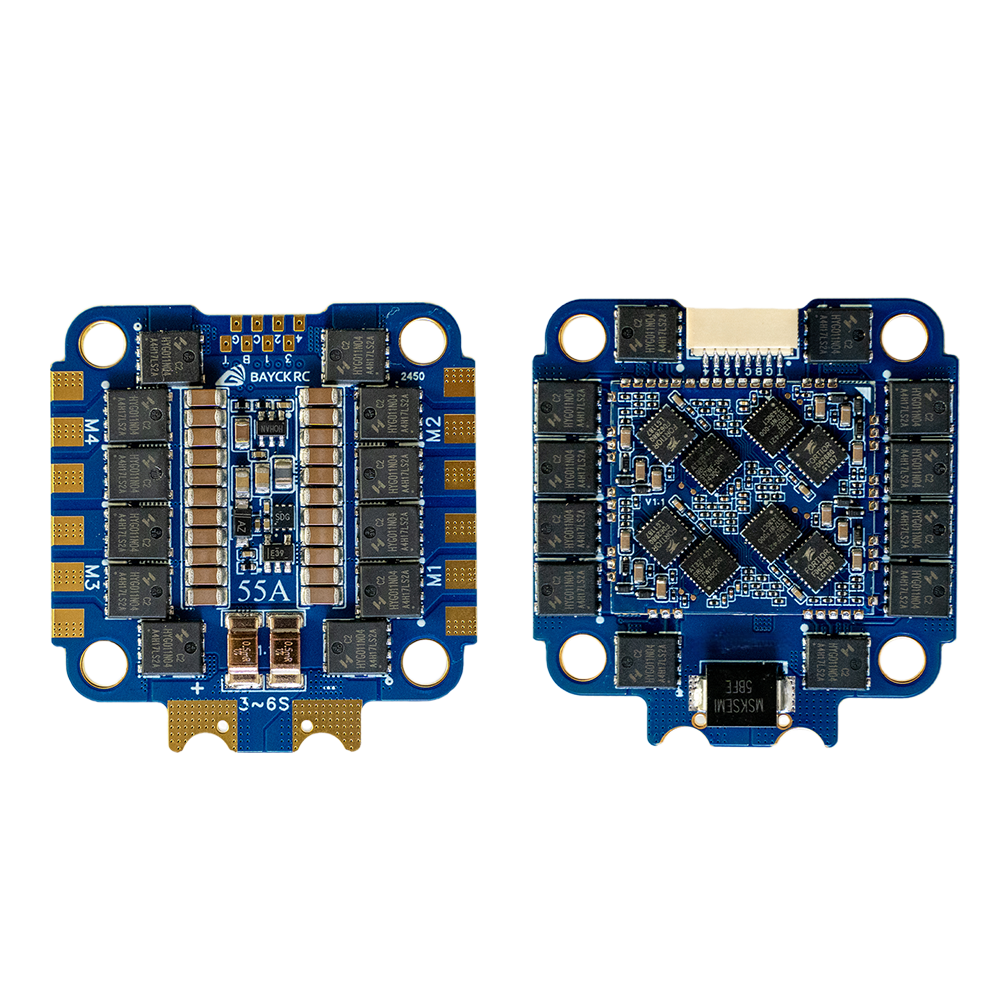
Any 4-in-1 ESC designed for a 30.5 x 30.5 mm mounting pattern will fit. These are sold as “30.5 x 30.5 4-in-1 ESCs.” They come in various current ratings, typically from 45A to 80A per motor channel. The physical size of the ESC board is larger than the 20 x 20 mm version, but the mounting holes are what matter. Some ESCs are marketed as “30.5 x 30.5 mm” but have a slightly different hole diameter or slot shape. Always download the dimensional drawing or ask for a photo with a ruler. If you are building a drone soccer ball, the ESC must also fit inside the protective cage. Measure the internal clearance before ordering.
How to match ESC current rating to your motors and battery
Current rating is the most important electrical specification. The ESC must handle the maximum current your motors draw at full throttle. For 5-inch drone soccer builds, motors typically draw 20–40A each, so a 45–60A ESC provides a safe margin. If you use higher-kV motors or larger props, you may need 60–80A. Always check the motor’s maximum current rating from its datasheet. Then add a 20–30% safety margin. The battery’s C-rating and capacity also affect current delivery. A 4S or 6S LiPo with a high C-rating can deliver more current than a low-C pack. For a deeper dive, see our guide to motor, propeller and battery matching.
Firmware and protocol compatibility
Drone ESCs run firmware such as BLHeli_S, BLHeli_32, AM32, or proprietary variants. The ESC’s firmware must be compatible with your flight controller’s output protocol. Common protocols include DShot (150, 300, 600), Multishot, Oneshot, and PWM. DShot is preferred for digital signal integrity. If you are standardizing a fleet for a club, choose one firmware family and stick to it. This simplifies configuration and spares. Some ESCs support telemetry, which sends temperature, voltage, and current data back to the flight controller. Telemetry is useful for monitoring battery health and motor performance. Check whether your flight controller supports the ESC’s telemetry protocol. If not, you may need a different ESC or a firmware update.
Comparison table: 30.5 mm vs 20 mm vs 25.5 mm stacks
| Feature | 30.5 x 30.5 mm | 20 x 20 mm | 25.5 x 25.5 mm |
|---|---|---|---|
| Typical drone size | 5-inch, drone soccer | 3-inch, cinewhoops | 4-inch, lightweight 5-inch |
| Common current ratings | 45A–80A per channel | 20A–45A per channel | 35A–60A per channel |
| Hole diameter | M3 (3 mm) typical | M2 (2 mm) typical | M3 (3 mm) typical |
| Weight | Higher | Lower | Medium |
| Best for drone soccer | Yes, standard | No, too small | Possible but less common |
| Spare parts availability | Wide | Wide | Limited |
Common mistakes when choosing a drone ESC
- Ignoring hole diameter. A 30.5 mm spacing with M2 holes will not fit M3 screws. Always check.
- Underestimating current draw. Cheap ESCs may claim 45A but overheat at 35A. Look for continuous current ratings, not peak.
- Mismatched firmware. An ESC that only supports PWM may not work with a DShot-only flight controller.
- Forgetting connector type. Battery connectors (XT30, XT60, etc.) and motor pads must match your components.
- Overlooking heat management. High-current ESCs need airflow. In drone soccer balls, the enclosure may trap heat. Consider adding thermal pads or vents.
- Buying mixed batches. For clubs, mixed ESCs create configuration headaches. Standardize on one model.
Buyer checklist for drone soccer teams and clubs
Before you request a quote, gather these details. This checklist helps you compare suppliers and avoid returns.
- Mounting pattern: 30.5 x 30.5 mm
- Hole diameter: M3 or M2? Confirm.
- Continuous current per channel: at least 45A for 5-inch
- Peak current: note it, but don’t rely on it
- Input voltage: 3S–6S LiPo (or as required)
- Firmware: BLHeli_S, BLHeli_32, AM32, or other
- Protocol support: DShot, Multishot, Oneshot, PWM
- Telemetry: supported? Which protocol?
- Battery connector: XT30, XT60, or solder pads
- Motor pads: solder or plug? Size?
- Dimensions and weight: fit inside your frame or cage
- Operating temperature range: relevant for enclosed balls
- Certifications: ask for RoHS, CE, or other compliance documents if needed
- Sample availability: request a sample before bulk order
- Warranty and support: confirm in writing
- Lead time and MOQ: confirm in writing
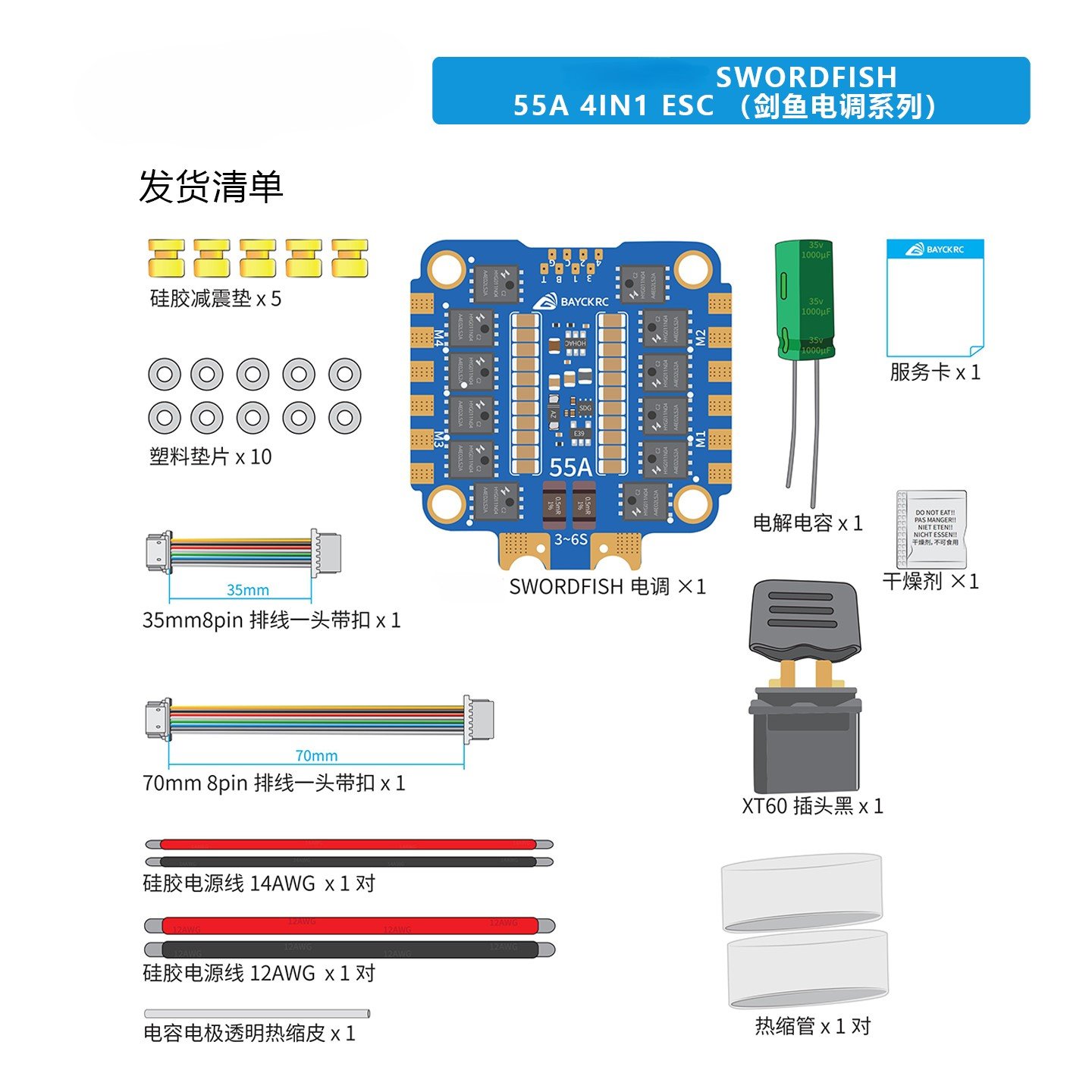
For teams standardizing propulsion, it helps to align ESC choice with your FPV motors and propulsion combo kits. If you are developing a custom drone soccer ball, our motor and propulsion matching service can help you specify the right ESC.
Ready to equip your team? Request a Team Kit Quote and we’ll help you configure the right drone ESCs for your fleet.
Frequently asked questions
Can I use a 20 x 20 mm ESC on a 30.5 mm stack?
No, the mounting holes will not align. You would need an adapter or a different frame. Stick to a 30.5 x 30.5 mm ESC for a 30.5 mm stack.
What current rating do I need for drone soccer?
Most 5-inch drone soccer builds use motors that draw 20–40A each. A 45–60A continuous ESC provides a safe margin. If you use high-kV motors or heavy props, go higher.
Does ESC size affect performance?
The physical size does not directly affect performance, but larger ESCs often have higher current ratings and better heat dissipation. The key is matching the current rating to your motors.
What firmware should I choose?
BLHeli_S is common and inexpensive. BLHeli_32 offers more features and telemetry. AM32 is open-source and gaining popularity. Choose based on your flight controller’s compatibility and your need for telemetry.
How do I protect ESCs in a drone soccer ball?
Ensure the ESC is securely mounted with soft-mount grommets to reduce vibration. Provide airflow if possible. Avoid covering the ESC with heat-sensitive materials. Consider a heat sink if the enclosure is sealed.
Can I mix different ESC models on the same drone?
It is not recommended. Different firmware or current ratings can cause uneven motor response. For clubs, standardize on one ESC model for all drones.
What should I confirm in writing before ordering?
Confirm mounting pattern, hole diameter, continuous current rating, firmware, protocol support, connector type, warranty, lead time, and MOQ. Ask for a sample if possible.
Conclusion
Choosing the right drone ESC for a 30.5 mm stack comes down to three things: mounting pattern, current rating, and firmware compatibility. For drone soccer teams and clubs, a 30.5 x 30.5 mm 4-in-1 ESC rated for at least 45–60A continuous is a safe starting point. Standardizing on one model simplifies spares, repairs, and configuration. Always verify specifications in writing before placing a bulk order. If you are ready to equip your team, Request a Team Kit Quote and our team will help you select the right ESCs for your fleet.