Quick summary
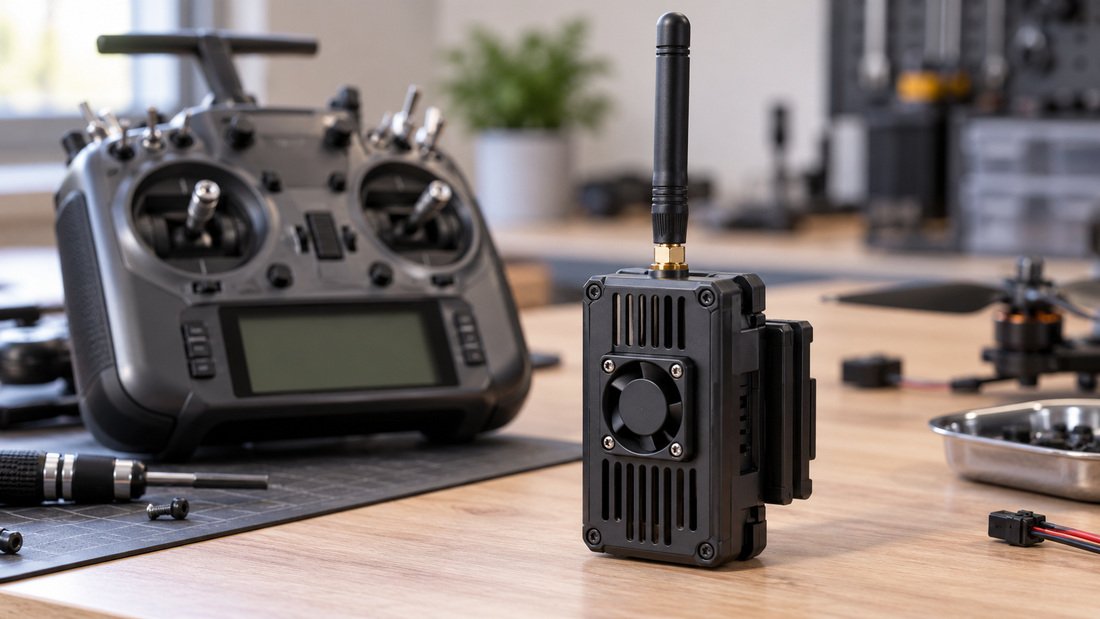
A 1W dual-band ELRS TX module is an external radio transmitter module that fits into a compatible handset and can output up to 1 watt of RF power on both 2.4GHz and 900MHz bands. It lets one radio talk to 2.4GHz receivers, 900MHz receivers, or both, without swapping hardware. For drone soccer clubs, school programs and multi-team events, this means fewer radios to buy, simpler inventory and one transmitter that can serve different aircraft and venues.
Key Takeaways
- A 1W dual-band ELRS TX module is an external transmitter module, not a standalone radio.
- “Dual-band” usually means 2.4GHz and 900MHz support in one module, so you can match different receivers.
- 1W is a maximum output power, not a guaranteed range. Antennas, receiver sensitivity and RF environment matter more.
- Higher power is most useful for outdoor flying, long-distance work or noisy RF venues, not small indoor arenas.
- For drone soccer programs, confirm handset compatibility, regulatory limits and antenna options before ordering a team kit.
What does “1W dual-band ELRS TX module” actually mean?
The phrase breaks into three parts. “ELRS” is ExpressLRS, an open-source radio control link. “TX module” means a transmitter module that plugs into the back of a compatible handset, adding ELRS capability to a radio that may not have it built in. “1W dual-band” describes the maximum RF output power and the frequency bands the module supports.
So a single product can serve 2.4GHz receivers, 900MHz receivers, or both depending on how it is configured. Confirm whether the module supports simultaneous dual-band operation or switches between bands, because the two designs behave differently.
How does a dual-band ELRS TX module work?
ELRS uses LoRa-based modulation, which trades raw data rate for link robustness. The transmitter sends small control packets in a timed schedule that the receiver expects. When the link degrades, ELRS can adjust packet rate and telemetry behavior to keep the control link alive.
A dual-band module adds a second RF front end and antenna path. The module’s firmware and your handset settings decide which band is active, or whether both are used together. The receiver must support the same band and protocol, so band matching is the first thing to check.
Why 2.4GHz and 900MHz behave differently
2.4GHz generally offers smaller antennas and higher packet rates, which suits responsive indoor flying and short-range drones. 900MHz generally penetrates obstacles and foliage better, which can help outdoors. Neither band is universally “better”; they are tools for different environments.
1W dual-band vs single-band: a practical comparison
Before choosing, decide what problem you are solving. A single-band 2.4GHz module is often enough for indoor school gyms and drone soccer arenas. A dual-band 1W module is more versatile for clubs that fly indoors and outdoors, or that maintain mixed receiver inventories.
| Consideration | Single-band 2.4GHz module | 1W dual-band module |
|---|---|---|
| Typical use | Indoor arenas, short-range FPV, school gyms | Mixed indoor/outdoor clubs, longer-range FPV |
| Receiver matching | Only 2.4GHz receivers | 2.4GHz and 900MHz receivers |
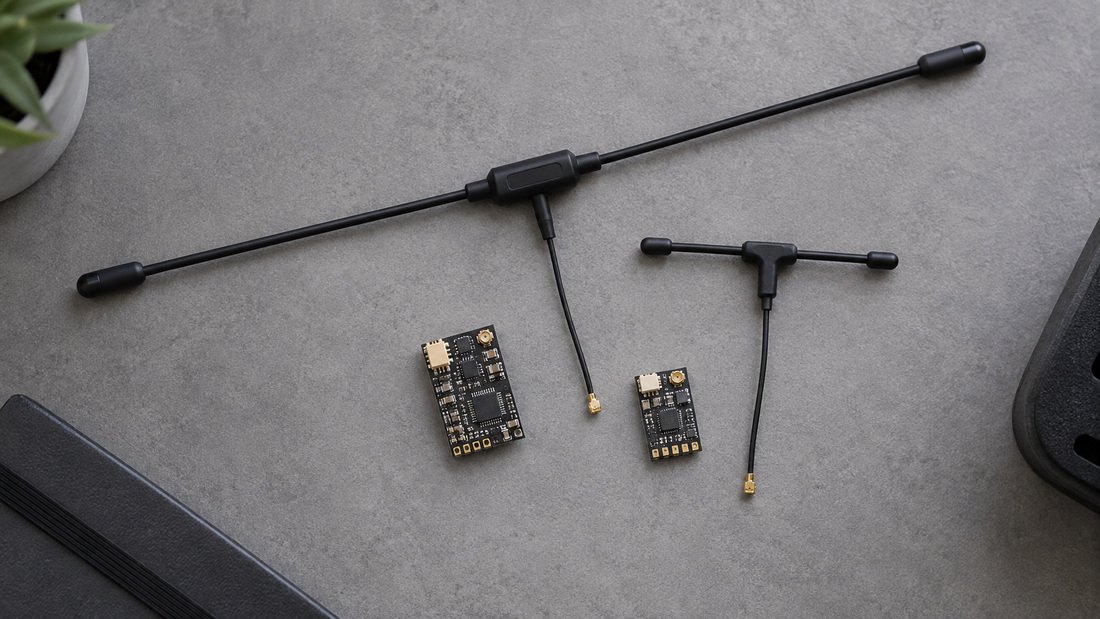
| Antenna setup | Simpler, fewer parts | May need band-specific or dual-band antennas |
| Power draw on handset | Usually lower | Higher at 1W; verify handset and battery limits |
| Regulatory complexity | Usually simpler | Bands and power limits vary by country and region |
| Cost and inventory | Lower cost per unit | One module covers more scenarios |
| Best for | Single-band programs | Programs with mixed gear or outdoor ambitions |
None of these differences are automatic. With an RF antenna and RF antenna choice, you are matching the transmitter to the receiver and the environment, not just buying more power. Explore ELRS and RF systems to see how modules, receivers and antennas are grouped.
Who actually needs a 1W dual-band ELRS TX module?
Not every program does. Buying more power than you need adds cost, weight and complexity. Use the list below to decide.
- Drone soccer clubs: a shared module that works with 2.4GHz and 900MHz team aircraft can reduce handset changes between sessions.
- School and youth programs: fewer variants to track means simpler storage, charging and spare planning.
- Event organizers: a mixed fleet with different receivers is easier to support when one module type can bind to both.
- Outdoor and long-range FPV: 900MHz and higher output can help where 2.4GHz struggles.
- Distributors and OEM/ODM teams: a versatile module SKU can simplify catalog logic, but confirm regional RF rules per market.
When a simpler module is the better buy
If your program only flies 2.4GHz indoors, a single-band module is usually easier to manage. It draws less power, needs fewer antennas and is easier for students to understand. Dual-band flexibility has little value if every receiver in your kit is 2.4GHz.
Common mistakes when buying ELRS transmitter modules
Most problems come from mismatched expectations rather than faulty hardware. Watch for these:
- Assuming 1W equals range. Range depends on receiver sensitivity, antennas, orientation and interference. Power is only one factor.
- Ignoring band compatibility. A 900MHz receiver will not work on a 2.4GHz-only setting, and vice versa.
- Forgetting handset compatibility. The module’s form factor and firmware must match your radio’s module bay and supported protocols.
- Overlooking local RF rules. Maximum allowed power and permitted bands vary by country. Check what applies where you fly.
- Neglecting antennas. A poor antenna can undo the benefit of a 1W module. Band-matched antennas matter.
- Skipping firmware planning. ELRS versions and target selection need to be consistent across the fleet.
Drone soccer and youth program considerations
Drone soccer teams operate in confined arenas with many radios active at once. In that setting, RF discipline matters more than raw power. High output near players and spectators can create interference and may conflict with venue or local rules.
For team kits, prioritize consistent firmware, clear labeling, spare antennas and a simple bind procedure students can follow. A dual-band module can help if your club uses both 2.4GHz and 900MHz gear, but standardizing on one band per program is often easier to teach and support.
Managing a shared module pool
If several students share modules, track which module is paired with which receiver. Keep a simple log of band, firmware version and antenna type. This reduces troubleshooting time during short practice sessions.
Buyer checklist for 1W dual-band ELRS TX modules
Use this checklist before requesting a quote. It separates general guidance from confirmed supplier terms, so you know what to verify in writing.
- Handset compatibility: confirm the module fits your radio’s bay and supported protocol.
- Band support: confirm whether it operates 2.4GHz, 900MHz, or both, and whether both can run at once.
- Firmware and targets: ask which firmware family and target the module uses, and whether updates are documented.
- Antenna options: request band-matched antenna guidance and any required connectors.
- Power behavior: ask how output power is set and what the handset battery draw looks like at 1W.
- Regulatory notes: ask for documentation you can review for your region. DPF does not provide legal advice.
- Warranty and lead time: request these in writing; do not assume figures from a web page or conversation.
- MOQ and pricing: confirm minimum order quantity, per-unit pricing and shipping terms for your team size.
- Samples: for club or OEM evaluation, ask about sample availability before committing to a fleet order.
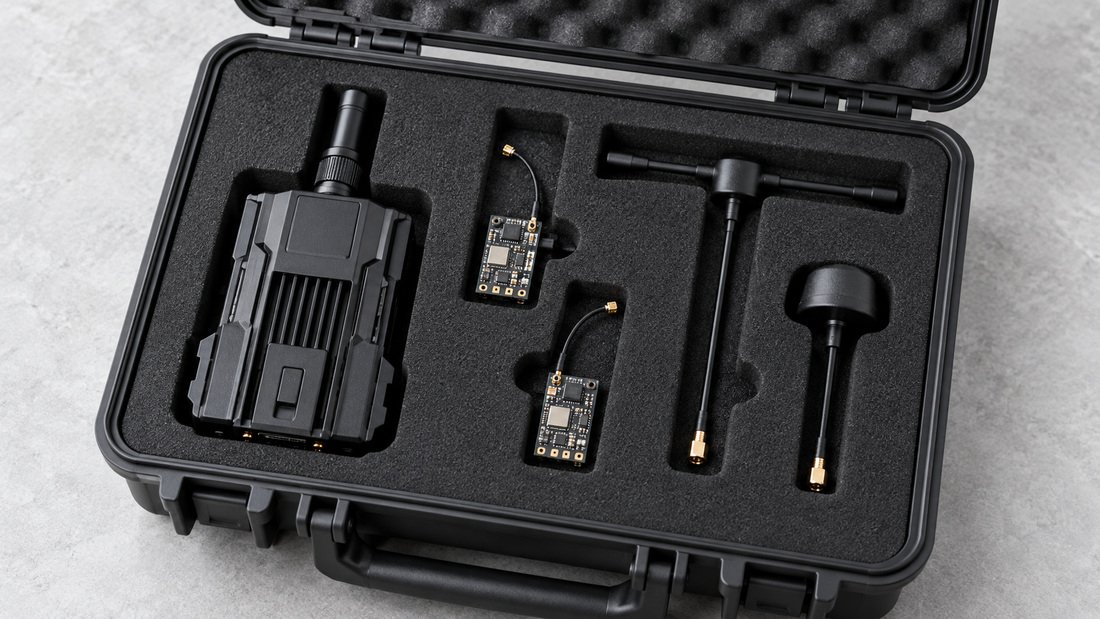
Ready to equip a team? Request a Team Kit Quote and share your handset model, receiver bands, expected team size and region so the conversation starts with real constraints.
Matching modules to receivers and antennas
A module is only one part of the link. Receivers and antennas determine how well the signal is received. Review ELRS receivers and RF antennas together with the module. If you are mixing older and newer gear, check ELRS receiver compatibility before ordering.
Frequently asked questions
Is a 1W dual-band ELRS TX module the same as a 1W radio?
No. It is a module that adds ELRS capability to a compatible handset. The handset still provides the controls, battery and user interface. You need both a compatible radio and the module to fly.
Do I need 1W for drone soccer?
Usually not. Indoor arenas are small, and lower power is often sufficient. Higher power can be useful outdoors or in RF-noisy environments, but confirm local rules and venue requirements first.
Can one module work with both 2.4GHz and 900MHz receivers?
That is the intent of a dual-band module, but the exact behavior depends on the design and firmware. Confirm whether it supports simultaneous dual-band operation or switches between bands, and check that your receivers match.
What antennas should I use?
Use antennas matched to the band you are operating and the module’s connector. Antenna placement and orientation also affect link quality. Ask your supplier for band-specific guidance rather than assuming one antenna fits all cases.
Are there legal limits on 1W transmission?
RF rules vary by country and region, and permitted power and bands differ. DPF does not provide legal advice. Ask your supplier for documentation you can review and confirm what applies where you fly.
How do I know if a module fits my handset?
Check the module bay form factor and the radio’s supported external module protocol. Share your exact handset model with the supplier and ask for written confirmation before ordering a team kit.
What should I confirm before a bulk order?
Request warranty terms, lead time, MOQ, pricing, antenna inclusion and firmware documentation in writing. For club or OEM evaluation, ask whether samples are available before committing to a fleet purchase.
Conclusion
A 1W dual-band ELRS TX module is a flexible external transmitter that can support 2.4GHz and 900MHz receivers from one handset. It is most valuable for clubs and programs with mixed gear or outdoor ambitions, while single-band modules remain simpler for pure indoor use. The right choice depends on your receivers, handset, venue and local RF rules, not on power alone.
Next step: gather your handset model, receiver bands, team size and region, then Request a Team Kit Quote. Ask for written confirmation of warranty, lead time, MOQ and antenna options before you commit.