Quick summary
A racing-grade drone soccer ball is built to survive repeated impacts, hold consistent thrust across dozens of matches, and be repaired between heats. A toy set is built around occasional home flight. The practical differences show up in four places: motor and propeller choice, ESC (electronic speed controller) current headroom, frame and cage (the outer protective sphere) construction, and whether spare parts, firmware and league-legal replacement components are available. If you are buying for a club, school or league, ask for those four specifications in writing before you compare prices.
Key Takeaways
- Ball design, not just component quality, decides whether a drone soccer ball keeps flying after contact in a match.
- ESCs and motors are usually the first parts to fail under league duty cycles; current headroom is the number to check.
- Toy sets rarely publish spare-part availability, firmware versions or replacement motors, which makes long-term team ownership expensive.
- For youth programs, serviceability (how fast a student can swap a motor or propeller) matters as much as flight performance.
- Confirm all commercial terms — MOQ, lead time, warranty, spare-parts list and compliance documentation — in writing before ordering.
What does “racing-grade” actually mean for a drone soccer ball?
In drone soccer, the aircraft is flown inside a protective ball or cage and scored by passing through opponent hoops. “Racing-grade” describes equipment specified for continuous indoor competition, not for occasional recreational flight. That means components chosen for thermal margin, impact tolerance and repeatability rather than lowest cost.
The phrase is not a formal standard. There is no single global body that certifies a drone soccer ball as “racing-grade.” Treat it as a buying category: it describes how the product was specified, tested and supported. Your job as a buyer is to convert that marketing label into concrete specifications you can compare across suppliers.
The four engineering differences that matter
1. Motor and propeller specification
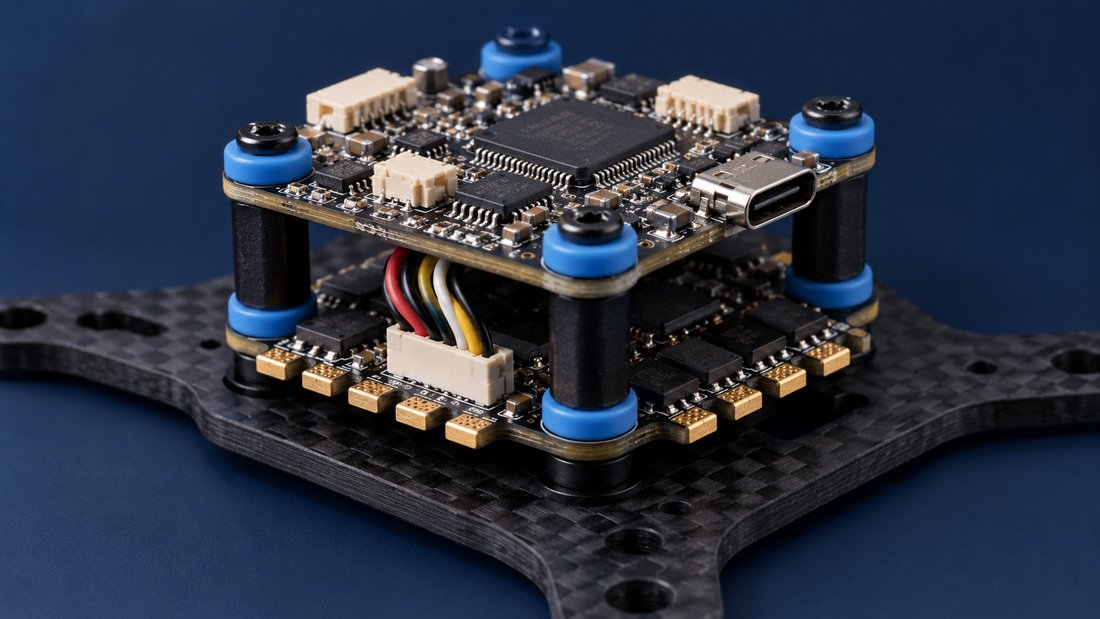
Competition drones are tuned for rapid throttle changes indoors, where the ball hits walls, hoops and other drones. Motors with higher torque and tighter manufacturing tolerance hold thrust more consistently over a match. Toy motors often use lower-grade bearings and looser tolerances, which shows up as vibration, heat and shorter life.
Practical check: ask for the motor’s rated thrust, weight and recommended propeller pairing, and how many matches the supplier expects before service. If a supplier cannot state a service interval, treat that as missing information rather than a guarantee.
2. ESC current headroom
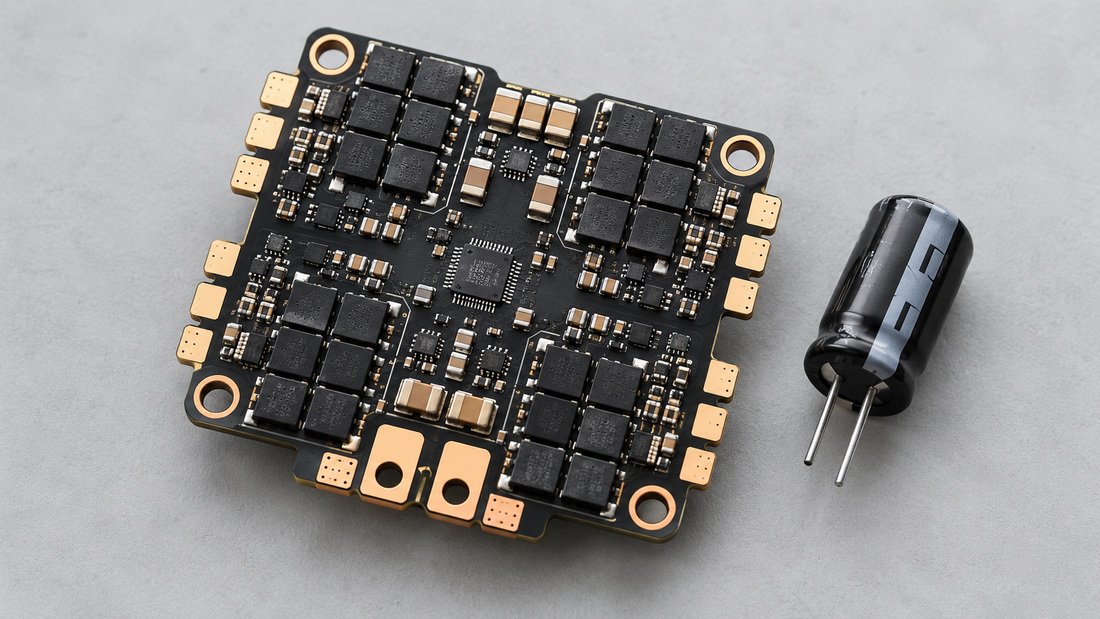
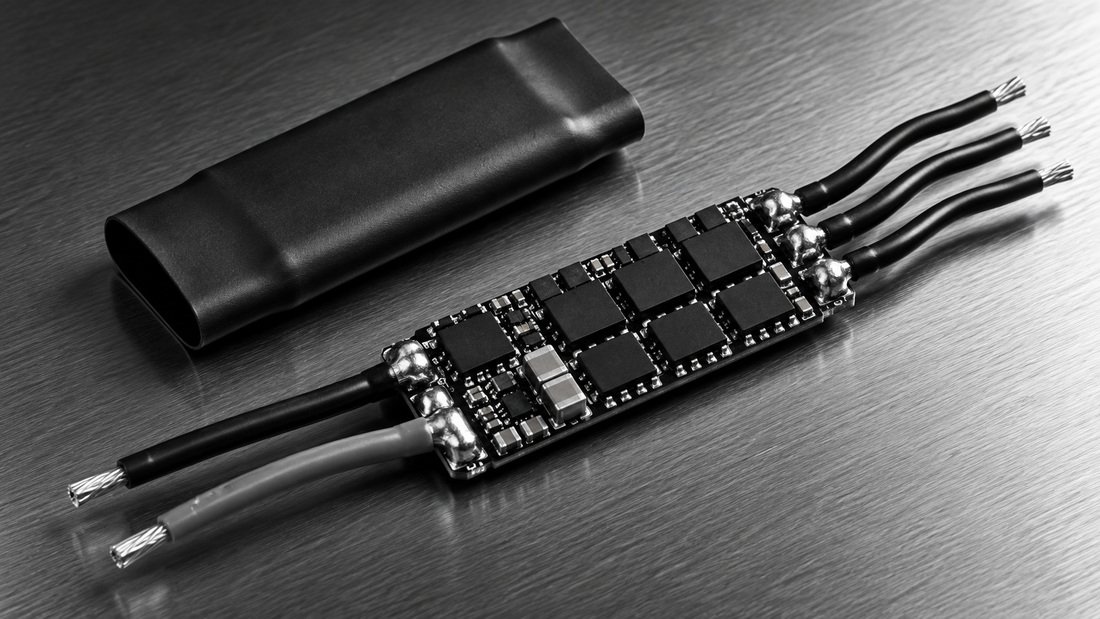
The ESC (electronic speed controller) converts flight-controller commands into motor power. Under match conditions, current draw spikes during aggressive corrections and impacts. If the ESC’s continuous current rating has little headroom above the motor’s peak draw, it runs hot and fails prematurely. This is the single most common weak point in cheap builds and the first upgrade in serious ones.
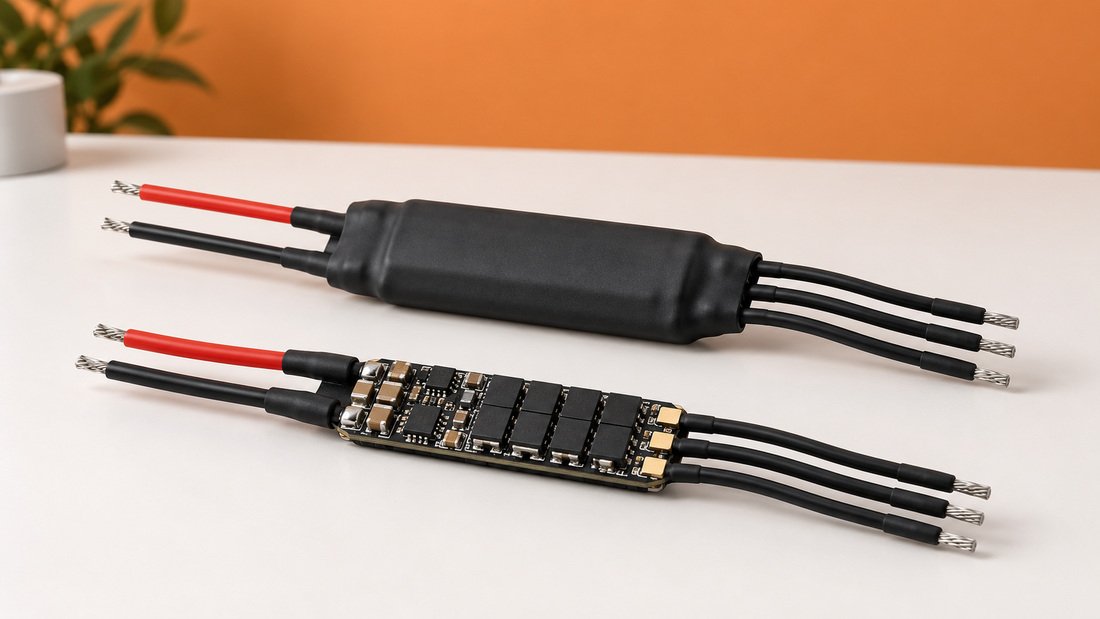
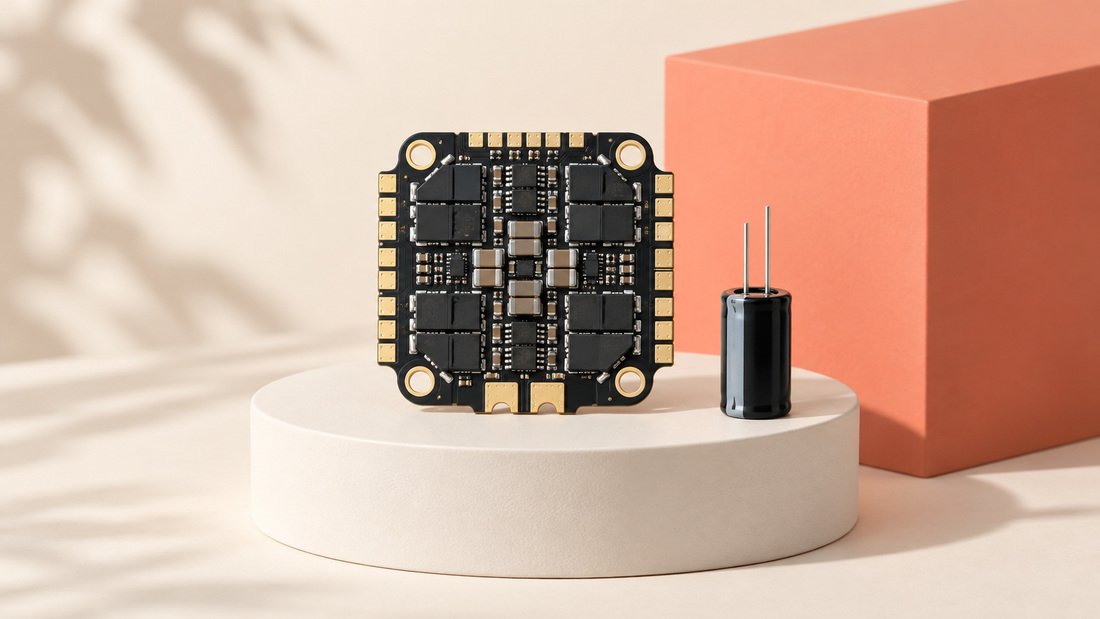
When comparing drone soccer systems, ask for the ESC’s continuous and burst current ratings, its firmware, and whether it is supplied as a four-in-one board or individual modules. Four-in-one boards simplify wiring and reduce weight; single modules are easier and cheaper to replace individually. Neither is universally better — the right answer depends on how your team services equipment.
3. Frame and ball/cage construction
The outer ball absorbs the energy of impacts; the internal frame holds geometry so the drone stays balanced after contact. Racing-grade designs use materials that deform and recover predictably, with fasteners and mounts that survive repeated disassembly. Toy cages often crack at mounting points or lose shape, which changes flight characteristics and frustrates younger pilots.
Ask what the ball is made from, whether individual cage segments are replaceable, and whether the internal frame can be re-aligned after a hard hit. For school programs, replaceable segments matter more than absolute strength because a damaged cage that can be repaired in five minutes keeps a class flying.
4. Serviceability and parts availability
A competition ball is a consumable machine. Propellers, motors and ESCs will be replaced during a season. If spare parts are not listed, stocked or shipped in compatible batches, a club ends up with grounded aircraft. Racing-grade equipment comes with a documented spare-parts path — not necessarily an expensive one, but a predictable one.
Comparison table: toy set vs racing-grade drone soccer equipment
| Attribute | Toy set | Racing-grade drone soccer equipment |
|---|---|---|
| Primary use | Occasional recreational flight | Repeatable indoor competition and training |
| Motor selection | Cost-driven, limited spec disclosure | Published thrust/weight pairing and service expectations |
| ESC headroom | Seldom stated | Continuous and burst ratings documented |
| ESC format | Often integrated, hard to replace | Four-in-one board or replaceable single modules |
| Ball/cage repair | Replacement only | Replaceable segments and documented frame alignment |
| Spare parts | Rarely listed | Published spare-parts list with compatible batches |
| Firmware/updates | Typically none | Stated firmware version and update path |
| Documentation | Basic manual | Specs, service notes, compliance documents on request |
| Typical owner | Home user | Club, school, league or distributor |
Prices and commercial terms differ by supplier and region. Compare specifications column by column rather than assuming a higher price automatically means racing-grade build quality.
What this means for schools and youth programs
School and youth buyers carry a different risk profile from hobby pilots. Equipment must be safe, repairable by students under supervision, and predictable across a class of twenty or more aircraft. Program staff also need to understand the regulatory context before flying.
In the United States, drones flown for educational purposes are regulated either under the Exception for Limited Recreational Operations of Unmanned Aircraft (49 U.S.C. § 44809) or under the Small Unmanned Aircraft Systems Rule (14 CFR Part 107). The FAA notes that qualifying educational organizations include institutions of higher education, Junior Reserve Officers’ Training Corps (JROTC) programs, and educational programs chartered by an FAA-recognized Community Based Organization. Organizations that do not qualify must generally operate under Part 107. Educational institutions can also request a FAA-Recognized Identification Area (FRIA), where drones may be flown without Remote ID. See the FAA’s educational users guidance for the current rules: https://www.faa.gov/uas/educational_users. Rules differ outside the United States — confirm local requirements.
Because of this, program buyers should weight durability and parts logistics above peak performance. A slightly slower ball that a student can repair between matches is usually more useful than a faster one that sits in a box waiting for a replacement part. Programs building a curriculum around this equipment can explore STEM drone education and training resources and schools and training organizations support.
Planning a season of equipment? Send your class size, competition format and service expectations to our team and we will help you specify a consistent parts list. Start a conversation with our team.
Common mistakes when buying drone soccer equipment
- Comparing price before specification. A cheaper ball with no spare-parts path often costs more over a season.
- Buying one hero aircraft. Clubs need matched spares, not a single high-spec unit.
- Ignoring ESC headroom. Underspecified ESCs fail first and can damage motors.
- Assuming firmware is current. Ask which firmware version ships and how updates are handled.
- Mixing incompatible batches. Parts from different production runs may not match in weight or tuning.
- Skipping the regulatory check. Confirm whether your program flies under § 44809 or Part 107 before purchase planning.
Buyer checklist before you order
- Written motor spec: thrust, weight, recommended propeller, expected service interval.
- ESC continuous and burst current ratings, form factor (four-in-one or single modules), firmware version.
- Ball/cage material and whether segments are individually replaceable.
- Published spare-parts list with part numbers and matching production batches.
- Confirmed compatibility between motors, ESCs and flight controllers in the kit.
- Documentation: user manual, service notes, and any compliance documents the supplier can provide.
- Commercial terms in writing: MOQ, lead time, warranty period, shipping and returns — request these explicitly, as they vary by supplier and region.
- Sample unit for evaluation before a full team kit order.
How clubs and leagues should structure a kit
For drone soccer clubs, a practical structure is: match-ready aircraft, a matched spare set of motors and ESCs, replaceable ball segments, and propellers. That keeps aircraft flying while repairs happen in parallel. Event organizers should also carry a spare flight controller and a verified firmware reference unit for troubleshooting.
For drone soccer competitions, consistency across teams matters. If teams use different motor or ESC revisions, performance varies and results become harder to compare. Leagues and associations can reduce this by standardizing a parts list and a revision number for the season.
Frequently asked questions
Is a toy drone soccer set safe to use in a school club?
Safety depends on the specific product, flight area and supervision, not on the category label. Many toy sets lack published specifications, which makes risk assessment harder. Ask any supplier for documentation and check your local rules before flying.
Can a toy set be upgraded into competition equipment?
Sometimes, but it is rarely economical. If the ESCs, motors and ball structure are not replaceable or specified, upgrading usually means replacing most of the aircraft. Selling the toy set and buying a specified platform is often simpler.
How many spare motors and ESCs should a team carry?
There is no universal number. It depends on fleet size, match frequency and repair speed. A reasonable starting point is one spare set per active aircraft, then adjust based on your actual failure log. Track failures from your first season.
Does a racing-grade ball need a different battery?
Higher-current motors and ESCs draw more from the pack, so battery discharge rating and connector quality matter more than in a toy set. Ask the supplier which battery specification the kit was designed around, and confirm it in writing.
What is the difference between a four-in-one ESC and single ESC modules?
A four-in-one board integrates four ESCs on one PCB, saving weight and simplifying wiring. Single modules are individually replaceable, which can lower repair cost. Racing-grade kits may use either; choose based on your service model.
How do we confirm parts are compatible across a season?
Request a parts list with part numbers and the production revision for each item, and ask the supplier to confirm in writing that future orders will match. Keep a record of what you installed in each aircraft.
Should we order samples before a full team kit?
Yes, where possible. A sample lets you test repair time, check spare-part availability in practice, and confirm that documentation matches the delivered product. Confirm sample pricing and lead time in writing first.
Conclusion
The difference between racing-grade drone soccer equipment and a toy set is not one feature — it is a set of decisions about motors, ESC headroom, ball construction and parts support. For clubs, schools and leagues, the deciding factor is usually serviceability: how quickly can a damaged aircraft return to the air? Compare specifications line by line, request documentation, and confirm all commercial terms in writing.
As a next step, define your fleet size and service expectations, then request a written specification and spare-parts list from your supplier. Drone Parts Factory can support Request a Team Kit Quote alongside our drone soccer, motor and ESC product lines.