Quick summary
A flip in a drone soccer ball is usually a recovery problem, not a power problem: after rotation, the aircraft is inverted or off-axis, the pilot over-corrects, and the ball contacts the frame or net. Recovery depends on three things: predictable drone soccer ball electronics (flight controller, ESC, receiver, and firmware), a transmitter mix and rates that let a young pilot stop rotation quickly, and a repeatable pilot drill. Most clubs fix flip recovery by standardising the tune, reducing rates, and practising a three-step recovery rather than buying more thrust.
Key Takeaways
- Flip recovery starts with the flight controller and receiver chain, not the motor: after a flip, the controller must re-level the ball before the pilot adds throttle.
- Betaflight is open-source flight control software that runs on the flight controller; the manufacturer of each board supports that hardware, so clubs should confirm board support before standardising a fleet (see Betaflight getting started).
- Lower rates and a defined recovery mix give new pilots time to stop rotation before the ball contacts the net.
- Standardise one electronics stack per age group so coaches troubleshoot the same way at every session.
- For procurement, request written confirmation of board support, firmware version, connector type, and spare-part availability before you order a team kit.
What actually happens during a flip in a drone soccer ball
A flip in drone soccer is a rapid roll or pitch rotation, often used to change the ball’s orientation or to protect the goal. After the rotation, the aircraft may be inverted or tilted well past the level attitude. The flight controller reads the gyroscope (rotation sensor) and accelerometer (tilt and gravity sensor) and calculates how much correction to send to the electronic speed controllers (ESCs), which drive the motors.
If the pilot adds throttle before the controller has corrected attitude, the ball climbs in the wrong direction and contacts the frame, net, or another aircraft. That is why coaches describe flip recovery as a timing problem more often than a power problem.
Betaflight describes the flight controller as a small computer that reads sensors, computes the desired actions, sends commands to the ESC to control the motors, and can control peripherals such as VTX (video transmitter) and radio link telemetry. That description is useful for coaching: recovery is the controller doing its job while the pilot does less.
Which drone soccer ball electronics affect recovery most
Flight controller and firmware
The flight controller is the single most important part for flip recovery. The firmware running on it determines how attitude correction, rates, and filters behave. Betaflight notes that it supports a wide variety of receiver protocols, including CRSF, FPort, SBUS, and Spektrum, and ESC protocols including DShot. It also supports OSD (on-screen display) across analog and digital video systems, which matters for coaching because battery voltage, flight timers, and status can be shown to the pilot.
‘
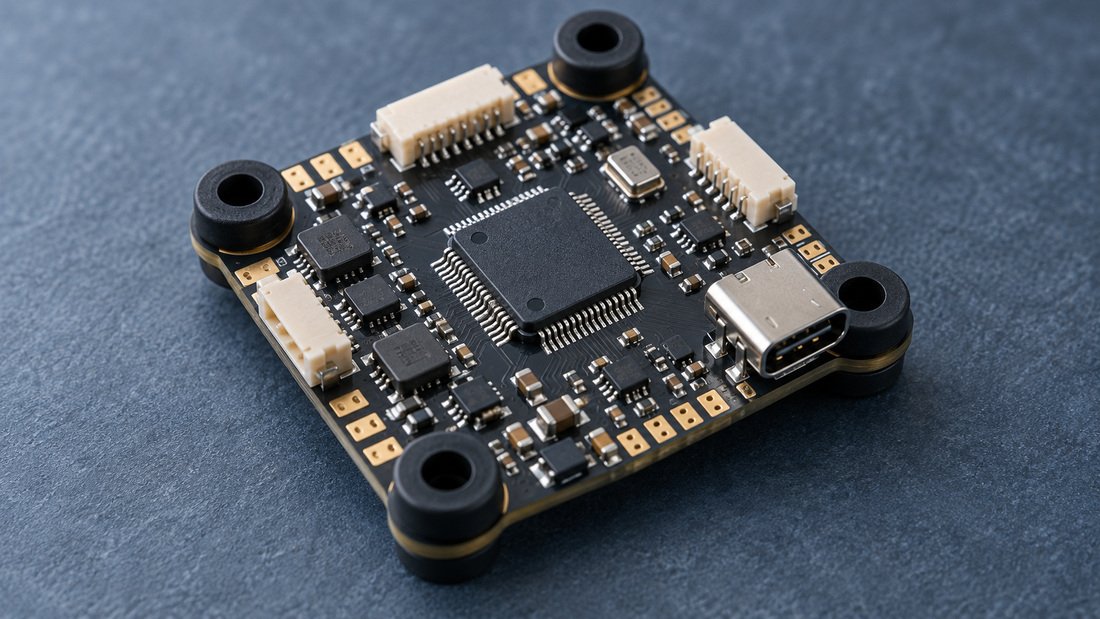
For a club, the practical question is not which firmware is best in the abstract. It is whether every ball in a training fleet runs the same firmware version and the same tune profile. A mixed fleet makes flip recovery coaching inconsistent because each pilot is fighting a different feel.
ESC and motor response
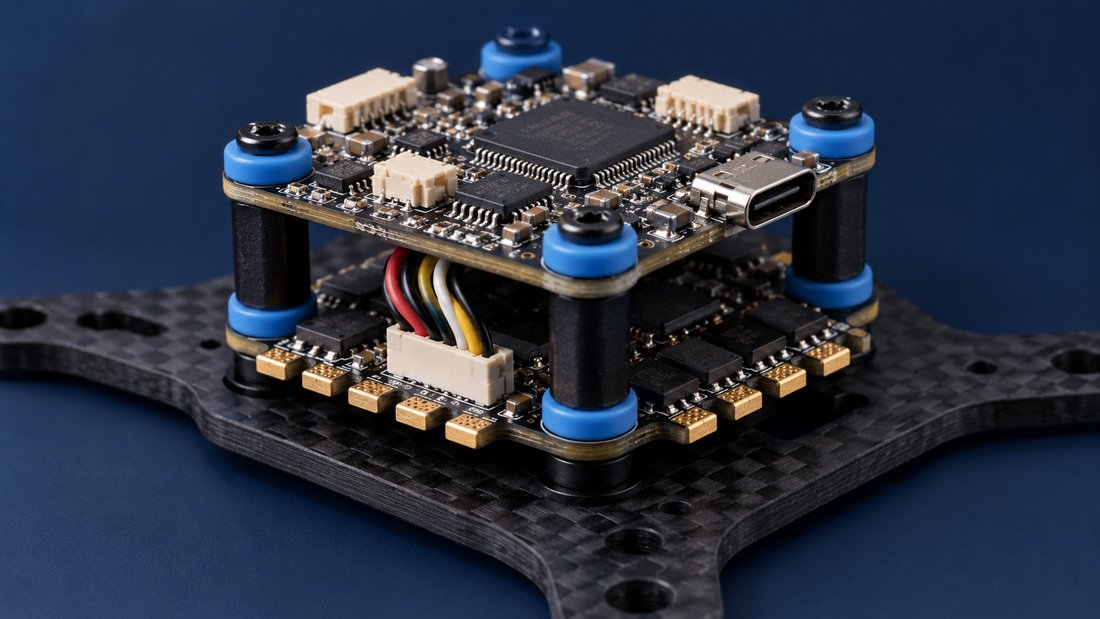
The ESC translates flight controller commands into motor speed. Betaflight supports multiple ESC protocols such as DShot, Oneshot, and Multishot. For drone soccer, consistent ESC firmware and calibration across the fleet matter more than the specific protocol, because inconsistent response makes a flip feel different from ball to ball.
‘
Receiver and radio link
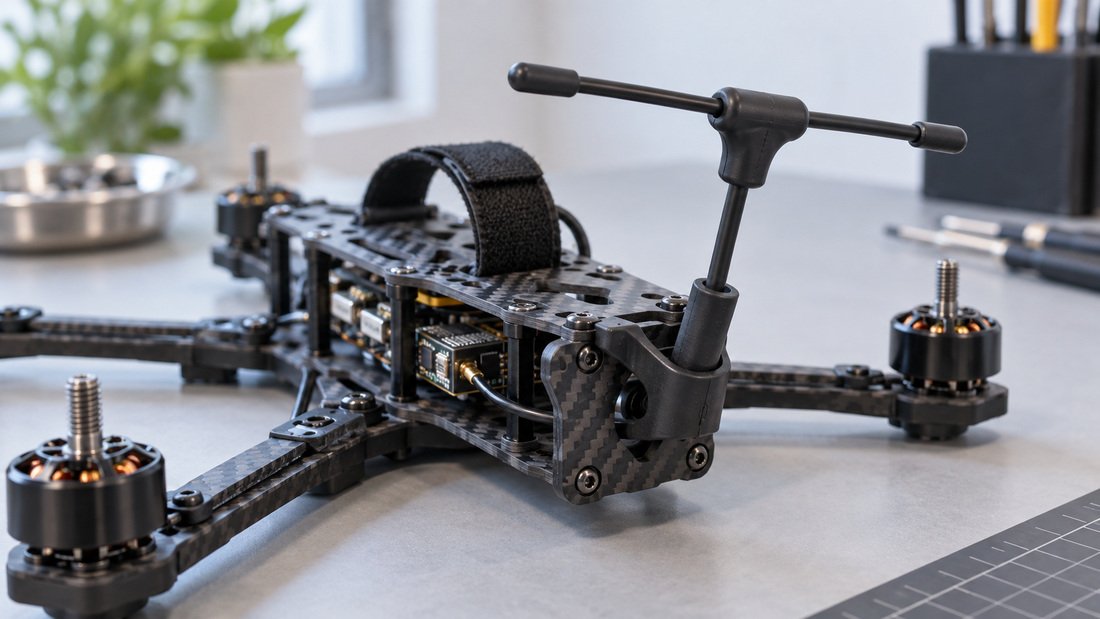
A flip is a fast, high-stick-input maneuver. If the receiver link drops frames or the antenna is poorly mounted, the pilot’s correction arrives late. That delay looks like a pilot error but is an electronics issue. Antenna placement inside a protective ball shell is therefore a recovery topic, not just a range topic.
‘
Video and DVR for coaching
Recovery is hard to coach without evidence. A DVR (digital video recorder) recording of the pilot’s view lets a coach show exactly when the flip started and whether the pilot added throttle too early. Video and DVR are coaching tools as much as pilot aids.
Step-by-step flip recovery for a drone soccer ball
The sequence below is a coaching framework, not a universal firmware setting. Confirm it against your own fleet and firmware documentation.
- Stop the input. Centre the rotation stick immediately. Additional input during an inverted moment usually worsens the attitude error.
- Let the controller re-level. Pause briefly so the flight controller can read the gyro and accelerometer and send the correction.
- Add throttle smoothly. Once the ball is close to level, add throttle gradually. A sudden throttle punch during recovery is the most common cause of a second contact.
- Re-aim. Only after the ball is stable should the pilot reposition for play.
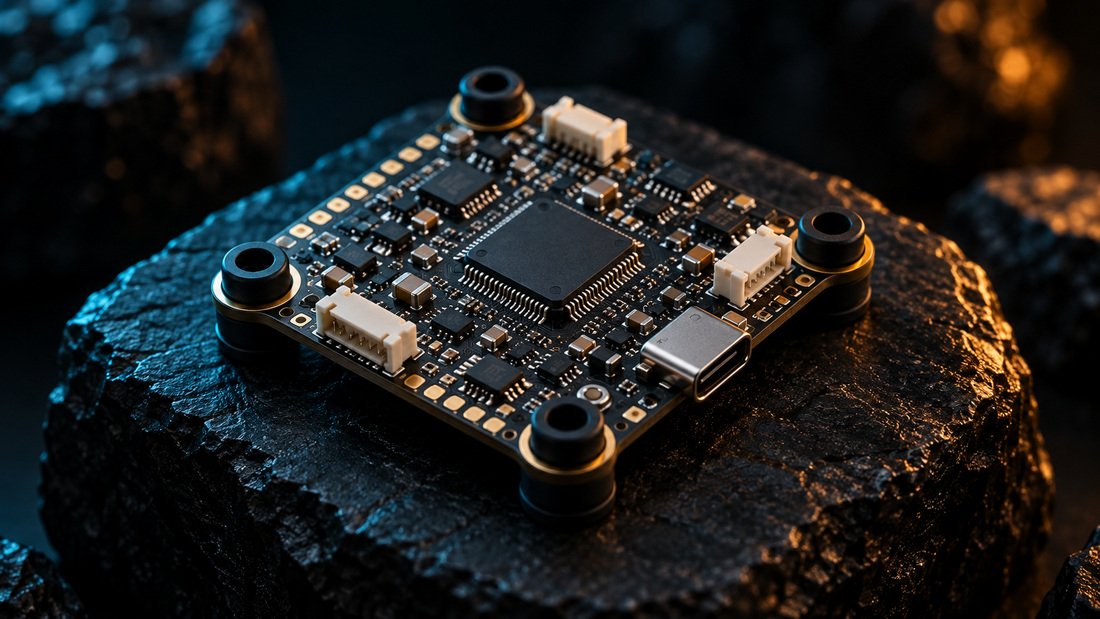
Betaflight’s own documentation explains that the flight controller can use a gyroscope for basic flight control and an accelerometer for self-levelling. That is why self-levelling modes can make early flip recovery easier for beginners: the controller does more of the correction work, and the pilot does less.
‘
Setup decisions that make recovery easier
There is no single correct tune for drone soccer, because ball weight, frame design, and pilot skill all vary. What clubs can control is consistency. The table below compares common setup choices and their likely effect on flip recovery.
| Setup choice | Likely effect on flip recovery | Trade-off to consider |
|---|---|---|
| Lower control rates | Rotation stops faster; less overshoot | Slower aggressive maneuvers for advanced pilots |
| Self-levelling mode available | Controller assists recovery | Some pilots rely on it and delay learning acro control |
| Higher rates | Faster flips for advanced play | Harder recovery for beginners; more contacts |
| Standardised firmware version | Coaches give the same advice to every pilot | Requires a fleet update process |
| Better antenna placement | Fewer late corrections from link dropouts | Requires space inside the ball shell |
| DVR recording | Coach can review the exact moment of failure | Adds weight and cost per ball |
Common mistakes that make flips worse
- Adding throttle during the flip. This is the most common error; it turns a recoverable rotation into a crash.
- Flying different tunes on each ball. Pilots cannot build muscle memory if every ball feels different.
- Ignoring receiver antenna placement. A blocked or poorly mounted antenna causes delayed pilot input, which looks like a pilot mistake.
- Mixing firmware versions across a fleet. Buttons, menus, and behavior differ, slowing troubleshooting during practice.
- Buying higher-thrust motors to fix recovery. Recovery is usually a control and timing issue; more thrust often worsens a mid-flip contact.
- Not recording practice. Without video, the coach and pilot argue about what happened instead of reviewing it.
Planning a team kit or a fleet refresh? Get help selecting a consistent flight controller, ESC, and receiver combination for your age group and league rules. Request a Team Kit Quote
Procurement checklist for clubs and programme managers
Use this checklist before ordering. If a supplier cannot answer in writing, treat the answer as unconfirmed.
- Flight controller board support: Ask which firmware the board is supported under and by whom. Betaflight states that support for each board comes from its manufacturer.
- Firmware version: Confirm the version shipped and whether the supplier can supply the same version on a repeat order.
- Receiver protocol: Confirm the protocol (for example CRSF, FPort, or SBUS) and that it matches your transmitters.
- ESC protocol and connectors: Confirm the ESC protocol and the physical connector type so spares fit existing balls.
- Antenna mounting: Ask for the recommended antenna position inside your ball shell, and check it does not conflict with league rules.
- Spare parts: Request a written spares list for the parts most likely to fail after contact.
- Documentation: Ask for wiring diagrams and firmware notes your volunteer coaches can follow.
- Compatibility with existing fleet: If you already own balls, confirm the new electronics match current controllers and batteries.
- Bulk consistency: Ask whether units in a single order are configured identically before shipping.
- Support channel: Confirm how technical questions are handled and in what language.
‘
How to run a flip recovery training session
Give every pilot the same drill so improvement is measurable without telemetry.
- Warm up with level hovering to confirm each ball behaves the same.
- Practise a single commanded flip, then a full stop, with no throttle until the ball is level.
- Progress to flip, stop, then reposition to a target.
- Record each attempt on DVR and review one attempt per pilot.
- Log which ball was used, so electronics issues can be separated from pilot issues.
For a broader view of the parts involved, review the FPV electronics range and the individual flight controllers, electronic speed controllers, and FPV video receivers categories. If you record practice, a FPV DVR is the simplest coaching upgrade.
Frequently asked questions
Is a flip in drone soccer a pilot error or an electronics problem?
It can be either. A pilot who adds throttle mid-flip causes a crash that looks like an electronics problem. A fleet with mixed tunes or poor antenna placement causes delays that look like pilot errors. Reviewing DVR footage and logging which ball was used helps separate the two.
Should beginners use self-levelling mode to learn flip recovery?
Self-levelling can help early recovery because the flight controller does more of the correction. Betaflight documentation notes that an accelerometer can be used for self-levelling. The trade-off is that pilots may delay learning manual control, so many coaches phase it out as skill improves.
Do lower rates make flip recovery easier?
Generally yes for new pilots, because the rotation stops faster and overshoot is smaller. The trade-off is slower aggressive maneuvers, which advanced players may need.
How does the flight controller know the ball is upside down?
It reads the gyroscope and, when available, the accelerometer. Betaflight describes the gyroscope as the sensor for basic flight control and the accelerometer as the sensor for self-levelling. The controller then sends correction commands to the ESC.
Can a weak radio link cause flip recovery failures?
Yes. A delayed correction looks identical to a late pilot input. Antenna placement inside a ball shell and the choice of receiver protocol both affect link reliability, so confirm the protocol matches your transmitters.
Should we buy more powerful motors to improve recovery?
Usually not first. Recovery is predominantly a control and timing issue. Increasing thrust before standardising tunes and rates tends to make contact worse, not better. Verify the root cause before changing hardware.
What should we confirm in writing before ordering a team kit?
Ask for board firmware support, shipped firmware version, receiver and ESC protocol, connector types, antenna guidance, spares availability, and whether units in one order are configured identically. Treat any unanswered item as unconfirmed.
Conclusion
Flip recovery in a drone soccer ball is a systems problem. The flight controller and firmware set the ceiling on how well the ball can correct itself, the receiver link determines whether the pilot’s correction arrives on time, and the pilot’s drill determines whether throttle is added at the right moment. Clubs get the fastest improvement by standardising electronics and tunes across a fleet, lowering rates for beginners, using self-levelling as a teaching aid, and reviewing DVR footage instead of guessing.
For procurement, the next step is a documented conversation. Share your fleet size, age groups, league rules, and current electronics with us, and ask for written confirmation of firmware support, connectors, and spares before you commit. Request a Team Kit Quote to start that review.