Quick summary
Starting drone soccer in schools takes more than buying drones. Most programs need five things: a safe indoor flight space, a class set of drone soccer equipment (ball drones, goals, controllers, batteries, spares), a coach or teacher with basic drone knowledge, a simple operating plan covering rules and supervision, and a realistic budget for consumables and repairs. This article explains what to buy, what to check, and what to ask suppliers before you commit.
Key Takeaways
- Start with the venue, not the kit: a gym or hall with clear netting and predictable airflow is the foundation of a safe program.
- Budget for spares early: propellers, batteries, motors, and ball shells will be consumed faster than most first-time buyers expect.
- Check your legal route before first flight: in the US, educational operations may fall under 49 U.S.C. § 44809 or Part 107 depending on the organization and purpose. Confirm which applies to you. See the FAA educational users page: https://www.faa.gov/uas/educational_users
- FRIAs matter for indoor and campus flying: eligible educational institutions can request a FAA-Recognized Identification Area (FRIA) where drones can fly without Remote ID. Source: https://www.faa.gov/uas/educational_users
- Write your procurement spec around training and support, not just the drone price. Ask for curriculum fit, spare parts lists, and warranty terms in writing.
What Is Drone Soccer and Why Schools Adopt It
Drone soccer is a team sport where players fly small, enclosed drones (often called ball drones) inside a protective cage or ball. Teams score by passing through a goal ring, and matches are usually short, fast, and indoor. Because the drones are enclosed and fly in a netted arena, the format is easier to supervise than open-field FPV flying.
For schools, the appeal is practical: it blends engineering, teamwork, and competition in a single activity. It can sit inside a STEM elective, an after-school club, or a district league. Many programs start as a club and grow into a competitive team once equipment and coaching stabilize.
What a School Actually Needs to Start
A minimum viable drone soccer program can run with one class set, one arena, and one trained adult. But “minimum” is not the same as “good.” Below is a practical breakdown of the categories you should plan for.
1. A Safe Indoor Flight Venue
Drone soccer is usually played indoors on a smooth floor. You need enough space for the arena plus a safety perimeter for players and spectators. Ceiling height matters because ball drones can climb. Look for a gym, cafeteria, or multipurpose hall with:
- Clear floor space for a netted arena and goal rings.
- Netting or barriers that keep drones inside the play area.
- Controlled airflow (HVAC vents and open doors can push small drones off line).
- Access to power for charging batteries, with a fire-safe charging area.
- Storage for cases, spares, and charging equipment.
2. Drone Soccer Equipment
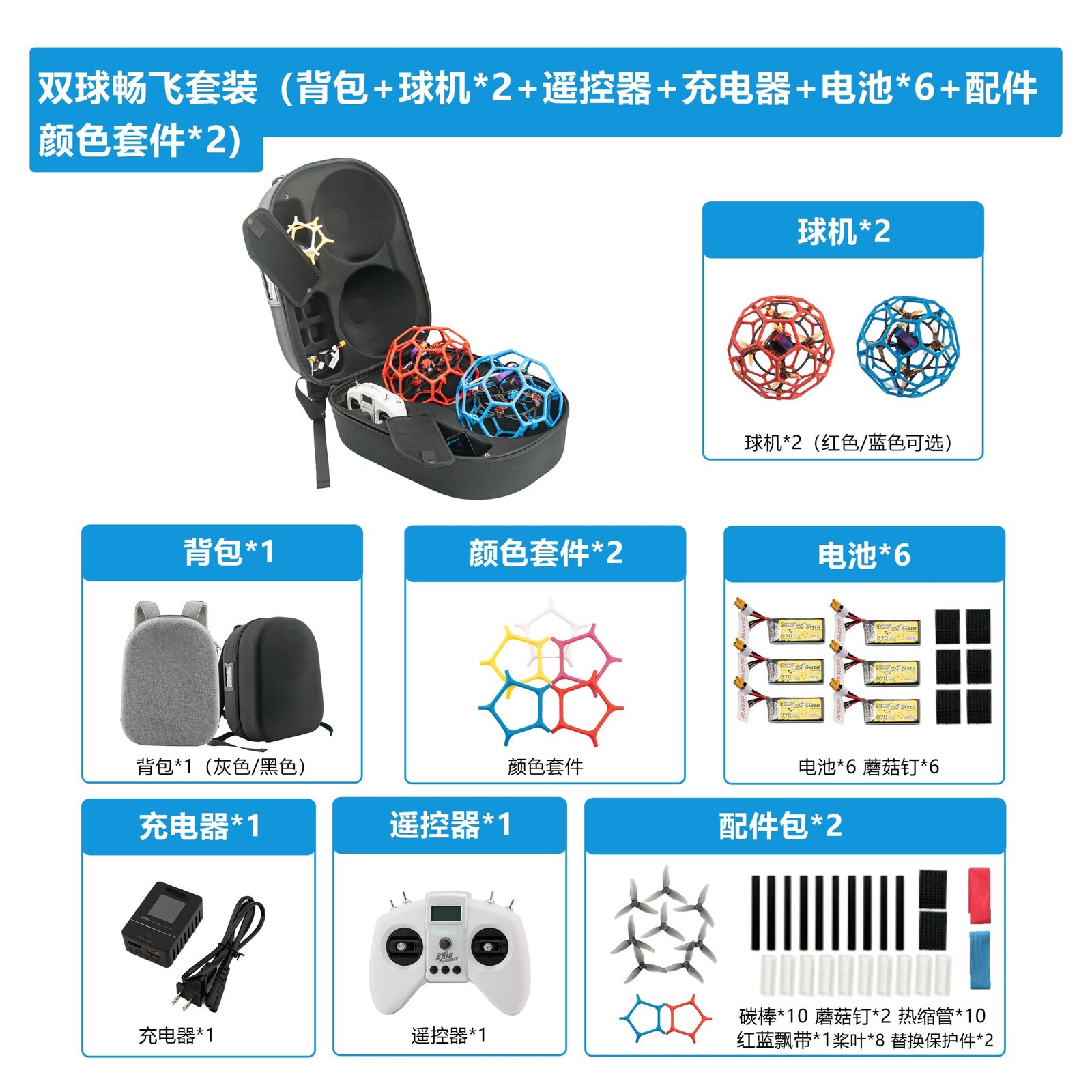
Most school programs need the same core equipment categories. Exact models and specifications vary by supplier, so use this as a category checklist rather than a fixed bill of materials.
| Category | What it covers | Why it matters for schools |
|---|---|---|
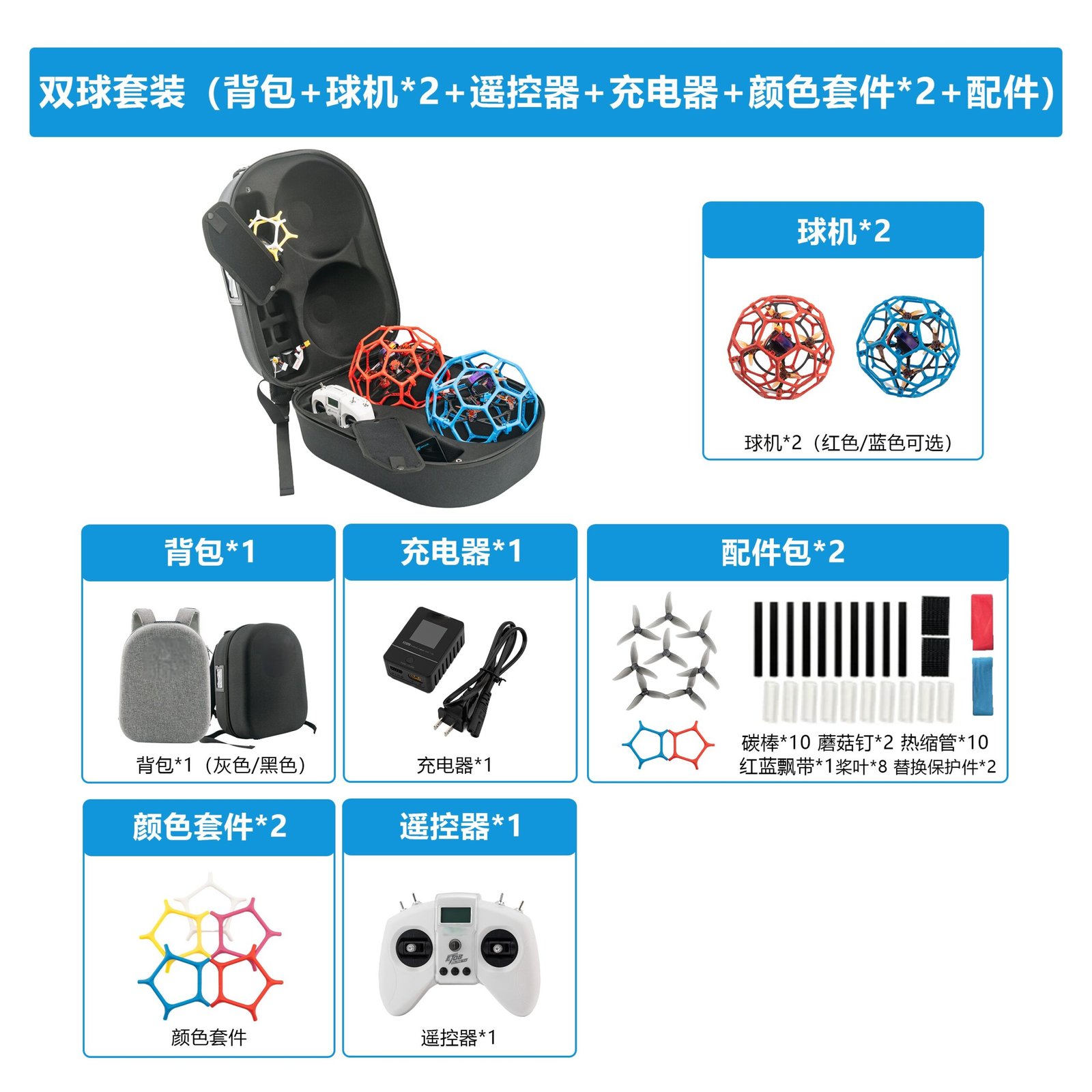
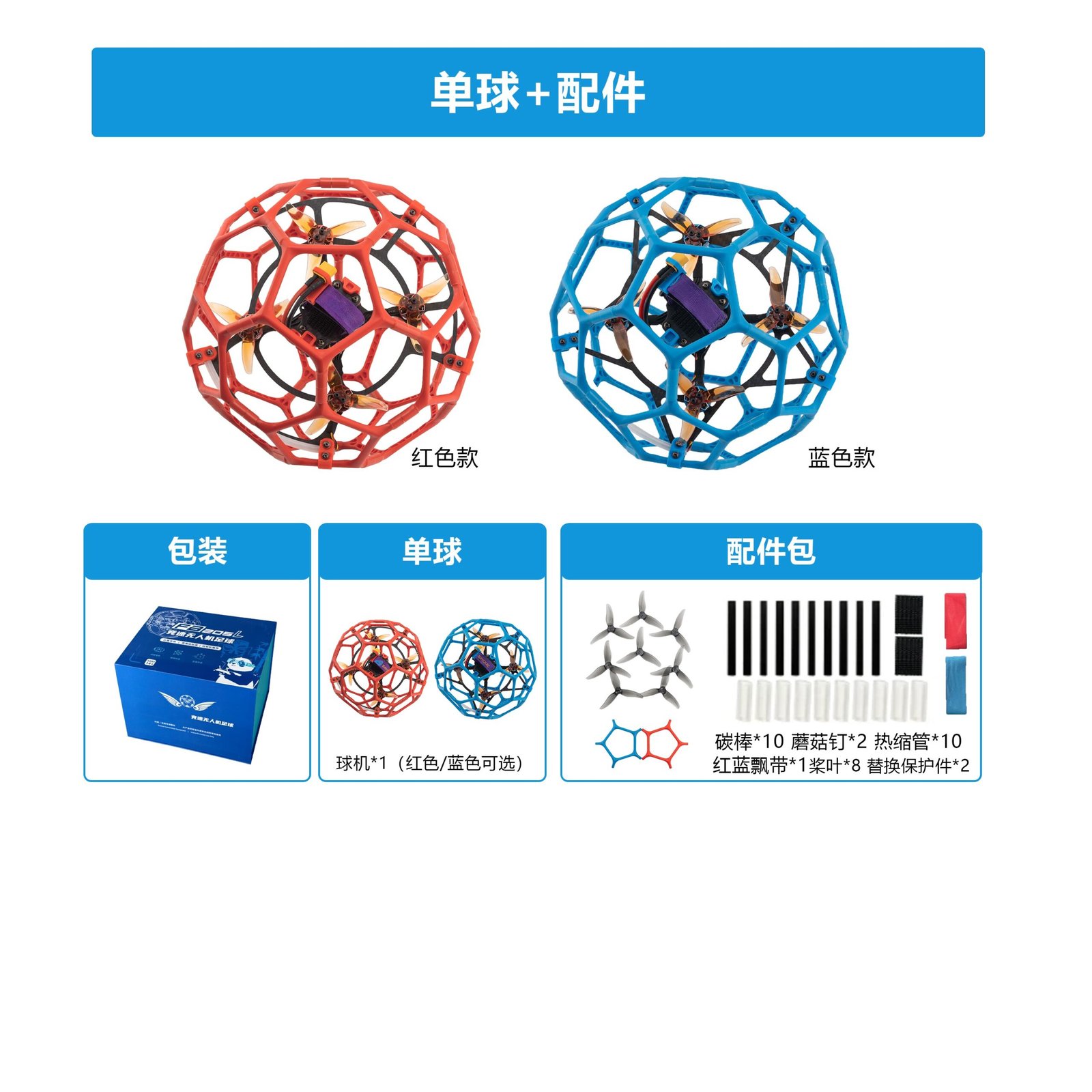
| Ball drones | Enclosed drones with protective shells | Enclosure reduces damage and injury risk indoors |
| Transmitters | Student controllers, often with training modes | Beginner-friendly control affects how fast students progress |
| Goals and arena | Goal rings, netting, boundary markers | Defines the playing field and keeps spectators safe |
| Batteries and chargers | Flight packs, multi-port chargers, storage bags | Battery count limits how many students can fly per session |
| Spares | Propellers, motors, shells, arms, screws | Consumables drive long-term cost more than the initial kit |
| Safety and support | Goggles or monitors, first-aid, tools, cases | Protects students and keeps sessions organized |
If you are comparing suppliers, look at their full drone soccer systems rather than individual parts, because compatibility between drones, transmitters, and spare parts is easier to manage when it is designed as one system. See DPF’s drone soccer systems: https://dronepartsfactory.com/products/drone-soccer-systems/
3. Coaches and Training
You do not need a professional drone pilot to start a school program, but you do need at least one adult who is comfortable with basic flight, battery safety, and troubleshooting. Many schools split the role: a teacher handles classroom logistics, and a coach or volunteer runs flight sessions.
Ask suppliers what training they provide, whether it is online or on-site, and whether it is included or priced separately. If training is not included, budget for it. Sources such as the FAA DronePro program can also connect schools with local safety volunteers who may support demonstrations or events: https://www.faa.gov/uas/educational_users
4. Curriculum and Program Structure
Drone soccer works best when it is tied to a learning sequence, not just free flight. A simple structure could include:
- Week 1–2: Safety, battery handling, and basic controls.
- Week 3–4: Hovering, turns, and passing drills.
- Week 5–6: Team roles, rules, and small-sided matches.
- Ongoing: League play, scrimmages, and student-led maintenance.
If your school already runs STEM drone education, drone soccer can be added as an applied module. See DPF’s STEM drone education and training solutions: https://dronepartsfactory.com/solutions/solutions-by-application/stem-drone-education-training/
5. Regulatory and Safety Planning
Rules vary by country, and even within the US there are two common routes. The FAA explains that drones flown for educational purposes are regulated either under the Exception for Limited Recreational Operations of Unmanned Aircraft (49 U.S.C. § 44809) or under the Small Unmanned Aircraft Systems Rule (Part 107). The same FAA page notes that the statutory provision in P.L. 116-283, Section 10002 clarifies that drones flown for educational and research purposes may be operated under § 44809 for qualifying educational organizations, which include institutions of higher education, JROTC programs, and educational programs chartered by an FAA-recognized Community Based Organization. Educational organizations that do not qualify must either be chartered by a recognized CBO or operate under Part 107. Source: https://www.faa.gov/uas/educational_users
That page also explains that FAA-Recognized Identification Areas (FRIAs) are locations where drones can be flown without Remote ID, and that educational institutions including primary and secondary schools, trade schools, colleges, and universities are eligible to request a FRIA. Source: https://www.faa.gov/uas/educational_users
For schools outside the US, check your national aviation authority. Do not assume US rules apply elsewhere, and do not assume indoor flight is unregulated everywhere.
Comparison: Recreational vs. Educational vs. Competitive Programs
Schools often mix these categories, but they have different implications for rules, equipment, and budget.
| Program type | Typical purpose | Equipment focus | Regulatory question to confirm |
|---|---|---|---|
| Recreational club | After-school fun and introduction | Small class set, basic arena | Whether § 44809 applies, or whether the school must operate under Part 107 |
| Educational program | Curriculum-linked STEM learning | Class set plus spares and curriculum | Whether the organization qualifies under § 44809 or must use Part 107; FRIA eligibility if Remote ID is a concern |
| Competitive team | League play and tournaments | More drones, more batteries, travel cases | Event rules, venue requirements, and any additional insurance or waivers |
Competitive programs usually need more equipment per student and a larger spare pool. If you plan to compete, tell your supplier early so they can help you size the kit. DPF’s drone soccer competitions page outlines how events are structured: https://dronepartsfactory.com/solutions/solutions-by-application/drone-soccer-competitions/
Common Mistakes When Starting Drone Soccer
Most first-year problems are avoidable. These are the mistakes schools report most often.
- Buying drones without a venue plan. A gym with poor airflow or no netting can make even good equipment frustrating.
- Underestimating consumables. Propellers, batteries, and shells wear out. Budget for replacements from day one.
- Skipping the legal check. Confirm whether your program falls under § 44809 or Part 107 before the first flight. See https://www.faa.gov/uas/educational_users
- Ordering too few batteries. Battery count, not drone count, often limits how many students fly per session.
- Ignoring storage and charging safety. Plan a fire-safe charging area and proper battery storage.
- Assuming training is included. Ask explicitly what training, documentation, and ongoing support are included in the price.
Planning a program and need help sizing equipment? Talk to DPF about your venue, student count, and competition goals. Request a School Program Quote.
Buyer Checklist: What to Confirm Before You Order
Use this checklist in conversations with any supplier. If a supplier cannot answer clearly in writing, treat that as a risk.
- What is included in the starter kit, and what is sold separately?
- What is the recommended student-to-drone ratio for a class session?
- How many batteries are recommended per drone, and what charger is compatible?
- Which spare parts are considered consumables, and how often should schools expect to replace them?
- What training is included, in what format, and for how many staff?
- What warranty covers the drones, transmitters, and batteries, and what is excluded?
- What are the lead times for the initial order and for reorders of spares?
- What documentation is provided for safety, charging, and storage?
- Does the equipment support both practice and competition formats?
- What is the process for technical support, and what response time is promised?
For unverified commercial terms such as warranty length, lead time, or minimum order quantity, ask for written confirmation. Do not rely on verbal assurances or marketing pages.
Budgeting: Where the Money Goes
Drone soccer budgets are usually split into three phases: setup, per-season consumables, and travel or competition costs. Setup includes the arena, drones, transmitters, chargers, and cases. Per-season costs include propellers, batteries, shells, and motors. Travel costs depend on your league and how far you compete.
A useful approach is to ask suppliers for a sample spare-parts list with estimated replacement intervals. Treat those estimates as planning inputs, not guarantees, and verify them against your own usage.
Schools and training organizations often need to explain costs to administrators. DPF’s page for schools and training organizations may help frame the program: https://dronepartsfactory.com/solutions/schools-training-organizations/
Safety, Supervision, and Student Protection
Indoor drone soccer is generally lower risk than outdoor FPV, but it still needs rules. A basic safety plan should cover:
- Eye protection and a defined flight line for students and spectators.
- Battery charging, storage, and disposal procedures.
- Pre-flight checks for propellers, shells, and loose parts.
- Clear roles: who flies, who spots, who coaches.
- Incident reporting and equipment quarantine for damaged drones.
If your school has a risk management or insurance office, involve them early. They may ask about supervision ratios, venue, and equipment condition.
How DPF Supports School Programs
DPF supplies drone soccer equipment and related parts for schools, clubs, and programs. Availability, configurations, and commercial terms vary by order and region, so the practical next step is to share your requirements and ask for a written proposal. If you run clubs outside the classroom, DPF’s drone soccer clubs page is a useful starting point: https://dronepartsfactory.com/solutions/drone-soccer-clubs/
FAQ
How many drones does a school need to start drone soccer?
There is no universal number. A small club can start with enough drones for a few students to fly at once, plus spares. For a class, plan around your student count, session length, and battery capacity. Ask suppliers for a recommended student-to-drone ratio and confirm it in writing.
Is drone soccer safe for students?
Drone soccer is designed with enclosed drones and netted arenas, which reduces risk compared with open-propeller aircraft. Safety still depends on supervision, eye protection, battery handling, and a clear flight line. Follow your school’s risk management policies.
What regulations apply to drone soccer in schools?
In the US, the FAA states that drones flown for educational purposes are regulated either under 49 U.S.C. § 44809 or under Part 107, and that qualifying educational organizations may operate under § 44809. Organizations that do not qualify must be chartered by a recognized CBO or operate under Part 107. Confirm your route before flying. Source: https://www.faa.gov/uas/educational_users
Can schools fly indoors without Remote ID?
The FAA explains that FRIAs are locations where drones can be flown without Remote ID, and that educational institutions including primary and secondary schools are eligible to request a FRIA. Availability depends on approval. Source: https://www.faa.gov/uas/educational_users
What spare parts should schools stock?
Common consumables include propellers, motors, ball shells, arms, screws, and batteries. Exact needs depend on your equipment and usage. Ask your supplier for a recommended spare-parts list and estimated replacement intervals.
Do teachers need a license to coach drone soccer?
This depends on your jurisdiction and how the program is classified. In the US, the applicable rule (for example, § 44809 or Part 107) affects what is required. Check with your national aviation authority and school legal counsel. The FAA page for educational users is a starting reference: https://www.faa.gov/uas/educational_users
How long does it take to set up a school program?
Timelines vary by procurement, venue availability, and training. A club can sometimes start quickly with a small kit, while a full class program may take longer for approvals, equipment delivery, and staff training. Ask suppliers for lead times and plan backward from your target start date.
Conclusion
Starting drone soccer in schools is a logistics project as much as a technology purchase. Get the venue right, buy a system rather than disconnected parts, plan for consumables, confirm your regulatory route, and ask suppliers for written details on training, spares, and support. If you do those things, the first season is far more likely to be sustainable.
Ready to scope your program? Share your student count, venue, and competition plans with DPF and Request a School Program Quote.