Quick summary
For schools, the charger features that matter most are automatic cell-count detection, per-cell voltage monitoring, adjustable charge current, balance charging, storage-discharge mode, and clear fault alerts. These reduce the chance of overcharging and make safe charging repeatable for students and staff. Chargers should also match your fleet’s cell count, connector type, and power source. Treat LiPo battery safety and charging as a system: charger, battery, storage, and supervision together.
Key Takeaways
- Automatic cell detection and balance charging are the baseline; they prevent the most common classroom charging errors.
- Adjustable current and storage mode let you manage packs between practice sessions, not just during them.
- Clear, plain-language fault alerts help non-specialist teachers supervise charging safely.
- Charger features only work within a battery-management routine that includes inspection, storage, and supervision.
- Always confirm connector types, cell counts, and power requirements in writing before ordering at scale.
Why Charging Is the Highest-Risk Routine in a School Drone Program
Schools handle batteries differently from hobbyists. Packs are charged in batches, by rotating staff, often between classes. A charger that assumes expert knowledge creates avoidable risk. The U.S. Federal Aviation Administration notes that all lithium-ion batteries can overheat and enter thermal runaway, which can occur without warning if a battery is damaged, overheated, exposed to water, overcharged, or improperly packed (FAA lithium battery guidance).
That framing matters for procurement. You are not buying a charger to maximize performance; you are buying a control point that makes correct behavior the default. A charger that detects cell count, balances cells, and warns clearly does more for a youth program than one with higher current or fancy telemetry.
Core Charger Features and What They Do
Automatic Cell-Count Detection and Balance Charging
Direct answer: a balance charger charges each cell group to the same target voltage, while automatic cell detection prevents a charger from being set to the wrong cell count. Together they address the two most common manual errors: wrong setting and unbalanced packs.
For schools, look for chargers that read the balance lead and confirm cell count before starting. If a charger requires the operator to select cell count manually every time, that is a training burden. Over many sessions with rotating staff, manual settings drift toward mistakes.
Adjustable Charge Current
Direct answer: adjustable current lets one charger serve multiple pack sizes without pushing small packs too hard. Schools often run several battery sizes across a fleet, and a single fixed-current charger is rarely appropriate for all of them.
Adjustable current also supports a conservative default. A lower current setting is slower but gentler, which suits supervised classroom charging where speed is less important than predictability.
Storage and Discharge Mode
Direct answer: storage mode brings packs to a mid-range voltage for longer storage, and discharge mode brings a full pack down when it will not be used soon. These features matter because most school batteries sit unused between sessions.
If your charger cannot discharge or hold packs at storage voltage, staff will either leave packs full or leave them depleted. Both habits shorten pack life and increase the chance of problems later.
Per-Cell Voltage Display and Fault Alerts
Direct answer: per-cell voltage display lets a teacher spot a weak or drifting cell before it becomes a safety issue, and fault alerts flag errors without requiring interpretation. For non-specialist staff, a clear error message is worth more than detailed graphs.
Connector Compatibility and Power Source
Direct answer: the charger must match your batteries’ balance and main connectors, and the power supply must suit your classroom. Mismatched connectors force adapters, which add failure points and confusion.
Decide early whether you want AC-powered chargers that plug into a wall outlet or DC chargers that need a separate power supply. For schools, fewer cables and adapters generally means fewer mistakes.
Charging Multiple Packs at Once
Direct answer: multi-channel or parallel charging increases throughput but also multiplies the consequences of a single error. For youth programs, parallel charging boards should be used only with strict, documented procedures and adult supervision.
If your program charges many packs in a short window, weigh throughput against simplicity. More channels with independent monitoring is generally easier to supervise than a single high-current parallel setup.
How Charger Features Map to Program Needs
| Program situation | Charger features that matter most | Trade-off to accept |
|---|---|---|
| Single after-school club, few packs | Automatic cell detection, balance charging, storage mode | May charge fewer packs per session |
| Full class rotation, many packs per day | Multiple independent channels, adjustable current, clear alerts | Higher upfront cost; more staff training needed |
| Shared equipment across departments | Connector flexibility, simple interface, labeling support | Adapters add steps and can be misplaced |
| Traveling team or competition kit | Compact design, storage/discharge mode, protected connectors | May need external power supply on the road |
Charger settings only make sense alongside the rest of the power system. If you are specifying packs and motors, review motor, propeller and battery matching so your charger is not compensating for a mismatched setup.
Common Mistakes Schools Make With Charging Equipment
- Buying chargers for speed rather than controllability, then discovering that students charge faster than staff can supervise.
- Choosing a charger without storage mode, so packs sit full or flat between sessions.
- Ignoring connector standards, then relying on adapters that get lost or reversed.
- Assuming all staff know the difference between a balance lead and a main lead.
- Storing and charging packs in the same cabinet without separation or fire-resistant containment.
A Practical School Charger Procurement Checklist
- List every battery in the fleet: cell count, capacity, and both connector types.
- Confirm the charger supports automatic cell detection and per-cell balance charging.
- Check whether charge current is adjustable and what the lowest setting is.
- Confirm storage and discharge modes are included, not optional add-ons.
- Ask what the fault alerts say and whether they are understandable to non-specialists.
- Decide on AC or DC power and confirm what is included in the box.
- Plan charging location: non-flammable surface, away from student traffic, with supervision.
- Ask the supplier to confirm, in writing, lead times, replacement policy, and any warranty terms.
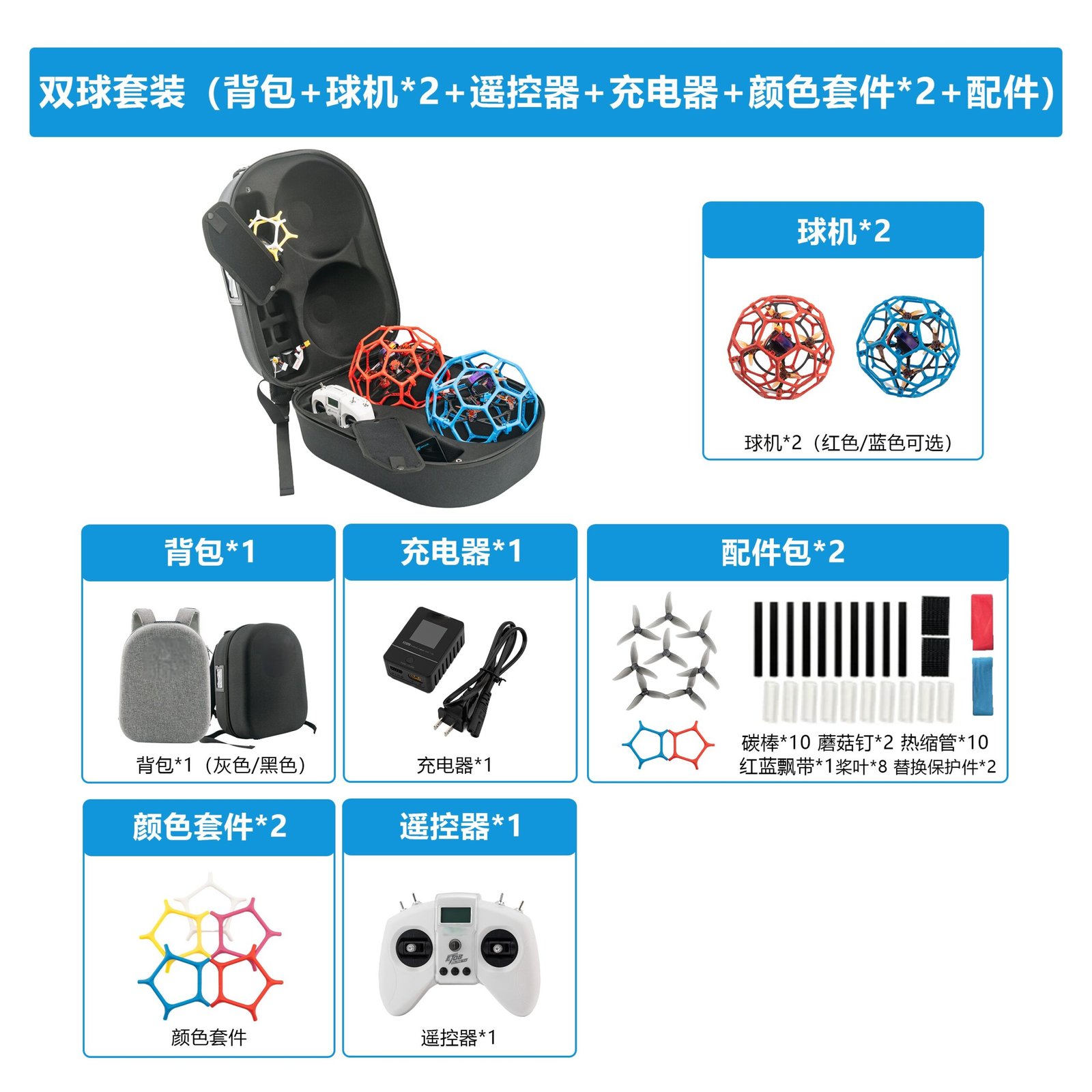
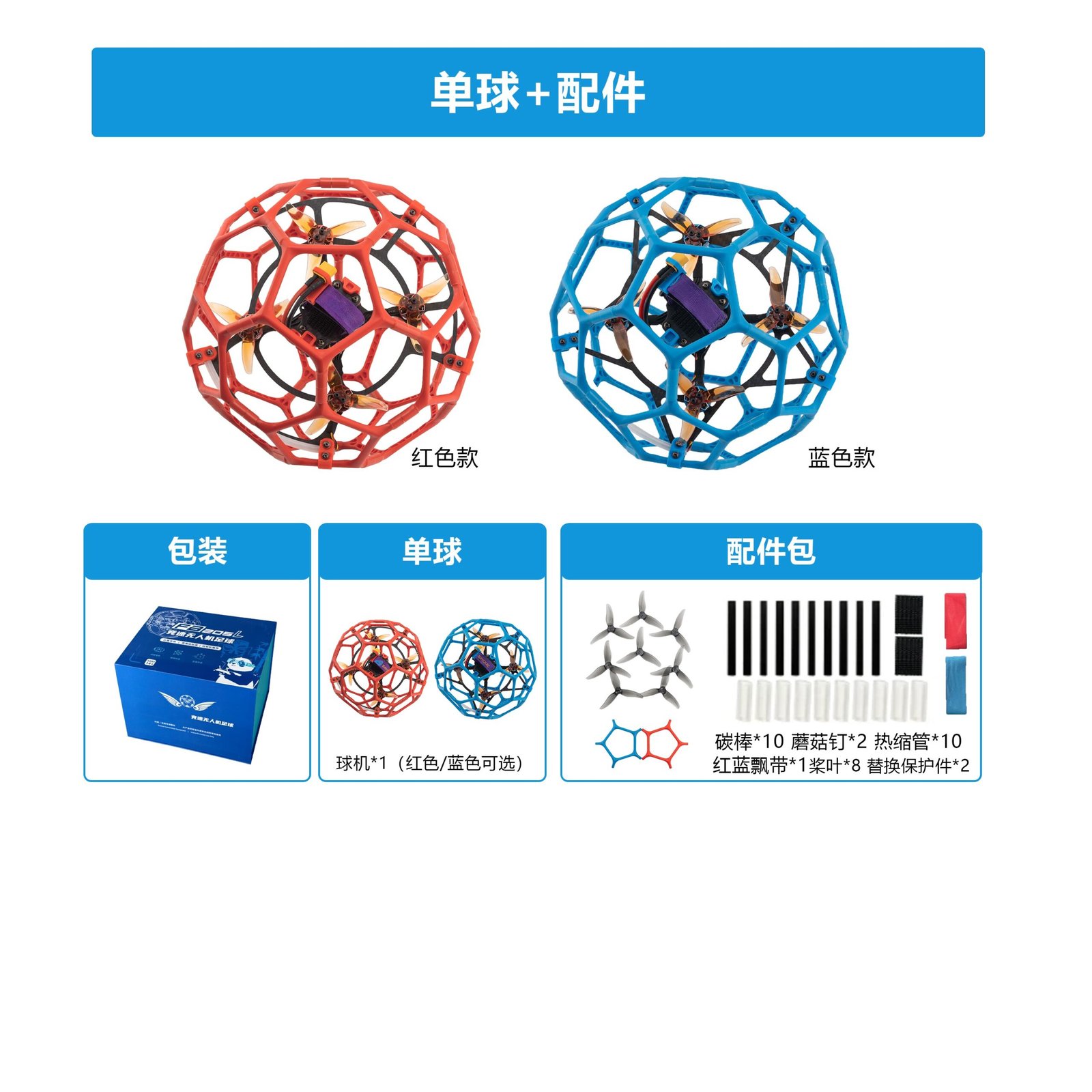
Drone soccer programs often add a second layer of equipment complexity. See how packs integrate with the airframe and power train in our propulsion combo kits.
Handling, Storage, and Transport Basics
Charging is only one part of the routine. Damaged packs should never be charged. The FAA advises that damaged or recalled batteries likely to spark or generate dangerous heat must not be carried aboard an aircraft unless removed or made safe (FAA lithium battery guidance). That principle is useful for schools even off aircraft: isolate suspect packs rather than charging them.
The same source notes that battery terminals must be protected from short circuit, for example by using retail packaging, taping terminals, or using a battery case. For school storage rooms, this is a simple, cheap control that prevents accidental contact between packs.
Air Travel With Team Batteries
If your team travels to competitions, check airline rules early. The FAA guidance states that spare lithium-ion batteries must be carried in carry-on baggage, with terminal protection, and that lithium-ion batteries are generally limited to 100 Wh per battery, with some larger batteries allowed only with airline approval. The FAA also notes that many airlines may have stricter limits, so confirm with your carrier before traveling.
These are U.S. aviation rules; other countries and carriers may differ. Always verify current requirements with the airline and the relevant authority for your jurisdiction.

Where Chargers Fit in a Broader Power Plan
Chargers interact with motors, electronic speed controllers (ESCs), and propellers because those components determine how hard your packs work. If packs are consistently hot or depleted quickly, the issue may be system matching rather than the charger. Our motor and propulsion matching service explains how these choices connect.
For programs building or specifying airframes, matching motors and props to the pack is a practical first step. See our range of FPV motors for reference points when discussing fleet specifications.
FAQ
Do schools need balance charging if packs are new?
Yes. Balance charging is part of routine care, not a repair for old packs. It keeps cell groups consistent over many charge cycles and helps staff spot a cell that is drifting.
Is a higher charge current better for a school program?
Usually not. Higher current reduces charging time but increases heat and demands closer supervision. A moderate, adjustable setting that suits your smallest pack is generally a safer default.
What is storage mode and why does it matter?
Storage mode brings a battery to a mid-range voltage intended for longer periods of non-use. It matters because school packs often sit unused between sessions, and long-term storage at full or empty voltage is harder on them.
How many charging channels does a typical school need?
It depends on class size, session length, and how many packs you run per flight. There is no universal number; count your packs, your usable charging window, and how much adult supervision you can provide.
Can students charge batteries themselves?
That is a school policy decision, not a product feature. Many programs restrict charging to trained staff or supervised older students. Whatever the policy, choose chargers with clear alerts and simple controls to reduce the chance of mistakes.
What should we confirm with a supplier before ordering chargers?
Confirm connector types, supported cell counts, included power supply, fault-alert behavior, lead times, returns or replacement policy, and any warranty terms in writing. These vary by supplier and region.
Are airline battery limits the same worldwide?
No. The FAA rules cited here apply to U.S. aviation. Other countries and individual airlines may set different limits. Verify with your carrier and the relevant authority before travel.
Conclusion
For schools, the charger is a safety control, not a performance accessory. Prioritize automatic cell detection, balance charging, adjustable current, storage and discharge modes, clear alerts, and connector compatibility. Then wrap those features in a routine: inspect packs, store them correctly, protect terminals, supervise charging, and train rotating staff.
If you are equipping a class, club, or competition team, our team can help you align chargers, packs, and airframes for drone soccer programs. Request a School Program Quote to discuss your fleet requirements and confirm specifications in writing.