Quick summary
For most indoor FPV racing and training, the best combination is modular square or octagonal gates for corners, collapsible hoops for corridors, and low, wide “gates” for dive-in/dive-out sections, set on a flat sports-hall floor with polished or matte tape for the track line. Choose soft, snag-tolerant gate lips so prop strikes do not break props or rip gate covers, and keep timing hardware separate from decorative obstacles. The right geometry depends on room size, pilot skill and how often you rebuild the layout.
Key Takeaways
- Indoor layouts usually favor 5-inch-class quads at reduced throttle or sub-250g builds on smaller props; gate size should follow prop diameter and pilot skill, not fashion.
- Square and octagonal gates frame corners predictably; round hoops suit straight corridors and dive gates; low gates train line discipline and altitude control.
- Surface matters as much as gate choice. Smooth, non-marking floors change braking distance and let tape hold its position through repeated sessions.
- Timing gates, lap transponders and OSD (on-screen display) data are separate systems from the obstacles themselves and should be specified independently.
- Buy gates as replaceable modules, because netting, lips and connectors wear out long before frames do.
Indoor FPV racing and training is constrained by walls, ceilings, spectators and shared gym time, so gate selection is really a question of damage control and repeatability. A track that survives a full evening of novice pilots will teach more than a fragile layout that looks spectacular but fails after the first hard hit.
What does “gates and tracks” actually mean for indoor FPV racing?
Two things get conflated in purchasing conversations: the physical gates and track furniture, and the electronic and airframe systems that make a track flyable. Gates are obstacles and reference points. Tracks are the ordered sequence of gates plus floor markings, timing points and safety margins. Electronics, motors, ESCs (electronic speed controllers) and flight controllers sit on the aircraft side of that divide.
For indoor FPV racing and training, the obstacle set usually includes square gates, hoop gates, dive gates, flags or “limbo” bars, and sometimes tunnels. Track furniture includes tape, cones, netting, spectator barriers and timing posts. A club that separates these categories in its budget gets a more durable program than one buying a single all-in-one kit.
It also helps to define who the track is for. A youth education session with first-time pilots needs forgiving gate geometry and generous spacing. A race night for experienced pilots can use tighter gaps, offset gates and low gates that punish sloppy lines.
How to choose gate types for an indoor hall
Square and octagonal gates
Square and octagonal gates give a visible frame and a predictable apex. Because the frame forms corners, pilots can read the required line before they enter the gate. They are the workhorse for corner sections indoors, where you want a clear visual boundary without a curved surface that can snag a prop.
Check the lip and joint construction rather than the outside dimensions alone. On many fabric gates the corner joints are the first failure point, so replaceable connectors extend the usable life of the set.
Round hoop gates
Round hoops work well as corridor gates and dive gates. Their continuous rim gives a consistent silhouette from many approach angles, which helps newer pilots judge centre. Indoors, hoops are often paired with a drop or a low gate to create a vertical challenge without needing extra height.
Low gates and limbo elements
Low gates and limbo bars train altitude discipline. They force pilots to hold a height band rather than a lazy arc, which is exactly the skill that indoor FPV racing and training should build. Keep them well clear of walls and spectators, because a missed low gate often ends in a slide.
Timing gates and transponders
Timing hardware is a separate purchase from the obstacle set. Ask suppliers how their timing gates mount, whether they need mains power or batteries, and whether they can be moved between venues without recalibration. Treat any claim about accuracy or lap-timing performance as something to verify with the vendor in writing for your venue.
Track layouts that work indoors
A good indoor layout is usually a loop, a figure-eight or a hybrid with one long straight. Loops are easiest to marshal and safest for mixed-ability groups. Figure-eights create crossing traffic, so they suit controlled race sessions rather than open practice.
Practical approach: sketch the room on paper, mark doors, fire exits, spectator zones and any fixed equipment, then place gates inside the remaining envelope. Leave more run-off than you think you need at the fastest corner, and keep the first gate far enough from the start line that pilots are not bunched at launch.
For drone soccer programs, the track question overlaps with pitch layout. A drone soccer pitch has its own goal and ball conventions, and many clubs run a shared hall with both a soccer pitch and a race loop on different nights. In that case, favour gates that break down flat and stack, and use floor tape that lifts without residue.
Small halls and multi-use gyms
In a small hall, reduce the number of gates rather than shrinking each gate. Very small gates raise crash frequency and shorten sessions. Fewer, well-spaced gates with clear lines usually produce more completed laps per hour.
Larger halls and dedicated venues
Larger halls allow a proper straight and a technical infield. This is where timing gates and a fixed track plan pay off, because pilots can compare runs across a season instead of relearning the layout each week.
Comparison: gate and track options for indoor programs
| Option | Best use indoors | Main trade-off | What to confirm before buying |
|---|---|---|---|
| Square/octagonal fabric gate | Corners, apex training, visible frames | Corner joints wear; bulkier to store | Joint construction and availability of spare connectors |
| Round hoop gate | Corridors, dive gates, centre judgement | Less line guidance at corners | Rim stiffness and how the hoop folds |
| Low gate / limbo bar | Altitude discipline, youth progression | Higher risk of ground strikes | Impact tolerance and base stability |
| Flags and cones | Fast setup, soft safety margins | Less precise for tight lines | Floor marking compatibility |
| Netting and barriers | Spectator and pit separation | Storage and rigging time | Fire and venue rules for your hall |
| Timing gates | Race nights, lap comparison | Separate system to install and power | Mounting, power source and moving between venues |
Matching aircraft electronics to indoor tracks
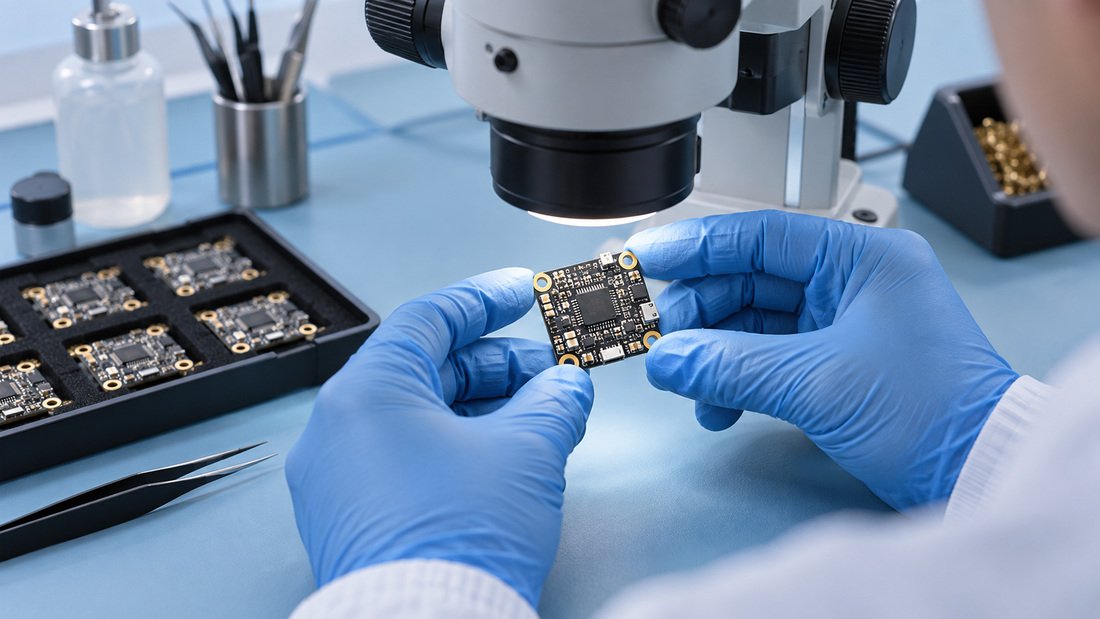
Gates set the physical challenge; the aircraft decides how comfortably a pilot can meet it. Indoor FPV racing and training rewards builds that are light, repairable and consistent rather than outright fast. When a club standardises a build, spare parts and tuning advice transfer between members, which shortens the learning curve.
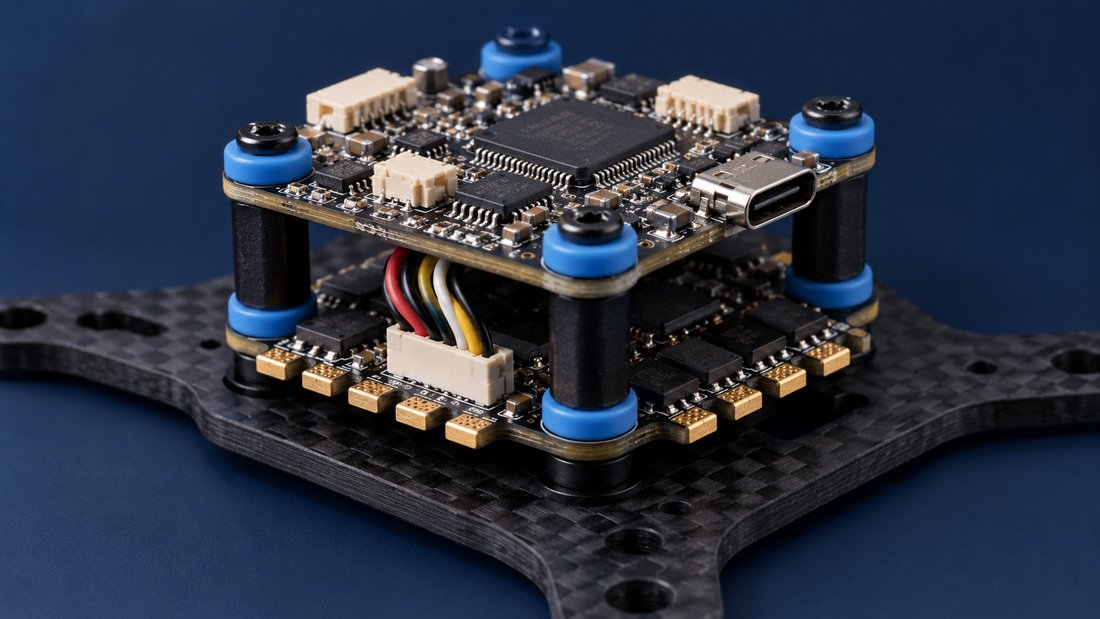
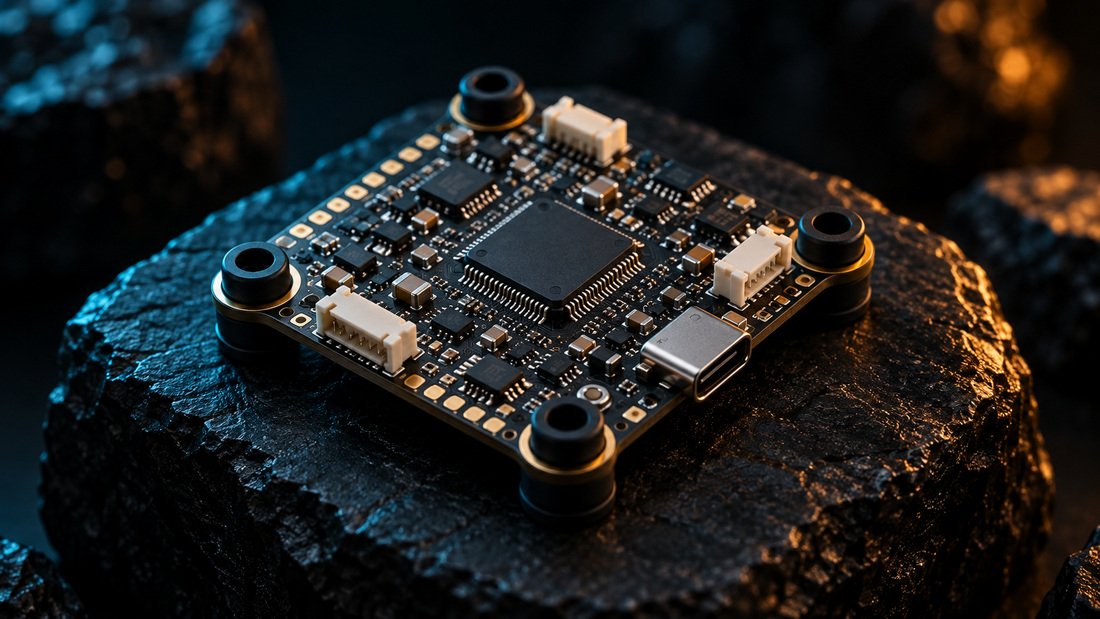
Betaflight is free, open-source flight control software used across racing, freestyle and other drone types, and it runs on the flight controller, the board that reads sensors, computes commands and sends signals to the ESC to control the motors (Betaflight getting-started documentation). That matters for clubs because firmware support and tuning guidance are widely documented and not tied to one airframe brand, so a team can standardise on a hardware platform and still use community tuning resources.
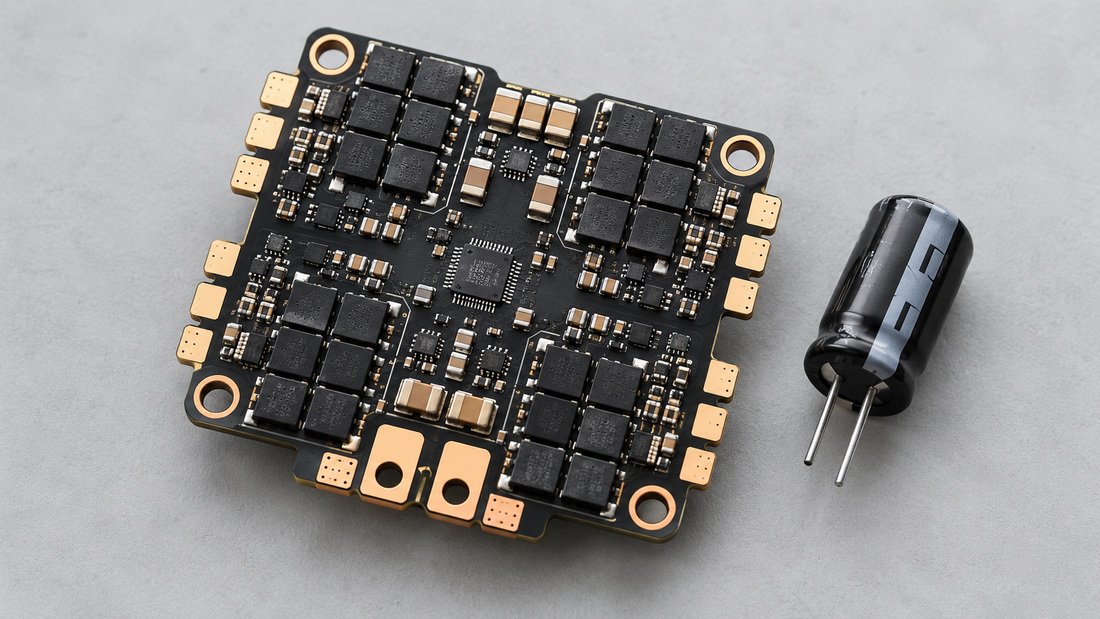
The same documentation notes support for a wide range of receiver protocols, including CRSF, Ghost, FPort and SBUS, and for ESC protocols where DShot is the common choice, alongside Oneshot, Multishot and PWM. For indoor venues with restricted radio conditions, this protocol flexibility is worth checking at the club level before locking in a radio system.
If your club buys in volume or supports a distributor, review our FPV electronics range and the component-level pages for flight controllers and electronic speed controllers. For training visibility between sessions, an FPV DVR lets coaches review the same run the pilot just flew, which is often more instructive than verbal feedback alone.
Safety, venue rules and track discipline
Indoor FPV racing and training puts people close to fast machines. Establish a pit area away from the flight line, keep spectators behind a physical barrier, and agree a launch and land procedure before the first battery. Venue rules on netting, fire exits and floor protection override any layout preference, so check them before you design the track.
Prop guards, arming discipline and a spotter protocol are club decisions, not product specifications. Write them down and apply them consistently, because inconsistency is what erodes trust with a venue that lets you hire its hall.
Electrical safety is the other half. Batteries should be charged in a designated area away from the flight line, and damaged packs should be removed from rotation. Keep a written log of pack condition so coaches can retire tired packs before they fail mid-session.
Common mistakes clubs make with indoor track purchases
- Buying gates before agreeing a layout. Measure the hall and sketch the loop first; gate counts and sizes follow from that.
- Choosing one gate type for everything. A mixed set of square, hoop and low gates covers more drills than a single style.
- Ignoring consumables. Netting, lips, connectors and floor tape wear out; budget for replacements from year one.
- Treating timing hardware as an accessory. It has its own power, mounting and transport requirements.
- Standardising aircraft without checking firmware and protocol support. Confirm that the chosen flight controller platform is documented and supported before committing a squad to it.
- Skipping the written quote. Verbal agreements about MOQ (minimum order quantity), spare parts or delivery dates do not protect a club budget.
Buyer checklist before you order
- Hall dimensions, ceiling height, floor surface and any venue restrictions on tape or rigging.
- Pilot levels and typical session format: open practice, coached training or race night.
- Gate mix required and how many spare gates of each type you want in rotation.
- Storage and transport: do the gates fold flat, and who carries them between venues?
- Timing system requirements, including power, mounting and whether it moves between sites.
- Aircraft standard: frame class, motor size, ESC and flight controller platform, and how spares will be stocked.
- Radio and video systems: receiver protocol, video system and DVR or recording for coaching.
- Safety equipment: barriers, netting, charging area and first-aid provision.
- Budget split between gates, timing, aircraft consumables and replacement parts.
- Written confirmation of price, MOQ, spare-part availability, shipping terms and support route from the supplier.
Where a supplier’s published terms are unclear, ask for them in writing rather than relying on a catalogue or a conversation. This applies to gate spare parts as much as to electronics.
If your program needs a single-source kit for a squad or an event, request a Team Kit Quote and include your hall dimensions, pilot numbers and required component list so the response matches your actual layout.
Frequently asked questions
What gate size should a beginner indoor track use?
Size gates generously at first and let pilot skill, not the rulebook, decide when to tighten them. Very small gates increase crash frequency and reduce productive practice time, so a beginner track should prioritise completed laps over precision.
Are fabric or rigid plastic gates better indoors?
Fabric gates are generally more forgiving on prop strikes and easier to store, while rigid frames hold their shape. Many clubs use fabric for most of the track and rigid elements only where geometry must stay exact. Check joint and rim construction either way.
How many gates does an indoor race track need?
There is no universal number. In a small hall, fewer well-spaced gates usually produce better sessions than many tightly packed ones. In a larger hall, a longer loop with a clear straight supports race formats and lap comparison.
Can I run a drone soccer pitch and a race loop in the same hall?
Yes, if you alternate nights and use gates and markings that break down flat without leaving residue. Confirm the venue’s rules on tape, anchors and spectator zones before designing either layout.
Does the flight controller platform matter for indoor tracks?
It matters for support and knowledge sharing. Betaflight is free, open-source flight control software that runs on the flight controller across racing and other drone types, with documented receiver and ESC protocol support, which helps a club standardise without depending on a single airframe brand (Betaflight documentation). Confirm your chosen boards are supported before committing a squad to them.
What should a club ask a supplier before ordering FPV electronics?
Ask for written confirmation of the component list, price, MOQ, spare-part availability, shipping terms and the support route for firmware or hardware questions. If a term is not confirmed in writing, treat it as unverified.
How should we evaluate whether a track layout is working?
Measure completed laps per pilot per session and note where crashes cluster. If one gate causes repeated damage, reposition it rather than buying more gates. Layout adjustments are usually cheaper than equipment upgrades.
Conclusion and next step
Indoor FPV racing and training succeeds when the physical challenge and the aircraft are matched to the room and the pilots. Choose a mixed gate set, design the layout before you buy, keep timing hardware as a separate decision, and standardise on electronics that your club can support and repair. Document safety rules and check venue constraints early.
When you are ready to equip a squad, a class or a race night, Request a Team Kit Quote and share your gate list, aircraft standard and hall dimensions so the kit matches your track plan.