Quick summary
Whether a 1 W ELRS transmitter module is legal depends on where you operate, which frequency band you use, and whether your device and licence meet local radio rules. There is no single global answer. Many countries cap 2.4 GHz and sub-GHz power well below 1 W, while others allow higher power only for licensed users or specific applications. For schools and drone soccer clubs, the safe approach is to check the national regulator’s rules, confirm the module’s certified band and power, and document approval before events.
Key Takeaways
- Legality is set by the country of use, not by the module’s label alone.
- 1 W output is often above licence-free limits on common ELRS bands; licensed operation may be possible.
- Band choice (2.4 GHz vs 900 MHz) changes which rules apply.
- Clubs should keep written verification of device certification, frequency, and power settings.
- When in doubt, reduce power or use a compliant band until the regulator or a qualified advisor confirms.
ELRS (ExpressLRS) is an open-source radio link protocol used for RC control. A “1 W” module refers to its maximum RF output power, but the legal limit is about effective radiated power (ERP/EIRP), antenna gain, duty cycle, and band—not just the module’s watt rating. Always verify the exact regulatory limits for your country and the band you intend to use.
Why “1 W” Is Not a Universal Green Light
Radio regulations typically define maximum power for a given frequency band and use case. A module capable of 1 W may be legal to own but illegal to transmit at full power without a licence or in certain bands. Conversely, some jurisdictions allow higher power for licensed amateur or industrial users. The key is to match transmit power, antenna gain, and band to the local authorisation.
Power, antenna gain and ERP
Effective radiated power combines transmitter output and antenna gain. A 1 W transmitter with a high-gain antenna can exceed ERP limits even if the module alone seems compliant. Clubs should calculate or ask the manufacturer for ERP at the antennas they use. For antenna selection, see RF antennas.
Band matters: 2.4 GHz vs sub-GHz
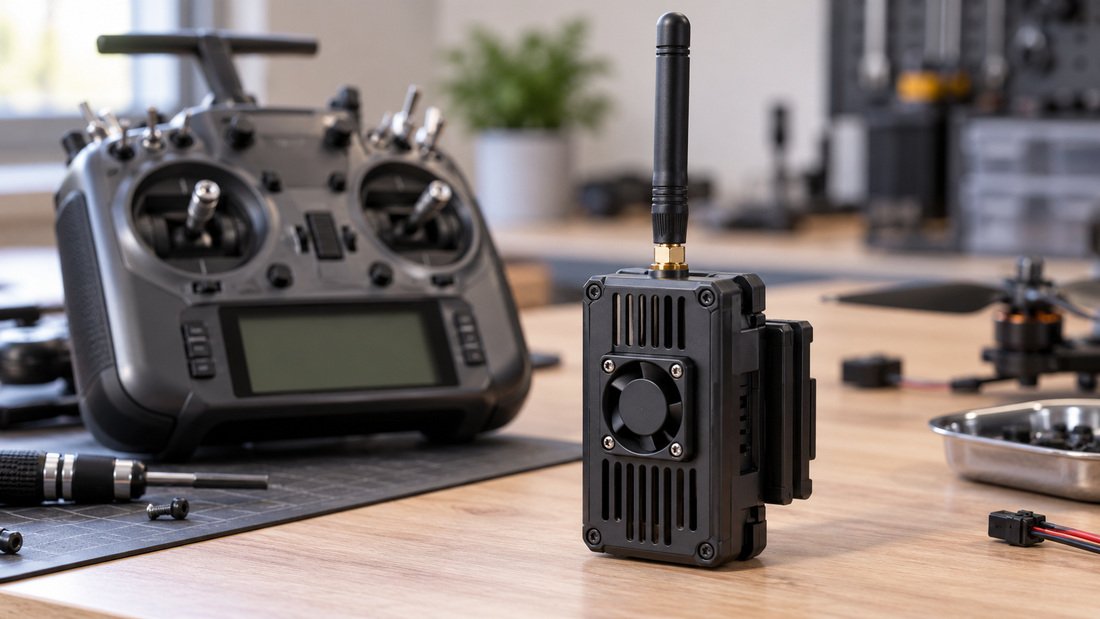
ELRS transmitter modules are commonly available in 2.4 GHz and 900 MHz variants. Each band has different power limits, licensing conditions, and permitted applications. A module that is fine on one band may be restricted on another. Confirm the band you need for your event and region.
How to Check Legality in Your Country
Start with the national telecommunications or radio regulator. Look for the licence-exempt power limits for the bands you use, and any special conditions for model aircraft, drones, or event transmissions. Then verify the specific module’s certification and default power settings. Keep records.
Step-by-step verification for clubs
- Identify the exact frequency band and maximum output power you plan to use.
- Find your regulator’s published limits for that band and application (licence-exempt or licensed).
- Check the module’s user manual and certification marks; confirm it can be locked to compliant power levels.
- Account for antenna gain and calculate ERP if required by local rules.
- If needed, apply for a licence or seek written guidance from the regulator.
- Document everything and brief your pilots and event organisers.
For a broader overview of ELRS hardware, see ELRS and RF systems.
Comparison: Typical Regulatory Approaches
The table below illustrates common patterns, not specific country rules. Always confirm with your national regulator; this is general guidance only.
| Scenario | What to check | Implication for 1 W modules |
|---|---|---|
| Licence-exempt 2.4 GHz | Max ERP, duty cycle, band edges | Often lower than 1 W; may need power reduction |
| Licence-exempt sub-GHz | Band-specific power and channel limits | Varies widely; some bands allow higher power |
| Licensed amateur radio | Operator licence, permitted bands, power | May allow higher power for licensed individuals |
| Event or school use | Temporary permits, coordination | Organiser may need approval for high-power or high-density use |
What Schools and Drone Soccer Teams Should Do
For youth programmes and competitions, compliance is a governance issue. Adopt a written RF policy, choose modules that can be set to compliant power, and train coaches to verify settings before each session. If your programme uses ELRS transmitter modules, keep a register of device models, bands, and power settings.
Practical procurement checklist
- Confirm the regulatory limits for your country and band in writing (regulator website or letter).
- Ask the supplier for the module’s frequency range, maximum output, and certification documents.
- Verify the module can be firmware-limited to compliant power levels.
- Check antenna gain and ERP; avoid high-gain antennas unless allowed.
- Plan for licensed operation if required; identify a licence holder.
- Document event RF plans and share with organisers.
- Review ELRS receiver compatibility with your chosen transmitter settings: ELRS receiver compatibility.
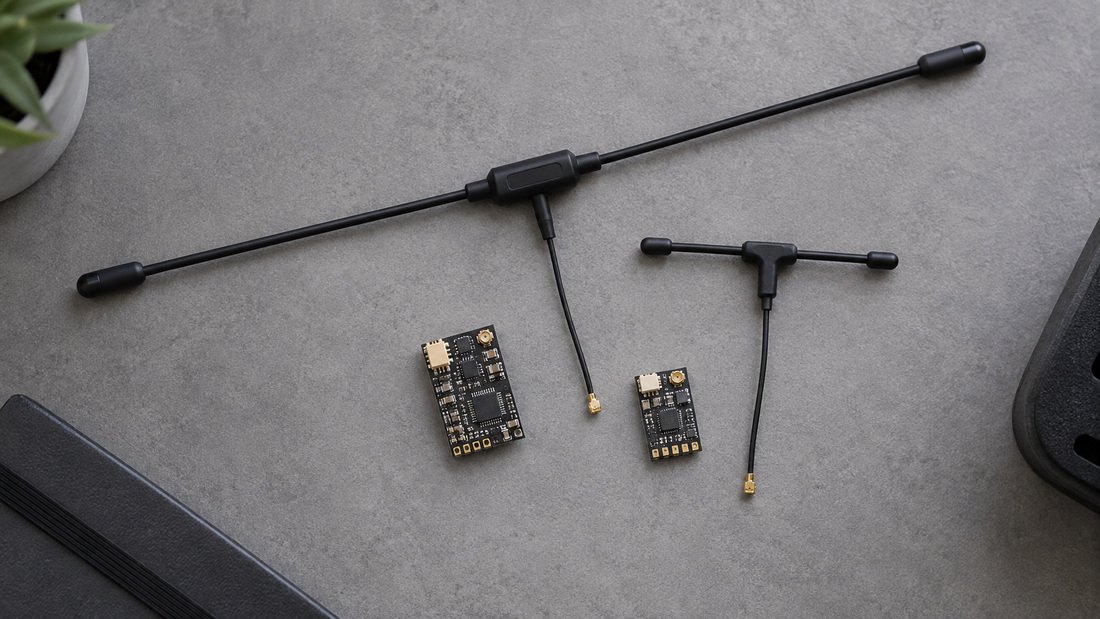
If you are equipping a team, see our ELRS transmitter modules and ELRS receivers for compatible options.
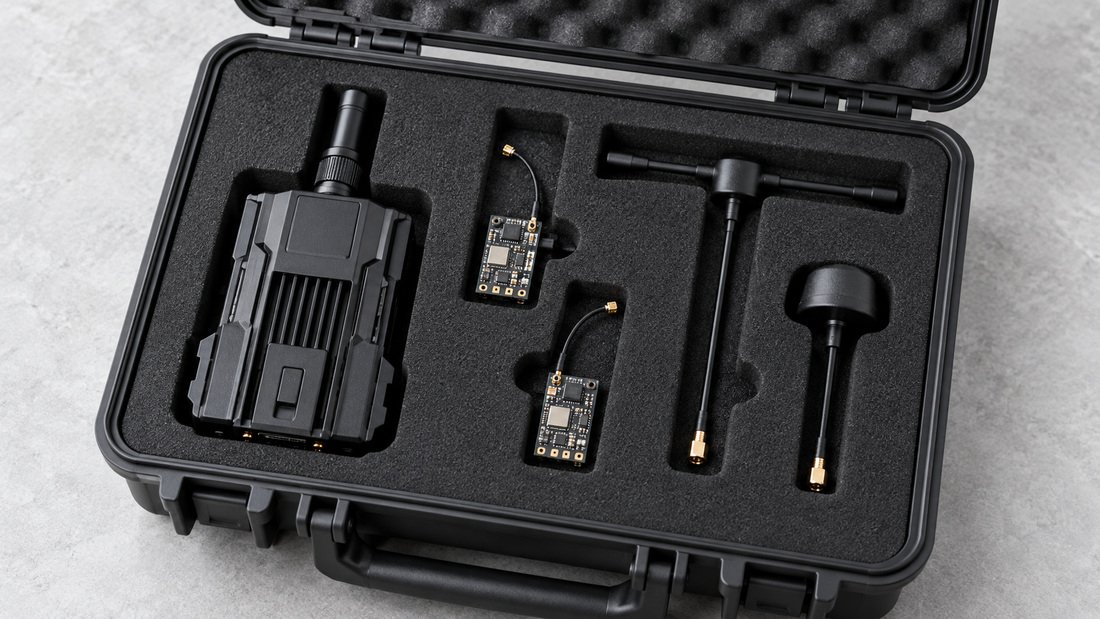
Need help matching modules to your compliance plan? Request a Team Kit Quote and tell us your country, band, and power requirements.
Common Mistakes
- Assuming a module sold globally is legal everywhere at full power.
- Ignoring antenna gain, which can push ERP above limits.
- Using the wrong band for the region or event.
- Not keeping written evidence of compliance for school or event audits.
- Confusing ownership with permission to transmit.
Testing and Documentation
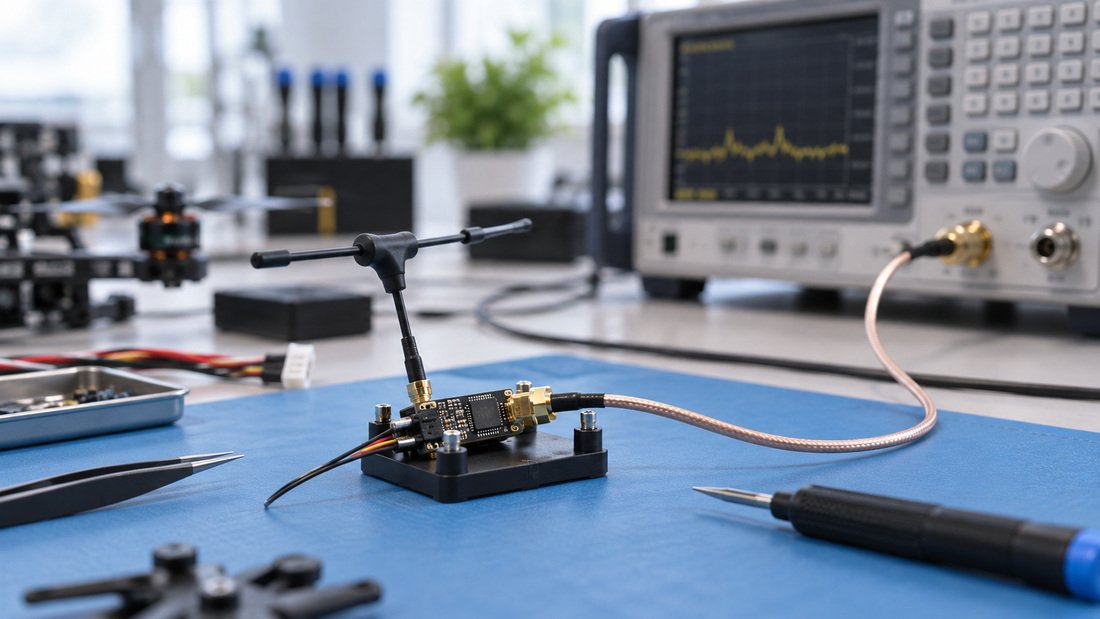
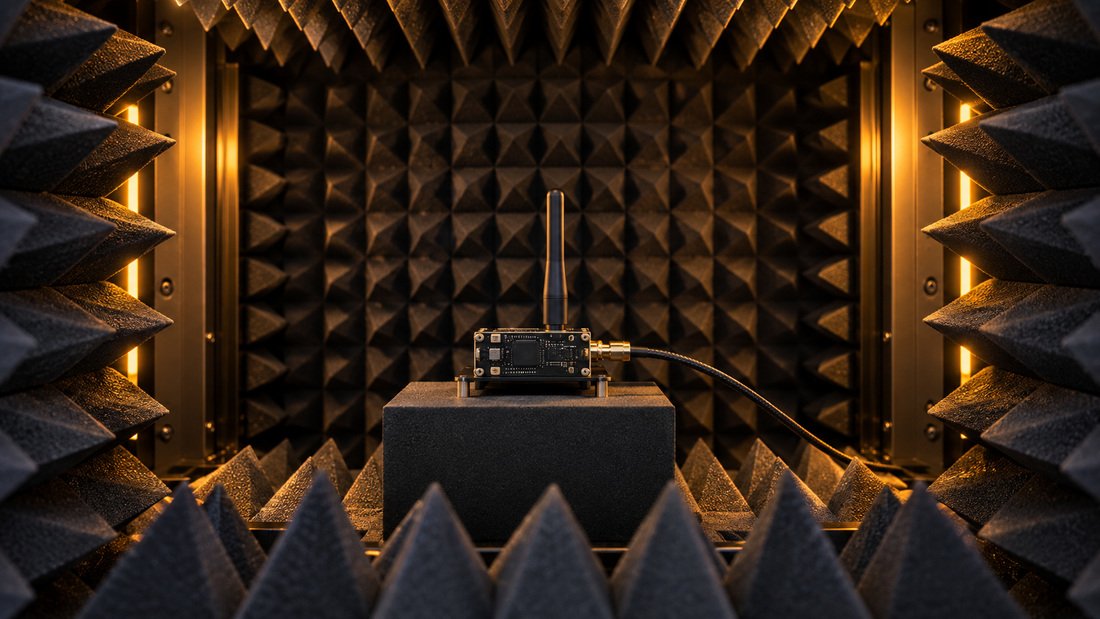
Bench testing and documentation help clubs demonstrate diligence. While DPF does not publish test results in this article, you can ask suppliers for test reports or certification evidence. For general RF testing context, see the image below. Always verify claims independently.
Frequently Asked Questions
Is a 1 W ELRS module legal in my country?
It depends on your country’s rules for the band and application. Check your national regulator’s limits and whether a licence is required. Some countries allow 1 W only for licensed users or specific bands.
Can I use a 1 W module at lower power to comply?
Often yes, if the module can be set to a compliant power level and you document it. Confirm the minimum power and firmware options with the supplier.
Does antenna choice affect legality?
Yes. Antenna gain changes effective radiated power. A high-gain antenna may push you over limits even at lower transmitter power.
Do schools need a licence for drone soccer events?
Possibly, depending on the band, power, and local rules. Contact your regulator or a qualified RF advisor. Event organisers should include RF compliance in their planning.
What documents should I request from a supplier?
Ask for frequency range, maximum output power, certification marks, and user instructions showing how to limit power. Confirm in writing; DPF’s specific documents should be requested directly.
Is 900 MHz ELRS always better for range?
Not necessarily; range depends on many factors including power limits, antenna, and environment. Legality may restrict 900 MHz use in some countries.
How can clubs verify ELRS transmitter module compliance?
Combine regulator guidance, supplier documentation, and internal checks. Keep records and review before each season or event.
Conclusion
Legality of a 1 W ELRS transmitter module is country- and band-specific. Clubs, schools, and event organisers should verify local limits, choose modules that can be power-limited, and keep written evidence. When planning a team kit, start with your compliance requirements and ask suppliers for the documents you need.
Next step: Request a Team Kit Quote and share your country, band, and power constraints so we can help you select suitable ELRS transmitter modules and receivers.