Quick summary
Starting a drone sports club begins with four decisions: define the club’s purpose and age groups, secure a safe indoor or outdoor flying venue, adopt a written safety and oversight policy, and choose an affordable, repairable equipment platform. Then register the organization, recruit a volunteer coach or teacher, and buy a small starter kit before scaling. For school and youth programs, check local aviation rules early and confirm equipment, lead time, and support terms in writing with your supplier.
Key Takeaways
- Start with a small, repairable drone soccer or FPV starter kit, not a large fleet; expand after your first season.
- Secure a venue and written safety policy before recruiting members; indoor spaces reduce weather and airspace risk.
- In the US, educational drone operations fall under either the Exception for Limited Recreational Operations (49 U.S.C. § 44809) or Part 107; qualifying schools may use § 44809 for educational flights. Verify your organization’s status before flying.
- Budget for consumables (propellers, batteries, frames) and a repair station, not just the initial drones.
- Ask suppliers for written confirmation of compatibility, spare-part availability, and support terms before ordering.
What is a drone sports club, and who is it for?
A drone sports club is an organized group that flies drones for competition, skill development, and education. Formats include drone soccer — where teams fly enclosed drones into a goal — and FPV (first-person view) racing or freestyle. Clubs typically serve students aged 10–18, but can include university and community teams.
Drone clubs and teams work best when they combine three elements: regular practice sessions, a structured safety culture, and a clear progression path from beginner to competitor. Schools often run clubs as extracurricular programs, while community clubs may operate independently or under a national association.
For a deeper look at how drone soccer is organized, see drone soccer clubs.
Step-by-step: how to start a drone sports club
Use this sequence to move from idea to first practice in a predictable order. Each step reduces risk before you spend money.
1. Define purpose, age group, and format
Decide whether the club will focus on drone soccer, FPV racing, or a mix. Match the format to your venue: drone soccer works well indoors, while racing may need a larger space or outdoor field. Write a one-page charter stating the club’s purpose, age range, meeting frequency, and expected costs.
2. Secure a venue and time slot
Indoor gyms, community halls, and school auditoriums are common choices. Confirm ceiling height, floor surface, storage, and access times. Ask about insurance requirements and any restrictions on battery charging or LiPo (lithium polymer) storage.
3. Adopt a written safety and oversight policy
Include supervision ratios, pre-flight checks, battery handling, spectator separation, and incident reporting. Assign a safety officer. For school programs, align the policy with district rules and local aviation authority guidance.
4. Register the organization and recruit volunteers
Decide whether to operate under a school, a nonprofit, or a national association. Recruit at least two adults: a coach and a safety lead. Background checks and safeguarding training are standard for youth programs.
5. Choose a starter equipment platform
Start with a small number of durable, repairable drones and a shared set of controllers, batteries, and chargers. Prioritize parts availability over peak performance. See drone soccer systems for an overview of typical kit components.
6. Set a budget and procurement plan
Separate capital costs (drones, goals, controllers) from operating costs (propellers, batteries, repairs). Plan a replacement cycle for consumables. See the checklist below.
7. Run a pilot session before full launch
Invite a small group, test your safety policy, and time each activity. Adjust ratios and equipment counts before opening registration.
Safety and regulatory basics for youth drone clubs
Rules vary by country and by the organization’s legal status. In the United States, the FAA states that drones flown for educational purposes are regulated either under the Exception for Limited Recreational Operations of Unmanned Aircraft (49 U.S.C. § 44809) or under the Small Unmanned Aircraft Systems Rule (Part 107). According to the FAA, qualifying educational organizations may operate under § 44809 for educational and research purposes; organizations that do not qualify must generally operate under Part 107. Confirm your status with the FAA’s guidance before flying: FAA educational users page.
The FAA also notes that educational institutions, including primary and secondary schools, trade schools, colleges, and universities, are eligible to request a FAA-Recognized Identification Area (FRIA), where drones can be flown without Remote ID. This can simplify operations for school-based clubs in the US.
Regardless of jurisdiction, a written safety policy should cover supervision, battery charging, propeller guards, spectator distance, and emergency procedures. Indoor drone soccer arenas typically use protective netting and propeller guards.
Equipment for a new drone sports club
A practical starter setup includes team drones, controllers, a charging station, spare parts, and safety equipment. Avoid buying the maximum fleet on day one; buy enough for one or two teams and expand after your first season.
| Item | Why it matters | What to confirm with the supplier |
|---|---|---|
| Team drones (drone soccer or trainer) | Core platform for practice and competition | Compatibility with your chosen league rules; spare-part availability |
| Radio controllers and receivers | Reliable link for multiple pilots | Protocol compatibility; receiver form factor; binding procedure |
| Batteries and chargers | Practice time and safety | Battery chemistry; storage and charging guidance; replacement availability |
| Propellers, frames, motors | Consumables and crash repairs | Pack quantities; cross-compatibility; restock terms |
| Safety equipment (guards, nets, first aid) | Protects players and spectators | Venue requirements; replacement parts |
| Field or goal set | Defines the playing area | Dimensions; setup time; storage |
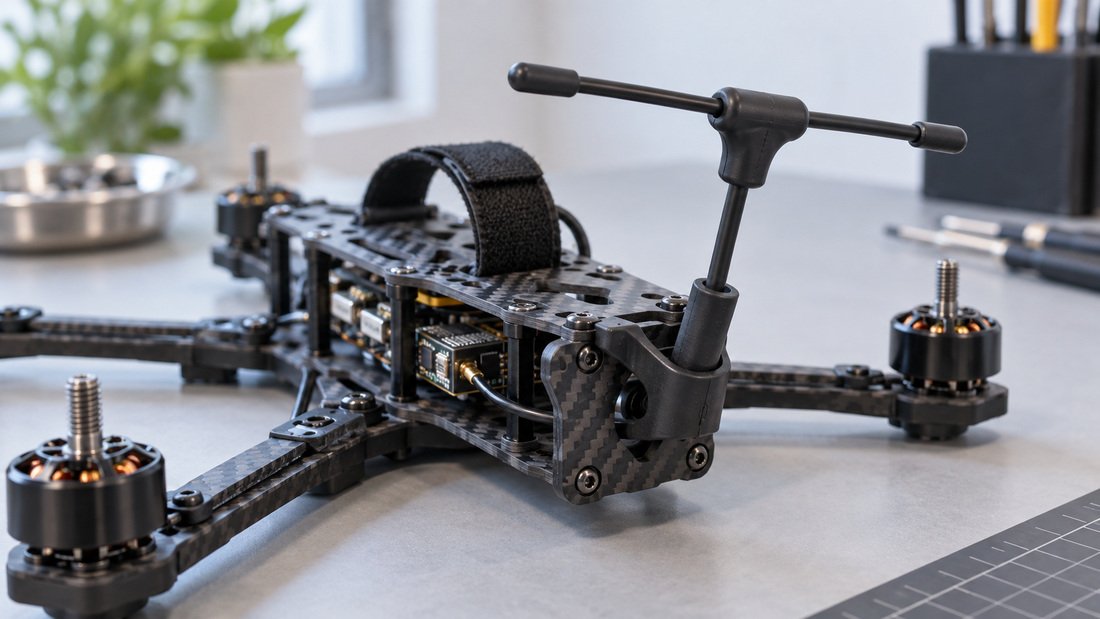
For schools and training organizations building a program, see schools and training organizations. For radio link components such as ELRS (ExpressLRS) receivers, ask the supplier how the receivers are tested and matched to your controllers. The images below illustrate typical receiver and antenna components used in small FPV and drone soccer platforms.
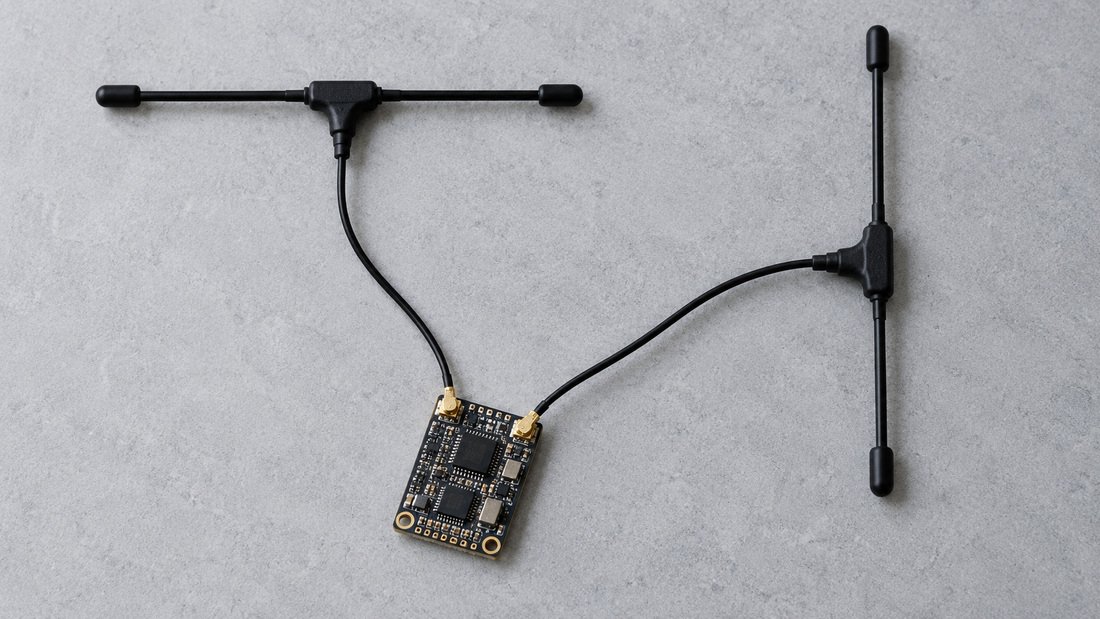
Receiver and antenna choices affect link reliability in crowded gyms. When specifying equipment, ask whether receivers include telemetry and how antennas should be mounted to avoid damage during crashes.
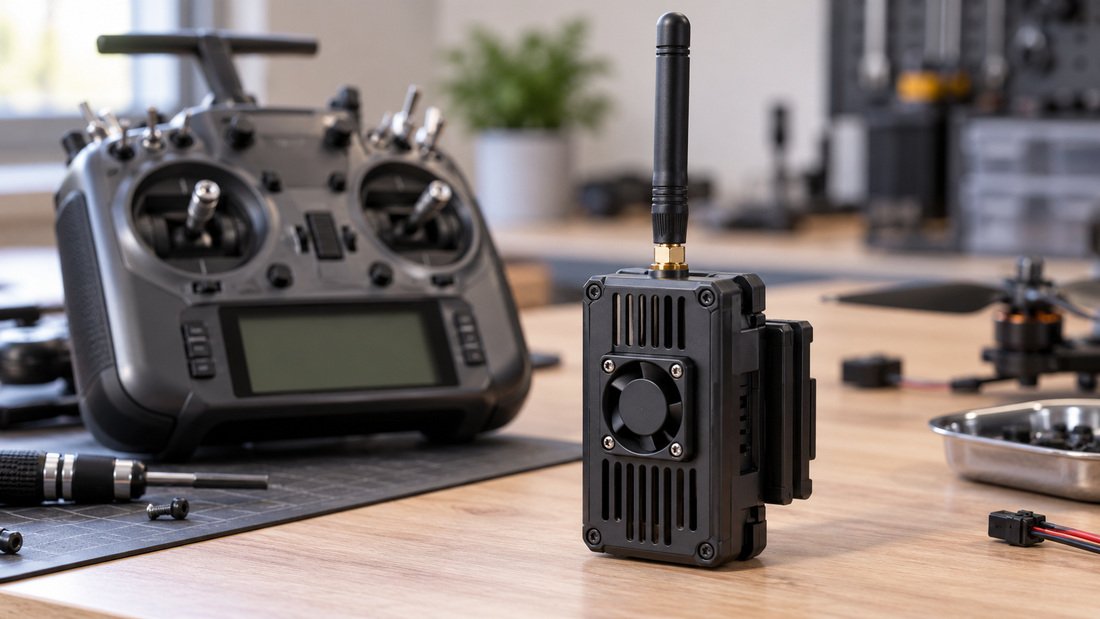
For clubs that also run FPV practice, a modular radio setup can simplify fleet management. Confirm module compatibility with your chosen transmitter before ordering.
Comparison: starter club vs. competitive club
| Factor | Starter club | Competitive club |
|---|---|---|
| Fleet size | Small set for one or two teams | Multiple matched sets plus spares |
| Focus | Safety, basic skills, fun | League rules, timed practice, repair workflow |
| Equipment priority | Durability and repairability | Consistency across team drones |
| Budget emphasis | Low upfront, high learning | Spare parts, travel, coaching |
| Venue | School gym or hall | Regulation-size arena or dedicated space |
Budget and funding for a new club
Build a line-item budget that includes equipment, safety gear, venue hire, insurance, coach training, and a consumables reserve. For schools, ask about STEM or after-school funding; for community clubs, consider local business sponsorship. Avoid assuming supplier pricing or lead times — request a written quotation.
Plan for a repair station: spare propellers, frames, motors, soldering tools, and a safe battery charging area. Consumables often represent a recurring cost that is easy to underestimate.
Ready to price a starter setup? Request a team kit quote with your team size, age group, and venue type.
Common mistakes when starting a drone sports club
- Buying too much too soon. Start small and expand after your first season.
- Ignoring local aviation rules. Check your national authority’s guidance before the first flight.
- No written safety policy. Supervision, battery handling, and incident reporting should be documented.
- Underestimating consumables. Budget for propellers, batteries, and frames from day one.
- Skipping compatibility checks. Confirm controller, receiver, and drone compatibility in writing.
- No repair workflow. Designate a repair lead and a parts storage system.
Procurement checklist for schools and club organizers
- Written quotation with itemized pricing and quantities
- Compatibility confirmation between drones, controllers, and receivers
- Spare-part availability and restock terms
- Safety documentation and battery handling guidance
- Return, repair, and support terms in writing
- Lead time confirmed for your event or semester start
- Payment and shipping terms for your organization type
For OEM or distributor inquiries, ask for sample evaluation units before committing to a full order. For competition planning, see drone soccer competitions.
Frequently asked questions
Do I need a license to start a drone club?
Requirements vary by country. In the US, the FAA states that educational drone flights are regulated under either § 44809 or Part 107, and qualifying educational organizations may operate under § 44809. Check your local aviation authority’s rules before flying.
What age group can join a drone sports club?
Many programs serve ages 10–18, but this depends on the format and supervision. Confirm your insurer’s and venue’s requirements.
How many drones does a starter club need?
Enough for one or two teams plus spares. The right number depends on team size, practice format, and your repair capacity. Ask suppliers for guidance based on your planned session structure.
Can we fly indoors?
Indoor flying is common for drone soccer and small FPV practice. Check ceiling height, netting, and battery charging rules with the venue.
What is the best first drone for a school club?
Choose a durable, repairable platform with available spare parts and league compatibility. Avoid high-performance models for beginners.
How do we fund a drone club?
Common sources include school STEM budgets, grants, sponsorships, and parent contributions. Prepare an itemized budget and a clear safety plan for funders.
Do we need insurance?
Many venues and schools require liability coverage. Confirm requirements with your venue and insurer; do not assume a supplier’s product warranty covers club operations.
Conclusion and next step
Starting a drone sports club is a sequence of manageable decisions: define your format and age group, secure a venue, adopt a safety policy, and buy a repairable starter kit. Expand only after your first season. For schools and youth programs, check aviation rules early and document every supplier commitment in writing.
To price a starter or team setup, Request a Team Kit Quote and include your team size, venue type, and target start date.