Quick summary
For most drone clubs and teams, the right stock mix is a small, fast-moving spares pool rather than a deep inventory: spare propellers, motors, arms/frames, batteries, receivers and antennas, plus a shared set of chargers and tools. Stock enough to keep every pilot flying through a session, track what actually breaks, and reorder against confirmed lead times rather than guesswork.
Key Takeaways
- Stock by failure rate, not by catalogue size: props, motors, arms and batteries usually drive downtime.
- Standardise one or two airframe and radio configurations so spares fit every pilot.
- Keep a shared “team bench” of chargers, soldering tools and test gear instead of duplicating per pilot.
- Buy critical spares in small, frequent batches and confirm lead times, MOQs and warranty terms in writing.
- For school-linked programs, check local flight rules and organisation eligibility before buying airframes — in the US, see the FAA’s educational users guidance.
Why drone clubs and teams need a deliberate spares plan
A deliberate spares plan keeps a session running when a prop shatters or a receiver fails. Clubs rarely have the budget of a commercial fleet, and a single grounded airframe can stall a whole practice block. The goal is uptime per dollar, not the largest possible inventory.
Start from what stops flying. In most club settings, crashes and wear drive demand for props, motors, arms, antennas and batteries. Electronics such as receivers and video transmitters fail less often but are hard to substitute mid-session, so a small buffer matters. Use your own repair log to rank items after two or three months.
Match stock to your program type
Drone soccer programs, FPV racing teams and STEM classroom clubs have different failure profiles. Contact-heavy drone soccer benefits from protected frames and spare cage components; open-field FPV racing stresses props, motors and antennas. If you run both, keep separate bins and label them by program.
Programs attached to schools should also check eligibility and operating rules before ordering airframes. The FAA explains that educational flights fall under either the limited recreational exception (49 U.S.C. § 44809) or Part 107, and that qualifying educational organisations have specific criteria; schools not qualifying must operate under Part 107 or be chartered by a recognised Community Based Organization. Confirm your status locally rather than assuming.
Which FPV parts should a racing team stock? The core list
The core list covers airframe, propulsion, power, radio link and consumables. Quantities below are starting points to calibrate, not fixed rules. Adjust after your first month of repair data.
1. Propellers and consumables
Props are the highest-turnover item. Stock several sets per active pilot in the sizes your airframes use, and keep a shared consumables box: zip ties, heat-shrink, tape, silicone wire, connectors and spare screws. These low-cost items prevent small repairs from becoming cancellations.
2. Motors and frame components
Motors and arms take crash loads. Keep at least one spare motor per pilot position and a few arms or frame sections matched to your standard frame. If you use a modular frame, spare arms and a bottom plate cover most impact damage. For teams running drone soccer, keep spare cage and protection parts as well.
3. Batteries and charging
Batteries are a recurring cost and a safety item. Stock enough packs for a full rotation plus a small reserve, and inspect for puffing or damage before each session. Keep a shared charging station with parallel boards and fire-safe storage. Do not over-order packs that will age before use.
4. Radio link: receivers and antennas
ExpressLRS (ELRS) is a common open-source radio link for FPV; its receivers are small and inexpensive, which suits club standardisation. Keep spare receivers and antennas because a damaged antenna can ground a pilot even when the receiver is fine.
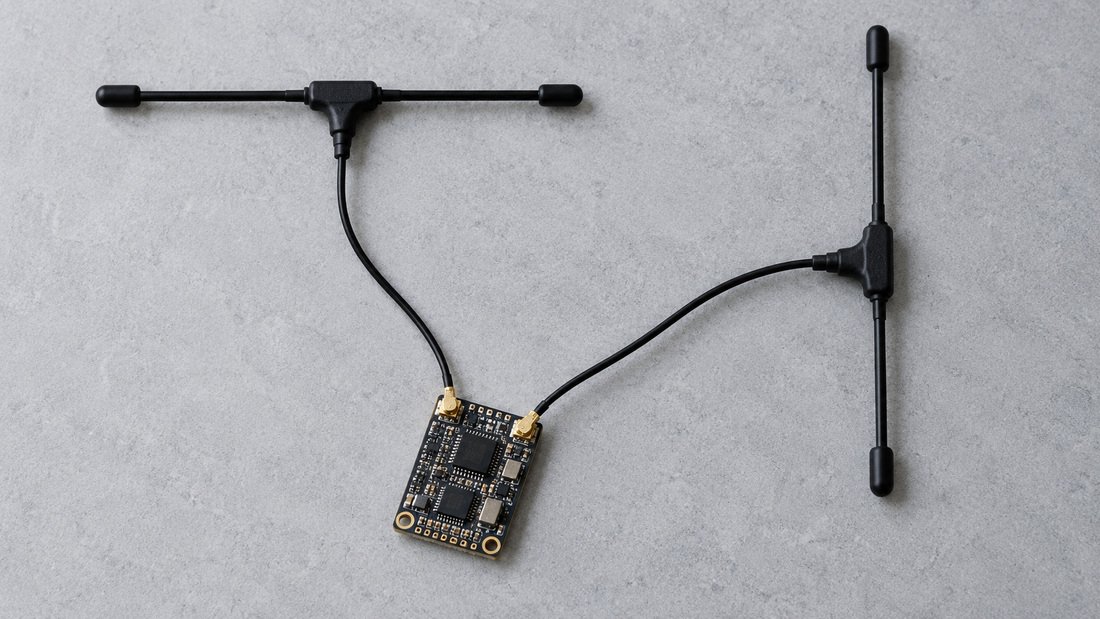
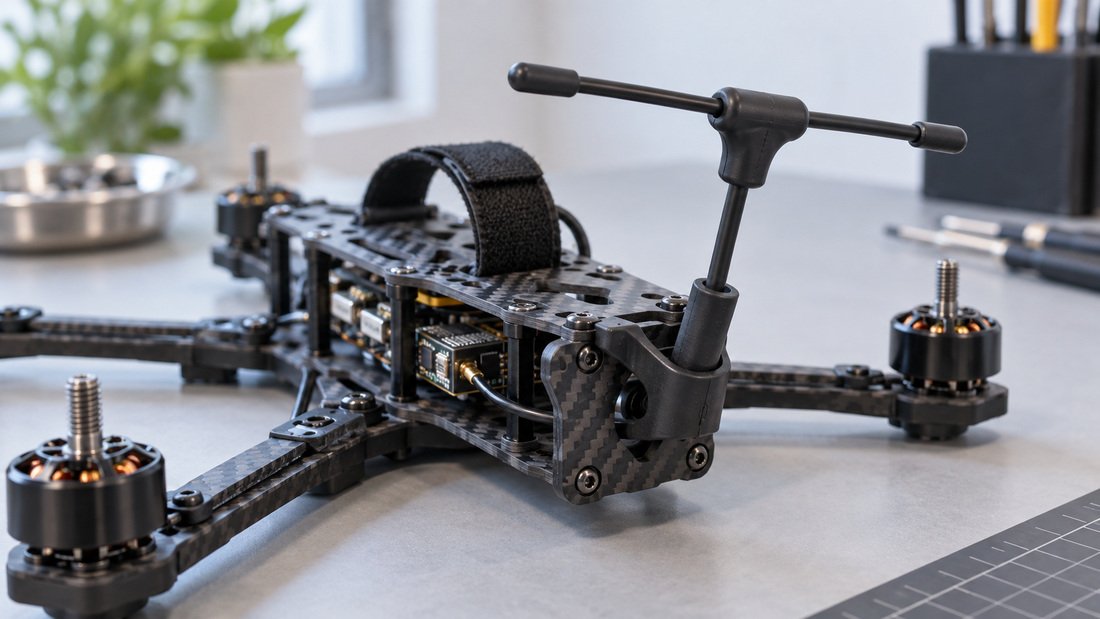
Antenna mounting and protection matter as much as the receiver itself. A protected antenna mount reduces repeat failures. If your team uses a shared transmitter module, keep one spare module or cable set so a single failure does not stop the whole group.
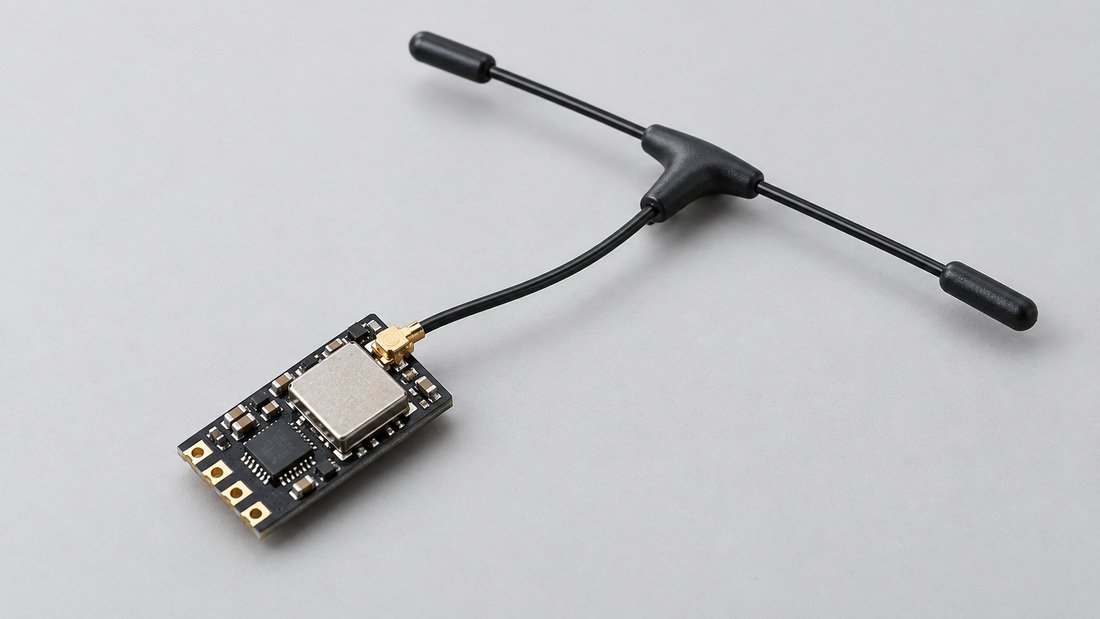
Small nano receivers with integrated antennas simplify repairs for tight builds. Standardising one receiver form factor across the team keeps spares interchangeable.
5. Video and shared test gear
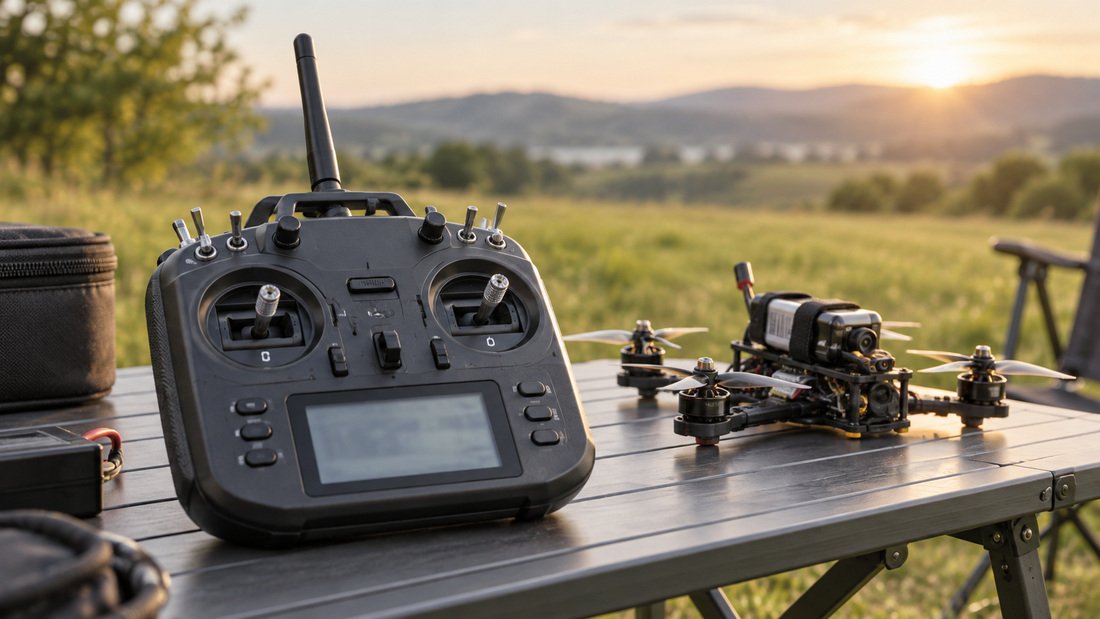
Video transmitters, cameras and goggles fail less often but are costly to replace. Keep one spare camera and VTX per team configuration, not per pilot. Shared test gear — a smoke stopper, multimeter, receiver tester and telemetry check — catches faults before they reach the flight line.
How many spares should a team keep? A comparison of stocking levels
There is no single correct quantity. The table compares three common approaches so clubs can choose a starting point and adjust with repair data.
| Stocking level | Typical use | Advantages | Trade-offs |
|---|---|---|---|
| Lean (per-session buffer) | Small club, one shared build standard | Low cash tied up; fresh stock | Higher risk of mid-session grounding; more frequent reorders |
| Balanced (per-pilot + team bench) | Most school and club teams | Good uptime; spares fit every pilot | Requires tracking and storage discipline |
| Deep (event or multi-team) | Hosting competitions or running several squads | Fewest disruptions; supports visiting teams | Capital tied up; older stock and obsolescence risk |
Choose lean if your pilots share identical builds and you can reorder quickly. Choose balanced for most clubs. Choose deep only if you host events or cannot rely on fast restocking. Ask suppliers to confirm lead times and minimum order quantities in writing before committing to deep stock.
Standardise builds to make spares go further
Standardisation is the cheapest inventory strategy. When every pilot flies the same frame, motor size, receiver protocol and battery connector, one spare fits all. Mixed builds multiply the number of part numbers you must carry and increase the chance of a mismatch at the field.
Write a one-page team build sheet: frame, motor, propeller size, receiver protocol, battery connector and firmware versions. Review it each season. For drone soccer programs, standardising cages and protection parts also simplifies repairs. Browsing drone soccer systems can help you see how complete kits are structured before you mix components.
Set a simple reorder and tracking system
Track consumption for four to six weeks, then set reorder points. A simple bin system with labelled minimum levels works for most clubs; a shared spreadsheet is enough for larger programs. Record what failed, why and which pilot or airframe was involved.
Separate consumables from capital items. Props, zip ties and antennas can be reordered on a fixed rhythm. Motors, frames and video gear should be reordered when stock falls below the agreed minimum, not after a failure. Keep damaged batteries and electronics out of the flight box immediately.
Procurement checklist for coaches and buyers
Use this checklist before placing an order. Written confirmation protects the club when staff change or budgets are audited.
- Confirm the exact part numbers, firmware/protocol compatibility and connector types.
- Ask for lead times, minimum order quantities and shipping terms in writing.
- Clarify warranty terms, spare-part availability and how returns are handled.
- Check whether prices include taxes, duties and delivery to your location.
- Request a sample or small trial batch before committing to deep stock.
- Confirm that batteries and radio equipment meet your local transport and operating rules.
- For school programs, verify organisational eligibility and flight rules before buying airframes.
Distributors and event organisers should also ask about bulk packaging, mixed-kit options and documentation for institutional purchasing. DPF can discuss a team kit quote once your build sheet and quantities are clear.
Common mistakes when stocking FPV parts for drone clubs and teams
Most stocking problems come from buying too broadly or too deeply at the start. These are the recurring mistakes to avoid.
- Buying many airframe types before the team settles on one build standard.
- Over-ordering batteries that age before they are used.
- Forgetting antennas, mounts and connectors, which fail more often than receivers.
- Skipping a repair log, so reorders are based on memory rather than data.
- Assuming warranty or returns terms without written confirmation.
- Ignoring local flight rules and eligibility for school-linked programs.
Where DPF fits
DPF supplies drone soccer systems, ELRS receivers, and frames and power combos for clubs, schools and distributors. For program planning, see drone soccer clubs and STEM drone education and training. Teams hosting events can review drone soccer competitions, and schools can check schools and training organizations. Confirm current specifications and commercial terms directly with DPF before ordering.
FAQs
How many spare propellers should a club keep?
There is no universal number. Start with several sets per active pilot and adjust after a month of repair logs. Props are cheap and fail often, so they are usually the safest item to over-stock modestly.
Should we standardise on one radio protocol?
For most clubs, yes. Standardising on one protocol, such as ELRS, keeps receivers and transmitter modules interchangeable across pilots and reduces the number of spare part numbers you carry.
Do we need spare batteries?
Yes, but not excessive numbers. Keep enough for a full rotation plus a small reserve. Batteries age, so deep stock can become a safety and cost problem if it sits unused.
How do school programs check rules before buying?
Review your national aviation authority’s guidance. In the US, the FAA’s educational users page explains the limited recreational exception and Part 107, including eligibility for qualifying educational organisations. Confirm your own status locally.
What commercial terms should we confirm in writing?
Ask for lead times, minimum order quantities, warranty terms, return procedures, shipping costs and tax treatment. Do not rely on verbal assurances or assume terms carry over from another supplier.
Can distributors buy mixed kits for several teams?
Ask the supplier directly. Mixed-kit and bulk-packaging options vary, and DPF can confirm what is available for your quantities and destination when you request a quote.
Conclusion and next step
Stock FPV parts for drone clubs and teams around one or two standard builds, a shared team bench and a small pool of high-failure spares. Track what breaks, reorder against confirmed lead times, and verify rules and commercial terms before committing budget. To turn your build sheet into a purchasing list, Request a Team Kit Quote from DPF.