Quick summary
To check that a supplier’s FCC ID is valid, ask for the exact FCC ID printed on the product label, then look it up in the FCC’s Equipment Authorization database (often called the FCC ID Search). Confirm the grantee name matches the manufacturer, the product description matches the device you are buying, and the grant is not expired or limited to a different variant. For CE-RED and SRRC claims, request the original test reports and certificates from an accredited lab, and verify the issuer and scope. Always cross-check the physical label, packaging, and user manual against the database entry.
Key Takeaways
- An FCC ID is only valid for the exact product variant and grantee listed in the FCC database; a similar model number is not enough.
- Look up the FCC ID directly on the FCC website and compare grantee name, product description, and grant status.
- For CE-RED, request the EU Declaration of Conformity and test reports from an accredited lab; for SRRC, request the SRRC certificate and test report.
- Red flags include mismatched grantee names, generic certificates, missing test reports, and IDs that only appear on marketing materials.
- Document your verification steps and keep copies of all certificates and reports in your compliance file.
Why Radio Approvals Matter for B2B Buyers
Radio approvals such as FCC, CE-RED, and SRRC are legal requirements for placing radio equipment on the market in the United States, European Union, and China, respectively. For importers, distributors, and solution integrators, an invalid or missing approval can lead to customs delays, fines, forced recalls, or liability if interference occurs. Schools and drone soccer teams may also face insurance or event rules requiring compliant equipment.
However, not every supplier’s claim is backed by a valid certificate. Some suppliers reuse another company’s FCC ID, list an expired grant, or provide a certificate that covers a different frequency band or power level. Your job is to verify the claim, not just accept a PDF.
Step-by-Step: How to Verify an FCC ID
The FCC maintains a public database of equipment authorizations. Follow these steps to verify a supplier’s FCC ID.
1. Get the Exact FCC ID from the Product
Ask the supplier for a clear photo of the product label showing the FCC ID. The FCC ID format is typically a grantee code (3-5 characters) followed by a product code (up to 14 characters), with no spaces or hyphens. Do not accept an FCC ID that appears only in a datasheet or email; it must be on the device or its packaging.
2. Search the FCC ID Database
Go to the FCC’s Equipment Authorization Search (https://www.fcc.gov/oet/ea/fccid) and enter the FCC ID. The database will show the grantee, product description, frequency bands, and grant date. If the ID returns no results, it is either invalid or not an FCC ID.
3. Compare Grantee Name and Product Details
Check that the grantee name matches the manufacturer or the brand owner, not an unrelated trading company. Review the product description and frequency bands to ensure they match the device you are buying. For example, an ELRS receiver operating at 2.4 GHz should have a grant covering that band and modulation.
4. Check Grant Status and Dates
Verify that the grant is active and not expired. FCC grants do not expire, but they can be revoked or modified. Also check if the grant is limited to a specific variant; some grants cover multiple model numbers under one FCC ID, but only if listed.
5. Request the Test Report
The FCC database often includes the test report and internal photos. Ask the supplier for the full test report from an FCC-recognized lab. The report should show the same FCC ID and model number.
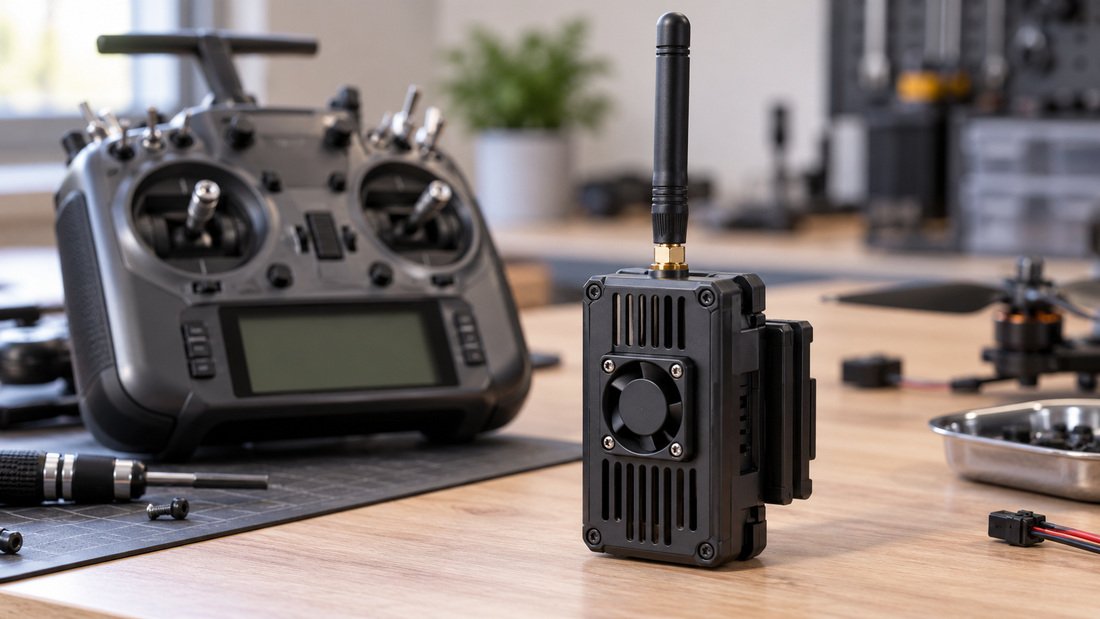
CE-RED and SRRC: What to Check
CE-RED (Radio Equipment Directive 2014/53/EU) and SRRC (State Radio Regulation of China) are not centralized databases like the FCC. Verification requires document review.
CE-RED
Request the EU Declaration of Conformity (DoC) signed by the manufacturer, listing the applicable directives and standards. Check that the DoC references the correct product and includes the notified body number if required. Ask for the test report from an accredited lab (e.g., according to ETSI standards). The DoC must be in an EU language and include the manufacturer’s address.
SRRC
Request the SRRC certificate and test report. The certificate should show the model number, frequency, and applicant name. The SRRC mark is required on the product. Verify the certificate number with the SRRC or a trusted lab if possible.
Comparison Table: FCC vs. CE-RED vs. SRRC
| Approval | Region | Verification Method | Key Documents |
|---|---|---|---|
| FCC ID | United States | Public online database | Grant, test report, label photo |
| CE-RED | European Union | Document review | DoC, test report, label |
| SRRC | China | Certificate review | Certificate, test report, label |
Common Mistakes and Red Flags
- FCC ID listed on a certificate but not on the product label.
- Grantee name is a trading company, not the manufacturer.
- Test report shows a different model or frequency band.
- Certificate is a generic “compliance certificate” without test data.
- Supplier cannot provide the full test report or refuses to share it.
- FCC ID belongs to a different product category (e.g., a Wi-Fi router for an ELRS receiver).
For a broader overview of compliance documentation, see our compliance center overview.
Procurement Checklist for Radio Approvals
Use this checklist when evaluating a new supplier or product. Confirm each item in writing.
- [ ] Supplier provides high-resolution photo of product label with FCC ID, CE mark, and SRRC mark.
- [ ] FCC ID appears in the FCC database and matches grantee name and product description.
- [ ] Full FCC test report available and matches model number.
- [ ] EU Declaration of Conformity is signed and references correct directives and standards.
- [ ] CE test report from accredited lab is available.
- [ ] SRRC certificate and test report are available (if applicable).
- [ ] Certificates and reports are valid for the exact variant you are purchasing.
- [ ] Supplier can explain any discrepancies between label and database.
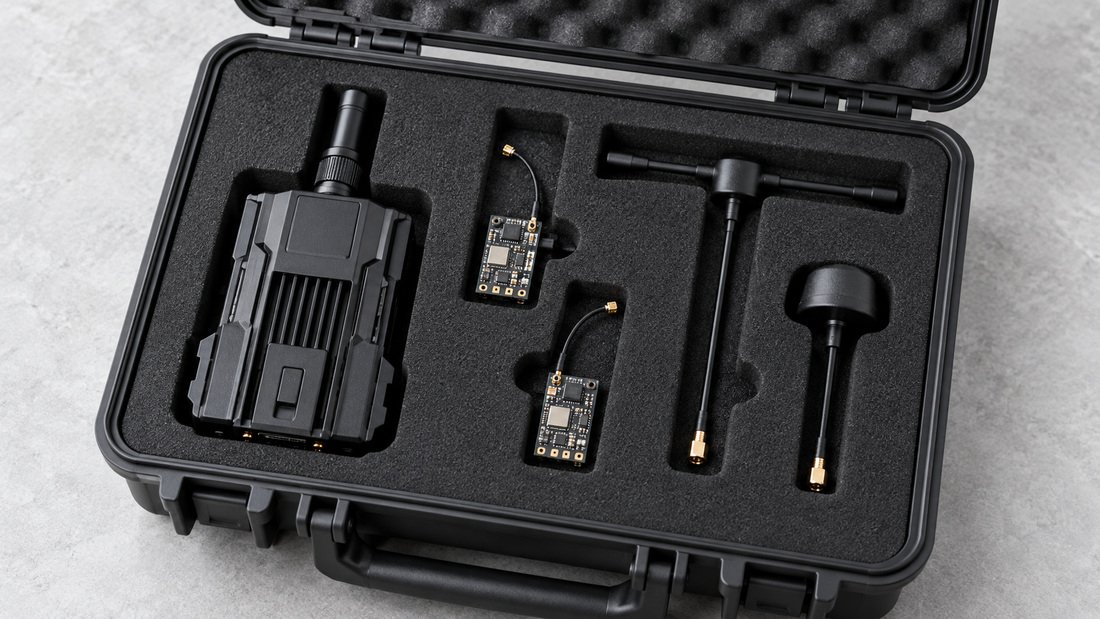
If you are sourcing ELRS receivers (BKR) or ELRS TX modules (BKT), ensure the approval covers the specific frequency and power output. Our export control and product classification page explains how classification affects shipping.
Contextual CTA
Need help verifying radio approvals for your order? Request an OEM / Wholesale Quote and our compliance team can guide you through the documentation.
How to Document Your Verification
Keep a compliance file for each product. Include the FCC ID search results (PDF or screenshot), the grant, test reports, DoC, and label photos. Record the date of verification and the name of the person who checked. This file is useful for customs, audits, and customer inquiries.
For products with batteries, also review battery shipping compliance because lithium batteries have additional transport rules. The FAA notes that spare lithium batteries must be carried in carry-on baggage only and terminals must be protected from short circuit; business shipments by air are subject to separate dangerous goods regulations.
FAQs
1. Is an FCC ID required for all radio products?
In the US, most intentional radiators and unintentional radiators require FCC equipment authorization. Some low-power devices may be exempt, but you should confirm with the FCC rules or a compliance lab.
2. Can a supplier use another company’s FCC ID?
Only if that company is the grantee and the product is manufactured under the same authorization. Reusing an FCC ID without permission is not valid and can be considered fraud.
3. How long does an FCC grant last?
FCC grants do not have an expiration date, but they can be revoked or modified. Always check the current status in the database.
4. What if the FCC ID is not in the database?
It may be invalid, or the product may not require an FCC ID (e.g., a receiver that is not intentionally radiating). Ask the supplier for clarification and the applicable FCC rule.
5. Is CE-RED the same as CE marking?
CE-RED is the radio equipment directive; CE marking is the broader conformity mark. A product can have CE marking under other directives (e.g., EMC, LVD) but still need CE-RED for radio functionality.
6. How do I verify SRRC?
Request the SRRC certificate and test report. You can also ask the supplier for the certificate number and verify with the test lab. There is no public database like the FCC.
7. Do I need to re-certify if I rebrand a product?
If you change the hardware, software, or labeling, you may need a new authorization. Consult a compliance lab. For more on EU-specific rules, see EU UAS requirements.
Conclusion
Verifying a supplier’s FCC ID is a straightforward but essential step in procurement. Use the FCC database, request test reports, and cross-check CE-RED and SRRC documents. When in doubt, ask the supplier for the original certificate and test report, and confirm in writing that the approval covers the exact product you are buying.
Ready to source compliant ELRS modules and receivers? Request an OEM / Wholesale Quote and our team will assist with the documentation you need.