Quick summary
Antenna diversity uses two or more antennas and receiver chains to reduce signal dropouts when the aircraft rotates, banks, or flies behind obstacles. In ELRS receiver selection, diversity can be useful for drone soccer teams and clubs that need a more tolerant link in busy indoor arenas, but it is not automatically better than a well-placed single antenna. The real benefit depends on receiver design, antenna type, mounting, and how your team flies. This guide explains when diversity helps, what trade-offs to expect, and which questions to ask suppliers before ordering team kits.
Key Takeaways
- Antenna diversity helps most when signal paths change quickly, such as during tight turns, low passes, or flights near people and structures.
- True diversity and switched diversity are not the same; ask which architecture a receiver uses and how it handles antenna switching.
- Two antennas cannot fix a poor antenna mount, damaged coax, or a transmitter setup that is already at its limit.
- For school and club procurement, prioritize repairability, standardized connectors, and spare antennas over marketing labels.
- Confirm receiver firmware compatibility, connector type, and team-kit contents in writing before ordering.
What antenna diversity means in practice
In simple terms, antenna diversity means the receiver can use more than one antenna to improve the chances of receiving a usable signal. The receiver may combine, select, or switch between antennas depending on its design. For a drone soccer team, the practical question is whether that design reduces dropouts during the maneuvers your team actually performs, not whether the product page uses the word “diversity.”
True diversity vs. switched diversity
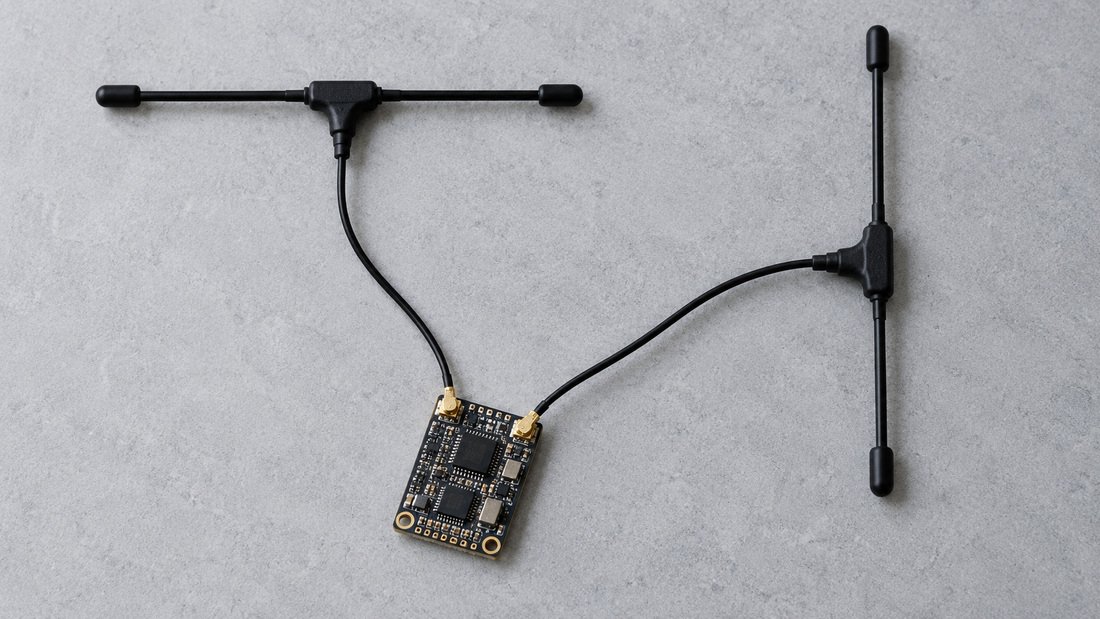
True diversity generally implies separate receiver chains for each antenna, while switched diversity uses one receiver path and selects between antennas. The distinction can affect how quickly the system responds to fading, but the real-world difference depends on the implementation. Ask the supplier to describe the architecture in plain language and to confirm whether both antennas are active simultaneously or selected over time.
When antenna diversity is useful
Diversity is most useful when the received signal changes rapidly because the aircraft orientation or surroundings change. In drone soccer, that can happen during quick direction changes, low-altitude passes near goal structures, and flights in halls with reflective surfaces or crowded RF environments. Diversity can also help when the aircraft is small and the antenna cannot be mounted far from the frame.
Indoor drone soccer arenas
Indoor arenas often have many reflective surfaces and multiple active radios. A diversity receiver may maintain a more stable link when one antenna orientation is temporarily blocked, but it does not eliminate interference from other transmitters. Teams should treat diversity as one part of RF hygiene, alongside transmitter power settings, antenna placement, and channel planning.
Small frames and tight mounting
On small drone soccer frames, antenna placement is constrained. A diversity receiver with two antennas can give the installer more options to orient antennas differently, which may improve coverage. However, the benefit depends on keeping the antennas separated and clear of conductive parts. A single well-placed antenna can outperform two poorly placed antennas.
When diversity may not be worth it
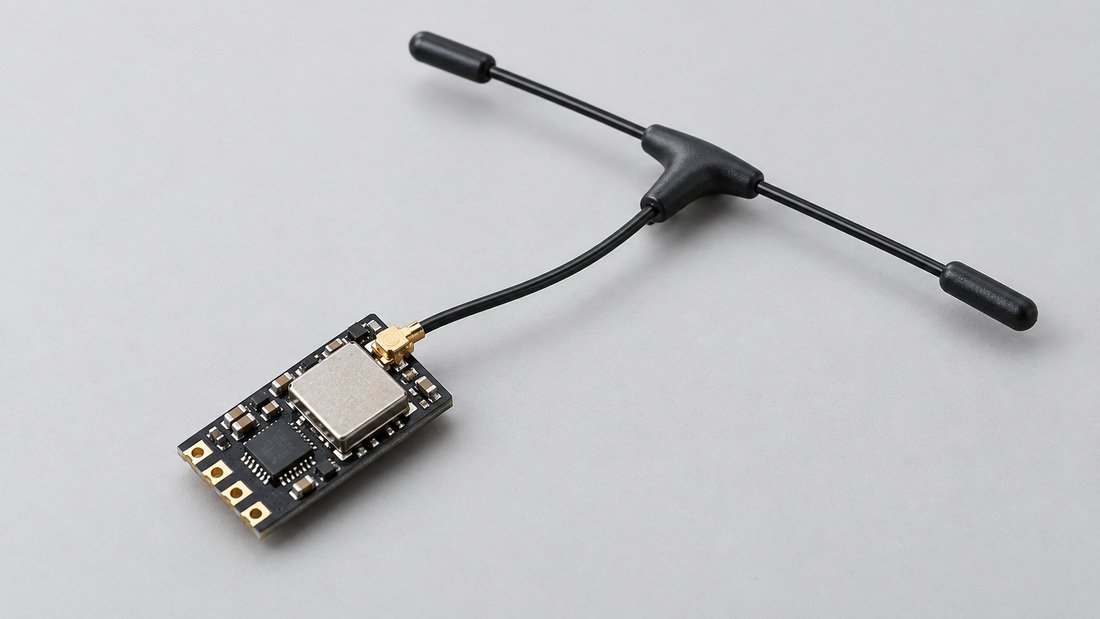
Diversity adds size, weight, cost, and another antenna to damage. For casual school programs or low-intensity practice, a simple receiver with a protected antenna may be more practical. If your team flies in a clean RF environment and already has a reliable link, diversity may not deliver a noticeable improvement. It is also not a substitute for fixing a bad antenna connector or a damaged coax.
Comparing receiver antenna approaches
The table below summarizes general trade-offs to discuss with your supplier. It is not a ranking of specific products.
| Approach | Potential benefit | Trade-off | Questions to ask |
|---|---|---|---|
| Single antenna | Simple, lightweight, fewer parts to damage | More sensitive to orientation and blockage | Is the antenna protected? Is a spare available? |
| Switched diversity | May reduce dropouts when one antenna is blocked | Switching behavior and latency depend on design | How fast does it switch? Does it support both antennas actively? |
| True diversity | Potentially more robust reception in changing conditions | Larger, heavier, more expensive; needs good antenna separation | Are there separate receiver chains? How are antennas mounted? |
| External antenna vs. onboard antenna | External can be positioned away from interference | Connector and coax add failure points | What connector type? Is the coax replaceable? |
ELRS receiver selection checklist for teams
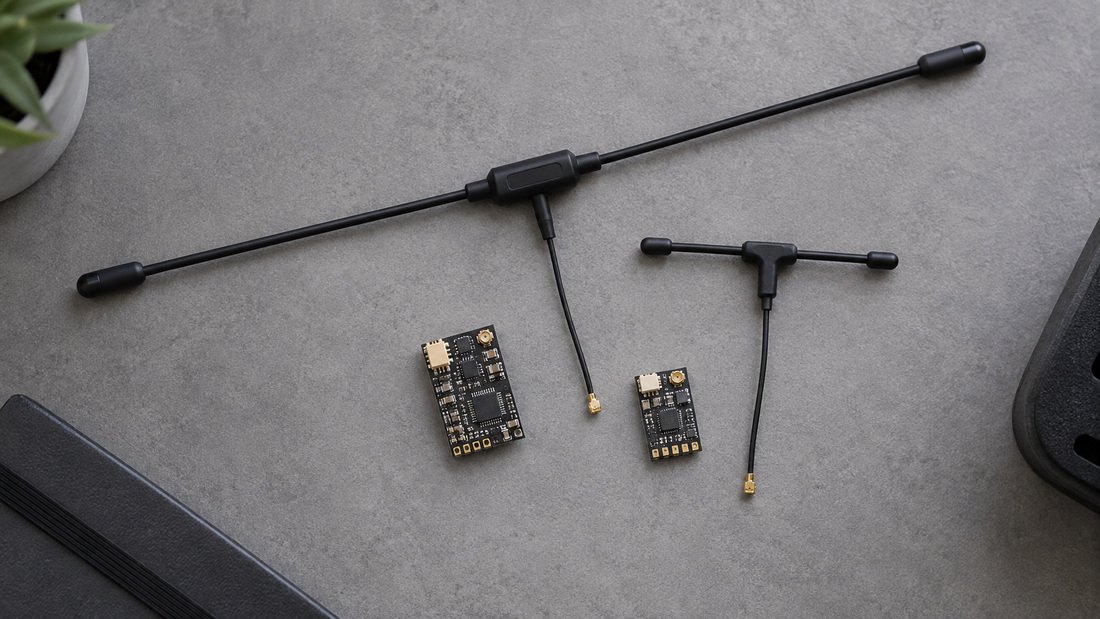
Use this checklist to compare options before purchasing team kits. Confirm each item in writing with your supplier; do not rely on product titles alone.
- Firmware compatibility: Confirm the receiver works with your team’s transmitter modules and ELRS firmware version. See ELRS receiver compatibility guidance.
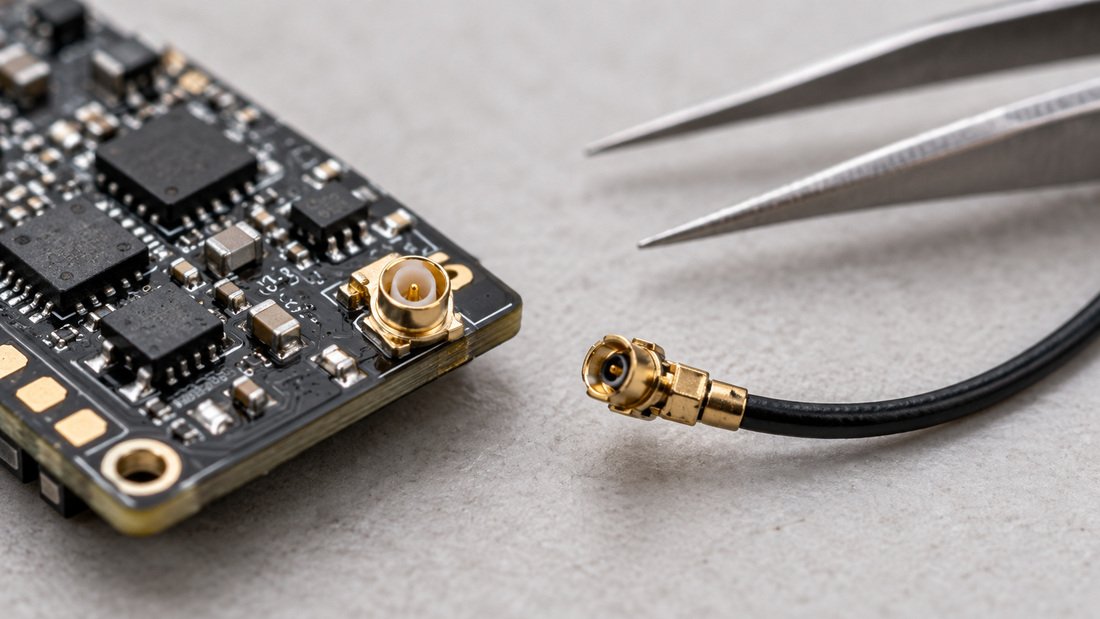
- Antenna connector type: Identify whether the receiver uses a soldered antenna, U.FL, or another connector, and whether spare antennas are available.
- Mounting and protection: Check that antennas can be mounted securely and are protected during crashes or storage.
- Weight and size: Verify the receiver fits your drone soccer frame and does not shift the center of gravity.
- Spare parts: Ask for spare antennas and cables as part of the team kit so repairs do not end a practice session.
- Documentation: Request wiring diagrams and setup notes suitable for students and volunteer coaches.
For a broader overview of receiver options, see ELRS receivers and RF antennas.
Common mistakes in diversity receiver setups
Even a good receiver can underperform if installed poorly. Watch for these issues:
- Mounting both antennas in the same orientation or too close together.
- Routing antenna coax next to power wires or carbon fiber parts that can block RF.
- Using damaged or incorrect antennas without checking connector type and frequency band.
- Assuming diversity replaces the need for sensible transmitter power and channel planning.
- Buying diversity receivers for a fleet without confirming that spare antennas and mounts are available.
Procurement next step for clubs and schools
Before ordering a team kit, define your flying environment, frame size, and repair workflow. Ask suppliers to confirm receiver architecture, antenna connector type, firmware compatibility, and spare-part availability in writing. If you need help matching receivers to your program, Request a Team Kit Quote and include your expected fleet size, frame type, and training schedule. DPF can help you compare options within our ELRS and RF systems range.
Frequently asked questions
Does antenna diversity always improve range?
No. Diversity can improve link reliability when signal paths change, but range depends on transmitter power, antenna gain, environment, and receiver sensitivity. A diversity receiver with poor antenna placement may perform worse than a simple receiver with a good antenna.
Is diversity required for drone soccer?
It is not universally required. Some teams may benefit in crowded or reflective indoor spaces, while others may prioritize lightweight, simple receivers. Base the decision on your practice and competition environment.
What is the difference between true diversity and switched diversity?
True diversity generally uses separate receiver chains for each antenna, while switched diversity selects between antennas using one receiver path. Ask the supplier to explain how their receiver handles antenna switching.
Can I add a second antenna to a non-diversity receiver?
Not safely unless the receiver is designed for it. Adding antennas without the matching RF design can damage the receiver or degrade performance. Follow the manufacturer’s instructions.
How should I mount two antennas on a small frame?
Aim for separation and different orientations where possible, and keep antennas clear of conductive materials. Confirm the mounting method with your supplier and test in your own environment before competitions.
What should schools check before buying diversity receivers?
Check firmware compatibility, antenna connector type, spare-part availability, and whether the receiver fits student-built frames. Request written confirmation of these details and any support documentation for educators.
Does DPF publish diversity receiver test data?
Do not assume test data exists. Ask your DPF contact for available documentation, and request samples to evaluate in your own flying environment before committing to a team kit.
Conclusion
Antenna diversity can be a useful tool in ELRS receiver selection for teams that fly in changing or reflective environments, but it is not a guaranteed upgrade for every program. Focus on the full RF system: transmitter setup, antenna placement, connector quality, and spare-part support. Use the checklist above and confirm details in writing before you order. To discuss your team’s needs, Request a Team Kit Quote with your fleet size and flying conditions.