Quick summary
Designers balance cage strength and weight by treating the drone soccer ball cage and structure as a structural system, not a single part. The cage must absorb repeated impacts without deforming permanently, yet stay light enough for motors to accelerate quickly and batteries to last a full match. This usually means choosing impact-resistant polymers, using ribs and trusses instead of solid walls, spreading load through the frame, and testing prototypes under realistic collisions. The goal is not maximum strength or minimum weight, but the best strength-to-weight ratio for a specific competition class and budget.
Key Takeaways
- Strength and weight trade off directly: every gram added to the cage reduces acceleration and flight time.
- Geometry — ribs, trusses and rounded shapes — often matters more than material thickness alone.
- The cage works with the drone frames and propulsion system, so balance must be designed as a whole.
- Prototyping and impact testing are essential; paper calculations rarely predict real collision behaviour.
- Procurement teams should request material specifications, impact test methods and spare-part availability in writing.
Why the cage matters in drone soccer
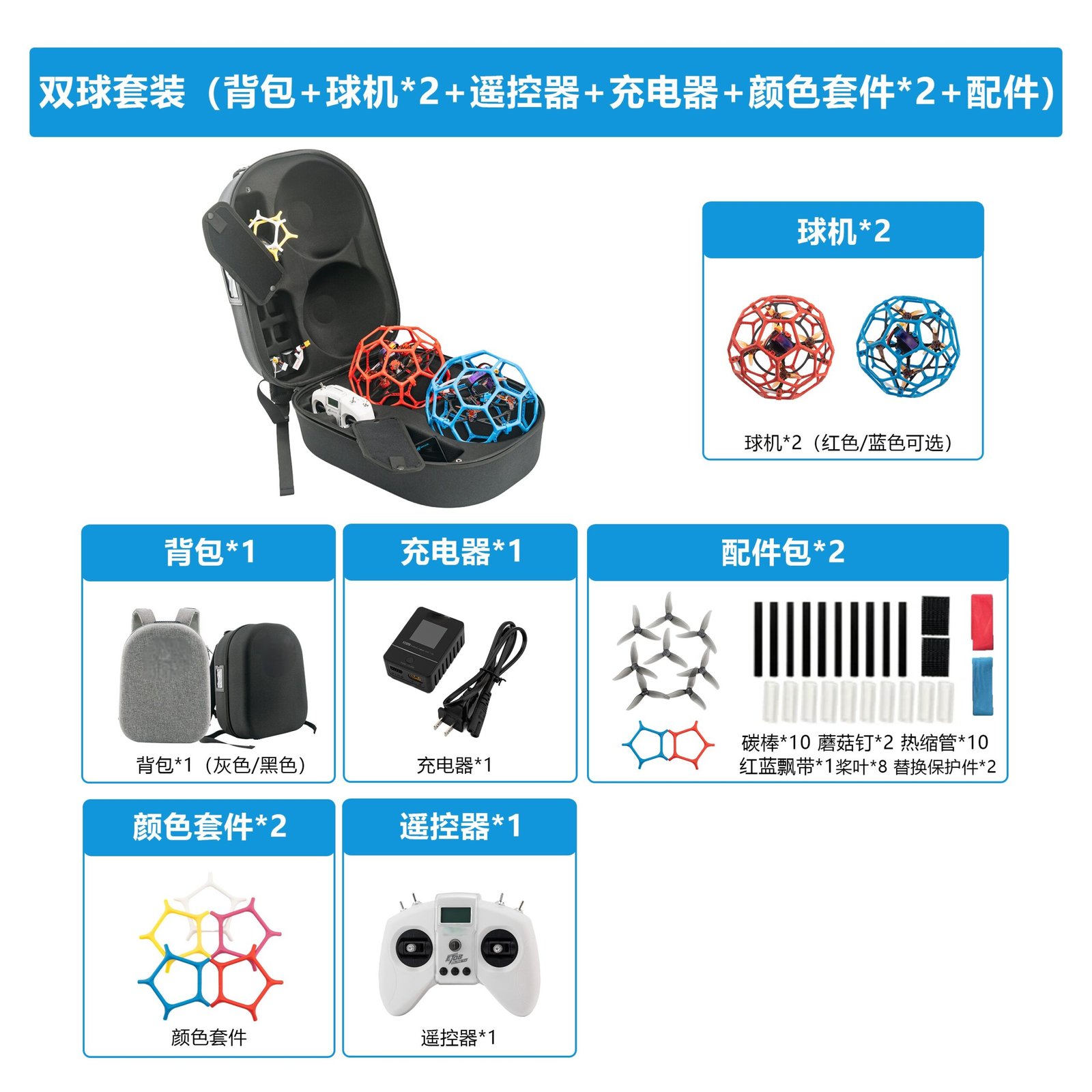
In drone soccer, the ball is the scoring device and the cage is its outer shell. The cage protects the internal drone, absorbs collisions with other balls, goals and walls, and keeps the ball round enough to roll and fly predictably. A cage that is too weak deforms, cracks or detaches; a cage that is too heavy makes the ball sluggish and shortens flight time. Designers therefore treat the cage as a tuned compromise between durability and flight performance.
What the cage actually does
The cage serves three jobs: it protects the propeller and electronics, it defines the rolling and bouncing behaviour of the ball, and it transfers impact loads into the internal frame. Each job pulls the design in a different direction. Protection favours thicker walls; predictable rolling favours a consistent round shape; load transfer favours stiff mounting points. Good design satisfies all three with the least material.
How strength and weight trade off
Strength generally increases with material thickness, cross-section and stiffness, while weight increases at the same time. The designer’s task is to gain strength more efficiently than weight. That is why modern cages use thin shells reinforced with ribs, hollow sections, and strategic mounting bosses rather than uniformly thick plastic. The table below summarises common approaches and their trade-offs.
| Design approach | Strength effect | Weight effect | Typical trade-off |
|---|---|---|---|
| Uniform thicker shell | Higher impact resistance | Significant weight gain | Slower acceleration, shorter flight time |
| Ribbed or truss structure | Good stiffness with less material | Moderate weight | More complex tooling and cost |
| Hollow or lattice sections | High stiffness-to-weight | Low weight | Risk of local buckling if poorly designed |
| Rounded, impact-friendly geometry | Better load spreading | Neutral | Less internal volume for electronics |
| Modular replaceable segments | Repairable, localised failure | Slightly higher joint weight | More assembly steps and spare parts |
Material choices for cages
Designers usually select polymers that combine impact resistance with low density. Common families include polycarbonate (PC) for toughness, acrylonitrile butadiene styrene (ABS) for cost and ease of moulding, and blends or reinforced grades for stiffness. Fibre-reinforced composites can offer high stiffness-to-weight but are more expensive and harder to repair. The right choice depends on competition rules, expected impact energy and the replacement budget of the team or school.
Geometry before material
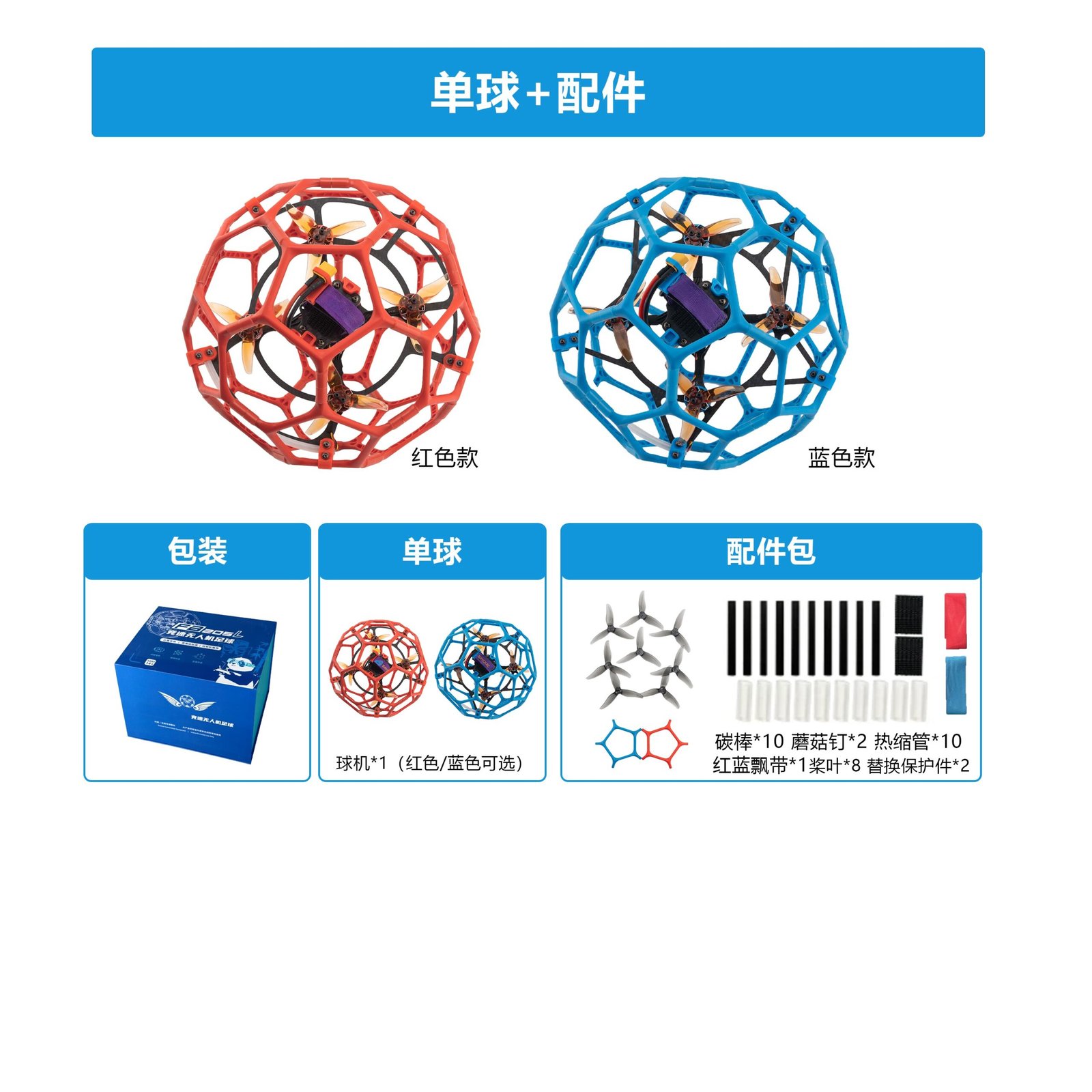
Before changing material, designers optimise geometry: rounded edges, continuous load paths, ribs aligned with impact direction, and mounting points that distribute force into the internal frame. A well-shaped thin shell can outperform a poorly shaped thick one. This is why two cages of similar weight can behave very differently in a collision.
Testing and validation
Prototypes are validated with repeated drop tests, wall impacts and ball-to-ball collisions at match speeds. Designers record deformation, cracking and weight change after each test. Because real collisions are complex, physical testing is more reliable than simulation alone, although simulation helps narrow the design space. Teams and schools can ask suppliers what testing was done, under what conditions, and whether results are available for review.
What to ask suppliers about testing
Ask for the test method (drop height, impact speed, number of cycles), the pass criteria, and whether the tested cage is the same version being sold. If test data is not available, treat durability claims as unverified and request samples for your own trials. Documented testing is more useful than marketing claims.
Balancing weight across the whole drone
The cage is only one part of the mass budget. Motors, propellers, battery, flight controller and propulsion combo kits all contribute. A heavier cage may require more powerful motors, which add weight and reduce efficiency. Designers therefore optimise the cage together with the propulsion system. In practice, teams often find that a slightly lighter cage with good repairability gives better match performance than a heavier, stronger cage, because damaged cages are replaced quickly and flight characteristics stay consistent.
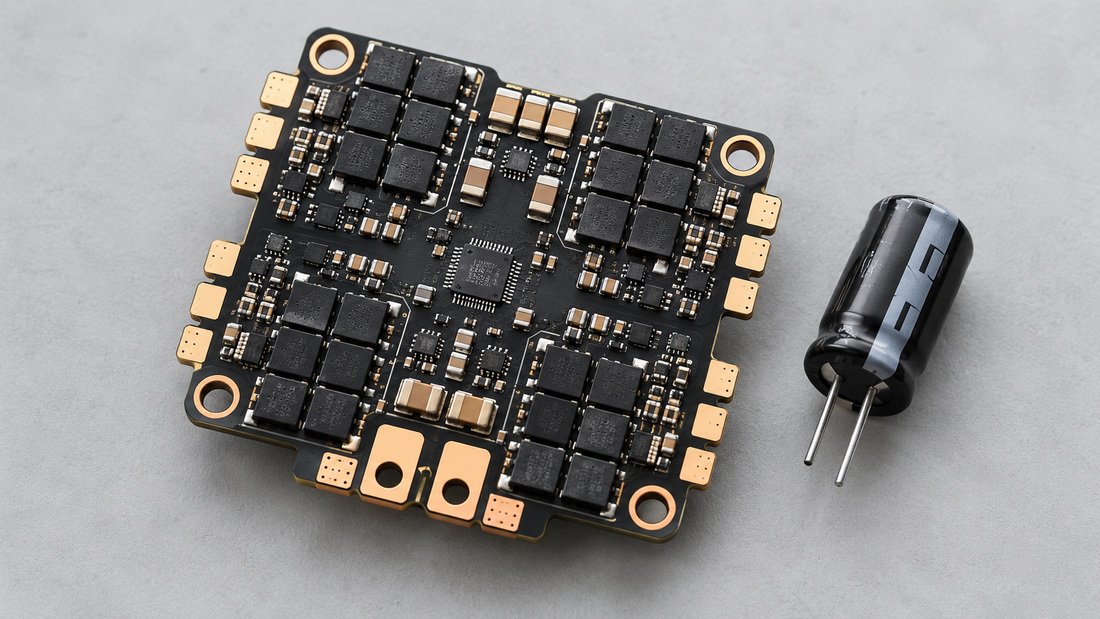
Flight controllers and electronic speed controllers (ESCs) also affect how a given cage weight feels in flight. Firmware such as Betaflight runs on the flight controller and coordinates sensors, ESCs and motors to keep the craft predictable; it is free, open-source software used across many drone types (Betaflight documentation). A well-tuned control system can partly compensate for weight changes, but it cannot overcome an overweight cage.
Common mistakes
- Choosing the thickest cage available without checking total ball weight and motor capacity.
- Ignoring repairability: a cage that cannot be locally repaired becomes expensive over a season.
- Mixing parts from different generations without confirming fit and mounting compatibility.
- Relying on unverified durability claims instead of requesting test reports or sample trials.
- Forgetting the rules: competition classes may limit ball dimensions, weight or materials.
Procurement checklist for clubs and schools
Before ordering cages or full balls, confirm the following in writing with your supplier. This checklist is general guidance; it does not represent confirmed terms from any specific supplier.
- Compatible competition class and ball dimensions.
- Material family and grade, with data sheet if available.
- Ball weight and how it was measured.
- Impact test method and pass criteria, if testing was performed.
- Mounting interface and compatibility with your existing drone soccer replacement parts.
- Availability of protective shells as separate spares.
- Repair guidance and expected service life under club use.
- Sample availability for your own impact trials.
- Warranty and return terms specific to your region and order type.
For OEM or club procurement, ask your supplier to confirm commercial terms such as minimum order quantity, lead time and warranty scope in the quotation rather than assuming typical values. See Get a Quote to start a documented conversation.
How schools and clubs can evaluate cages in practice
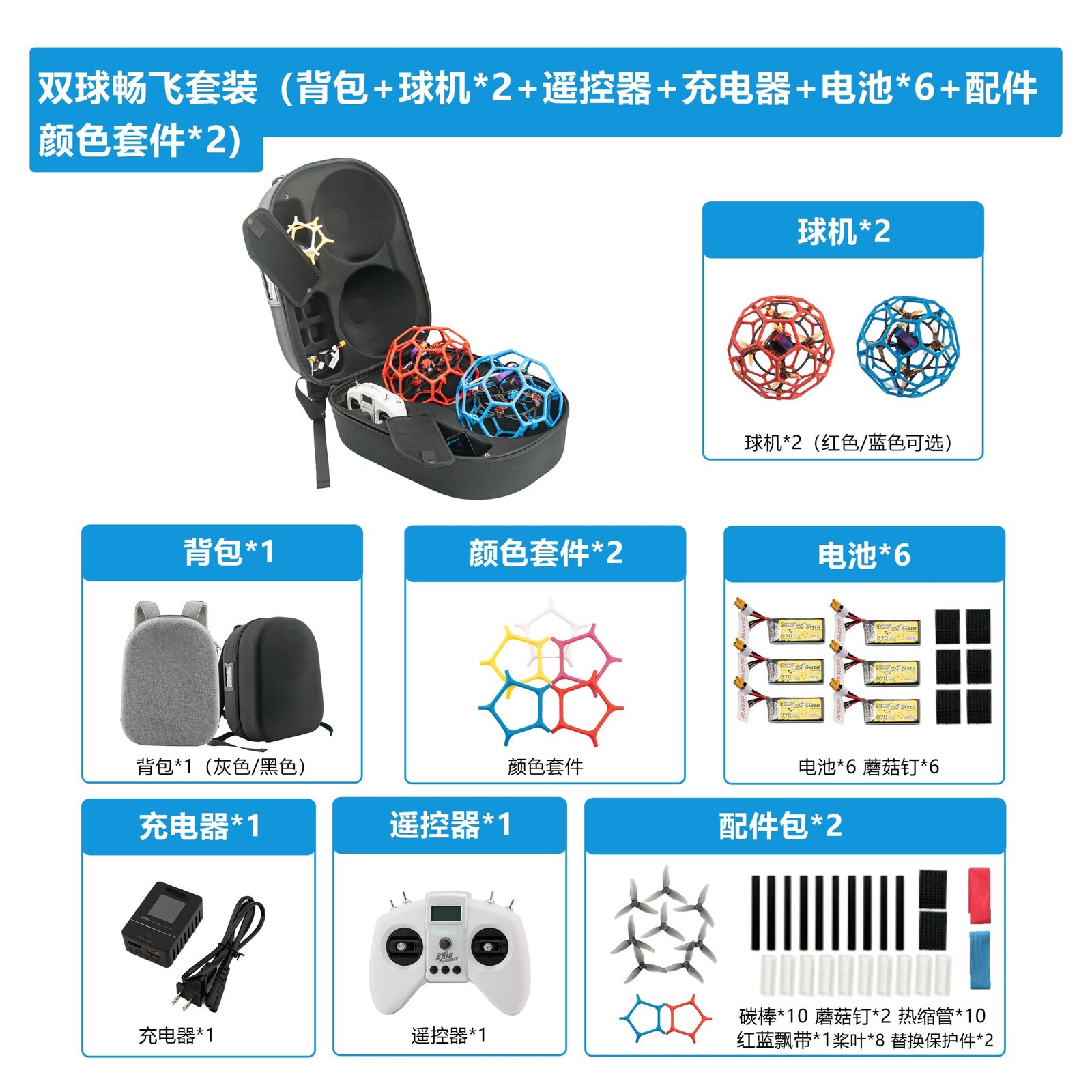
Run a simple trial with a small number of cages before committing to a season order. Fly the same drone setup, perform controlled collisions with a wall or another ball, and record deformation, cracking and any change in flight behaviour. Compare results across candidate cages using the same protocol. This approach gives your team evidence that matters more than catalogue claims, and it helps you choose the strength-to-weight balance that suits your training intensity and budget.
Frequently asked questions
Is a heavier cage always stronger?
Not necessarily. Strength depends on geometry, material and load paths as well as mass. A well-designed ribbed cage can be stronger than a heavier solid one.
Can we use cages from different suppliers on the same ball?
Only if the mounting interface and dimensions match. Mixed parts can create weak points or change flight behaviour, so confirm compatibility in writing.
How do we know if a cage is competition legal?
Check your competition class rules for ball dimensions, weight limits and material restrictions before purchasing.
What should we ask for when requesting samples?
Ask for the exact model, material data sheet, weight measurement and any available impact test information, plus the terms for sample orders.
Does cage weight affect flight time?
Yes, added mass increases the energy needed for acceleration and hovering, which generally reduces flight time and responsiveness.
How often should cages be replaced?
Replacement depends on impact frequency and material fatigue. Inspect regularly for cracks and deformation, and keep spare protective shells available.
Conclusion
Balancing cage strength and weight is a design discipline that combines material choice, geometry, testing and whole-drone mass budgeting. For schools, clubs and procurement teams, the practical path is to define your competition class, request documented specifications and test samples under realistic conditions. When you are ready to equip a team, request a documented quotation and confirm commercial terms in writing. Request a Team Kit Quote.