Quick summary
A cracked drone soccer ball cage part can often be repaired if the crack is small and does not affect the structural integrity or safety of the ball. For minor cracks, clean the area, apply a suitable adhesive or plastic weld, and reinforce if needed. For larger cracks or damage to key structural points, replacement is safer. Always inspect the entire drone soccer ball cage and structure for hidden damage, and consult your team’s safety guidelines. Repair decisions should balance cost, safety, and performance, especially for school and club use.
Key Takeaways
- Assess crack size, location, and material before deciding to repair or replace.
- Use appropriate adhesives or plastic welding for minor cracks; avoid repairs that compromise safety.
- Reinforce repairs with compatible materials and monitor after repair.
- Replace cracked parts if they affect structural integrity, balance, or player safety.
- Keep spare protective shells and cage components on hand to minimize downtime.
Understanding the Drone Soccer Ball Cage and Structure
The drone soccer ball cage and structure is the protective outer framework that surrounds the drone, allowing it to bounce and roll safely during play. It typically consists of a spherical cage made from lightweight yet durable materials such as carbon fiber, fiberglass, or high-impact plastic, often with protective shells covering the drone’s propellers and electronics. The cage must withstand impacts while keeping the drone stable and protecting players.
Common materials include composite rods, molded plastic connectors, and protective shells. Each material has different repair characteristics. For example, carbon fiber may splinter and require specific adhesives, while plastic may be more amenable to welding or gluing. Understanding the material helps choose the right repair method.
How to Assess a Cracked Cage Part
Before repairing, evaluate the crack’s severity. Consider the location, size, depth, and whether the part is under constant stress. A crack near a joint or mounting point is more critical than a cosmetic crack on a flat surface. Also check for deformation or missing pieces.
Inspection Checklist
- Clean the area to see the crack clearly.
- Check for cracks extending into critical areas like screw holes or rod ends.
- Flex the part gently to see if the crack opens.
- Look for signs of stress whitening or delamination in composites.
- Compare with an undamaged part if available.
If the crack is longer than a few millimeters or affects a structural joint, replacement is usually recommended. For minor cracks, repair may be viable.
Repair Methods for Cracked Cage Parts
The best repair method depends on the material and crack type. Below are common approaches for plastic, composite, and metal components. Always follow safety guidelines and test repairs before returning to play.
Plastic Parts (e.g., connectors, shells)
For plastic cracks, cyanoacrylate (CA) glue or two-part epoxy can be effective. For a stronger bond, plastic welding using a soldering iron with a plastic welding tip or a hot air welder can melt the plastic together. Reinforce with a small piece of compatible plastic mesh or strips if needed. Ensure the repair is smooth to avoid sharp edges.
Composite Parts (e.g., carbon fiber rods, fiberglass)
Composite repairs often require epoxy resin and hardener. For a cracked rod, you can wrap the area with fiberglass cloth and saturate with epoxy. Alternatively, use a composite-specific adhesive. Allow full cure time per manufacturer instructions. Sand smooth after curing. For hollow rods, consider inserting a splint inside if accessible.
Metal Parts (e.g., screws, connectors)
Metal cracks are less common but can be repaired by welding or brazing if equipment is available. For small cracks, metal-filled epoxy may work. However, metal parts in drone soccer cages are typically fasteners and are usually replaced rather than repaired.
Regardless of method, ensure the repair does not add significant weight or alter balance. Test the repaired part with a gentle flex and visual inspection before reinstalling.
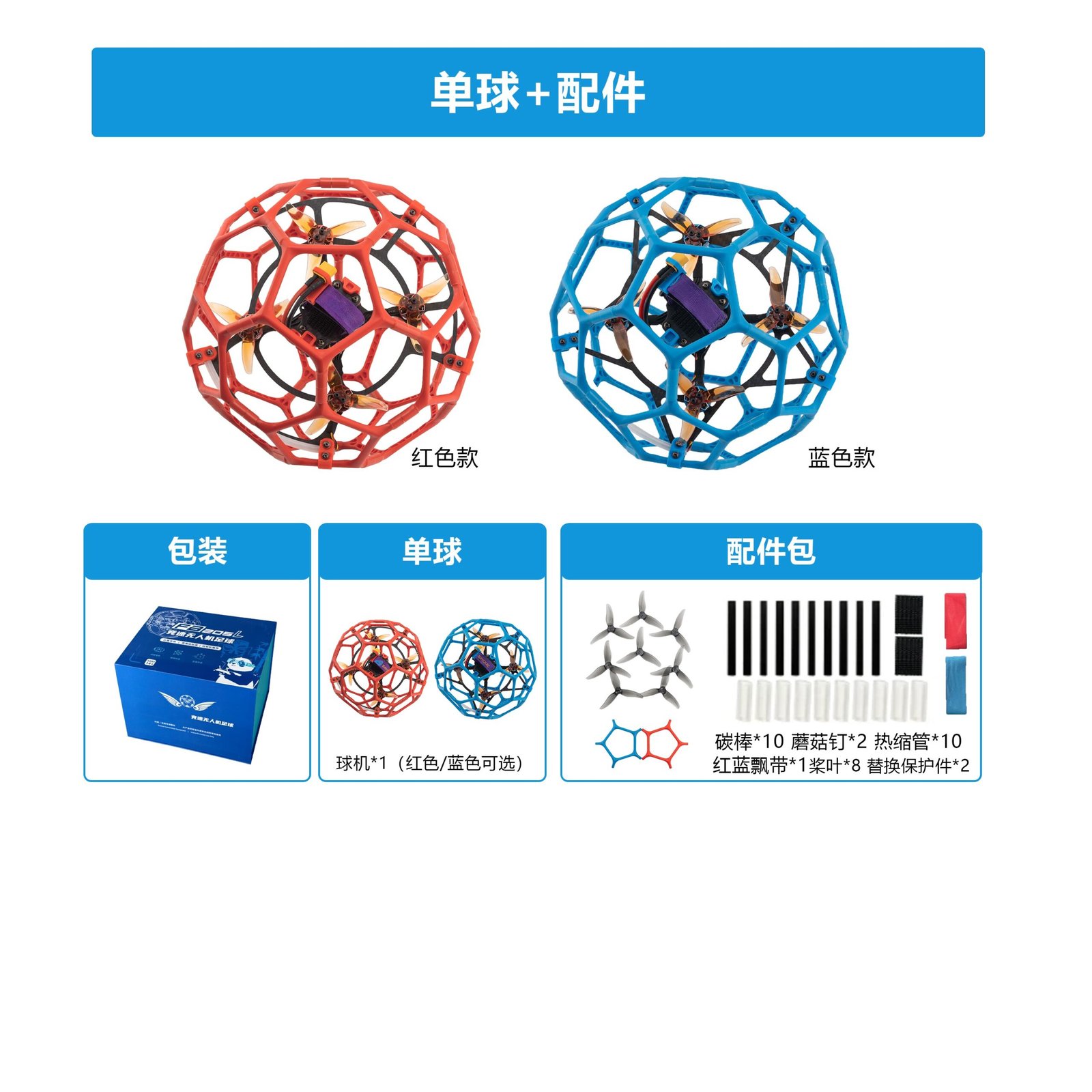
Single ball accessories, like these protective shells and connectors, are common repair items for drone soccer cages.
Repair vs. Replace: Comparison Table
| Factor | Repair | Replace |
|---|---|---|
| Cost | Lower for minor cracks | Higher, but ensures integrity |
| Time | May require curing time | Immediate if spare available |
| Safety | Depends on repair quality | Guaranteed if new part |
| Performance | May affect balance or weight | Original performance |
| Best for | Cosmetic or non-structural cracks | Structural cracks or critical parts |
For school programs and clubs with tight budgets, repairing minor cracks can extend part life. However, safety should never be compromised. Keep a small stock of protective shells and other drone soccer replacement parts to quickly replace critical components.
Step-by-Step Repair Process
Follow these steps for a reliable repair of a cracked cage part. This general process applies to most materials; adjust based on specific material requirements.
- Clean the area: Remove dirt, oil, and loose material with isopropyl alcohol.
- Stop the crack: For plastics, you can drill a small hole at each end of the crack to prevent propagation (stop-drilling). Use a drill bit slightly larger than the crack width.
- Prepare the surface: Sand around the crack to improve adhesion.
- Apply repair material: Use appropriate adhesive, epoxy, or plastic welding. Follow manufacturer instructions for mixing and curing.
- Reinforce if needed: Add a patch or splint for extra strength.
- Cure and test: Allow full cure time, then inspect and gently flex to test.
- Reinstall and monitor: After reinstallation, check for any loosening or new cracks after initial use.
Always wear safety glasses and gloves when repairing.
Common Mistakes to Avoid
- Using the wrong adhesive for the material (e.g., CA glue on flexible plastics may crack).
- Not cleaning the surface, leading to poor bond.
- Over-tightening fasteners, causing new cracks.
- Ignoring balance: added weight from repair can affect flight.
- Skipping safety checks before returning to play.
Buyer Checklist: Spare Parts and Repair Supplies
For clubs, schools, and distributors, maintaining a repair kit reduces downtime. Consider keeping these items in stock:
- Spare protective shells for your ball model.
- Assorted cage rods or connectors (check compatibility).
- Adhesives: CA glue, two-part epoxy, and composite resin.
- Reinforcement materials: fiberglass cloth, plastic mesh.
- Tools: sandpaper, drill bits, clamps, safety gear.
- Replacement drone frames if structural damage occurs.
- Consider propulsion combo kits for complete rebuilds.
When ordering, confirm compatibility with your drone soccer ball model. Request material specifications and repair guidelines from suppliers. For custom or bulk orders, discuss your needs with the supplier to ensure you get the right parts.
Need parts for your team? Request a Team Kit Quote to get started.
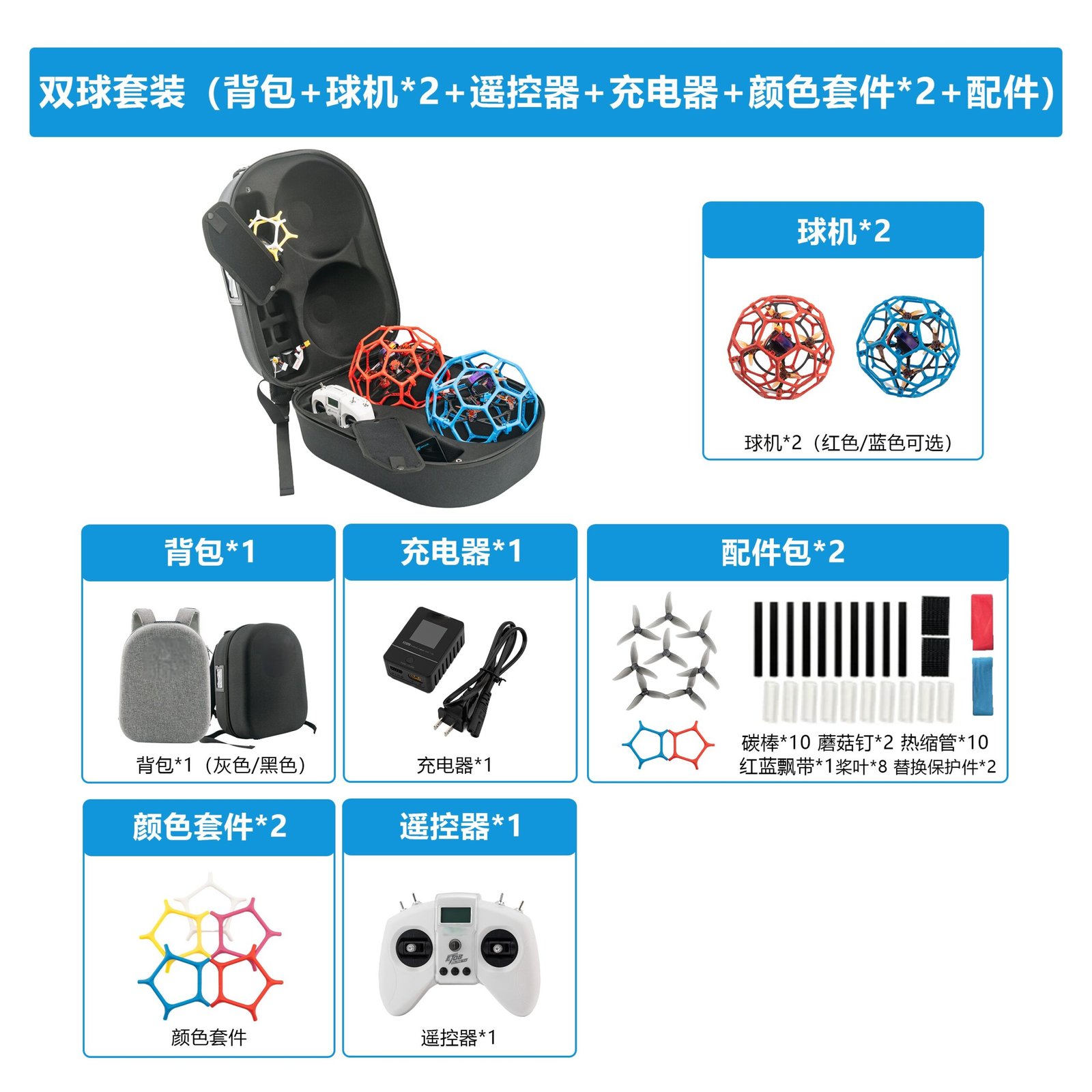
Double ball setups require careful maintenance of both cage structures.
Frequently Asked Questions
Can I use super glue to repair a cracked drone soccer ball cage?
Super glue (cyanoacrylate) can work for small cracks in some plastics but may be brittle. For load-bearing parts, use epoxy or plastic welding. Always test on a scrap piece first.
How do I know if a crack is too severe to repair?
If the crack extends across a joint, causes misalignment, or the part feels weak when flexed, replace it. Structural integrity is critical for safety.
What is the best way to reinforce a repaired cage part?
For plastics, embed a small piece of mesh or use a plastic splint. For composites, wrap with fiberglass cloth and epoxy. Ensure reinforcement doesn’t interfere with fit.
Can I repair a carbon fiber rod?
Yes, using epoxy and fiberglass wrap. For hollow rods, insert a snug-fitting splint inside if possible. Allow full cure before use.
How often should I inspect drone soccer balls for cracks?
Inspect before and after each practice or match. Regular inspection helps catch minor damage early.
Where can I buy replacement cage parts?
Contact your drone soccer equipment supplier or check online stores specializing in drone soccer parts. Ensure compatibility with your ball model.
Is it safe to use a repaired ball in competition?
Check with your league’s rules. Some competitions may prohibit repaired structural parts. When in doubt, replace.
Conclusion
Repairing a cracked drone soccer ball cage part can be a cost-effective solution for minor damage, but safety and performance must come first. By following proper assessment, repair techniques, and knowing when to replace, teams can keep their equipment in play longer. Always keep spare parts on hand and consult your supplier for specific guidance.
Ready to stock up on replacement parts or need a custom solution? Request a Team Kit Quote today.