Quick summary
For most indoor drone events, start with the lowest transmit (TX) power that maintains a stable link—often 10–25 mW in small gyms and 25–100 mW in larger halls—then increase only if you see link quality warnings. Because ELRS transmitter modules and receivers negotiate a dynamic link, high power is rarely needed indoors and can increase interference. Always test in the actual venue, follow local radio rules, and confirm settings with your event organizer and equipment supplier.
Key Takeaways
- Indoor ranges are short; lower TX power usually gives adequate link quality and reduces radio noise for everyone.
- Use telemetry and link-quality feedback to tune power, not guesswork.
- Coordinate power and frequency settings with the event organizer to avoid self-interference.
- Verify legal limits and venue rules; do not assume a single setting works worldwide.
- Document your team’s settings and test them before competition day.
Why TX power matters at indoor events
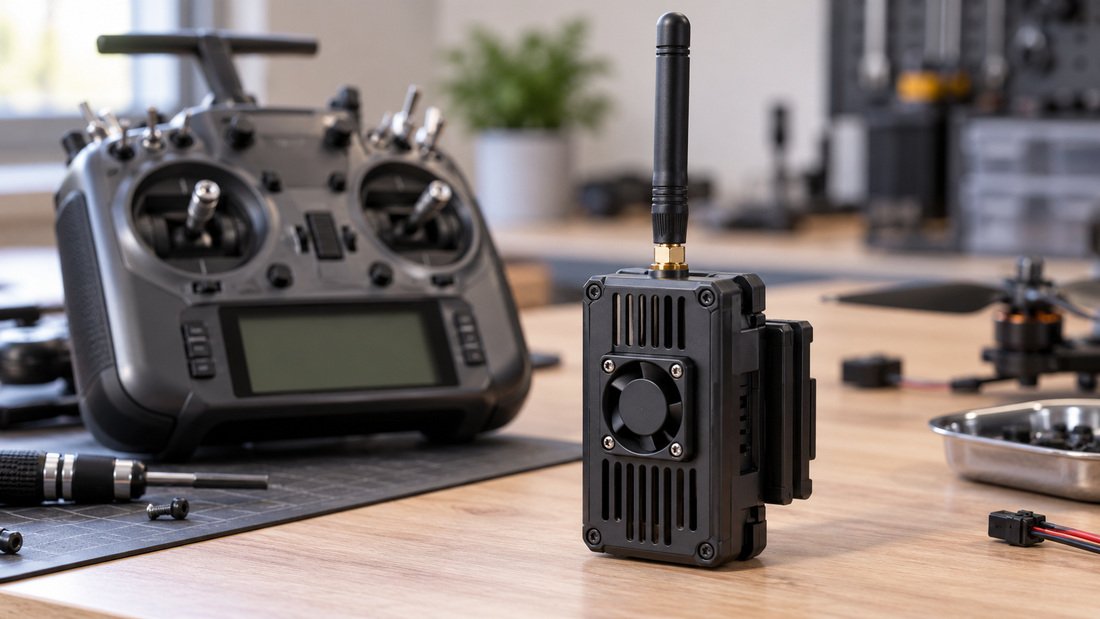
Indoor venues compress many pilots, drones, and radios into a small space. Higher TX power on ELRS transmitter modules can help at range, but indoors it may add unnecessary RF energy that affects nearby receivers and other teams. The goal is a reliable control link with the least power that works consistently.
ELRS systems use a bidirectional link, so the transmitter and receiver exchange information. This means you can often judge link quality from telemetry rather than pushing power to the maximum. For a broader overview of the ecosystem, see ELRS and RF systems.
How to choose a starting TX power
A practical approach is to begin low and increase only when link quality drops. The table below gives general starting points; always verify in your venue.
| Venue size | Suggested starting TX power | What to watch |
|---|---|---|
| Small gym or classroom | 10–25 mW | Link quality warnings, failsafe events |
| Standard school hall | 25–50 mW | Consistency across the flight area |
| Large sports hall or arena | 50–100 mW | Dead zones, antenna placement |
| Multi-team event with many radios | Start low; coordinate with organizer | Interference, channel plan |
These are illustrative starting points, not universal rules. Your receiver, antennas, and venue construction all affect the result. Test before you commit.
Coordinate with the event organizer
Event organizers often set rules for TX power, channels, and equipment checks. Ask for the venue’s RF plan and follow it. If no plan exists, propose a low-power default and a process to adjust if issues arise.
For teams, nominate one person to manage radio settings and keep a record. This avoids last-minute changes that can confuse pilots. Share your settings with the organizer so other teams can avoid conflicts.
Use link quality, not guesswork
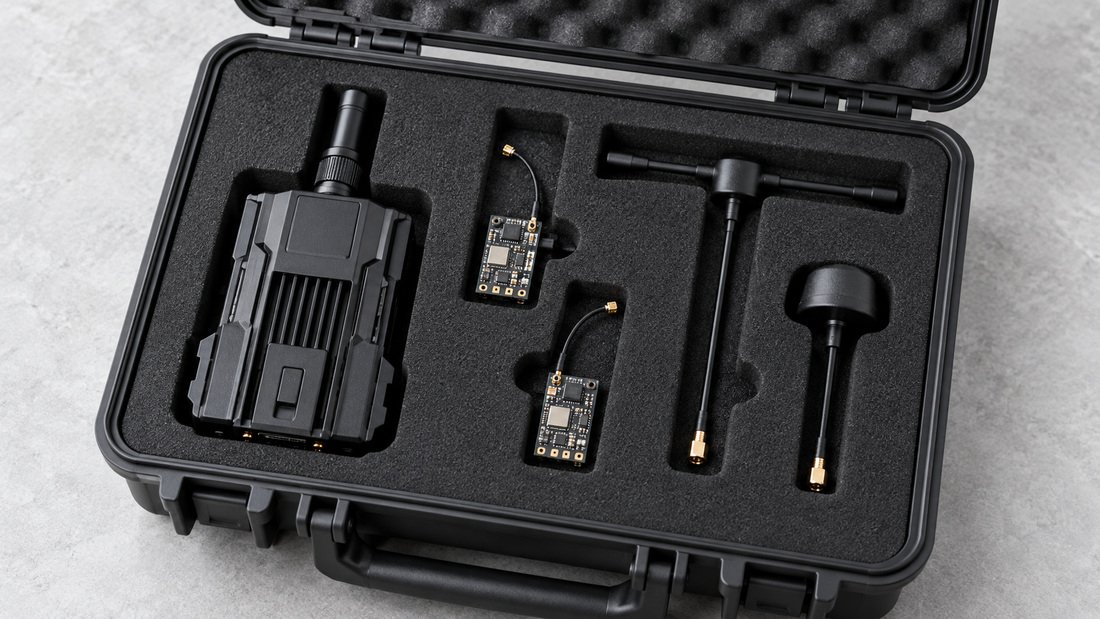
Modern ELRS transmitter modules can report link quality and RSSI (received signal strength indicator). Use these values during practice to find a power level that stays stable. If you see warnings or failsafes, increase power gradually or improve antenna placement.
Antenna choice and placement matter as much as power. A well-placed antenna can outperform a higher power setting. See RF antennas for options.
Common mistakes
- Defaulting to maximum power “just in case,” which can add interference.
- Changing power without retesting link quality.
- Ignoring venue rules or other teams’ settings.
- Assuming one power setting works in every venue.
If you are new to ELRS, review ELRS receiver compatibility to ensure your transmitter and receiver work together.
Practical procurement checklist
When equipping a team for indoor events, consider these points. Confirm details with your supplier in writing.
- Does the ELRS transmitter module support adjustable power settings across the range you need?
- Are telemetry and link-quality feedback available?
- Does the module fit your radio and team standard?
- Are antennas suitable for indoor use and easy to replace?
- What documentation and support are provided?
- Can you request samples to test in your venue before bulk purchase?
Testing before event day
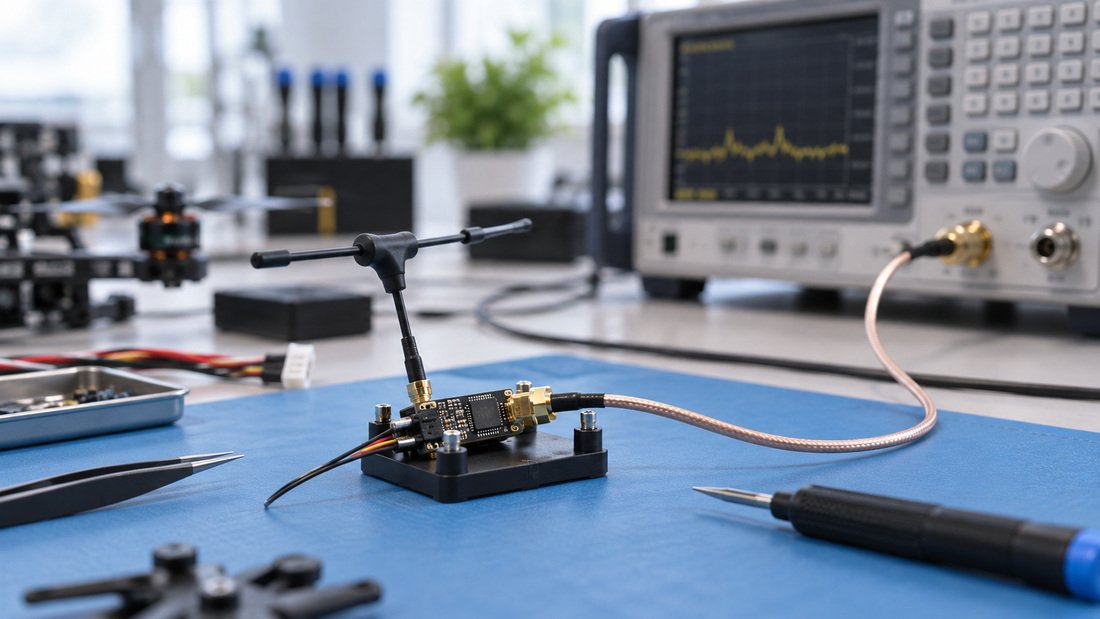
Set aside time to test in the actual venue or a similar space. Walk the flight area with the drone powered and check link quality at the edges. Record the power setting that works and note any changes needed.
If you cannot access the venue, test in a similar hall and plan to adjust on site. Bring a checklist and a small range of power options.
Frequently asked questions
What TX power should I start with indoors?
Start at the lowest available setting that gives a stable link—often 10–25 mW in small venues. Increase only if needed.
Can higher TX power cause problems indoors?
It can add interference for nearby receivers and increase power consumption. Use the lowest effective power.
Do all ELRS transmitter modules support low power settings?
Many do, but ranges vary. Check the product specifications and confirm with your supplier.
How do I know if my power is too high?
There is no single indicator. Watch for reports of interference from other teams and check link quality. Coordinate with the organizer.
Should I use the same power for practice and competition?
Use the same or very similar settings so pilots are familiar with behavior. Adjust only with a clear reason.
What about legal limits?
Radio regulations vary by country and region. Verify local rules and venue requirements before setting power.
Can I get help choosing modules for my team?
Yes. Contact a supplier with your venue details and requirements. See ELRS transmitter modules for an overview.
Conclusion
Choosing TX power for indoor events is about reliability with minimal interference. Start low, test in the venue, and coordinate with the organizer. For teams equipping multiple pilots, plan your ELRS transmitter modules and receivers together.
Ready to equip your team? Request a Team Kit Quote to discuss your needs.