Quick summary
As a distributor, you should expect a drone parts factory to run a documented, multi-stage factory QC and inspection process: incoming material checks, in-process inspections, final functional testing, sampling or 100% checks, traceability records, and corrective-action follow-up. The exact steps, acceptance criteria, and records must be agreed in writing, because generic “strict QC” claims are not verifiable. Ask for the control plan, inspection items, sampling rules, and record samples before you place a volume order.
Key Takeaways
- Expect QC at three gates: incoming, in-process, and final/outgoing—each with written criteria and records.
- Functional testing matters more than cosmetic checks for receivers, motors, ESCs (electronic speed controllers), and flight controllers.
- Sampling plans, defect classifications, and pass/fail limits should be defined in your purchase agreement, not left to verbal assurance.
- Traceability and corrective-action records show whether QC is a system or a final look-over.
- Confirm every commercial and inspection term in writing; do not rely on catalog claims or verbal promises.
What does “factory QC and inspection” actually cover?
Factory QC and inspection covers the planned checks a factory performs to confirm that materials, workmanship, and finished drone parts meet agreed requirements. It is broader than a final visual check. A credible process links incoming material verification, in-process monitoring, final testing, and outgoing sampling to documented acceptance criteria and corrective actions.
For distributors, the goal is predictable batch quality and evidence you can review. You do not need the factory’s entire quality manual, but you do need enough detail to judge whether the process is repeatable.
Three inspection gates to ask about
- Incoming inspection: checks on purchased components, PCBs (printed circuit boards), connectors, magnets, wire, and packaging before production.
- In-process inspection: checks during soldering, assembly, firmware flashing, motor winding, and calibration to catch defects before final assembly.
- Final and outgoing inspection: functional and cosmetic checks on finished units, plus sampling before packing and shipment.
Which QC steps should a distributor expect at each stage?
At each stage, expect defined inspection items, methods, frequency, acceptance criteria, and records. The table below outlines what to request and what evidence to review. It is general guidance, not a statement of any specific factory’s capability.
| Stage | Typical checks to request | Evidence to review |
|---|---|---|
| Incoming material | Supplier certificates, packaging condition, PCB and component visual checks, connector and wire dimensions, moisture-sensitive part handling | Incoming inspection records, approved supplier list, nonconformance log |
| In-process | Solder joint inspection, firmware version verification, motor winding and balance checks, ESC calibration, flight controller sensor checks | Process parameters, first-article inspection (FAI) report, in-process inspection sheets |
| Final functional | Power-on test, receiver binding and range check, motor spin and current draw, ESC throttle response, flight controller sensor and output checks | Functional test logs, pass/fail counts, defect codes |
| Outgoing sampling | Visual and cosmetic check, accessory completeness, packaging and labeling, sample functional re-test | Outgoing inspection report, sampling plan, packing checklist |
| Traceability | Batch or serial number linking, date code, firmware version record | Traceability matrix, batch records |
These steps align with the general structure of a factory quality control program, which you can review in more detail on DPF’s quality control page. For inspection-specific methods, see testing and inspection.
What should functional testing look like for ELRS receivers, motors, ESCs, and flight controllers?
Functional testing should match how the part fails in the field. For radio receivers, binding and signal stability matter. For motors, winding and balance matter. For ESCs, throttle response and thermal behavior matter. For flight controllers, sensor and output integrity matter. Ask the factory to describe the test method, fixture, pass/fail limit, and what happens to failed units.
ELRS receivers (BKR)
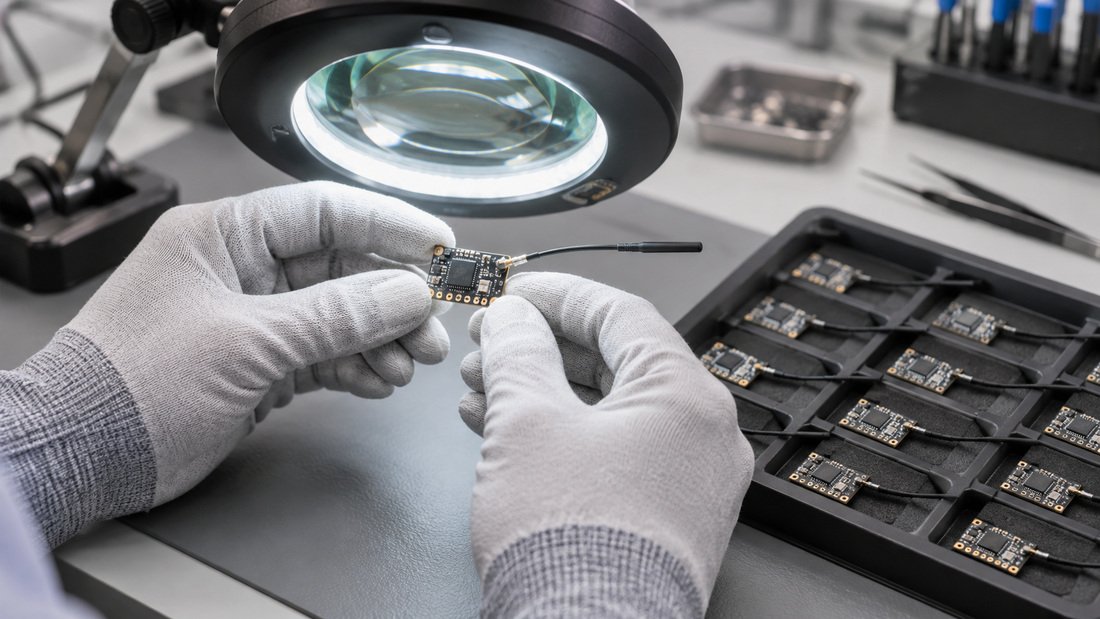
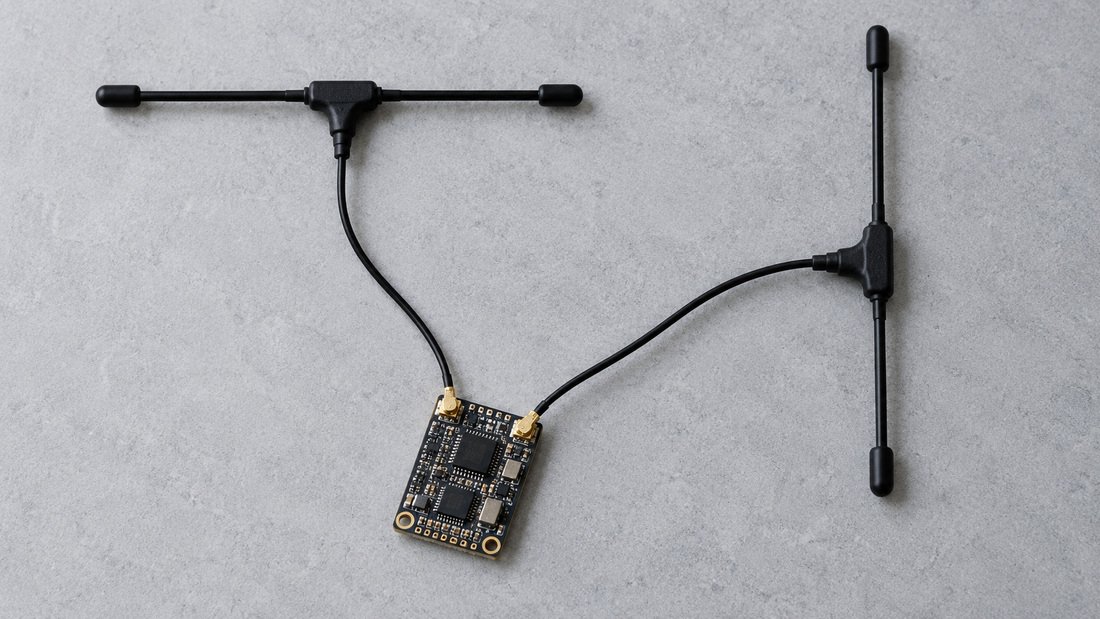
Expect checks for binding to a transmitter, firmware version confirmation, connector and antenna integrity, and basic range or signal-quality verification where the factory has a defined method. Ask whether testing is 100% or sampled, and how failed units are segregated.
Receiver variants with diversity antennas add connector and antenna checks; see the diversity receiver antenna example for the type of hardware involved.
Motors (BKM)
Look for winding resistance or continuity checks, no-load spin tests, vibration or balance checks where specified, and visual inspection of magnets, bearings, and solder joints. Ask whether test limits are recorded per batch and how out-of-limit motors are handled.
ESC (BKE)
Expect power-on and throttle-response tests, current or temperature checks under a defined load if the factory has a fixture, and firmware verification. Ask for the test setup description and whether every unit or a sample is tested.
Flight controller (BKF)
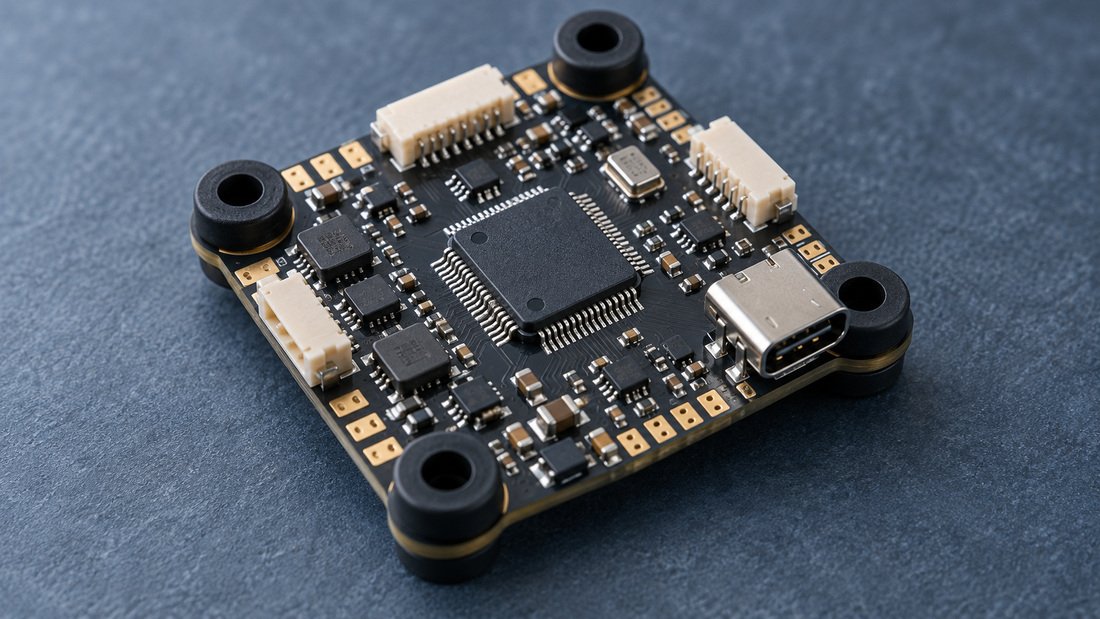
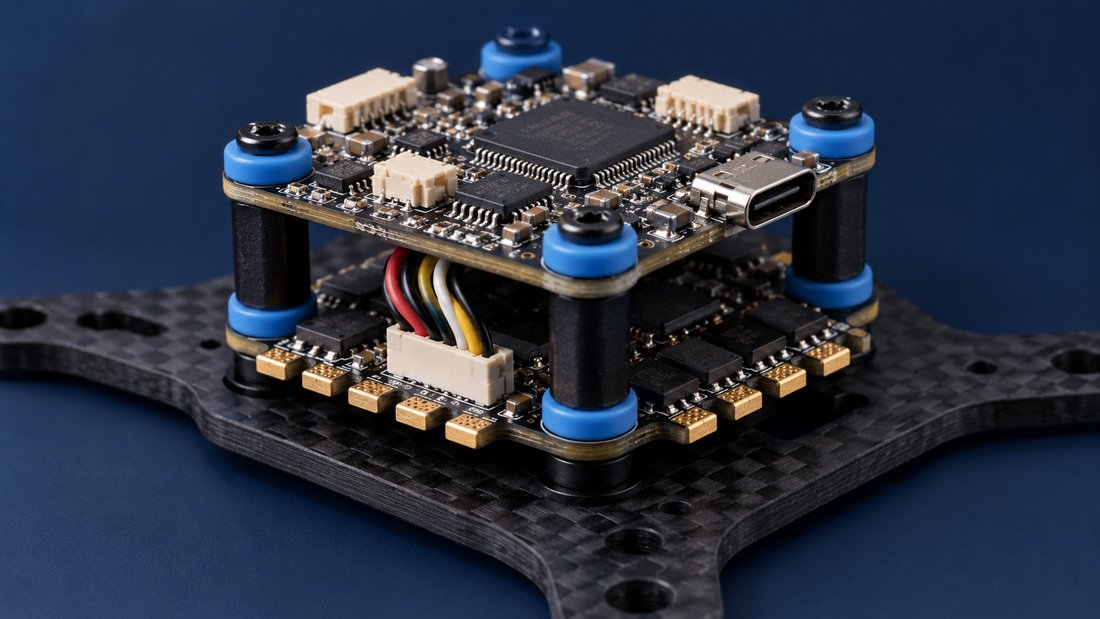
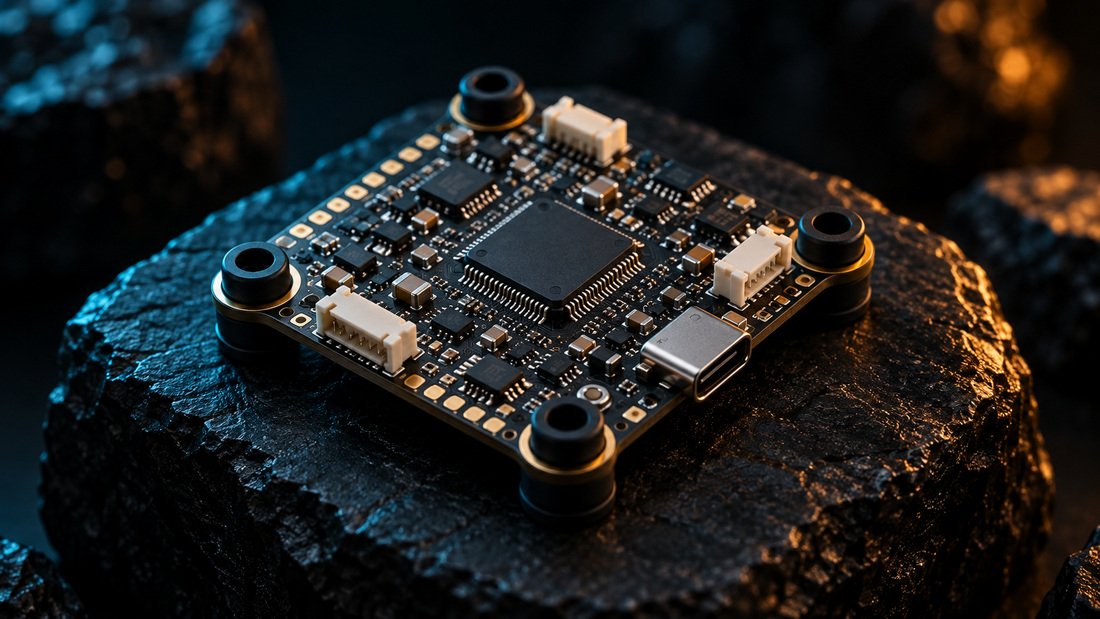
Expect sensor detection, gyro and accelerometer checks, output signal verification, and firmware flashing confirmation. Visual inspection of solder joints and connectors should also be defined. The flight controller board close-up shows the feature density that inspection must cover.
How should sampling and acceptance criteria be defined?
Sampling and acceptance criteria should be written into the purchase agreement or a referenced quality plan. Common approaches include 100% functional testing for critical items, or sampling based on an agreed standard such as AQL (acceptable quality limit). The key is that the plan states sample size, defect classification (critical, major, minor), and accept/reject numbers.
Ask the factory to show how it classifies defects and what it does when a lot fails. A written corrective-action process—root cause, containment, and verification—is a stronger signal than a promise of “no defects.”
What records and traceability should a distributor receive?
You should receive inspection records that let you link a shipped batch to its test results. At minimum, ask for batch or serial number traceability, date codes, firmware versions, and final inspection summaries. If the factory cannot provide records for a trial order, treat that as a question to resolve before scaling.
DPF’s testing and inspection page describes inspection-related services; request sample records to confirm what is actually provided. For market-specific documentation, ask about safety and compliance support and confirm in writing which documents the factory can supply for your destination.
Common mistakes distributors make when evaluating factory QC
Many QC failures are procurement failures: the distributor never defined what “good” means. Avoid these common mistakes.
- Accepting “100% tested” without asking what test, what limit, and what record.
- Not agreeing defect classifications or sampling plans before production.
- Reviewing only a golden sample and not the batch records.
- Ignoring packaging and accessory checks, which drive returns.
- Failing to ask how failed units are segregated and corrected.
- Assuming a certificate alone proves ongoing process control.
Practical procurement checklist for factory QC and inspection
Use this checklist when you request quotes or audit a supplier. Each item should be answered in writing.
- Control plan or inspection plan for each part number.
- Incoming, in-process, and final inspection items and methods.
- Functional test method and pass/fail limits for receivers, motors, ESCs, and flight controllers.
- Sampling plan, defect classification, and acceptance numbers.
- Traceability method and record samples.
- Corrective-action process and examples of recent records (redacted as needed).
- Handling of nonconforming units and rework rules.
- Packaging and labeling inspection criteria.
- Agreed quality agreement or purchase-order quality clauses.
- Warranty and after-sales process, such as the warranty and after-sales program, confirmed in writing.
For a specific quote or OEM/ODM project, request an OEM / Wholesale Quote and attach this checklist so the factory responds to each point.
Frequently asked questions
What is the difference between QC and QA in a drone parts factory?
QC (quality control) focuses on inspection and testing to catch defects. QA (quality assurance) is the broader system of processes and planning intended to prevent defects. Distributors usually see QC records, but should ask how QA planning drives them.
Should I require 100% testing or sampling?
It depends on the part’s failure impact and cost. Critical functional items may justify 100% testing; others may use sampling with a defined AQL. Agree the approach in writing and confirm what record is produced.
How do I verify a factory’s QC claims before ordering?
Request the inspection plan, sample records, and a trial order with pre-agreed acceptance criteria. Ask specific questions about test methods and defect handling. A factory that cannot answer in detail is a risk to confirm before scaling.
What records should come with each shipment?
Ask for a final inspection summary, batch or serial traceability, and packing checklist. The exact document set should be agreed in your purchase order; do not assume a standard package.
How are failed units handled?
Ask for the nonconformance and corrective-action process: how failed units are segregated, whether rework is allowed, and how root cause is verified. Request examples of records, with confidential details redacted if needed.
Can DPF provide QC records for a distributor order?
DPF describes quality control and testing services, but the specific records, sampling rules, and warranty terms for your order must be confirmed in writing. Ask during quotation.
What commercial terms should be confirmed in writing?
MOQ, lead time, warranty period, inspection criteria, and document set are commercial terms that vary by project. Do not rely on general website statements; confirm each item in your quotation or quality agreement.
Conclusion and next step
Factory QC and inspection should be a documented system, not a slogan. As a distributor, focus on three gates, functional test methods, sampling rules, traceability, and corrective-action evidence. Use the checklist above to structure your supplier questions, and confirm every term in writing before you commit volume.
To discuss your requirements with DPF, request an OEM / Wholesale Quote and include your QC checklist so the response addresses each point.