Quick summary
EN 71 testing is a set of European toy safety tests used to check whether products intended for children under 14 meet mechanical, physical, flammability and chemical requirements. For schools and drone soccer programs, the key question is product classification: is the drone kit a toy, a sports item, an educational tool, or an unmanned aircraft subject to aviation rules? The EN 71 series is evidence for toy-safety claims, not a blanket certificate for every drone-related product. Buyers should confirm which parts were tested, to which EN 71 parts, and by which laboratory.
Key Takeaways
- EN 71 is a multi-part European standard for toy safety; different parts cover mechanical hazards, flammability and chemical migration.
- Children’s product and sports equipment rules overlap but are not interchangeable: a drone soccer set may face toy rules, sports equipment expectations and aviation requirements depending on classification and market.
- Ask suppliers for the exact EN 71 parts tested, the test report reference, the laboratory and the product version covered.
- Lithium batteries introduce separate transport and safety obligations that EN 71 does not replace; see the supplied FAA guidance on lithium batteries for passenger-carriage context.
- A procurement checklist and written confirmation of scope are more useful than a single compliance logo.
What does EN 71 testing actually cover?
EN 71 testing is a series of test methods and requirements applied to toys. The series is commonly referenced under the EU Toy Safety Directive framework, but the standard itself and the legal framework are separate things: compliance with EN 71 is one route to demonstrating safety, not the whole of the legal obligation. The exact scope depends on the toy type, the age group and the materials used.
In broad terms, the series addresses mechanical and physical properties, flammability, and migration of certain elements from toy materials. Later parts and amendments cover additional chemical and material topics. Because the series is periodically revised, a report that cites an older edition may not reflect current expectations. Buyers should ask which edition and which parts are covered.
This matters for drone soccer because a team kit is not a single homogeneous product. It may include airframes, propellers, guards, balls, transmitters, receivers, batteries, chargers and packaging. Each element can raise different test questions. A supplier that says “EN 71 certified” without listing parts and components has told you very little.
How do children’s product and sports equipment rules interact?
Children’s product and sports equipment rules sit in different regulatory conversations. Children’s product rules usually focus on age suitability, choking and mechanical hazards, chemical exposure and warnings. Sports equipment rules often focus on performance, structural strength, user instructions and venue safety. A drone soccer program for young players can touch both, plus aviation and radio rules for the aircraft itself.
The practical implication for a school is to classify each item before buying. A foam ball used in a school gym is evaluated differently from a lithium battery pack, a radio transmitter or a propeller. Classification affects which documents are relevant, which warnings are needed, and which staff training is appropriate. It also affects what a distributor or OEM/ODM supplier should be able to confirm in writing.
Classification is not just a paperwork exercise. It shapes how you store equipment, how you supervise sessions, how you label storage boxes and how you instruct students. A conservative approach is to treat all drone soccer components as supervised equipment rather than unsupervised toys, even where toy-safety evidence exists.

EN 71 vs other compliance documents: a comparison
No single document covers every obligation. The table below compares common document types at a high level so procurement teams can ask better questions. It is general guidance, not legal advice, and requirements vary by market and product classification.
| Document or framework | Typical focus | What it does not automatically prove | Ask the supplier |
|---|---|---|---|
| EN 71 series test report | Toy safety: mechanical, flammability, certain chemical migration | Aviation compliance, battery transport safety, radio approval | Which parts and edition; which components; laboratory and report reference |
| EU UAS requirements | Unmanned aircraft operation and product requirements in the EU context | Toy classification or school supervision duties | Which class or category the product is placed in; documentation supplied |
| Battery transport guidance | Carriage of lithium batteries, spare batteries and watt-hour limits | Product safety testing or school storage policy | Battery watt-hour rating, packing method, shipping documents |
| Supplier declaration of conformity | Supplier’s statement that listed requirements are met | Independent test evidence for every claim | Which standards are cited; whether test reports back the declaration |
| Safety data sheet (SDS) | Hazard information for chemicals and some battery products | Toy safety or mechanical safety | Revision date and language |
For a fuller map of document types, see the compliance center overview. For classification questions specific to export, see export control and product classification. For EU operations, the EU UAS requirements page is a useful starting point.
Why batteries need their own compliance conversation
EN 71 testing does not replace battery safety and transport rules. Lithium batteries can overheat and enter thermal runaway, and the supplied FAA guidance states that lithium batteries are required to undergo safety testing and that thermal runaway can occur without warning due to damage, overheating, water exposure, overcharging or improper packing. The same guidance notes spare lithium batteries must be carried in carry-on baggage only, with terminals protected from short circuit, and that lithium ion batteries are generally limited to 100 watt hours (Wh) per battery, with airline approval for some larger batteries.
Those FAA points are US air-travel guidance for passengers; they are not a universal B2B shipping rule and not a substitute for product testing. Still, they illustrate why a school should separate three questions: is the product safe for its intended use, can it be shipped legally, and can it be carried by a student or teacher on a plane. The battery shipping compliance page covers transport considerations in more depth.
Source: FAA — Lithium Batteries.
What EN 71 testing means for drone soccer (BKZ) programs
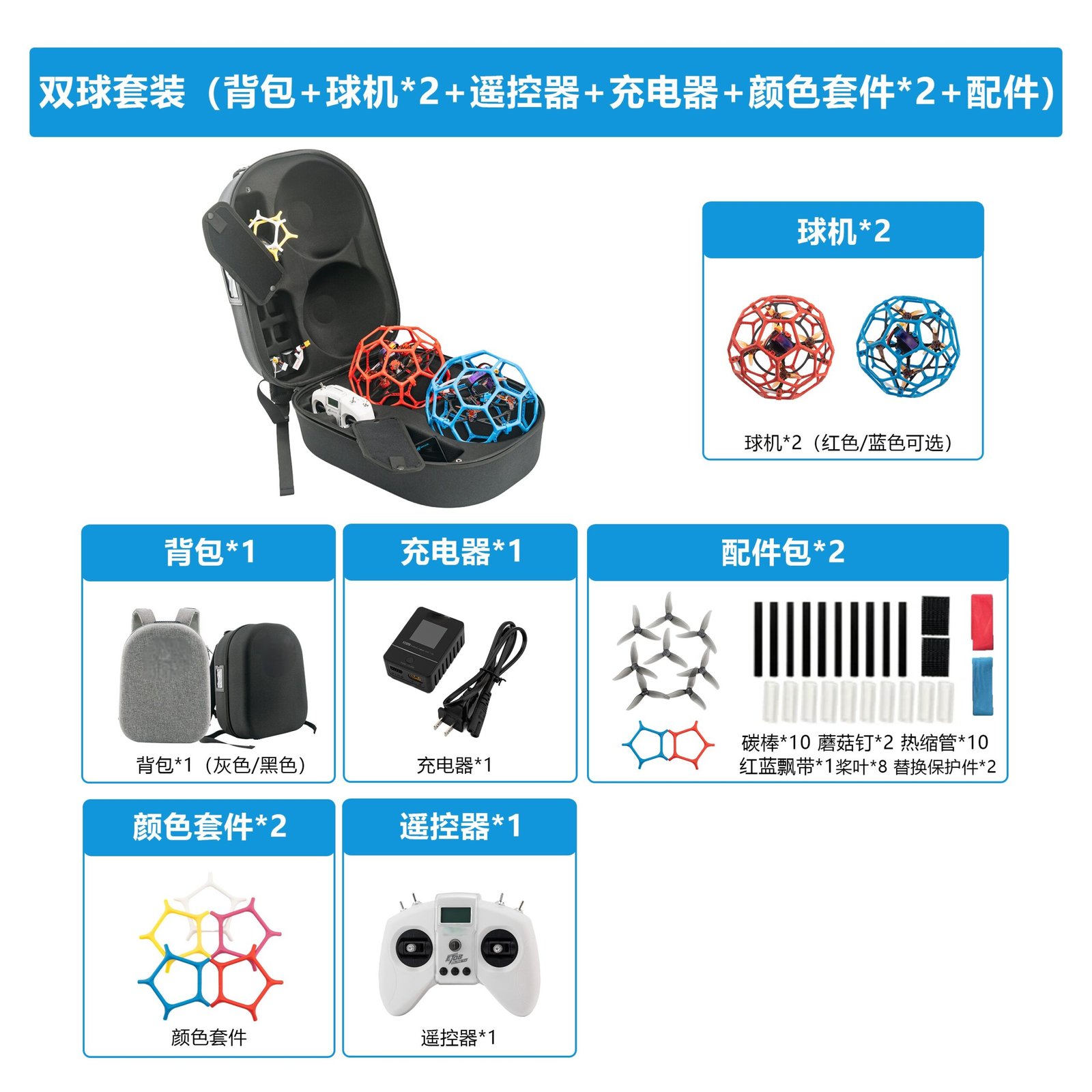
Drone soccer programs combine aircraft, protective structures, balls and radio equipment. EN 71 testing may be relevant for components presented to children as play items, but the aircraft itself is also an unmanned aircraft. A sensible procurement approach is to ask for a component-level compliance matrix rather than a single product certificate.
For each component, record the intended user age, the materials, the battery type, the radio link and the supervision level. Then match those to the documents you actually need. A school does not need to become a testing laboratory, but it does need to know which claims are backed by evidence and which are marketing shorthand.
Where a supplier offers a school kit, ask whether the kit is intended for supervised educational use, what age range it is designed for, and what warnings and instructions are supplied. If the answer is “it is a toy, so EN 71 covers everything,” ask for the parts list and the report scope. If the answer is “it is a drone, so toy rules do not apply,” ask which aviation and battery documents do apply.
Planning a school drone soccer program? Talk to our team about component documentation and kit configuration before you finalize your budget. Request a quote or contact us to discuss your requirements.
Common mistakes schools and clubs make
- Treating one certificate as full coverage. A single EN 71 report may cover specific parts and specific components only.
- Ignoring battery documentation. Batteries have their own transport and safety questions that EN 71 does not answer.
- Assuming age labels are interchangeable across markets. Age suitability and warnings can differ by jurisdiction and by product classification.
- Buying from a listing without a report reference. Without a report number and laboratory name, verification is difficult.
- Forgetting spare parts. Replacement propellers, guards and balls may not be covered by the original report.
- Confusing a declaration with test evidence. A declaration of conformity is a supplier statement; ask what evidence sits behind it.
Procurement checklist for EN 71-related buying decisions
Use this checklist to structure conversations with distributors, OEM/ODM teams and event organizers. It is general guidance; confirm all commercial and compliance terms in writing.
- Which EN 71 parts and edition are cited, and which components do they cover?
- Can the supplier provide the test report reference, laboratory name and report date?
- Does the report match the exact product version and bill of materials you are buying?
- What age range and supervision level does the supplier state for the product?
- What warnings, instructions and language versions are included?
- What battery type and watt-hour rating are used, and what transport documents are provided?
- Are replacement parts and accessories covered by the same evidence?
- For EU programs, how does the product fit the applicable UAS requirements?
- For OEM/ODM projects, who owns the test reports and who is responsible for re-testing after changes?
- What is the process if a report is missing, expired or applies to a different version?
Frequently asked questions
Is EN 71 testing legally required for every drone soccer product?
Not automatically. EN 71 is a toy safety standard; whether it applies depends on whether the product is classified as a toy in the relevant market and on the applicable legal framework. Ask the supplier and, where needed, seek local regulatory advice. The standard itself and the legal requirement are not the same thing.
Does an EN 71 report cover the battery and charger?
Do not assume so. Battery and charger safety involve separate considerations, including transport rules for lithium batteries. The supplied FAA guidance notes that lithium batteries are required to undergo safety testing and describes thermal-runaway risks. Ask for battery-specific documentation in addition to any toy-safety report.
Can a school rely on a supplier’s “EN 71 certified” logo?
A logo is not evidence by itself. Request the report reference, the laboratory, the parts covered and the product version. If the supplier cannot provide these, treat the claim as unverified.
What is the difference between a declaration of conformity and a test report?
A declaration is the supplier’s statement that specified requirements are met. A test report records testing performed by a laboratory. They serve different purposes; a declaration is stronger when backed by reports covering the actual product.
Do spare parts need their own testing?
Possibly. If a spare part is supplied to children or changes the product’s characteristics, it may fall within the scope of the original assessment or require separate evidence. Confirm with the supplier which parts are covered.
How does EN 71 relate to EU UAS requirements?
They address different questions. EN 71 concerns toy safety; EU UAS requirements concern unmanned aircraft. A product can raise both sets of questions. See the EU UAS requirements page for orientation and confirm specifics with the supplier.
What should an event organizer ask before accepting a vendor’s kit?
Ask for the component list, the classification the vendor is relying on, the relevant test reports and the battery transport documentation. Confirm the age range, supervision level and instructions supplied with the kit. Put the answers in writing.
Conclusion
EN 71 testing is a useful piece of evidence, not a universal passport. For schools, youth programs and drone soccer teams, the reliable approach is to classify each component, ask for the exact EN 71 parts and report references, and keep battery and aviation questions separate. Distributors and OEM/ODM teams should expect the same discipline from their suppliers. Where commercial terms, coverage or documentation are unclear, request written confirmation before committing.
Next step: Request a School Program Quote and tell us your age group, session format and component list so the compliance conversation starts from your actual setup.