Quick summary
Motor desync is a loss of synchronization between a brushless motor and its electronic speed controller (ESC). The ESC stops tracking the rotor’s position, so commutation timing drifts and the motor stutters, screeches, or cuts out under load. The usual causes are poor solder joints and connectors, incorrect ESC timing or PWM settings, damaged motor windings or magnets, voltage sag, firmware mismatches, and electromagnetic noise. In drone soccer and school programs, most desyncs trace back to assembly quality rather than the brushless motors themselves.
Key Takeaways
- Desync is a commutation failure, not a simple lack of power: the ESC loses rotor position and fires the phases at the wrong moment.
- Bad solder joints, worn bullet connectors and damaged motor leads are the most common field causes in school and club builds.
- ESC timing, PWM frequency, motor timing and firmware that do not match the brushless motors can trigger desync even on healthy hardware.
- Voltage sag, overheated motors and obstructed rotors during drone soccer impacts increase the chance of a desync event.
- Banning suspected parts from competition and logging every repair is faster than swapping components randomly.
What Is Motor Desync, Exactly?
Desync (also called loss of sync or commutation loss) happens when the ESC cannot determine which motor phase should be energized next. Brushless motors have no brushes; the ESC switches current between three phases in a sequence that must follow the rotor’s actual position. Sensorless ESCs infer position from back-EMF, the voltage the spinning motor generates.
Back-EMF is weak at low RPM and gets noisy at high RPM. If the ESC misreads it, or if the signal is corrupted, the phase sequence slips. The motor may twitch, reverse briefly, emit a high-pitched squeal, or stop. Some pilots describe this as the motor “cogging” or “skipping.” Persistent desync under load can overheat the ESC and, in the worst case, damage the FETs (field-effect transistors) or the motor windings.
Desync vs. Other Propulsion Faults
Not every stutter is a desync. Separate the symptom before you change parts, because a bent motor shaft and a bad ESC setting look similar on a bench test but need different fixes.
| Symptom | Likely cause | Typical fix |
|---|---|---|
| Motor stutters at start, then runs | Weak back-EMF signal, low throttle start, timing mismatch | Adjust ESC start-up power and timing; test a known-good ESC |
| Squeal or hard cut-out at high throttle | Desync under load, voltage sag, overheated FETs | Check battery, connectors, cooling and prop load |
| Vibration only at certain RPM | Unbalanced prop, bent shaft, loose bell | Replace prop and shaft; re-check motor balance |
| One motor always hot, others cool | Winding short, dragging bearing, timing too high | Bench-test that motor alone and inspect windings |
| Random single-motor dropout | Faulty solder joint, signal wire, or failing ESC channel | Reflow joints and inspect signal wiring |
The Main Causes of Motor Desync
Most desyncs come from a small set of causes, and the same causes appear across FPV drones, drone soccer balls and training builds. They fall into electrical connection faults, ESC configuration, motor condition, power supply and signal integrity.
1. Poor Solder Joints and Worn Connectors
A cold solder joint, a partially tinned wire or a loose bullet connector adds resistance and can drop the signal or phase voltage under load. On a bench test at low throttle everything looks fine; in a match, current spikes and the joint becomes the weak point. Club repairs done in a hurry are a frequent source of intermittent desync.
For school programs, inspect every motor-to-ESC joint under magnification and tug each wire gently. Replace connectors that show heat discoloration or a loose fit rather than bending them back into shape.
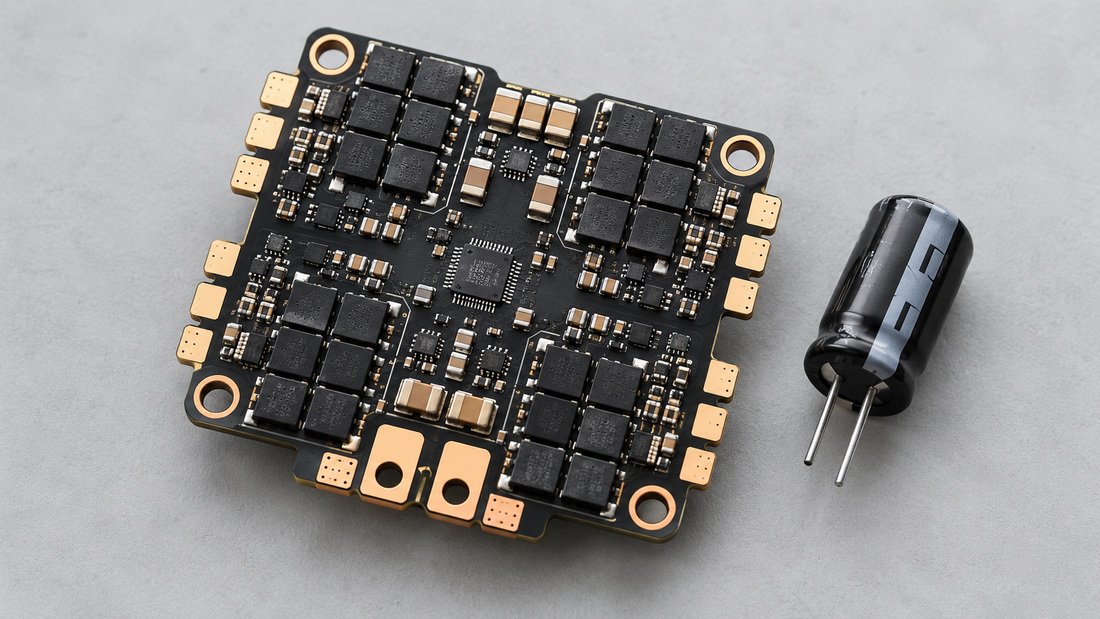
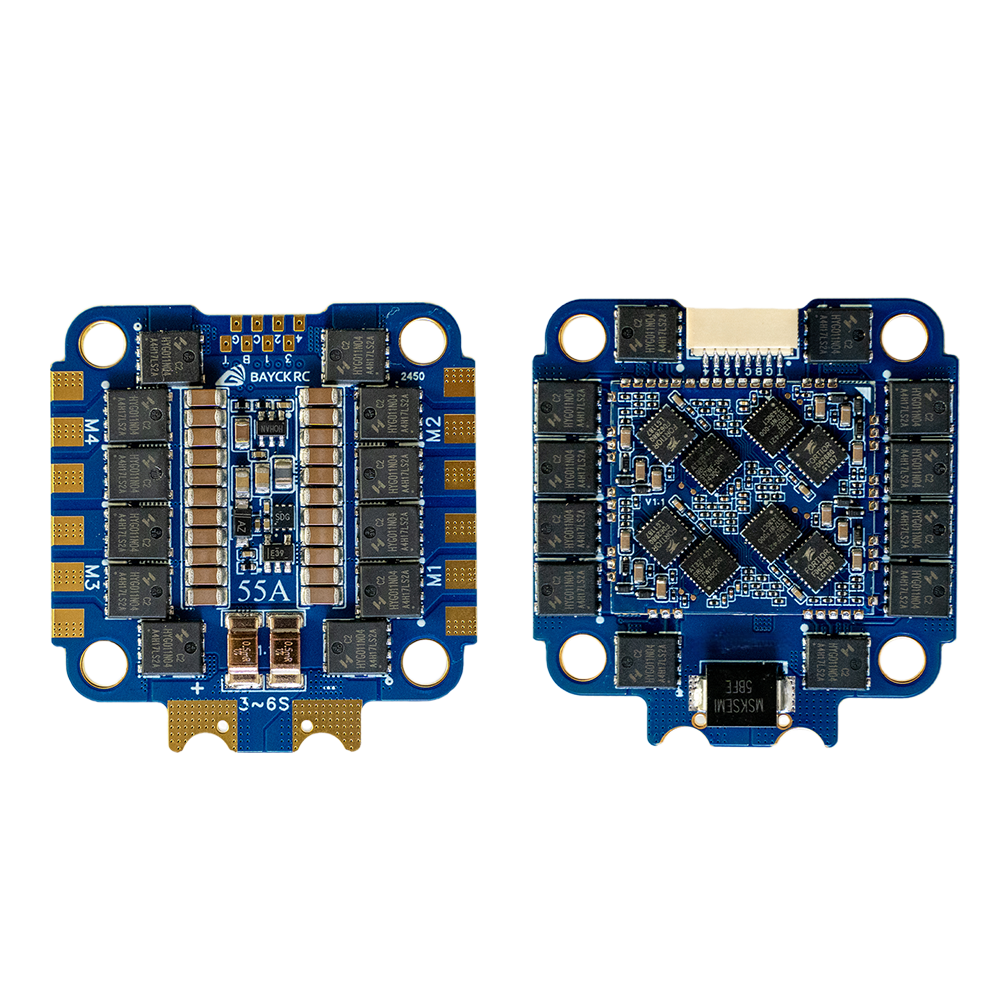
A four-in-one ESC board concentrates the phase connections in one place, which makes inspection easier but also means one bad motor joint can affect a single channel unpredictably. See our propulsion combo kits for matched ESC and motor sets that reduce compatibility guesswork.
2. Incorrect ESC Timing and Firmware Settings
ESC timing tells the controller how early to energize each phase. Too low and the motor loses torque and sync under load; too high and the ESC wastes energy, runs hotter and, on some motors, increases desync risk. PWM frequency, motor timing and demag compensation settings all interact with the specific brushless motors on the frame.
Firmware mismatches matter too. If an ESC is flashed with settings intended for a different motor size or pole count, or if one ESC in a four-in-one board runs different firmware from its neighbours, the drive signals will not match the hardware. Before changing settings, record the current values and change one variable at a time.
3. Motor Damage: Windings, Magnets and Bearings
Drone soccer involves collisions. A ball that hits the floor can knock a motor bell, chip a magnet, or nick a winding. A partial winding short changes the motor’s electrical signature, so the ESC’s back-EMF readings no longer match reality. A dragging bearing causes uneven RPM and heat, which also destabilizes commutation.
Bench-test suspicious motors one at a time at low and mid throttle and compare sound, temperature and current draw against a known-good motor of the same type. Do not assume a motor is healthy because it still spins.

4. Voltage Sag and Battery Stress
A battery that cannot deliver the current demanded by a sudden throttle change causes voltage to dip. When the supply voltage falls sharply, the ESC’s ability to read back-EMF can degrade, and the motor may lose sync. Aging packs, undersized capacity for the load, or a long training session with high internal resistance all raise this risk.
Lithium-ion batteries can overheat and enter thermal runaway, a process that can be triggered by damage, overheating, overcharging or improper packing, and can also occur without warning from manufacturing defects, according to the FAA lithium battery guidance. That is why battery inspection belongs in every pre-flight routine, not just a desync investigation.
For school and club fleets, rotate packs, retire swelling or heavily used batteries, and keep spare packs in protective cases with terminals protected from short circuit.
5. Signal Noise and Grounding Problems
Signal wires routed alongside high-current motor cables can pick up noise. Long, unshielded signal runs, a missing ground reference between receiver and ESC, or a shared ground loop can corrupt throttle signals. The motor then receives irregular commands that look like desync.
Keep signal and power wiring separated, use short runs, and confirm the ESC signal ground is solid. On competition builds, verify the wiring loom after every repair, not just after the first build.
6. Obstruction, Overload and Heat
A rotor that is obstructed—by netting, a damaged prop guard, or ball structure after a crash—dramatically increases load. The ESC raises current to compensate, the motor slows, and back-EMF readings become unreliable. Repeated overload accelerates heat and desync risk. For drone soccer balls in particular, post-impact inspection of rotor clearance is a fast way to prevent recurring faults.
Common Mistakes When Diagnosing Desync
Diagnosis fails most often because teams change several variables at once, or because they blame the brushless motors without checking the ESC and wiring first.
- Replacing motors before testing the ESC and solder joints on a known-good setup.
- Flashing new firmware during an event without recording the original values.
- Adjusting timing and PWM together, so the effect of each change is unknown.
- Ignoring battery age and voltage sag because a pack “looks fine.”
- Bench-testing only at low throttle, where desync rarely appears.
- Fitting unmatched motors, ESCs and propellers without checking compatibility.
If you need a systematic method, our guide to motor and propulsion matching explains how motor, ESC and propeller characteristics relate. For fleet-level checks, our motor, propeller and battery matching resource helps teams confirm that parts belong together before assembly.
Diagnostic Checklist for Teams and Schools
Work through this checklist in order. It is written for club coaches, school technicians and team mechanics who need repeatable results, not a one-off repair.
- Reproduce the fault safely. Remove propellers or mount the ball in a test stand. Never test with loose props or near people, and never leave a test running unattended.
- Inspect connections first. Check motor-to-ESC joints, bullet connectors, signal wires and the ground reference. Reflow any joint that looks dull or has moved under strain.
- Record configuration. Note ESC timing, PWM frequency, motor timing, firmware version and start-up power before changing anything.
- Test one motor at a time. Compare sound, heat and current draw against a known-good motor of the same type.
- Swap one variable only. Move a suspect motor to the ESC channel that is known to work, or fit a known-good ESC to the suspect channel.
- Check power supply. Confirm the battery is not sagging under load, and check for hot connectors or swollen packs.
- Check mechanical condition. Look for bent shafts, loose bells, chipped magnets, obstructed rotors and bearing play.
- Log the result. Record which part was replaced and whether the desync returned. A shared repair log turns individual fixes into team knowledge.
When the checklist points to a parts-selection problem rather than a single failed component, review FPV motors and matched propulsion sets before ordering replacements.
Procurement Checklist: What to Confirm Before Reordering
Desync investigations often end with a purchase. Confirm the following in writing with your supplier so that replacement parts match what your fleet already runs.
- Motor model, KV rating, pole count and mounting pattern, matched to the existing frame.
- ESC current rating, firmware family and configuration file compatibility.
- Connector type and wire length, including whether leads arrive pre-tinned.
- Propeller size and pitch limits that the motor and ESC are rated to drive.
- Spare parts availability for consumables such as bearings, bells and signal wires.
- Documentation for school procurement: specification sheets suitable for a purchase request.
- Warranty terms, return process and technical support contact path.
- Battery specifications, including voltage and watt-hour ratings, and safe packing for transport.
This is general procurement guidance. Commercial terms such as lead times, minimum order quantities, warranty periods, testing results and certifications vary by order and must be confirmed with DPF in writing. If carrying batteries between venues, note that many airlines set their own quantity and watt-hour limits regardless of capacity, and passengers should check with their air carrier before travelling, per the FAA guidance.
Illustrative Example: A Club Repair Log
Consider a fictional school team that experiences desync on one motor during high-throttle drills. They log the fault, bench-test all four motors, find one motor with a chipped magnet and a slightly dull solder joint on the same channel, and replace both the motor and the reflowed joint. The desync stops.
The useful lesson is not the specific part—it is the process: record the symptom, change one variable, and verify. Results will differ between builds, so treat this example as a method illustration rather than a claim about any product.
Frequently Asked Questions
What causes motor desync in brushless motors?
Desync is caused by a loss of rotor-position information at the ESC. Typical triggers include poor solder joints, damaged connectors, incorrect ESC timing or firmware, damaged motor windings or magnets, voltage sag, signal noise and obstructed rotors. The brushless motors themselves are often healthy; the fault usually sits in assembly, configuration or power supply.
Is desync always an ESC problem?
No. The ESC is often involved because it performs commutation, but the root cause may be a motor with a partial winding short, a marginal battery, or a wiring fault. Test each component separately and change one variable at a time.
Can a low battery cause desync?
It can contribute. A battery that sags sharply under load reduces the ESC’s ability to read back-EMF reliably. If desync appears near the end of a session or after several hard throttle bursts, test with a fresh, healthy pack and inspect connectors for heat.
Does motor timing affect desync?
Yes. Timing controls how early the ESC energizes each phase. Settings that suit one motor may not suit another, especially if pole counts or windings differ. Record original values and change timing and PWM frequency one at a time on the bench before flying.
Why does desync appear during drone soccer impacts?
Impacts can bend shafts, loosen bells, chip magnets or obstruct rotors. Heat and mechanical damage then degrade commutation. A post-impact inspection of rotor clearance and motor condition is quicker than a component swap and catches most of these faults early.
Should schools replace all motors when one desyncs?
Not automatically. Replace the failed component and any damaged connection, then verify the repair. For fleet consistency, keep spares of the same motor type and record which unit was replaced so recurring faults can be tracked across the team.
What should buyers ask suppliers about desync-prone setups?
Ask for written confirmation of motor KV, pole count, ESC current rating, firmware family, connector type and compatibility notes. Confirm warranty, lead time and minimum order terms in writing. Broader technical claims should be supported by the supplier’s documentation rather than marketing language.
Conclusion
Motor desync is a commutation failure with a small set of common causes: bad joints and connectors, mismatched ESC settings, damaged motors, voltage sag, signal noise and mechanical obstruction. For school and drone soccer programs, the fastest path to fewer faults is a repeatable diagnostic routine, a shared repair log and matched parts purchased with confirmed specifications.
Before your next season, review your fleet’s motor and ESC pairing and confirm spare-parts availability in writing. To equip a team with matched propulsion components, Request a Team Kit Quote.