Quick summary
The core difference is this: ExpressLRS (ELRS) is an open-source, low-latency radio link that runs on low-cost 2.4 GHz or 900 MHz hardware from many manufacturers, while Crossfire (TBS Crossfire) is a proprietary 900 MHz system sold by one brand and known for long-range reliability. For a drone soccer club or school program buying 20 to 200 radios, that single difference changes cost per pilot, firmware control, OEM options, and how long you can keep spares in stock.
Key Takeaways
- ExpressLRS basics: open-source firmware, no license fee, hardware from many factories, typically 2.4 GHz or 900 MHz.
- Crossfire is a closed ecosystem: one vendor, one firmware path, mature 900 MHz long-range performance.
- ELRS usually wins on unit price, receiver size, and OEM flexibility; Crossfire often wins on out-of-the-box simplicity for long-range pilots.
- For team sports like drone soccer, latency, receiver weight, and the cost of replacing damaged receivers matter more than raw maximum range.
- Always confirm regional RF rules, because legal transmit power and frequency bands differ by country.
Why This Question Matters for Club and School Buyers
If you manage a drone soccer team, a STEM lab, or a training center, you are not choosing a radio for one pilot. You are choosing a standard that every student, coach, and spare battery bag will live with for two or three seasons. The wrong pick creates hidden costs: receivers that do not bind to donated transmitters, antennas that vary batch to batch, and firmware versions that confuse volunteer coaches.
ExpressLRS basics are easy to summarize, but the commercial consequences are not. ELRS hardware comes from many factories, so quality varies widely. Crossfire hardware comes from one source, so pricing is stable but less negotiable. Buyers who understand both sides negotiate better and plan spares more accurately.
We publish this breakdown because clubs keep asking the same procurement question, and the answer depends on how you fly, not on which brand has louder marketing.
What Is ExpressLRS? The Basics in Plain Terms
ExpressLRS is an open-source radio control link. The firmware is developed by a community and published for anyone to use. Hardware makers build transmitters, receivers, and antennas around that firmware. Because no single company owns the protocol, prices stay competitive and form factors multiply.
ELRS runs mainly on 2.4 GHz and 900 MHz bands. The 2.4 GHz version is the common choice for racing, indoor drone soccer, and short-range training because antennas are small and receivers are light. The 900 MHz version trades a larger antenna for better penetration and longer range in open areas.
The protocol uses a packet-based link with configurable packet rates. Higher packet rates reduce latency but shorten range. Lower packet rates extend range but add delay. For drone soccer, where timing and responsiveness matter, teams usually run middle or high packet rates and accept shorter range, which is fine in a hall.
If you want a deeper overview of the hardware families, our ELRS and RF systems category shows how transmitters, receivers, and antennas fit together in a complete team kit.
What Is Crossfire? The Basics in Plain Terms
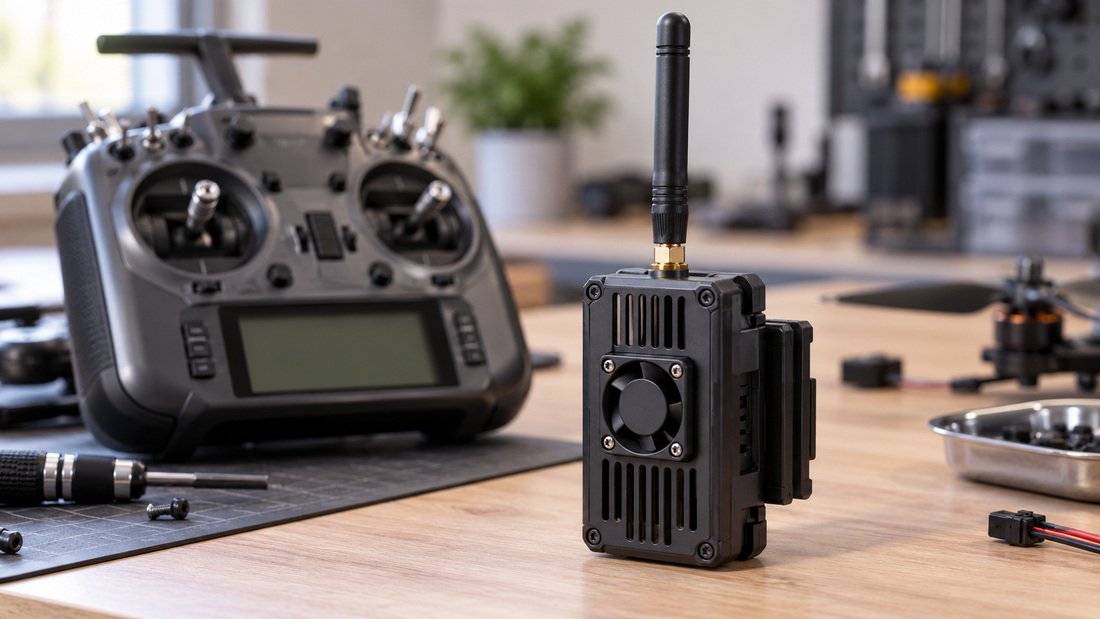
Crossfire is a proprietary radio link developed by Team BlackSheep (TBS). It operates in the 900 MHz band and became popular for long-range FPV, mapping, and industrial drone work. The transmitter modules and receivers are made and supported by one company, with a single firmware update channel.
The practical advantage is consistency. When you buy Crossfire hardware, you know exactly what firmware it ships with, what accessories fit, and who supports it. The practical disadvantage is cost and lock-in. You buy into one vendor’s pricing, one vendor’s inventory cycles, and one vendor’s roadmap.
Because Crossfire is 900 MHz, it generally handles obstacles and distance better than 2.4 GHz in open environments. That matters for long-range inspection or search work. It matters much less for indoor drone soccer, where a 30-meter hall does not test any radio’s limit.
ExpressLRS vs Crossfire: Head-to-Head Comparison
| Factor | ExpressLRS (ELRS) | Crossfire (TBS) |
|---|---|---|
| Licensing model | Open-source firmware, multi-vendor hardware | Proprietary, single vendor |
| Typical bands | 2.4 GHz and 900 MHz | 900 MHz |
| Unit cost (receivers) | Usually lower, many suppliers | Usually higher, one supplier |
| Latency options | Configurable packet rates, low at high rates | Fixed profiles, generally low |
| Receiver size and weight | Many very small options | Larger, especially 900 MHz |
| OEM / private label | Widely available with firmware customization | Not generally available |
| Firmware control | You can flash your own builds | Vendor-controlled updates |
| Best fit | Teams, schools, high-volume programs | Long-range and industrial pilots |
Two consequences stand out. First, ELRS gives buyers multiple sources, which improves negotiating power and reduces single-supplier risk. Second, Crossfire gives buyers fewer decisions, which some programs value when volunteer coaches have limited technical time.
Range, Latency, and Why Sports Teams Should Care
The real performance question
Range figures in marketing copy are measured in ideal conditions. Real performance depends on antenna quality, transmitter power, receiver sensitivity, interference, and packet rate. A cheap receiver with a poor antenna can underperform an expensive one with a good antenna.
For indoor drone soccer, the arena is small. What matters is link stability in a crowded RF environment, because dozens of transmitters and Wi-Fi access points share the 2.4 GHz band. Teams that run 2.4 GHz ELRS with solid antennas and disciplined channel planning usually get reliable links in a hall.
Latency in practice
Latency is the delay between your stick movement and the drone’s reaction. In drone soccer, that delay affects turning precision and how quickly a pilot recovers after contact. Packet rate settings on ELRS let teams tune this. Higher rates mean lower latency and less range; lower rates mean longer range and more delay.
Crossfire also delivers low latency, but with fewer user-facing tuning options. For teams that want predictable behavior without configuration work, that can be an advantage. For teams that want to optimize for an arena, ELRS tuning is more flexible.
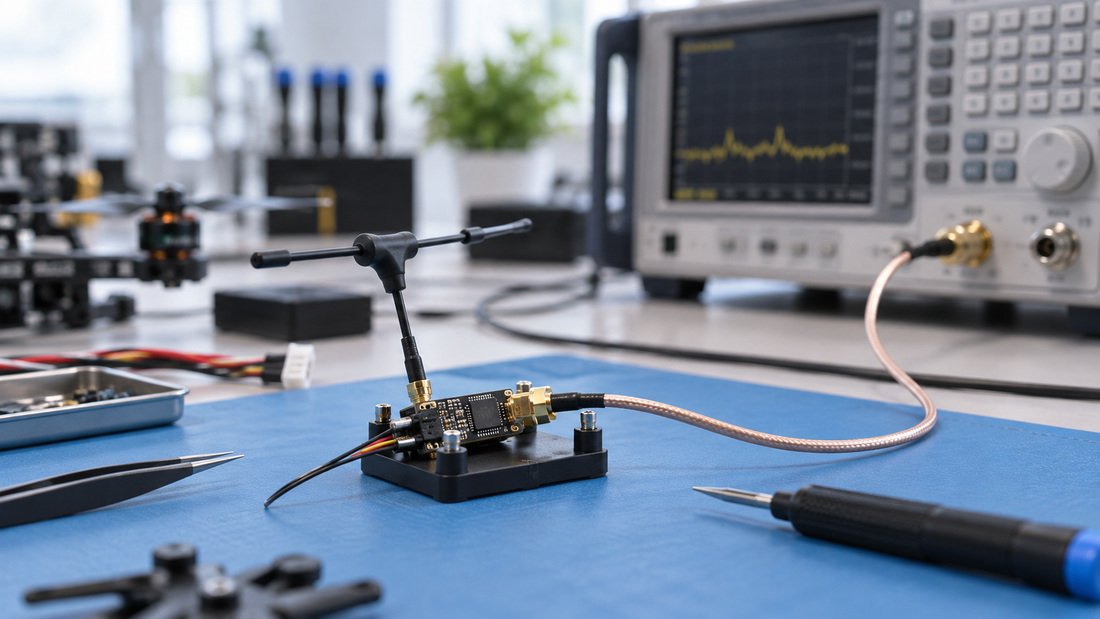
Serious buyers test rather than assume. A bench test of receiver sensitivity and a range walk before the season starts is cheap insurance. Our ELRS receivers page groups receiver formats by typical use case so you can shortlist before testing.
Software, Firmware, and Compatibility
ELRS compatibility is mostly about firmware version and hardware target. Transmitter modules and receivers must run compatible versions, and some older receivers need specific flashing methods. Once a team standardizes on one firmware version and documents it, support calls drop sharply.
Crossfire compatibility is simpler in one sense: one vendor controls the ecosystem. But versions still matter, and older modules may not support newer features. The difference is that you wait for the vendor rather than choose your own path.
If you maintain a mixed fleet, keep a compatibility reference. Our ELRS receiver compatibility page is built for exactly that situation.
One more point for program managers: open-source firmware can be customized for OEM projects, but that flexibility also means you must specify what firmware version ships and who is responsible for future updates. Put that in writing.
Cost Structure: Where the Money Actually Goes
Unit price is only part of the story. A full team kit includes transmitters or modules, receivers, antennas, batteries, chargers, spare parts, and training time. ELRS hardware usually has a lower entry price because multiple factories compete. Crossfire hardware usually costs more per unit but may need less configuration time.
For a 40-pilot program, receiver spares dominate the budget because receivers break most often in student hands. Lower-cost ELRS receivers make it practical to keep a 20 percent spare pool. With higher-cost receivers, programs often under-stock and lose training days.
Our team can quote complete configurations with spares included. If you want to compare options before committing, see our ELRS transmitter modules range and ask for a sample kit.
OEM, ODM, and Private Label Considerations
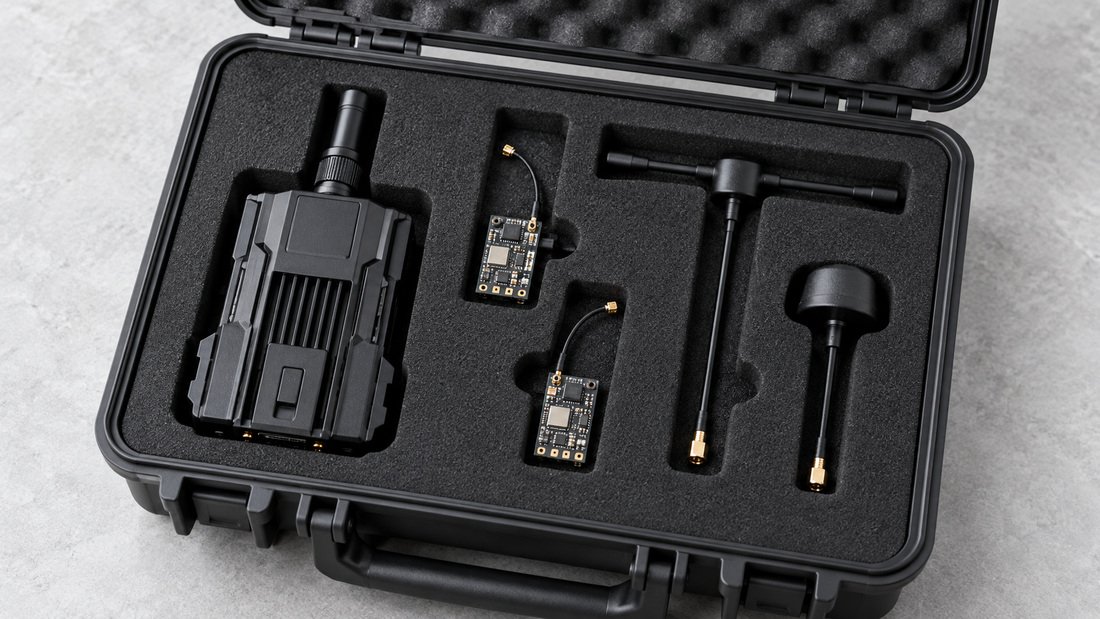
This is where ELRS and Crossfire diverge most for institutional buyers. ELRS hardware is widely available for OEM and private label programs. Factories can print your club or school branding, adjust packaging, and in some cases modify firmware defaults or binding behavior.
Crossfire is not generally available for private label. If your program depends on branded kits, donated equipment with visible sponsor logos, or retail resale, that limitation matters.
OEM decisions to clarify in writing include: minimum order quantity per SKU, firmware version and whether it can be locked, CE and FCC testing responsibility, packaging artwork ownership, tooling costs, and warranty terms for modified units. Buyers should also confirm who owns the firmware build if a custom version is created.
MOQ, Lead Time, and Production Planning
MOQ depends on the specific SKU, whether branding is customized, and whether firmware changes are required. Standard ELRS receivers often ship in small batch quantities, while custom-branded modules with modified firmware typically require larger runs. Exact numbers vary by supplier and configuration, so request a written quote with tiered pricing.
Lead time has two parts: production and shipping. Production depends on component availability. Shipping depends on the battery question below. For school terms, place orders at least one quarter before the season starts, and confirm the delivery date in the contract rather than assuming.
Plan for firmware consistency across batches. If a supplier ships version A in spring and version B in autumn, your coaches will notice. Specify the version in the purchase order.
Antennas and RF Performance Details Buyers Overlook
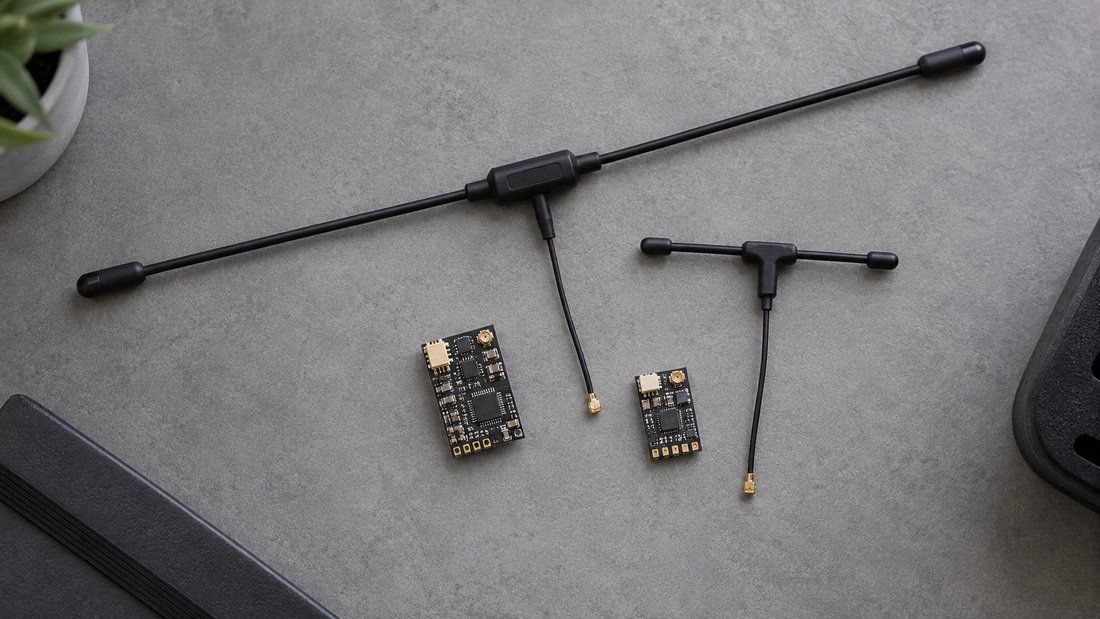
Antennas are the most underrated part of any RF purchase. A mismatched antenna can cut effective range dramatically and cause intermittent failsafe events. Polarization must match between transmitter and receiver. Connector type must match. Gain must suit the use case.
For indoor arenas, compact linear antennas usually work well. For outdoor training, higher-gain directional antennas can help, but they require aiming discipline. Buy extras, because antenna damage is common in student programs.
When you buy in volume, ask for antenna consistency data across batches. If a supplier cannot describe how antennas are tested, treat that as a warning sign. Antenna performance also depends on installation, so mounting instructions matter as much as the part. Our RF antennas section lists common connector and band combinations.
Samples, Validation, and Quality Control
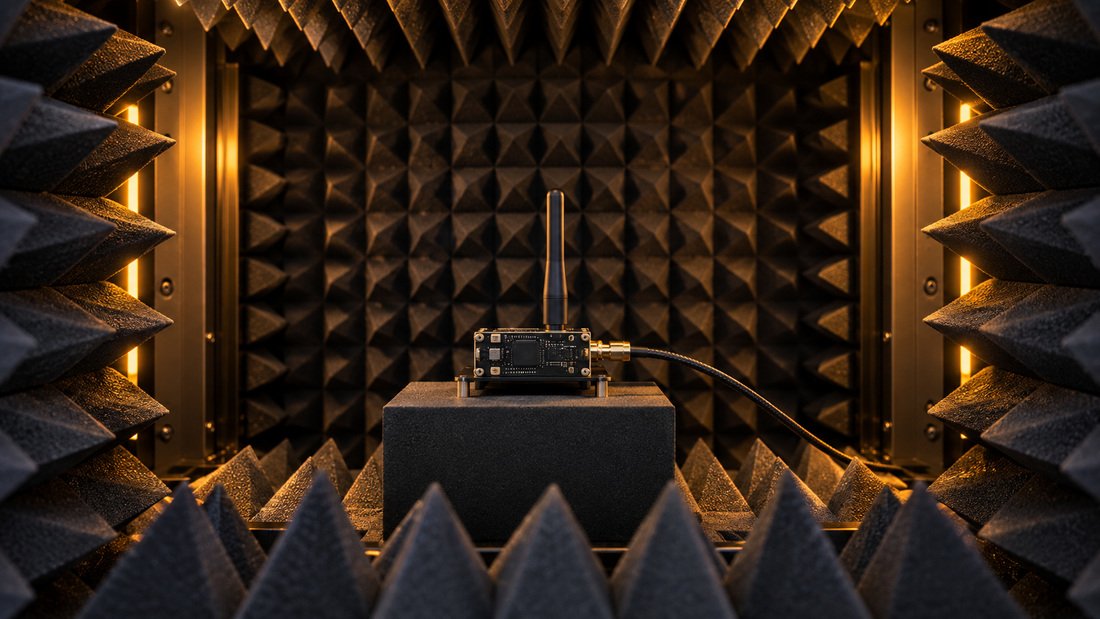
Never scale a program on samples alone. Sample units are often hand-selected. Ask for production-representative samples drawn from a normal batch, and test them the way your students will use them.
A practical validation plan includes: bind and range test, latency check at your chosen packet rate, a drop test on the receiver, antenna pull test, and a full training session with students. Document firmware versions and serial numbers. If a supplier resists production samples, that is a red flag.
Quality control questions worth asking: What is the outgoing test procedure? Is each unit range-checked or only sample-checked? What is the failure rate for the last three batches? Can you share a test report format? A supplier with a real QC process will answer these specifically, not vaguely.
Certification, Compliance, and Target Markets
Radio equipment is regulated almost everywhere. In the United States, the FCC sets rules for intentional radiators, and equipment authorization requirements depend on the device and how it is marketed. In the European Union, the Radio Equipment Directive applies, along with CE marking obligations that rest with the responsible economic operator. Other regions have their own regimes.
Do not assume that a product sold globally is certified everywhere. Certification status typically depends on the exact product configuration, the transmitter power setting, the band, and the destination market. Buyers should verify requirements with local authorities or a qualified testing lab before importing.
For youth programs, additional rules may apply if a product is classified as a toy. Standards such as EN 71 in Europe or ASTM F963 in the United States may be relevant depending on classification, but applicability is fact-specific. Ask your supplier for the documentation they hold, and confirm with your own compliance advisor.
Battery shipping is another compliance layer. Lithium batteries are regulated dangerous goods, and air transport rules differ from ground and sea. Packaging, state of charge, labeling, and documentation requirements vary by carrier and country. Confirm the shipping method and paperwork before you sign.
Packaging, Branding, and What Schools Actually Ask For
Educational buyers value packaging more than hobby buyers do. Kits that survive a school year need foam inserts, labeled compartments, and printed quick-start cards. Sponsors want logos on cases and, in some cases, on the hardware itself.
Clarify early: who owns the packaging artwork, what changes trigger a new MOQ, and whether retail-ready packaging is available. If your program resells or donates kits, retail-ready packaging avoids repacking labor later.
Warranty, Spares, and Long-Term Support
Warranty terms should be written, not implied. Typical questions include the warranty period, what is excluded (crash damage, water damage, modified firmware), how replacements ship, and who pays return freight. For schools, a clear replacement process matters more than a long warranty period.
Spares strategy for a club: stock receivers at roughly 15 to 20 percent of fleet size, antennas at 20 percent, and at least two spare transmitter modules. Keep a labeled bin of known-good units for troubleshooting. This single practice prevents most lost training days.
Common Mistakes and Buyer Red Flags
- Choosing a standard your coaches cannot support. Buying hardware your volunteers cannot flash or bind creates downtime.
- Skipping production samples. Hand-picked samples hide batch variation.
- Ignoring regional RF rules. Transmit power and band legality vary by country.
- Mixing firmware versions without documentation. This causes bind failures and wasted practice time.
- Under-stocking spares. Saving 5 percent on receivers can cost a full season of training.
- Accepting vague QC answers. A supplier who cannot describe the test process has no process.
- Assuming all certifications are included. Certification depends on configuration and market; confirm in writing.
- Ignoring battery shipping rules. Lithium shipping documentation failures delay entire orders.
Practical Buyer Checklist
- Define your flying environment (indoor arena, outdoor field, or both).
- Standardize on one band and one firmware version per cohort.
- Request production-representative samples, not showcase units.
- Test bind reliability, latency at your packet rate, and range in a real session.
- Confirm OEM and private label terms, including MOQ and artwork ownership.
- Verify certification status for your specific configuration and market in writing.
- Confirm lead time, shipping method, and lithium battery documentation.
- Agree on warranty terms, replacement process, and spare part pricing.
- Buy spares as a percentage of fleet size, not as an afterthought.
- Document everything in a purchase order, including firmware version.
Frequently Asked Questions
Is ExpressLRS better than Crossfire?
Neither is universally better. ELRS usually offers lower unit cost, smaller receivers, and OEM flexibility. Crossfire usually offers simpler setup, one-vendor support, and strong 900 MHz long-range performance. The right choice depends on your flying environment, budget, and support capacity.
Can I use ELRS and Crossfire in the same program?
Yes, but it complicates training and spares. Pilots must know which transmitter binds to which receiver, and you need separate spare pools. Standardizing on one system per cohort is usually cheaper in staff time.
Does ExpressLRS work for drone soccer?
ELRS is widely used in indoor and outdoor drone sports. Its small 2.4 GHz receivers suit lightweight soccer drones, and configurable packet rates let teams tune latency. Reliability depends on antenna choice and RF congestion management.
What is the minimum order quantity for ELRS hardware?
MOQ depends on the SKU, branding requirements, and whether firmware is customized. Standard products often have low entry quantities, while custom-branded or modified-firmware units require larger runs. Request a tiered quote for exact numbers.
Are ELRS products certified for my country?
Certification depends on the specific product configuration, transmit power, band, and destination market. Buyers should request current documentation from the supplier and verify requirements with local authorities or a qualified lab.
How should we ship lithium batteries for a team kit?
Lithium batteries are regulated dangerous goods. Packaging, state of charge, labeling, and documentation requirements vary by carrier and destination. Confirm the shipping method and paperwork with your supplier before ordering.
Which antennas should we order with ELRS receivers?
Match polarization and connector type to your transmitter and receiver. Indoor arenas usually favor compact linear antennas, while outdoor training may benefit from higher-gain options. Buy spares, since antenna damage is common in student programs.
Conclusion
ExpressLRS basics come down to one idea: open hardware with configurable firmware, built by many factories, at a price point that makes large team programs practical. Crossfire comes down to the opposite idea: one vendor, one ecosystem, mature long-range performance, higher cost, and limited OEM options.
For drone sports clubs, school programs, and training centers buying in volume, ELRS is often the more flexible commercial choice, provided you control firmware versions, validate production samples, and stock spares. For long-range outdoor work, Crossfire remains a legitimate option. What matters is matching the standard to your environment, your coaches, and your budget, then documenting every decision in writing.
We supply ELRS receivers, transmitter modules, and antennas from BKR and BKT lines, and we support clubs and schools with kit planning, OEM branding, and sample validation.
Scan the QR code to contact Emily on WeChat. Contact our team via Contact Us,
Get a Quote,
Request Samples, or
Discuss Your OEM Project.