Quick summary
For a drone soccer ball, the Betaflight settings that matter most are lower PID and rate values than freestyle pilots use, a locked indoor-friendly flight mode, RPM filtering matched to the small motors, and a tuned angle or horizon mode for stable indoor hovering. Because drone soccer requires precise, repeatable movement inside a protective cage, the setup favors stability and predictable response over aggressive acro performance.
Key Takeaways
- Drone soccer balls need stable, repeatable flight, so Betaflight rates, PIDs, and filters should be tuned for indoor durability rather than freestyle speed.
- Your choice of flight controllers determines how easily you can lock in those settings across an entire team fleet.
- Bulk buyers should treat firmware version, connector layout, and component consistency as procurement criteria, not just afterthoughts.
- Always validate a sample batch with your chosen Betaflight profile before committing to a full club or league order.
Why Betaflight setup matters for drone soccer balls
Drone soccer balls are not freestyle quads. They fly inside a rigid cage, often in school gyms or indoor arenas, and they are judged on controlled movement, quick stopping, and repeatable orientation. That changes what “good” looks like in Betaflight. A pilot who tunes for flips and dives will usually find the ball twitchy, hard to hold, and inconsistent between units.
For clubs and associations buying equipment at scale, inconsistent flight behavior is a real operational cost. Coaches spend practice time re-tuning, players compensate for different feel, and spare parts become harder to swap. A disciplined Betaflight baseline helps standardize the fleet so every player trains on the same platform.
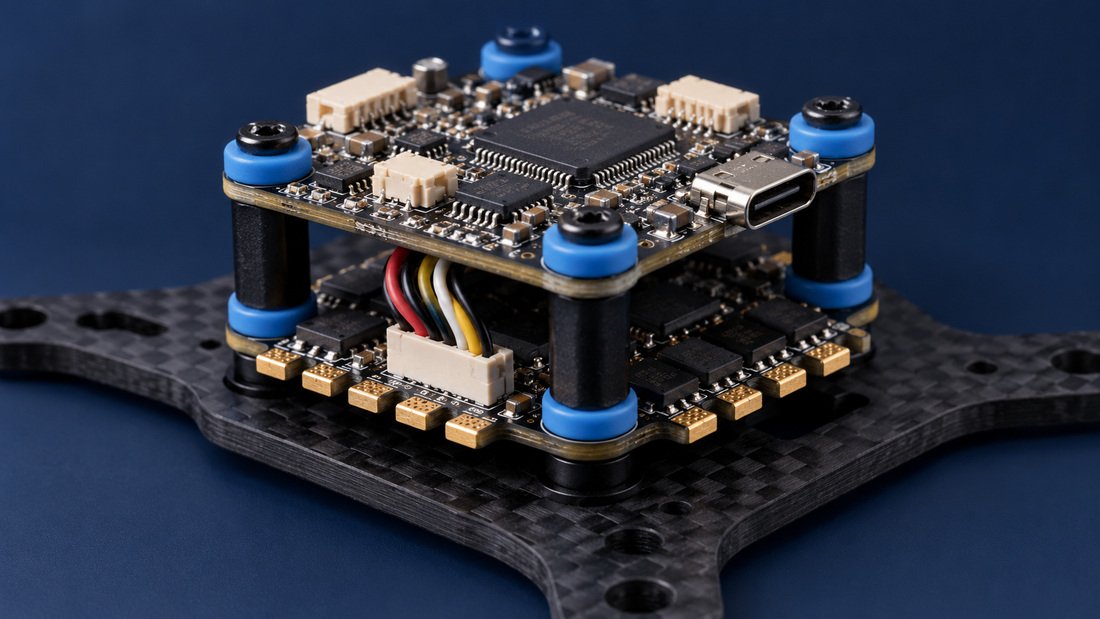
This is also why electronic speed controllers and flight controllers should be selected together. The ESC protocol, motor timing, and gyro filtering interact closely with your Betaflight profile.
7 Betaflight settings that work well for drone soccer balls
1. Flight mode: angle or horizon, not full acro
Most drone soccer programs benefit from a stabilized mode. Angle mode self-levels and limits rotation, which makes the ball easier to control for younger players and keeps matches predictable. Horizon mode can be useful for intermediate teams that want some freedom near the center stick. Full acro is usually reserved for advanced pilots, and even then it may not be the best choice for officiated play.
The exact mode depends on your league rules. Some organizers specify a flight mode or limit throttle behavior. Buyers should verify with their sanctioning body before standardizing on a configurator profile.
2. Rates: lower than freestyle, with a gentle center feel
Reduce your Betaflight rates to soften stick response. A lower max rate around the 400–600 degrees per second range is a common starting point for indoor sports, but the right number depends on the ball diameter, motor size, and cage weight. Keep expo modest so the center remains smooth and the outer range still allows quick turns.
The goal is to let a player make a sharp stop without oscillation. If the ball overshoots on direction changes, reduce rates before adding more PID authority.
3. PID tuning: start conservative and avoid over-damping
Start from a known stable indoor profile and adjust in small steps. For drone soccer, the D term is often kept conservative because aggressive D can amplify gyro noise in a small, tightly packed frame. P can be moderate, and I should be high enough to hold attitude in hover but not so high that the ball feels sluggish.
Test changes one axis at a time with a short hover and a few turns. Document each profile so your club can reproduce it on spare units.
4. Filters and RPM filtering: match the small motor setup
Betaflight’s filter sliders should be tuned to the noise profile of a small indoor motor. Enable RPM filtering where your ESC and firmware support it, and use dynamic notch filtering to handle motor noise. Over-filtering makes the ball feel disconnected; under-filtering lets noise reach the gyro and causes hot motors.
Check motor temperature after a few short flights. Warm motors usually mean the filter or PID setup needs attention, not a hardware failure.
5. Battery and voltage settings: keep voltage sag predictable
Set the Betaflight battery profile to match the cells your club actually uses, and configure a conservative voltage warning rather than a hard cutoff that can drop the ball mid-match. Small cells sag quickly under load, so a warning threshold that is too high will trigger early.
Standardizing battery chemistry and connector across a team keeps the flight feel consistent between practice and competition.
6. Motor protocol and ESC settings: consistency across the fleet
Use one motor protocol and one ESC firmware family across the fleet. Mixing protocols or firmware versions makes it nearly impossible to share Betaflight profiles. DShot is common in this class because it avoids calibration steps and gives cleaner throttle response.
If you are sourcing ESCs separately from flight controllers, confirm that both support the same protocol before finalizing the order.
7. Failsafe, arming, and safety behavior
Set failsafe to drop or land in a way that is safe inside a cage, and configure arming checks so a ball cannot spin up unexpectedly during a substitution or reset. For school programs, a clean arming sequence is both a safety feature and a coaching tool.
Also confirm how the controller behaves at low battery and after a signal loss. These behaviors should be identical on every unit in the fleet.
If you are building or refreshing a fleet, DPF supplies a range of FPV electronics and flight controller hardware intended for team and educational use. Sharing your intended Betaflight profile early helps our team recommend compatible components.
Comparing Betaflight setups for different drone soccer roles
Not every ball in a club plays the same role. Some are used for beginner drills, some for competitive matches, and some as spares. The table below summarizes a practical starting point. Values are illustrative and should be validated on your own hardware.
| Setting | Beginner / school program | Competitive club ball | Trainer / spare unit |
|---|---|---|---|
| Flight mode | Angle | Angle or horizon | Angle |
| Rates (max) | Lower | Moderate | Lower |
| PID base | Stock indoor profile | Tuned indoor profile | Stock indoor profile |
| Filtering | Dynamic notch enabled | Dynamic notch + RPM filtering | Dynamic notch enabled |
| Battery warning | Conservative | Tuned to cell type | Conservative |
| Motor protocol | Single protocol fleet-wide | Single protocol fleet-wide | Single protocol fleet-wide |
How flight controller hardware affects your Betaflight options
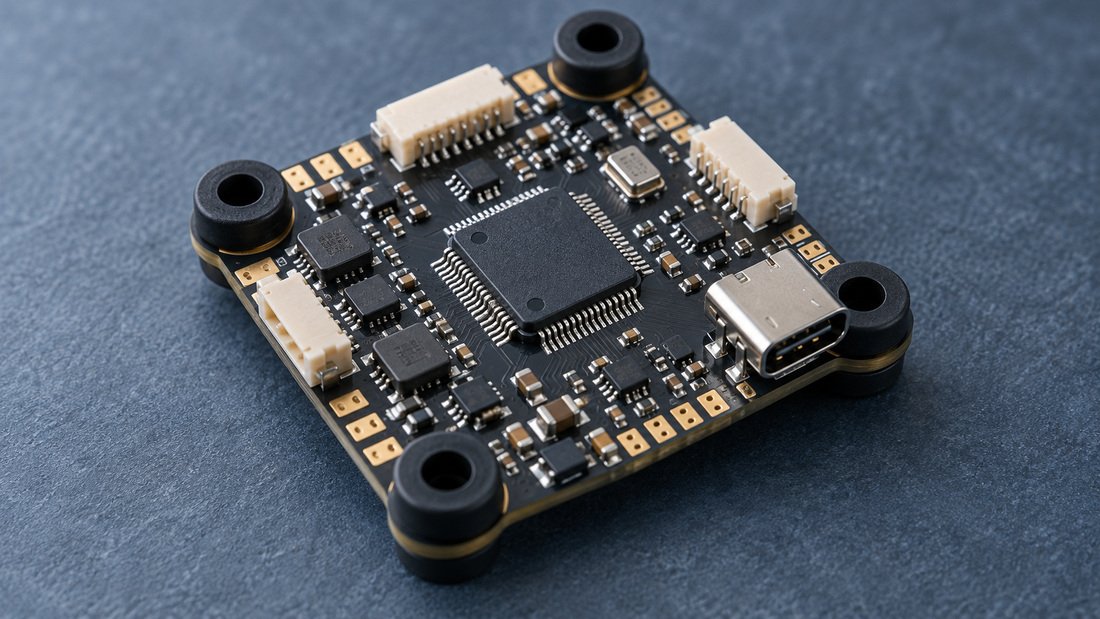
The board you choose sets the ceiling on what you can tune. Gyro type, processor headroom, UART count, and onboard flash all influence which Betaflight features run smoothly. A board with limited UARTs may force you to drop a feature you wanted, such as a separate receiver or a FPV DVR.
For drone soccer, reliability and serviceability usually matter more than raw processing power. A club needs boards that boot consistently, tolerate indoor crashes, and can be re-flashed without special tools.
Compatibility: receivers, video, and firmware
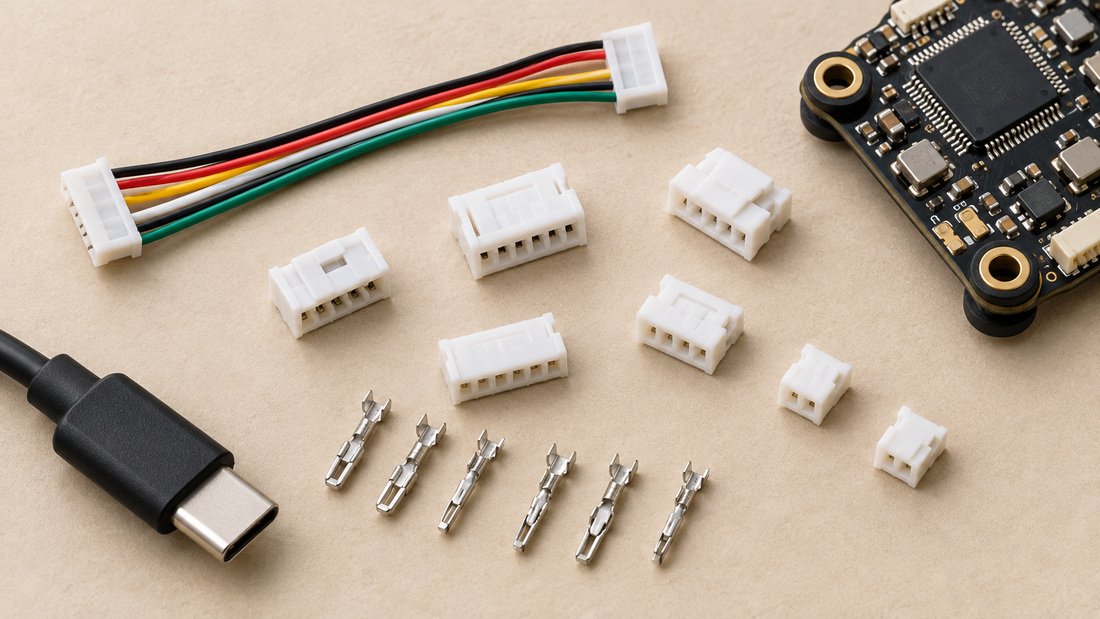
Your Betaflight profile only works if the whole electronics stack agrees with it. Receiver protocol, video system, and firmware version all interact. Many clubs use ELRS or another modern link because it is compact and reliable indoors, but the receiver must be bound and configured consistently across the fleet.
Video is the other half of the picture. If you run analog video, pair the flight controller with compatible FPV video receivers and keep channel plans documented. If you run digital, confirm that the flight controller supports your chosen system and that Betaflight firmware is recent enough for the features you need.
Firmware version discipline is underrated. Standardize on one Betaflight major version across the fleet, and keep a copy of your configurator diff for each ball type. Radio equipment and emissions rules vary by country; buyers should verify local requirements before importing transmitters or receivers, and consult official sources such as national telecom regulators or the FCC for guidance on radio compliance in their market.
MOQ, pricing, and what drives cost for club buyers
Unit price for flight controllers and related FPV electronics depends on several factors. Buyers should ask suppliers to break these out clearly rather than accepting a single quoted number.
- Order quantity: MOQ tiers usually lower unit cost as volume rises.
- Board specification: gyro class, processor, UART count, and onboard storage affect cost.
- Connector and harness choices: custom harnesses add tooling or assembly cost.
- Firmware and configuration: pre-flashing a Betaflight profile adds handling time but saves club setup hours.
- Packaging: retail-ready or branded packaging costs more than bulk packing.
- Testing regime: extra functional testing raises cost but reduces field failures.
- Certification scope: required marks depend on product configuration and destination market.
Be cautious with quotes that are unusually low. They often reflect untested boards, missing spares, or unclear warranty terms.
OEM/ODM and private label options for drone soccer programs
Clubs, leagues, and distributors often want their own branding on team kits. OEM and ODM programs can cover board labeling, color, packaging, and pre-loaded firmware profiles. A private label approach makes sense when you want consistent identity across a league or school district.
The practical questions to ask are: who owns the firmware profile, who handles warranty, and how replacement units are supplied during a season. Buyers should confirm documentation and labeling requirements, especially for youth-focused products where safety and age-suitability standards may apply. Requirements typically depend on the country and product category, so verify with local authorities.
To discuss customization, you can discuss your OEM project with our team.
Sample testing and validation before a bulk order
Never standardize a club fleet on a configuration you have not tested in your own gym. Request samples, flash your intended Betaflight profile, and run a structured test. A simple validation plan:
- Confirm firmware version and target board match your written spec.
- Flash your club profile and verify all sensors, receiver, and video behave correctly.
- Run hover tests and check motor temperature.
- Perform repeated turns and stops to check for oscillation or drift.
- Simulate a full practice session and note any resets or brownouts.
- Record results and compare across at least two sample units.
Samples are also the right time to check connector quality, solder joints, and labeling. Buyers can request samples before committing to a fleet order.
Quality control and what to verify
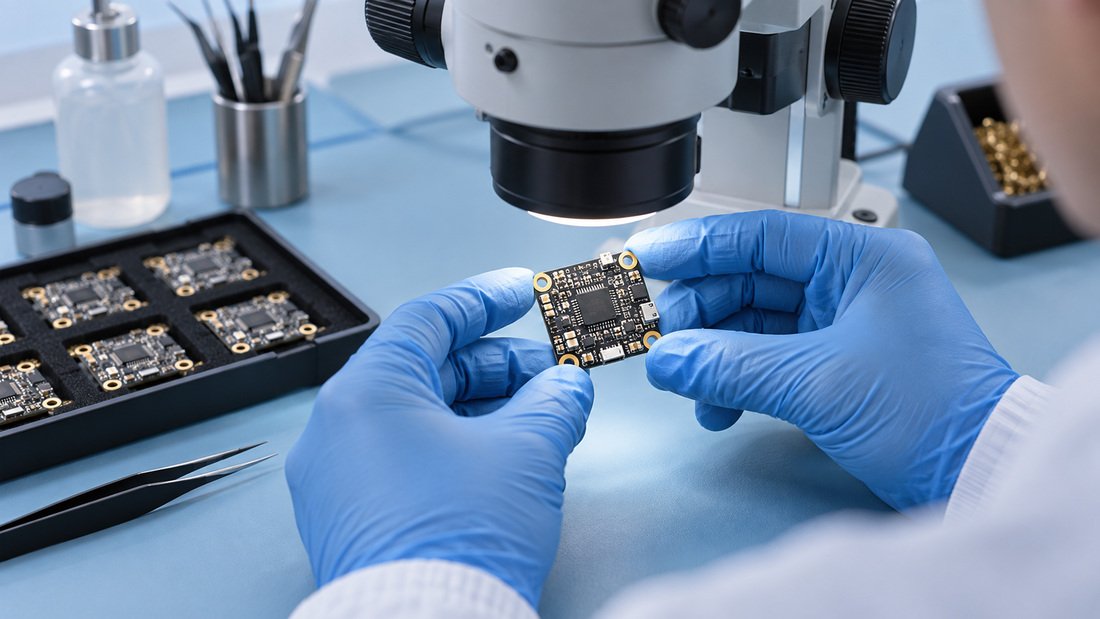
Ask how boards are tested before shipment and what failure rate is considered normal. Useful evidence includes incoming component inspection, functional testing after assembly, and a documented out-of-box check. If a supplier cannot describe their test process, treat that as a warning sign.
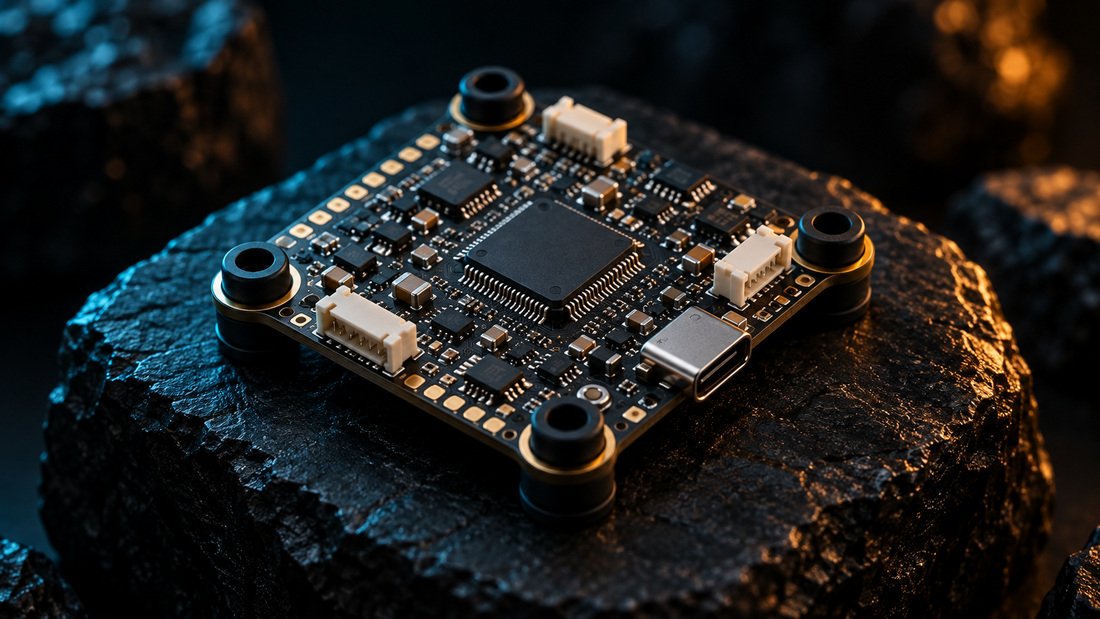
Visual inspection still matters. Check solder quality, connector seating, and board cleanliness. For a visual reference, see the board inspection image above.
Lead times, packaging, and shipping considerations
Lead time depends on whether you order standard stock or a customized configuration. Custom firmware, labeling, or packaging usually adds production time. Plan around your season calendar, not just the order date.
Lithium batteries are the most common shipping complication. International shipments of lithium cells and packs are subject to carrier and regulatory rules, and requirements vary by country and shipment size. Buyers should confirm documentation and label requirements with their freight forwarder before ordering.
Packaging should protect small electronics during transit and, if retail-facing, present clearly. Confirm whether units ship individually boxed or bulk-packed.
Common mistakes and buyer red flags
- Tuning for speed instead of control: drone soccer rewards precision, not top speed.
- Mixing firmware versions: makes profile sharing impossible across a fleet.
- Ignoring motor temperature: hot motors usually signal a filter or PID problem.
- No written configuration record: rebuilds and replacements become guesswork.
- Unclear certification claims: be skeptical of blanket “CE/FCC certified” claims that do not name the model.
- No sample validation: skipping samples is a costly way to learn about compatibility issues.
- Vague warranty and spares terms: confirm what is covered and how replacements arrive.
- Underestimating battery shipping rules: this delays more orders than any other logistics issue.
Practical buyer checklist for drone soccer flight controllers
- Define your league’s flight mode and rate expectations before sourcing.
- Choose one Betaflight firmware version and one motor protocol for the fleet.
- Confirm receiver and video compatibility with your chosen controller.
- Request samples and test them with your own profile in your own venue.
- Ask for a written test and inspection process.
- Clarify MOQ, price tiers, and what is included at each tier.
- Confirm OEM/private label options, labeling, and packaging.
- Ask about warranty, spare boards, and replacement lead times.
- Verify certification requirements for your destination market.
- Confirm lithium battery shipping documentation with your forwarder.
Frequently asked questions
Do drone soccer balls use standard Betaflight firmware?
Many do, because Betaflight supports the small flight controllers commonly used in drone soccer. The firmware is standard; the difference is in how you configure modes, rates, and filters for indoor, caged flight.
What flight mode is best for young players?
Angle mode is usually the most forgiving because it self-levels and limits rotation. Horizon mode can suit intermediate players. Confirm any mode restrictions with your league or event organizer.
Can I flash the same profile to an entire team fleet?
Yes, if the hardware is identical and you use the same firmware version. Save a configurator diff and apply it consistently, then verify each unit individually after flashing.
How much does a flight controller for drone soccer cost?
Pricing depends on specifications, order quantity, testing, packaging, and customization. Ask suppliers for a breakdown by tier so you can compare offers fairly.
What is a typical MOQ?
MOQ varies by supplier and by whether you order stock or custom configuration. DPF can confirm current MOQ for specific items when you request a quote.
Are these boards certified for my country?
Certification requirements depend on the product configuration and destination market. Some markets require specific marks or radio approvals. Buyers should verify with local authorities before importing.
How do I handle battery shipping for a club order?
Lithium batteries are subject to carrier and regulatory rules that vary by country. Work with your freight forwarder and confirm documentation and labeling requirements before shipment.
Conclusion
For drone soccer balls, the Betaflight settings that work are the ones built around control, consistency, and repeatability: a stabilized flight mode, moderate rates, conservative PID tuning, correct filtering, and a fleet-wide firmware standard. The flight controller hardware you choose determines how easily you can hold that standard across an entire team or league.
Clubs and associations get the best results by defining their configuration first, testing samples on their own hardware, and buying from suppliers who can document their testing and support OEM or private label programs.
Scan the QR code to contact Emily on WeChat. Contact our team via Contact Us,
Get a Quote,
Request Samples, or
Discuss Your OEM Project.