Quick summary
For most FPV racing and drone soccer teams, the 2.4 GHz ExpressLRS band is the practical default: smaller antennas, higher packet rates, and lower latency than 900 MHz. The 900 MHz band can offer better penetration and longer range in obstructed outdoor environments, but it often has larger antennas and different regulatory constraints. The “best” band depends on your race format, RF environment, and local rules. This guide explains ExpressLRS basics and gives you a procurement process to verify what fits your team before ordering.
Key Takeaways
- 2.4 GHz ELRS is generally preferred for FPV racing because it supports faster packet rates and compact antennas.
- 900 MHz ELRS can be useful for long-range or heavily obstructed courses, but check local band allocation and antenna size.
- Band choice affects receiver, transmitter module, and antenna selection—these must be compatible.
- For team orders, define the band, packet rate, and connector type before requesting a quote.
- Ask suppliers for written confirmation of compatibility, regulatory compliance, and warranty terms.
What Is ExpressLRS and Why Does the Band Matter?
ExpressLRS (ELRS) is an open-source radio control link protocol used between a transmitter module and a receiver. It operates on license-free bands, most commonly 2.4 GHz and 900 MHz (the exact frequency varies by region). The band determines antenna size, propagation characteristics, and how the link behaves around obstacles and other RF traffic.
For FPV racing, the band influences three things: latency, link reliability in congested environments, and the physical size of the receiver and antenna. A smaller band (2.4 GHz) generally means smaller antennas, which matters on tight racing frames. A lower band (900 MHz) generally means longer wavelength and larger antennas, but potentially better penetration through obstacles.
2.4 GHz vs 900 MHz for FPV Racing: A Practical Comparison
| Factor | 2.4 GHz ELRS | 900 MHz ELRS |
|---|---|---|
| Typical antenna size | Small, lightweight | Larger, heavier |
| Latency (typical packet rates) | Supports very high packet rates for low latency | May support lower maximum packet rates |
| Obstacle penetration | Lower | Higher (better around trees, buildings) |
| Regulatory considerations | Widely allowed for low-power use; check local rules | Band use varies; verify local allocation |
| Best for | Short-range, high-speed racing, indoor courses | Long-range, outdoor, obstructed courses |
Note: This table is general guidance. Actual performance depends on hardware, firmware, antennas, and the RF environment. Always test in your specific venue.
How to Choose the Right ELRS Band for Your Team
Start with your race format and venue
Indoor and tight outdoor courses with many pilots favor 2.4 GHz because of its smaller antennas and ability to handle high packet rates. Long-range or obstacle-heavy outdoor courses may benefit from 900 MHz. Ask your race organizer what band other pilots are using—mixing bands can cause interference if not coordinated.
Check local regulations
Radio bands are regulated differently by country. Before ordering, confirm that the band you plan to use is permitted for your intended power level and application. Your supplier should be able to provide documentation, but you must verify with local authorities.
Match receivers, modules, and antennas
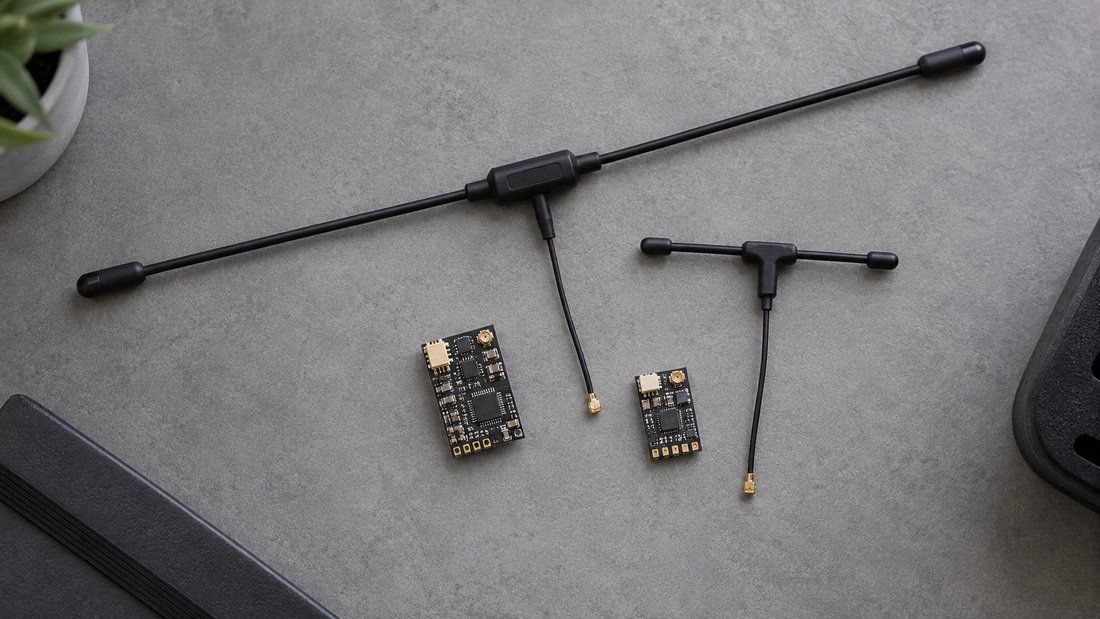
ELRS receivers and transmitter modules are band-specific. A 2.4 GHz module will not work with a 900 MHz receiver. Antennas are also tuned for a specific band. When ordering, specify the band and connector type. Our ELRS receiver compatibility page can help you check common pairings.
ELRS Basics: Receivers, Transmitter Modules, and Antennas
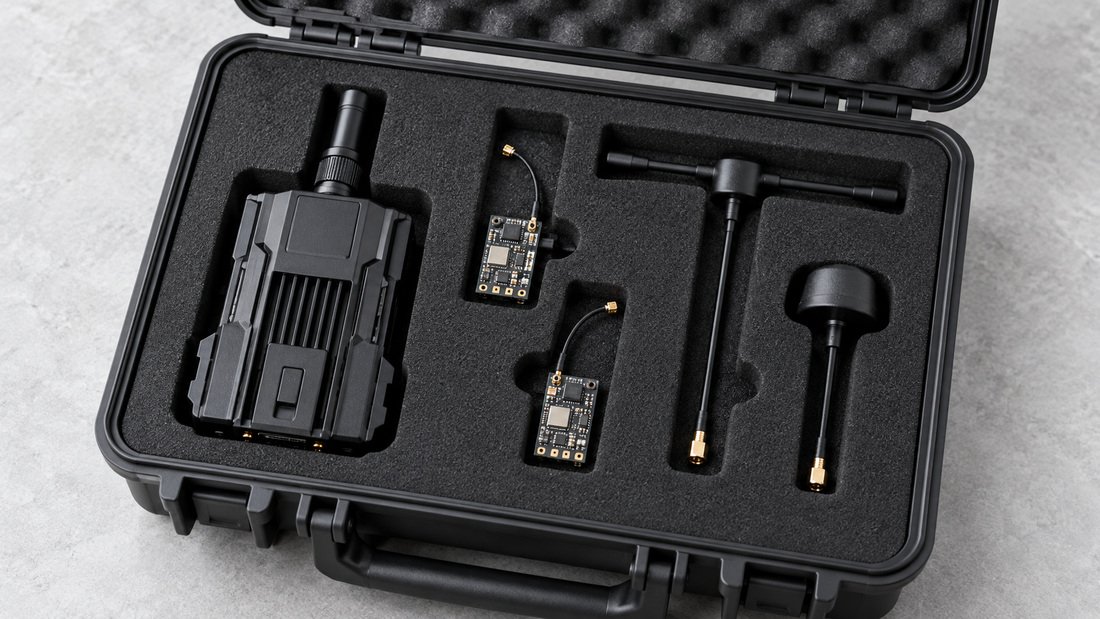
An ELRS system has three main RF parts: a transmitter module that plugs into your radio, a receiver in the drone, and antennas on both ends. For team procurement, you will need to standardize these across your fleet.
- ELRS receivers: Choose based on band, size, and protocol support. Common form factors include ceramic antennas and external antennas.
- ELRS transmitter modules: Must match the band and fit your radio’s module bay (e.g., JR, Nano).
- RF antennas: Must be tuned to the same band as the receiver and module. Connector type (e.g., U.FL, SMA) must match.
For a full overview of available components, see our ELRS and RF systems category.
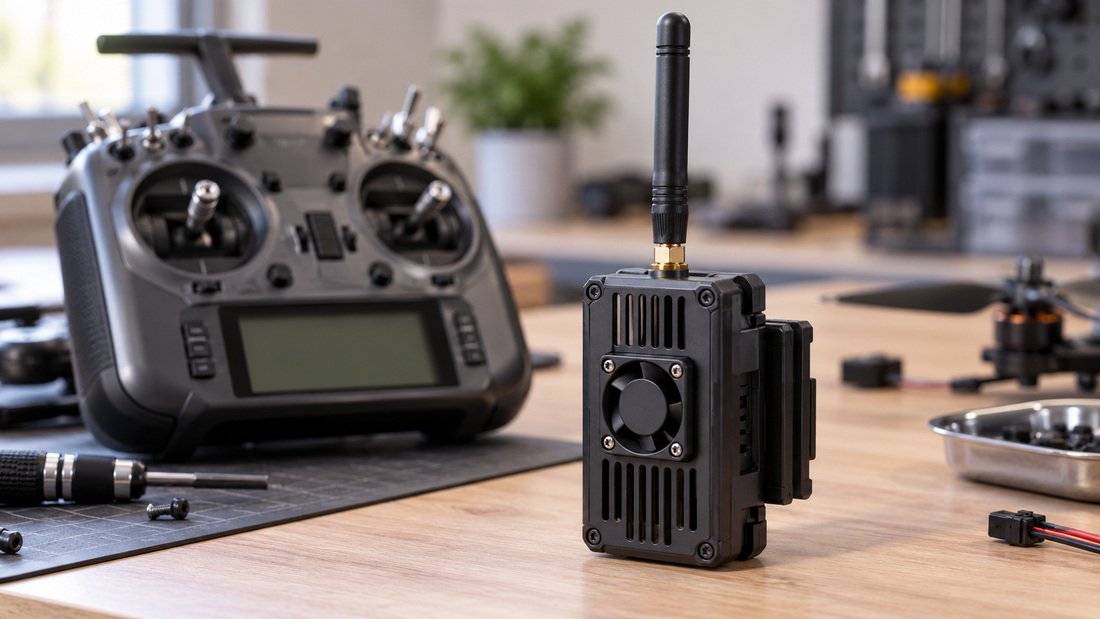
When building a team kit, you may need both receivers and modules. Our ELRS receivers and ELRS transmitter modules pages list current options. We also stock RF antennas for both bands.
Planning a team kit? Request a Team Kit Quote to discuss your specific band, quantity, and compatibility needs.
Common Mistakes When Choosing an ELRS Band
- Assuming one band is always better: The best band depends on your venue, rules, and team needs.
- Mixing bands without checking: A 900 MHz receiver will not bind to a 2.4 GHz module.
- Ignoring antenna connectors: U.FL and SMA are not interchangeable without an adapter.
- Overlooking local regulations: Always verify that your chosen band and power level are legal in your area.
- Ordering without a test plan: Small-scale testing at your venue is the only way to confirm real-world performance.
Procurement Checklist for Teams and Clubs
Before requesting a quote, gather this information to avoid back-and-forth and ensure compatibility:
- Band: 2.4 GHz, 900 MHz, or both?
- Packet rate: What firmware packet rate do you plan to use? (e.g., 250 Hz, 500 Hz—supported rates vary by hardware.)
- Receiver form factor: Ceramic antenna, external antenna, or diversity?
- Antenna connector: U.FL, SMA, RP-SMA, etc.
- Transmitter module bay: JR, Nano, or other?
- Quantity: How many receivers and modules for the team?
- Regulatory confirmation: Can the supplier provide documentation for your region?
- Warranty and support: What are the written warranty terms and support channels?
Note: DPF’s specific warranty periods, lead times, and MOQs are not stated here. Please confirm these in writing with your sales contact.
Frequently Asked Questions
Can I use 900 MHz ELRS for FPV racing?
Yes, but it is less common for short-range racing due to larger antennas and potentially lower maximum packet rates. It can be suitable for long-range or obstacle-heavy courses. Check local regulations and test at your venue.
Which band has lower latency for racing?
2.4 GHz ELRS generally supports higher packet rates, which can translate to lower latency. However, actual latency depends on firmware, packet rate setting, and hardware. Always test your specific setup.
Are ELRS receivers band-specific?
Yes. A 2.4 GHz receiver will not work with a 900 MHz transmitter module. You must match the band across your transmitter module, receiver, and antennas.
What antenna connector should I choose?
The connector must match your receiver and module. Common types include U.FL (for small receivers) and SMA (for external antennas). Confirm before ordering.
How do I know if a band is legal in my country?
Check with your local telecommunications authority. Regulations vary by country and power level. Your supplier may provide documentation, but you are responsible for compliance.
Can I mix 2.4 GHz and 900 MHz on the same team?
It is possible, but it can complicate frequency coordination and inventory. For racing, it is usually simpler to standardize on one band. Consult your race organizer.
What should I ask a supplier before buying ELRS gear for my team?
Ask for: band-specific compatibility confirmation, antenna connector types, firmware version, regulatory documentation for your region, warranty terms, and support process. Also request a sample for testing if possible.
Conclusion: Start with 2.4 GHz, But Verify for Your Venue
For most FPV racing and drone soccer teams, 2.4 GHz ELRS offers the best balance of latency, antenna size, and regulatory acceptance. However, 900 MHz can be advantageous in specific outdoor or obstructed environments. The right choice depends on your race format, local rules, and RF conditions.
Before you order, define your band, packet rate, and connector types. Then request samples or a small batch to test at your actual venue. This is the most reliable way to confirm performance.
To discuss your team’s ELRS needs and get a tailored quote, visit our Get a Quote page. We can help you select compatible receivers, modules, and antennas for your fleet.