Quick summary
For drone soccer in schools, ask for written warranty terms covering the airframe, motors, flight controller, battery, radio link and ball cage separately, plus a spare-parts kit that matches your fleet size and competition calendar. Confirm RMA procedure, turnaround time, who pays return freight, and whether replacement parts keep the same firmware and connector standard. Nothing in this guide replaces your district’s purchasing policy: treat every commercial term as unverified until the supplier confirms it in writing on the quotation or contract.
Key Takeaways
- Warranty coverage is rarely uniform across a drone soccer set; ask for a component-by-component table rather than a single blanket period.
- Spare-parts strategy should follow your competition calendar, not just your classroom headcount.
- Confirm the RMA (Return Merchandise Authorization) process, freight responsibility and diagnostic timeline before purchase.
- Standardisation matters: mixed connector, battery or firmware versions create avoidable downtime mid-season.
- Put every commitment you rely on into the purchase order or contract, because verbal assurances are hard to enforce.
This article is written for schools, youth education programs, drone soccer teams and clubs, and for the distributors, event organizers and OEM/ODM procurement teams that supply them. Where a term depends on a specific supplier’s policy, we tell you what to request rather than what to assume.
Why Warranty and Spares Decide Whether a School Program Survives
A drone soccer program fails for boring reasons: a motor burns out in week three, the spare is on a six-week boat, and the club stops meeting. Equipment failure is normal in a contact sport where aircraft collide inside a cage. The question is not whether parts break, but how fast and how cheaply a school can return a drone to flight.
Procurement officers usually evaluate the aircraft first and the after-sales terms last. In practice, the after-sales terms determine total cost of ownership. A slightly more expensive kit with a clear spare-parts list and a documented RMA path is often cheaper across a three-year program than a bargain kit with no parts pipeline.
Regulatory context also matters for schools. In the United States, the FAA explains that drones flown for educational purposes are regulated either under the Exception for Limited Recreational Operations (49 U.S.C. § 44809) or under the Small Unmanned Aircraft Systems Rule (Part 107). Qualifying educational organizations include institutions of higher education, JROTC programs, and educational programs chartered by an FAA-recognized Community Based Organization; other educational organizations must operate under Part 107. See FAA guidance for educational users. In other countries, check your own civil aviation authority, because local rules differ.

Equipment reliability supports participation. If you are building a full program across year groups, it helps to align your equipment plan with STEM drone education and training structures so that spares, storage and lesson time are planned together.
What Should a Warranty Cover on a Drone Soccer Set?
A useful warranty separates wearable parts, electronic parts and structural parts, because each fails for different reasons. Ask the supplier to state coverage for each category in writing.
Components to list separately
- Airframe and ball cage: the outer sphere and frame take the most impact. Clarify whether crash damage is excluded or partially covered.
- Motors: ask for expected service life under training conditions, and whether the warranty covers a seized or noisy motor.
- Flight controller and ESC (electronic speed controller): ask whether firmware corruption or a failed firmware update is covered.
- Battery and charger: batteries are consumables. Ask about cycle life, storage guidance, swelling policy and whether cells are replaceable.
- Radio link and receiver: ask about antenna damage and signal-loss faults.
- Propellers and guards: normally consumable, but confirm pricing and whether they ship in the standard spare kit.
The clauses that actually cause disputes
Three clauses decide most warranty arguments: what counts as misuse, who decides whether a part is defective, and what remedy you get. A repair-only remedy is less useful to a school than a replacement part, because a repaired drone may still miss a competition. Ask for the remedy in writing: repair, replace, credit, or advance replacement.
Also ask about the warranty clock. Does a replaced part restart its own warranty, inherit the remaining warranty of the original unit, or carry no separate coverage? Any of these answers can be acceptable, but the answer must be documented before you buy.
Drone Soccer Spare Parts: A Practical Minimum List
Below is a general planning framework, not a confirmed DPF stock list. Use it to structure your request for quotation, then confirm actual part numbers, prices and availability with the supplier.
| Category | Typical spare item | Planning question to ask |
|---|---|---|
| Flight-critical | Motors, propellers, propeller guards | How many flight-hours before replacement is expected in a school training environment? |
| Electronics | Flight controller, ESC, receiver | Can a teacher swap these with basic tools, or is factory service required? |
| Power | Battery packs, charger, balance leads | What is the storage and charging policy, and is a fire-resistant charging bag included? |
| Structure | Ball cage sections, frame arms, fasteners | Are cage sections sold individually or only as a complete ball assembly? |
| Consumables | Zip ties, tape, connectors, screws | Are these standard hardware-store items or proprietary parts? |
| Radio | Transmitter module, receiver antennas | Are spare antennas compatible across your existing fleet? |
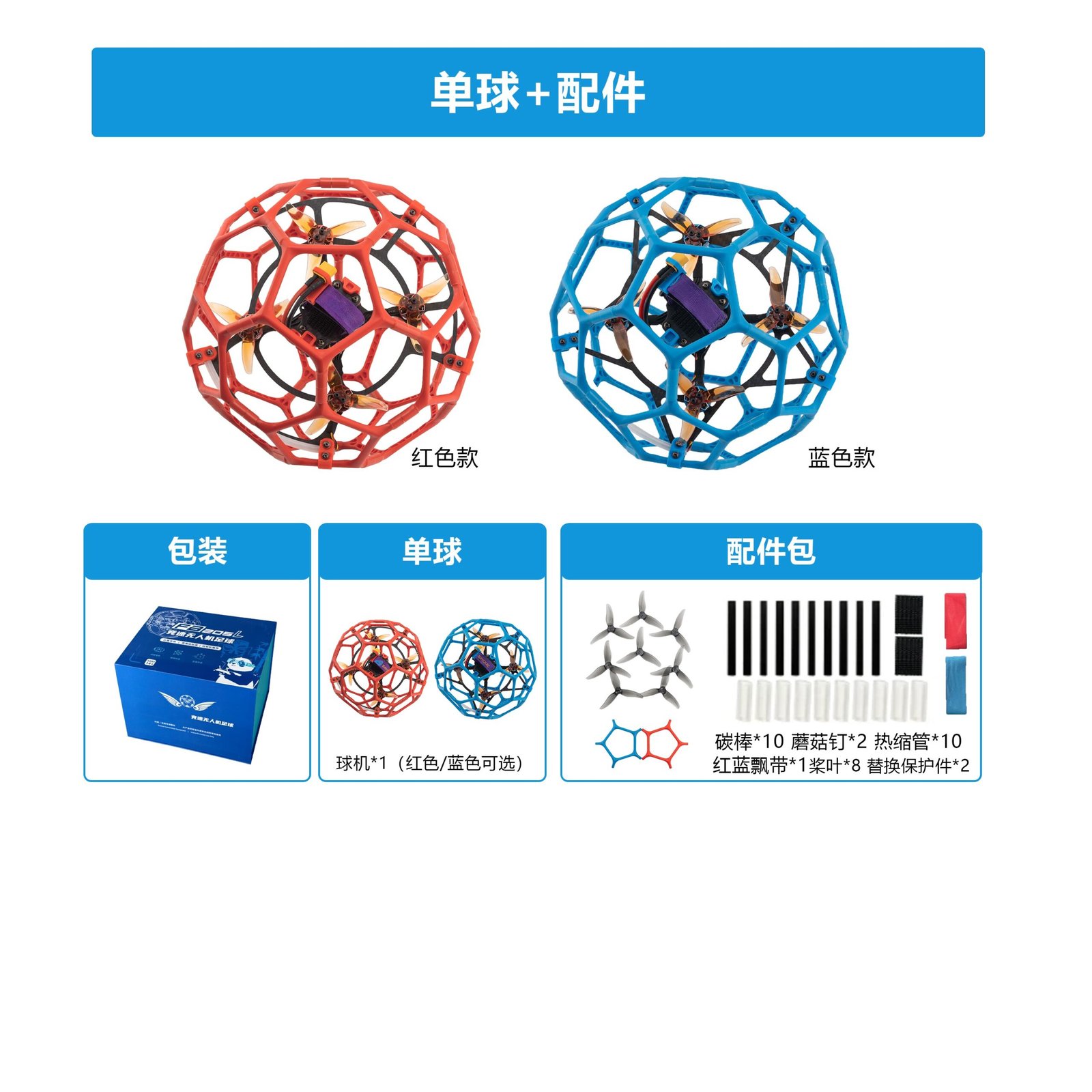
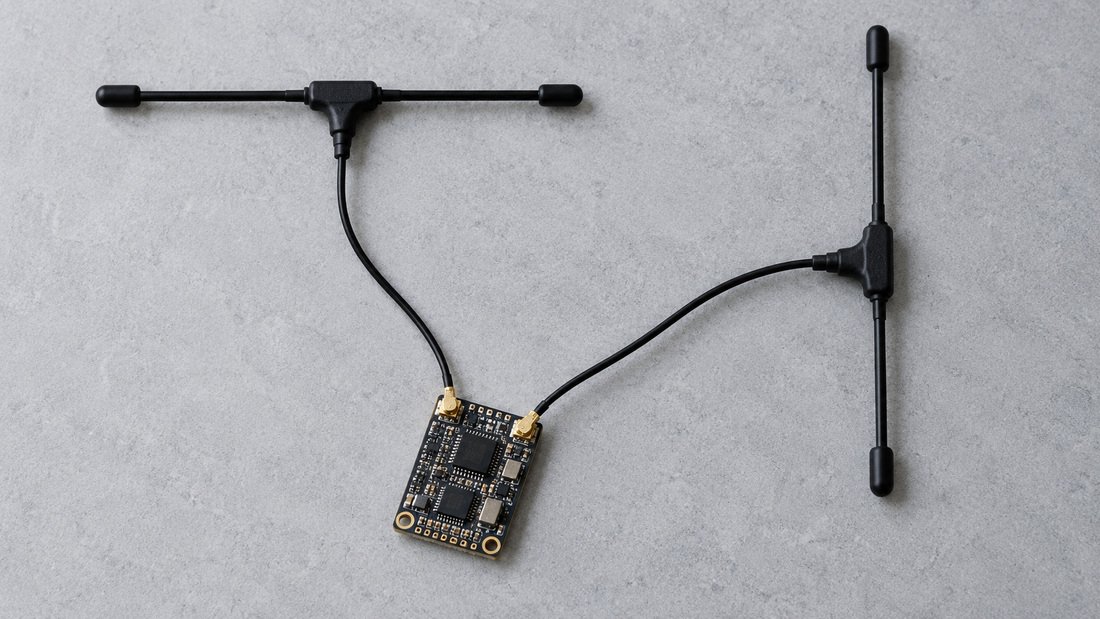
For radio-link spares, check whether your fleet uses a standard protocol such as ELRS (ExpressLRS, an open-source radio control link). Standardised links make it easier to keep spare receivers and antennas on the shelf.
How Many Spare Drones and Parts Does a School Program Need?
Size the spare pool from your match schedule and your worst week, not from your average week. A club entering a season needs enough airframes to keep a full team flying while two or three units are down for repair.
A commonly used planning rule is to hold a percentage of the fleet as ready-to-fly spares plus a deeper bench of consumables. The right percentage depends on how hard your students fly and how long your supply line is. Ask your supplier to help you model it against your competition calendar, and ask your regional organiser whether drone soccer competitions require specific equipment configurations.
A simple sizing conversation
- How many students fly per session?
- How many sessions per week?
- How many competition events per term, and how far do you travel?
- What is the realistic shipping time from the supplier to your school?
If shipping takes weeks, your spare ratio must rise. If a local distributor stocks parts, it can fall.
Mid-article CTA
If you are ready to compare options for your fleet, you can request a school program quote and include your student numbers, session frequency and competition calendar so the spare-parts list can be sized to your program.
Common Mistakes Schools Make When Buying Drone Soccer Kit
- Treating warranty as a single number. “One-year warranty” can mean almost anything. Ask for the component table.
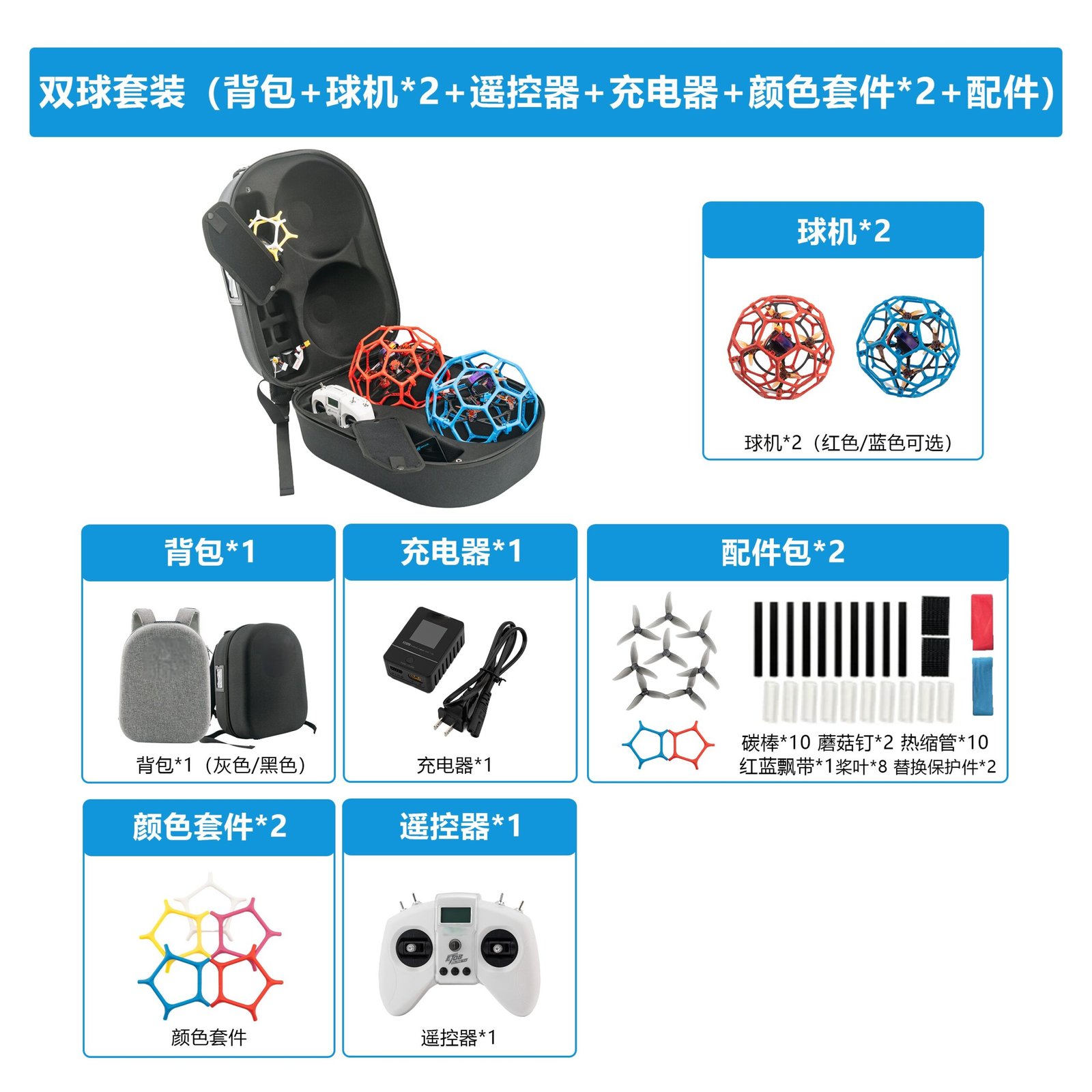
- Buying airframes without consumables. Propellers, guards and batteries fail first, and they are often the hardest items to source quickly.
- Ignoring connector and firmware versions. Mixed versions in one fleet create confusion for students and extra work for teachers.
- Assuming an academic supplier uses academic terms. Confirm the actual terms rather than relying on how the product is marketed.
- Leaving the RMA process undocumented. Without a written procedure, a fault can sit unresolved while the season passes.
- Forgetting storage and charging safety. Ask what charging and storage equipment is recommended and included.
If your program is part of a wider curriculum rollout, coordinate the purchase with your schools and training organizations plan so that spares and training are funded together rather than separately.
Buyer Checklist: What to Request in Writing
Send this list with your request for quotation. A supplier that answers all of it clearly is easier to work with long term.
- Component-by-component warranty table, including exclusions.
- Definition of misuse and who determines it.
- Remedy options: repair, replace, credit or advance replacement.
- RMA process, contact point, and how a fault is diagnosed.
- Turnaround time for diagnosis and for replacement dispatch.
- Who pays return and replacement freight.
- Recommended spare-parts list for your fleet size, with part numbers and unit prices.
- Battery handling, charging and storage guidance, and any recommended safety accessories.
- Firmware, connector and protocol compatibility statement across your fleet.
- Documentation: user manual, safety notes, and teacher-friendly maintenance guidance.
- Whether technical support is available in your time zone and language.
- Whether spare parts availability is expected to continue for the life of your program.
- Quotation validity period and price validity for reorders.
- Any training or onboarding included for teachers or coaches.
Trade-offs to accept consciously
Lower purchase price often means thinner after-sales support or a longer parts pipeline. Faster local support often means a higher unit price. A deeper spare inventory ties up budget but reduces cancelled sessions. There is no universally correct balance; there is only the balance that fits your calendar, your budget cycle and your tolerance for downtime.
What is confirmed DPF information and what is not
DPF publishes product and solution information for drone soccer systems and works with schools, clubs and distributors. Specific warranty periods, MOQs, lead times, freight terms and spare-parts lists depend on the order and must be confirmed on your quotation. If you run a drone soccer club as well as a school program, ask for terms that cover both recurring club use and seasonal school purchasing.
Frequently Asked Questions
1. How long should a drone soccer warranty be for a school?
There is no universal answer. What matters is that the coverage is written down per component, that the remedy is useful to a school, and that the RMA path is documented. Ask the supplier to state periods for airframe, motors, electronics, battery and radio separately.
2. Are batteries covered by warranty?
Batteries are usually treated as consumables with narrower coverage than electronics. Ask specifically about swelling, cycle life, storage conditions and whether cells can be replaced individually.
3. Who pays shipping for a warranty replacement?
Policies vary. Confirm in writing who pays outbound, return and replacement freight, and whether any customs or import charges apply on cross-border returns.
4. Can teachers replace parts themselves, or must the drone be returned?
This depends on the design. Ask which parts are field-replaceable with basic tools, and whether self-repair affects the warranty. For a school, field-replaceable parts are usually the difference between a missed session and a normal one.
5. Does a school drone program need to register with an aviation authority?
Rules vary by country. In the United States, the FAA states that drones flown for educational purposes are regulated under either the Exception for Limited Recreational Operations (49 U.S.C. § 44809) or the Small Unmanned Aircraft Systems Rule (Part 107), with qualifying educational organizations defined in statute. See the FAA educational users page. Outside the US, check your national aviation authority and your district’s own policy.
6. How do we avoid a fleet of incompatible spares?
Standardise on one radio protocol, one battery connector and one firmware baseline when you buy, and state that requirement in the purchase order. Confirm compatibility in writing before every reorder, because suppliers can revise designs between batches.
7. What should we do if a supplier will not put warranty terms in writing?
Treat that as a risk signal. At minimum, ask for the terms to be attached to the quotation or purchase order. Many schools also require terms to satisfy procurement rules and auditors, so undocumented promises may not be usable even if the supplier honours them informally.
Conclusion and Next Step
For drone soccer in schools, the equipment decision and the after-sales decision are the same decision. Build your request around three documents: a component-level warranty table, a sized spare-parts list with part numbers, and a written RMA procedure. Then check that the numbers fit your competition calendar and your budget cycle.
When you are ready to move forward, Request a School Program Quote and include your fleet size, student numbers, session frequency and event schedule so the proposal can address warranty, spares and support together.