Quick summary
Most drone clubs and teams choose a 2S (two-cell series) ball for entry-level and mixed-ability squads, and a 4S (four-cell series) ball for advanced competition classes, because the higher voltage delivers more thrust and speed while the lower voltage tends to be gentler on novice pilots and indoor structures. The practical decision usually comes down to four variables: competition rules, pilot skill, arena size and your budget for spares. This article explains the trade-offs without inventing specs, and gives procurement teams a checklist they can confirm in writing with any supplier.
Key Takeaways
- 2S and 4S describe the number of LiPo cells in series; nominal voltage scales with cell count, and 4S balls generally produce more thrust and top speed than 2S balls of comparable build.
- Choose based on your competition rulebook first, then pilot skill, then arena size — not the other way round.
- Lower-voltage balls are usually easier for beginners to control and less damaging on contact, which matters for school and youth programs.
- Higher-voltage balls increase performance but also increase battery management, cooling and crash-repair workload for the team.
- Whatever you choose, standardise one voltage per squad so batteries, chargers, spare cages and props stay interchangeable.
What 2S and 4S actually mean on a drone soccer ball
“2S” and “4S” are shorthand for the number of lithium-polymer cells wired in series inside the battery pack. A 2S pack has two cells in series; a 4S pack has four. Because cells in series add voltage, a 4S pack delivers roughly twice the nominal voltage of a 2S pack of the same chemistry. That higher voltage lets the same motors and propellers spin faster for a given throttle setting, which generally translates into more thrust, faster acceleration and higher top speed.
It is not simply “more cells equals better.” A 4S ball also draws more current, generates more heat and hits harder in a collision. A 2S ball of the same frame and motor class is usually lighter on batteries, easier on indoor surfaces and more forgiving for a first-season pilot. The right answer depends on what your league allows and what your team can maintain.
Start with the rulebook, not the spec sheet
Before comparing any hardware, confirm what your competition actually permits. Drone soccer formats vary by country, age group and league, and some classes fix the battery voltage, ball diameter or motor class. If your league mandates 2S, buying 4S hardware is wasted budget. If it permits both, you can field different squads in different classes.
Ask the organiser in writing for: permitted cell count, maximum all-up weight, ball diameter, motor class and any battery capacity limit. Keep that email — it is your procurement baseline and it protects you if a supplier later suggests a non-compliant configuration.
2S vs 4S: practical comparison for clubs and teams
The table below summarises the general trade-offs. Treat it as orientation, not a specification — exact thrust, runtime and current figures depend on the motor, propeller, battery capacity and ball design, and should be confirmed with your supplier for the exact SKU you intend to buy.
| Factor | 2S ball | 4S ball |
|---|---|---|
| Nominal voltage | Lower (two cells in series) | Higher (four cells in series) |
| Thrust and acceleration | Moderate; easier to modulate | Higher; sharper response |
| Beginner friendliness | Generally easier to learn on | Demands more throttle discipline |
| Impact energy on contact | Lower | Higher — more stress on cage and frame |
| Heat and current draw | Lower | Higher; cooling and connector quality matter more |
| Battery and charger mix | Fewer cells per pack; simpler charging | More cells; charger must support the pack |
| Typical use | Entry classes, school programs, mixed-ability squads | Advanced classes, experienced pilots, larger arenas |
| Spares planning | Fewer high-stress failures, but still need cages and props | Higher wear on props, cages and motors |
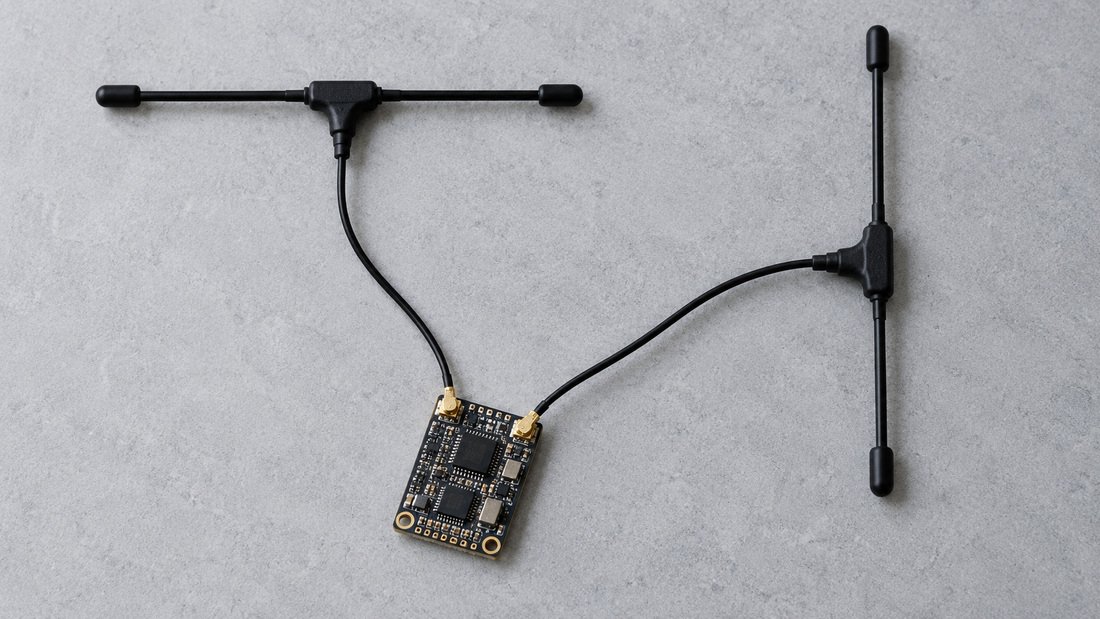
Radio link hardware matters in both classes. Teams that fly in shared indoor venues or busy arenas often standardise on a modern low-latency control link, because interference and dropout cost matches. Explore compatible drone soccer systems if you are specifying a complete squad rather than individual balls.
How pilot skill changes the answer
Skill is the variable clubs most often underestimate. A 4S ball responds faster to every stick input, which is an advantage for a trained pilot and a liability for a beginner. In youth and school programs, the training cost of a higher-voltage ball usually shows up as more crashes, more bent cages and more time in the repair bay rather than as better match results.
A common and defensible approach is a two-tier squad: 2S balls for the development group and 4S balls for the competition team. This keeps beginners progressing without exposing them to hardware that punishes small mistakes. For structured programs, STEM drone education and training resources can help coaches sequence that progression.
Arena size, ceiling height and match tempo
Smaller arenas with low ceilings reward control over outright speed. In those spaces a 2S ball is often competitive because the pilot cannot use the extra top speed anyway. Larger arenas and faster formats give a 4S ball more room to use its acceleration, and the tempo of the match tends to rise.
Before you commit, measure your actual playing space and ask the organiser how the venue for finals differs from your practice hall. Teams that practise in a small gym and compete in a large arena sometimes discover their 2S setup is out-paced, and vice versa.
Budget beyond the ball: the real total cost of ownership
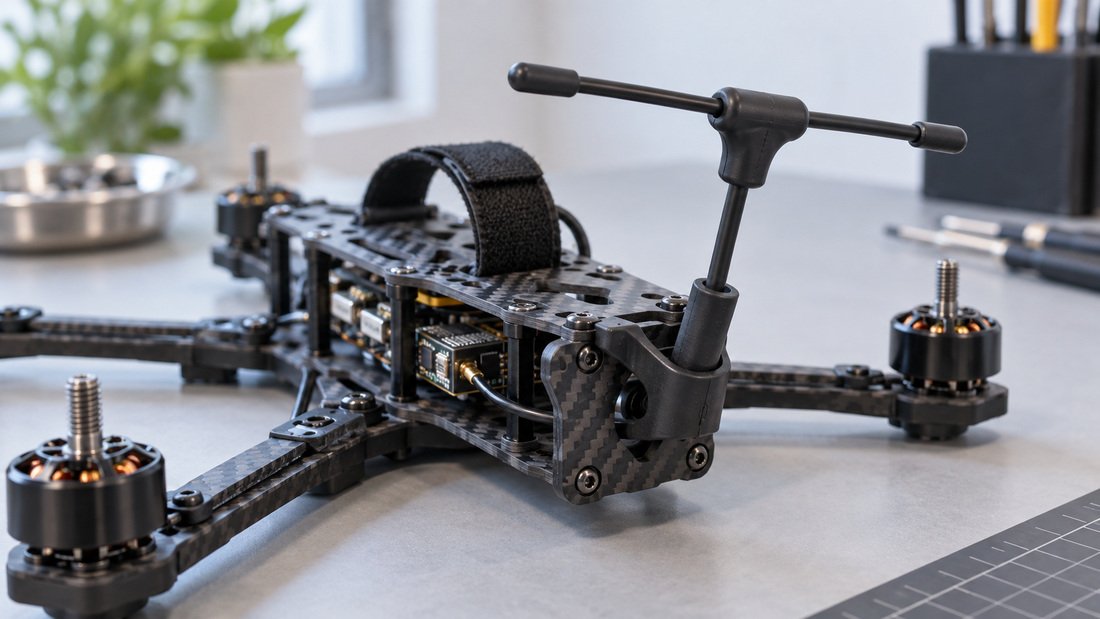
The purchase price of a ball is only the first line in the budget. Higher-voltage balls generally increase ongoing costs: more battery packs to rotate, chargers that support the pack configuration, faster prop wear and more frequent cage or frame repairs after contact. Lower-voltage balls often reduce those running costs but may need more balls on the bench to keep a squad flying all session.
Build a simple three-year model: balls, batteries, chargers, props, cages, motors and a repair allowance. Then compare 2S and 4S versions of the same squad size. This is the comparison that actually decides the purchase, because the cheapest ball to buy is not always the cheapest ball to run.
Mid-article next step
If you are specifying a squad and want help mapping 2S or 4S options against your league rules, Request a Team Kit Quote and include your rulebook requirements, squad size and arena dimensions.
Common mistakes clubs make when choosing 2S or 4S
- Buying before reading the rulebook. A non-compliant ball cannot be used in matches regardless of how well it flies.
- Mixing voltages in one squad. Batteries, chargers and spares stop being interchangeable, and coaching becomes confusing.
- Assuming 4S always wins. In a small arena with novice pilots, control frequently beats top speed.
- Ignoring charging capacity. A larger battery fleet needs enough chargers and a safe charging area, not just more packs.
- Skipping the spares ratio. Teams that buy balls without a proportional spares allowance lose match days to repairs.
- Not documenting the decision. Write down why you chose a voltage, so next season’s coach does not re-litigate it.
Buyer checklist for drone clubs and teams
Use this list when you approach a supplier. Anything you cannot confirm in writing should be treated as unverified until you do.
- Competition body, class and age group, plus the exact rulebook clause on cell count and weight.
- Number of balls, number of pilots, and how many balls you need airborne simultaneously.
- Squad structure: single-tier or development/competition tiers.
- Battery strategy: pack count per ball, rotation plan, and how many charge cycles you expect per season.
- Charger capacity and the safety arrangements for your charging area.
- Spares ratio you intend to hold, expressed as a percentage of the ball fleet.
- Spare-part interchangeability across the fleet — props, cages, motors and connectors.
- Compatibility of control-link hardware across all balls in the squad.
- Written confirmation of voltage, capacity limits, connector type, ball diameter and weight for each SKU quoted.
- Documentation for your school or district procurement process, requested as a question rather than assumed.
- Pilot training and onboarding support offered by the supplier, if any.
- Return, replacement and support terms, confirmed in writing before purchase.
Safety and regulatory context for schools and youth programs
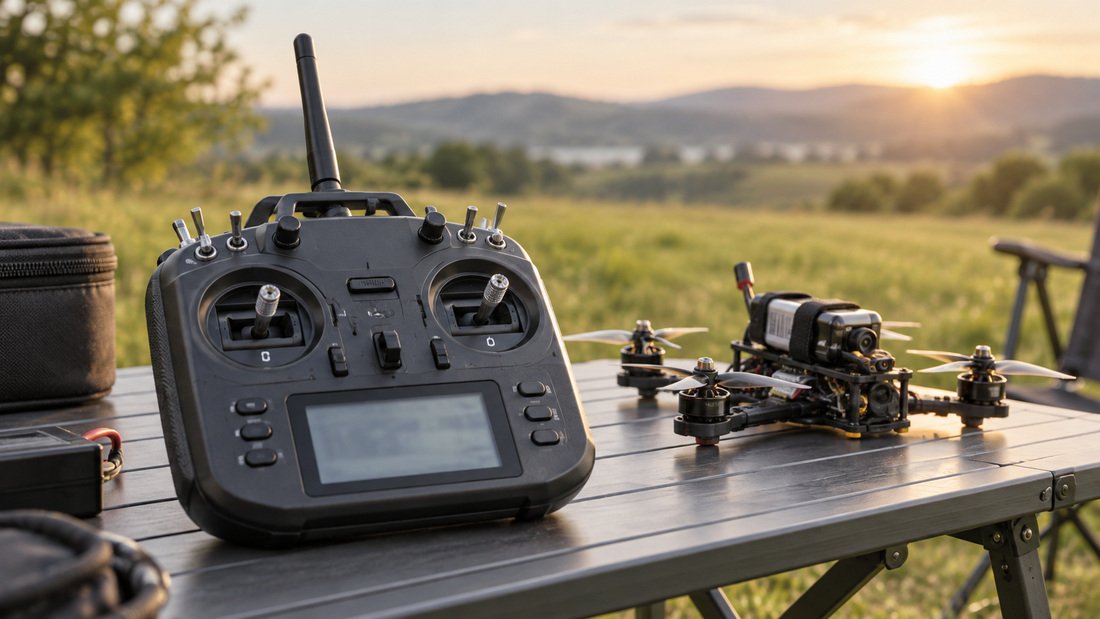
Voltage choice sits inside a wider compliance picture. In the United States, the FAA explains that drones flown for educational purposes are regulated either under the Exception for Limited Recreational Operations of Unmanned Aircraft (49 U.S.C. § 44809) or under the Small Unmanned Aircraft Systems Rule (14 CFR Part 107), and that qualifying educational organisations may operate under § 44809. Organisations that are not institutions of higher education and are not part of a JROTC program must be chartered by an FAA-recognised Community Based Organisation to operate under § 44809; otherwise they must operate under Part 107. See the FAA’s educational users page for the current position: https://www.faa.gov/uas/educational_users.
The same page notes that FAA-Recognised Identification Areas (FRIAs) are locations where drones can be flown without Remote ID, and that educational institutions including primary and secondary schools, trade schools, colleges and universities are eligible to request one. Rules differ by country, so always confirm the requirements that apply where you operate rather than assuming another jurisdiction’s framework transfers.
Note also that indoor drone soccer is frequently flown in a netted arena, and many venues have their own insurance, supervision and battery-handling conditions. Voltage is a performance choice; these are compliance conditions. Treat them separately and verify both.
How this connects to your wider program
Ball selection rarely stands alone. Clubs that run school outreach, after-school sessions and competition teams usually benefit from a single parts strategy across all age groups, so coaches can move hardware between programs. If your organisation runs both, the pages for schools and training organizations and drone soccer clubs cover the operational differences worth planning for.
At event level, organisers often standardise on one voltage class per division to keep officiating and timing consistent. See the notes on drone soccer competitions if you are setting up or hosting a fixture list.
Frequently asked questions
Is a 4S ball always faster than a 2S ball?
For otherwise comparable hardware, a 4S ball generally has more available thrust and top speed because of its higher voltage. However, thrust and speed also depend on motor, propeller, battery capacity and ball weight, so “4S” alone does not guarantee a faster ball. Confirm the actual configuration with the supplier rather than assuming from the cell count.
Which is better for beginners?
Most coaches find a lower-voltage ball easier to teach on, because throttle inputs are less aggressive and contact damage tends to be lower. A common structure is a 2S development squad feeding a 4S competition squad. Your league rules may restrict which class beginners can enter, so check that first.
Can a team fly both 2S and 4S balls in the same season?
Yes, if the competition permits both and you can support two battery and charger sets. The operational risk is mixing packs and spares, so label everything clearly and store the two sets separately. Many clubs run one voltage per squad rather than per athlete.
How many batteries should we plan per ball?
There is no universal number. Work backwards from your practice length, match format and charging capacity, then add a margin for packs that are charging or cooling. Ask your supplier what pack counts other programs of a similar size typically order, and treat that as a starting point for your own calculation.
Does the ball diameter or weight change with voltage?
Not necessarily, but competition classes often constrain both diameter and all-up weight. Some leagues fix them regardless of cell count. Always take the dimensions and weight limits from your rulebook and confirm the quoted product meets them in writing.
What should we ask a supplier to confirm in writing?
At minimum: cell count and nominal voltage, battery capacity, connector type, ball diameter, all-up weight, motor class, spare-part compatibility across the range, and the support or replacement terms. If a supplier cannot confirm a figure, treat it as unverified and factor that risk into your decision.
Does voltage choice affect regulatory compliance?
Regulations such as the FAA’s educational-user framework address how and where drones are flown, not the cell count of a battery. In the US, the FAA’s page for educational users explains the § 44809 and Part 107 pathways and FRIA eligibility: https://www.faa.gov/uas/educational_users. Confirm the rules for your own jurisdiction and venue separately from your hardware choice.
Conclusion: decide by rulebook, then skill, then budget
The 2S versus 4S question has a defensible answer for almost every club: start with what your competition permits, choose the voltage that matches your pilots’ current skill, and only then optimise for budget and arena size. Standardise one voltage per squad, hold a realistic spares ratio, and write down the reasoning so it survives a change of coach.
When you are ready to price a full squad — balls, batteries, chargers, spares and control-link hardware together — send your rulebook requirements and squad size through and Request a Team Kit Quote. Include your league’s cell-count and weight limits so the quote you receive is something you can actually fly.