Quick summary
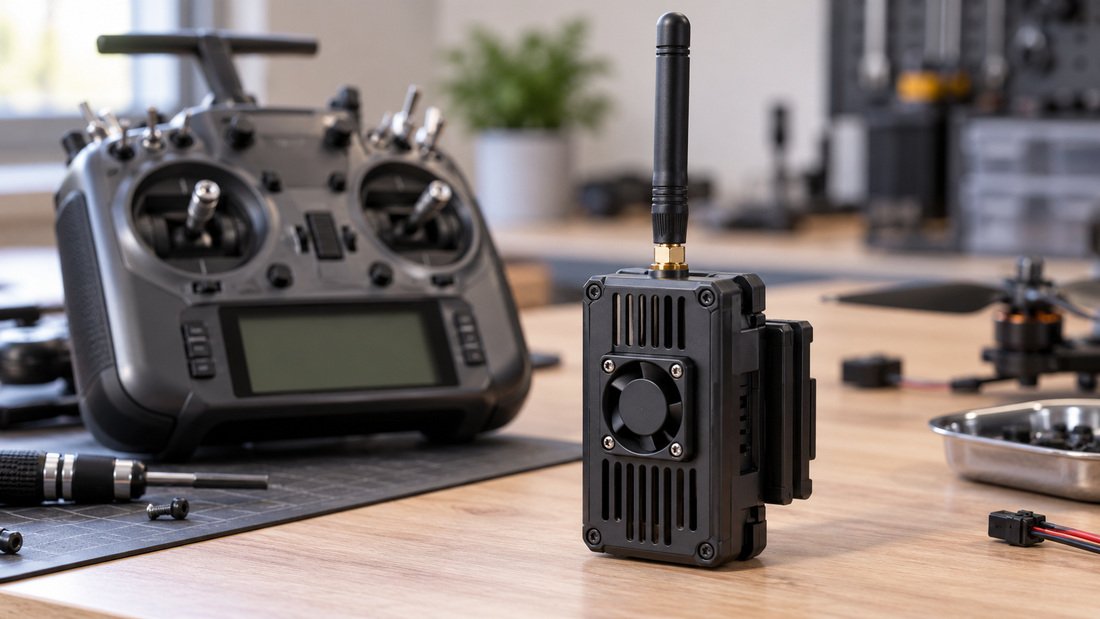
An SLA with a supplier is a written service level agreement that defines how fast and how completely the supplier must respond when a product fails. For schools, clubs and youth programs buying drone soccer (a team sport flown in protective cages using radio-controlled quadcopters) parts or ELRS receivers, the SLA is where warranty, RMA and after-sales become enforceable rather than verbal. You will not find it in the price list, so you must request it in writing. Start by naming the guarantee period, the response and replacement windows, who pays freight, what voids coverage, and the escalation name. Most school programs discover gaps only when a competition deadline is two weeks away.
Key Takeaways
- An SLA is not the same as a warranty. The warranty states what is covered for how long; the SLA states how quickly the supplier must respond and complete a claim.
- Put three numbers in writing: first response time, diagnostic decision time, and replacement ship time, measured from the day your school submits an RMA number request.
- Separate coverage classes before you buy. Electronics such as ELRS receivers fail very differently from batteries, props and airframes, so they need different service rules.
- Name who pays freight both ways. For a school in a remote area, two-way express freight can exceed the value of a single receiver.
- Never rely on verbal promises. If your budget documents depend on replacement guarantees, get them into the purchase agreement and confirm the template terms your own board requires.
Why Warranty, RMA and After-Sales Terms Matter More for Schools Than for Hobbyists
A hobbyist absorbs a failed receiver as a small personal loss. A school program cannot. Equipment may be funded by public budgets or grants, audited against a fixed asset register, and shared across cohorts of students. A component that fails in week three needs a documented resolution path, not a friendly conversation.
That is why the SLA you agree with a supplier must fit your institution’s own rules. Many public schools and youth organizations must follow internal procurement policies on record-keeping, asset disposal and repair-versus-replace decisions. Your supplier’s standard RMA terms do not automatically satisfy those rules, and your rules do not automatically apply to overseas manufacturers.
What a warranty actually promises
A warranty is a promise to stand behind the product and correct problems when it fails. US business guidance from the Federal Trade Commission describes the two general categories: implied warranties, which are unspoken promises created by state law, and express warranties, which are the written promises a seller chooses to make. See the FTC’s Businessperson’s Guide to Federal Warranty Law for the underlying explanation of implied and express warranties.
Two details in that guidance are worth carrying into every supplier conversation. First, implied warranties are promises about the condition of products at the time of sale, not guarantees that a product will last any specific length of time. Second, they do not cover problems caused by abuse, misuse, ordinary wear, failure to follow directions or improper maintenance. You should expect a supplier’s written warranty to draw similar boundaries.
Note the scope carefully: US federal warranty law primarily governs consumer products and US transactions. It is not automatically a blueprint for a B2B purchase order, for a school purchasing through a distributor, or for a transaction governed by another country’s law. Treat it as context for how warranties work, and confirm your own jurisdiction and contract terms with the supplier and, where needed, your legal advisor.
The Five SLA Clauses Every School Program Should Negotiate
Answer each question below with a number and a trigger event. If the supplier answers with a general phrase such as “reasonable time,” ask again until you have a measurable definition.
1. Guarantee period and start date
State the coverage length, and state whether the clock runs from shipment date, delivery date or first student use. For school programs that store stock until a new term begins, the difference between shipment date and first use can be weeks or months. This is one of the most common sources of dispute, and it is usually resolved simply by naming the start event in the purchase agreement.
2. Response and resolution timeframes
Ask for two separate clocks: how long until the supplier acknowledges and issues an RMA number, and how long until the supplier issues a diagnostic decision (repair, replace or reject). A third clock should cover the ship date of the replacement. Define the units clearly (business days, and whose time zone and public holidays apply).
3. RMA eligibility and evidence
List exactly what the school must submit: order number, serial or batch code where printed, photos or short video of the fault, flight-controller logs where available, and the number of affected units from the same batch. A clear evidence list speeds up your claim and reduces back-and-forth emails during a term.
4. Freight, customs and repair responsibility
Assign who pays outbound freight, who pays return freight, who handles customs paperwork and duties on a returned item, and whether the school or the supplier handles diagnostic labour. For low-value parts such as individual receivers or antennas, two-way international freight can be uneconomical, so agree in advance whether a defect may be settled by a credit or a bundled replacement in the next order.
5. Escalation and notice
Name a contact role, not just a generic inbox, and set a deadline at which you escalate to a manager. Also agree how much advance notice you get if a part becomes unavailable or is revised. A school that orders in July for a September season needs to know early if an ordered receiver is being replaced by a different revision.
Comparison: What Each Clause Looks Like as a Weak vs Useful Term
| SLA element | Weak, open-ended term | Useful, verifiable term |
|---|---|---|
| Coverage period | “Standard warranty applies” | “X months from confirmed delivery date, stated on the invoice” |
| RMA acknowledgement | “We usually reply quickly” | “RMA number issued within X business days of a complete claim submission” |
| Diagnostic decision | “We will assess the unit” | “Repair, replace or reject decision within X business days of receiving the returned unit” |
| Replacement shipment | “Replacement sent after approval” | “Replacement dispatched within X business days of approval, tracking provided” |
| Freight | “Buyer covers shipping” | “Supplier covers outbound replacement freight; buyer covers return freight; duties per Incoterm stated on the PO” |
| Exclusions | “Damage not covered” | Named list: crash damage, reversed polarity, water ingress, unauthorised repair, modified firmware |
| Escalation | “Contact support” | Named role plus a response deadline before escalation to a manager |
Match the SLA to the Part, Not the Whole Bundle
A single blanket warranty term across a whole drone soccer kit hides the parts that actually fail. Split your order into service classes and attach different rules to each.
Electronics and radios
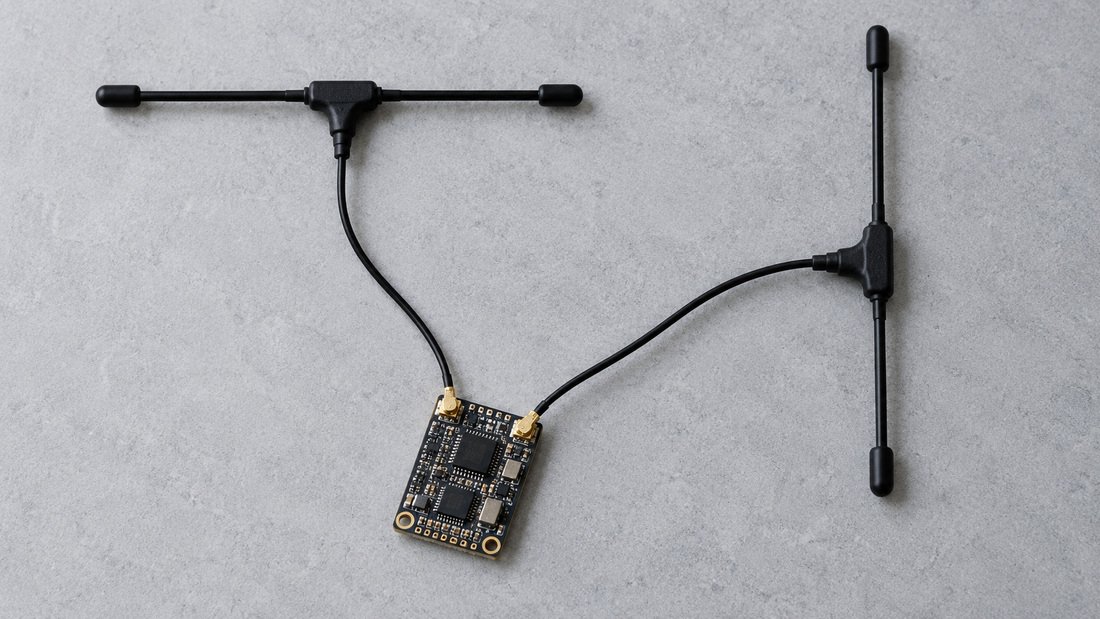
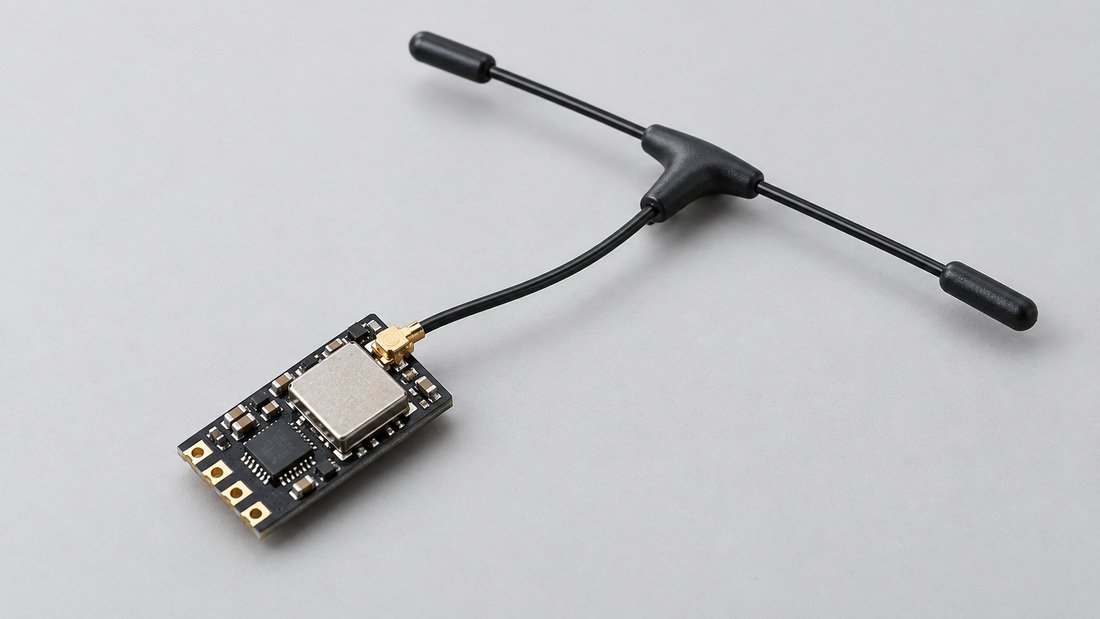
ELRS receivers, transmitters and antenna assemblies are the components schools ask about most, because a failed link stops a session immediately. These are also the items most often damaged by crash impacts, antenna mounting stress or incorrect power wiring. Ask for the fault-rate review process, how units are batch-traced, and how the supplier handles firmware-related questions. DPF describes its testing and inspection approach, which is a sensible starting point for discussing what evidence the supplier records before shipment.
When you discuss antenna-related failures, ask what mounting guidance is provided to students, because antenna strain relief is one of the most common preventable causes of receiver damage in youth programs.
Airframes, frames and props
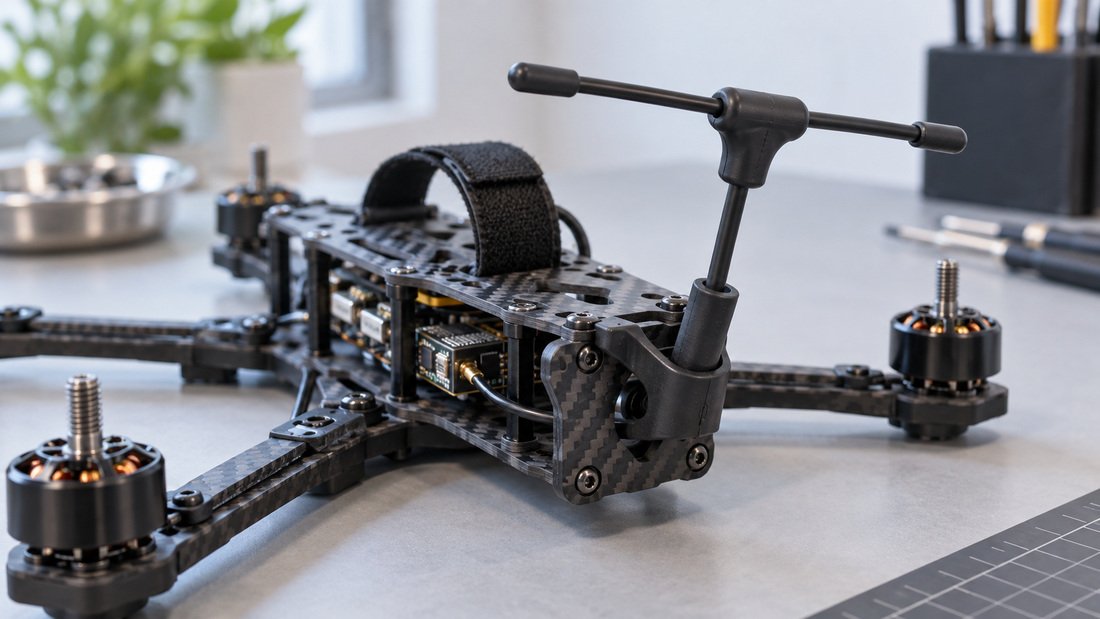
These are consumed by design. Crashes, hard landings and cage impacts are normal in drone soccer. For airframes and props, the useful SLA is about reorder speed, spare availability and dimensional consistency between batches, not about replacing parts broken in play.
Batteries and power systems
Battery claims are the most contested area in youth programs. Schools need clear rules for storage, charging practice and cycle counting, plus a defined process for reporting a suspect pack. Ask the supplier to state its storage and charging guidance in writing, because claim outcomes often depend on whether those instructions were followed.
Software, firmware and configuration support
For ELRS and similar radio links, some “failures” are configuration issues. Ask whether the supplier provides a documented support path for setup questions and how it separates a support case from an RMA case. That single distinction prevents a support backlog from consuming your warranty window.
Common Mistakes Schools Make With Supplier SLAs
- Treating the warranty card as the whole agreement. The card is a summary; the SLA, purchase order and quotation determine what actually happens.
- Ignoring the warranty clock until the season starts. If coverage runs from shipment, stored stock may age before first flight.
- Failing to document failures consistently. Without photos, logs and batch codes, claims slow down and patterns across a cohort are invisible.
- Assuming students will not cause damage. Crash and handling damage is normal in drone soccer; clarify the boundary between defect and damage before the first claim.
- Ordering exactly the number of units needed. A small spare pool keeps a session running while a claim is processed.
- Relying on verbal assurances in a trade show or chat conversation. Ask for the same commitment in the quotation or purchase agreement.
- Not checking how your own institution must record assets and disposals. Your finance or procurement office may require documentation the supplier does not normally issue.
Buyer Checklist: Confirm These in Writing Before You Order
- Coverage length and the exact event that starts the clock.
- RMA acknowledgement deadline, in business days.
- Diagnostic decision deadline, in business days.
- Replacement dispatch deadline and tracking provision.
- Responsibility for outbound and return freight, and duties.
- Named exclusions: crash damage, wiring errors, water ingress, unauthorised repair or modification.
- Evidence the school must submit with a claim.
- Handling of discontinued or revised parts, including notice period.
- Whether replacements ship from local stock or from the factory, and the typical difference in transit time.
- Escalation contact and the trigger for escalating.
- How support questions are separated from warranty claims.
- Whether documentation can be issued in a format your institution accepts.
A Practical Example of How This Plays Out
Illustrative example, not a DPF case study: a school club buys twenty small radio receivers for a new squad. Eight weeks later, three units stop linking after a practice session. Under a weak agreement, the club emails a general inbox and waits. Under a useful SLA, the club submits one claim covering the affected batch, receives an RMA number within the agreed window, gets a repair-or-replace decision within the agreed window, and receives replacement units while the original items are in transit back.
The second scenario only works if the batch and claim rules were agreed before purchase. That is why the SLA conversation belongs in the procurement stage, next to the price and lead time discussion, not after the first failure.
Where Purchasing Policy Meets Supplier Terms
Schools frequently need the supplier to align with internal compliance expectations: documented quality steps, traceable batches, and material or battery documentation suitable for the institution’s own records. DPF publishes guidance on its safety and compliance support and on its quality control process, both useful references when you ask a supplier to describe how it prevents and traces defects.
If your program is buying a full kit or a custom configuration, DPF’s warranty and after-sales program page is the right place to start the conversation about coverage scope and claim handling. Treat everything there as the starting point of a negotiation, not the end of it, and ask for the specific numbers that apply to your order.
Trade-Offs You Should Expect
| Choice | Benefit | Trade-off to accept |
|---|---|---|
| Longer coverage period | More protection across a school year | May raise unit price or reduce flexibility on revisions |
| Faster RMA timelines | Less downtime during a competitive season | May require a local spare pool or higher logistics cost |
| Supplier pays both-way freight | Predictable total cost of ownership | Often only viable at higher order values |
| Replace-don’t-repair policy | Simple, fast resolution for low-value parts | Requires accepting a return rate that supports it |
| Repair-based policy | Lower supplier cost, less electronic waste | Longer downtime and more shipping cycles |
Frequently Asked Questions
Is a supplier SLA the same as a warranty?
No. The warranty defines what is covered and for how long. The SLA defines the service process and the time limits for responding to and resolving a claim. A good agreement needs both.
Do US federal warranty rules apply to my school’s purchase order?
Not automatically. The FTC guidance referenced above addresses consumer product warranties and US transactions. A school buying through a distributor, or a purchase governed by another country’s law, needs its own review. Confirm the applicable terms with the supplier and, where necessary, your institution’s legal or procurement advisor.
How long should a supplier warranty last for drone soccer parts?
There is no universal figure, and we will not invent one. Ask the supplier what it offers, compare it against your school year and competition calendar, and decide whether the coverage period is long enough to cover a full season plus storage time.
Who should pay return shipping on a warranty claim?
That is a commercial decision, not a rule. For low-value electronics, the practical answer is often a credit or a replacement bundled into the next order rather than a two-way shipment. Ask for the freight, duty and customs responsibility to be stated explicitly.
Do batteries and props normally fall under the same warranty as electronics?
Usually not. Consumables and wear items typically carry narrower terms, and battery claims are often conditional on storage and charging practice. Ask for the specific rules for each category in your order.
What should a school do if a supplier will not put timelines in writing?
Treat the absence of written timelines as a risk factor in your supplier comparison. You can still proceed, but budget for a larger spare pool and plan for slower resolution. If your institution’s policy requires documented service terms, an unwillingness to confirm them may rule the supplier out.
How do we keep spare parts ready without overspending?
Identify the components with the highest failure and damage exposure in your program, then hold a modest spare pool for those items only. Combine that with a clear RMA process so replacements arrive in parallel rather than after the claim closes.
Conclusion: Negotiate the Service Terms Before You Sign
Setting SLA expectations with a supplier is a procurement task, not a support task. Decide the coverage period, the response and resolution clocks, the freight and customs responsibility, the evidence you will submit, and the escalation contact, then get all of it into the quotation, purchase order or supply agreement. Keep your own institution’s asset, documentation and procurement rules in the room.
Ready to define warranty, RMA and after-sales terms for a school or youth program order, including drone soccer (BKZ) kits and ELRS receivers (BKR)? Request a School Program Quote and ask for the service terms to be confirmed in writing with your quotation.