Quick summary
For a 10-inch long-range build, the best ELRS receiver is usually a dual-band 2.4 GHz or 900 MHz receiver with antenna diversity, mounted away from carbon fibre and high-current wiring. The right choice depends on your flight controller firmware, antenna connector, power budget and the RF environment your team flies in. There is no single winner: a school fleet may need plug-and-play 2.4 GHz receivers, while a long-range chase team may need 900 MHz with directional antennas.
Key Takeaways
- ELRS receiver selection for 10-inch builds starts with frequency band, antenna type and diversity, not brand name.
- Match receiver firmware target and serial protocol to your flight controller before ordering.
- Antenna placement and connector choice often matter more than a higher power rating.
- For fleet buying, choose one or two SKUs and standardise spares, antennas and wiring harnesses.
- Confirm lead times, MOQ, warranty and documentation in writing with your supplier before committing.
What makes a receiver suitable for a 10-inch long-range build?
A 10-inch long-range build is typically heavier and flies farther than a 5-inch freestyle quad. That means the receiver must tolerate more vibration, more current noise and longer flight times. It should also support telemetry back to the handset and maintain a stable link at the edges of your operating area. ELRS (ExpressLRS) is an open-source radio link protocol that runs on 2.4 GHz, 900 MHz or dual-band hardware.
For 10-inch builds, three factors dominate: frequency band, antenna configuration and how cleanly the receiver integrates with the flight controller and power system. A receiver that works perfectly on a 5-inch build can behave differently on a larger frame because of layout, prop wash and electrical noise.
2.4 GHz vs 900 MHz: which ELRS band fits a 10-inch long-range build?
2.4 GHz ELRS is compact, widely supported and usually the easiest to integrate. 900 MHz ELRS generally offers better penetration through obstacles and foliage, but antennas are larger and hardware options are fewer. Neither band is universally better.
When 2.4 GHz makes sense
Choose 2.4 GHz for school fleets, indoor drone soccer and mixed environments where compact antennas and low weight matter. It is also the common choice when many pilots fly together, because 2.4 GHz hardware is widely available and easy to replace.
When 900 MHz makes sense
Choose 900 MHz for rural long-range flights, low-altitude terrain following and areas with dense vegetation. The longer wavelength can help maintain link margin, but verify local regulations and antenna availability before standardising a fleet on 900 MHz.
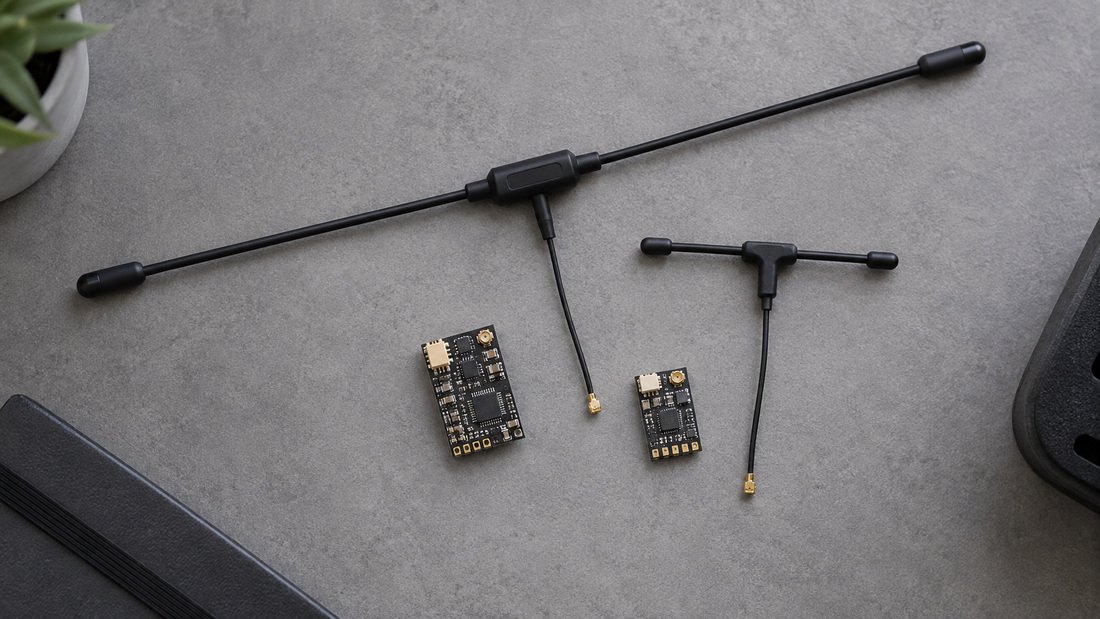
Antenna configuration: diversity, T-antenna and connectors
Antenna choice is often the difference between a reliable link and a failsafe. For a 10-inch airframe, there is usually room to mount antennas away from the battery and video transmitter. Use that space.
Diversity receivers
Diversity receivers use two antennas and switching or combining to reduce nulls and improve link reliability. On a long-range 10-inch build, diversity can help when the aircraft banks or when one antenna is shadowed by the frame. It adds weight and cost, so decide whether your mission truly needs it.
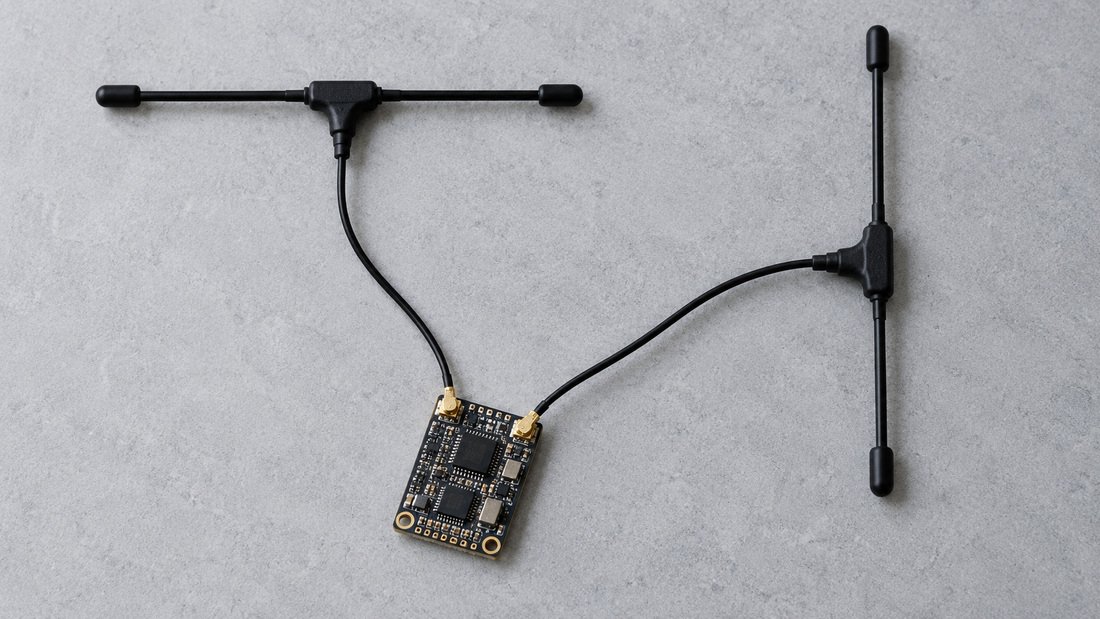
T-antenna and nano receivers
A T-antenna is a dipole style that can be mounted vertically for predictable polarisation. Nano receivers with T-antennas are popular where space is tight, but on a 10-inch build you are not forced into the smallest option. Prioritise antenna placement over saving a few grams.
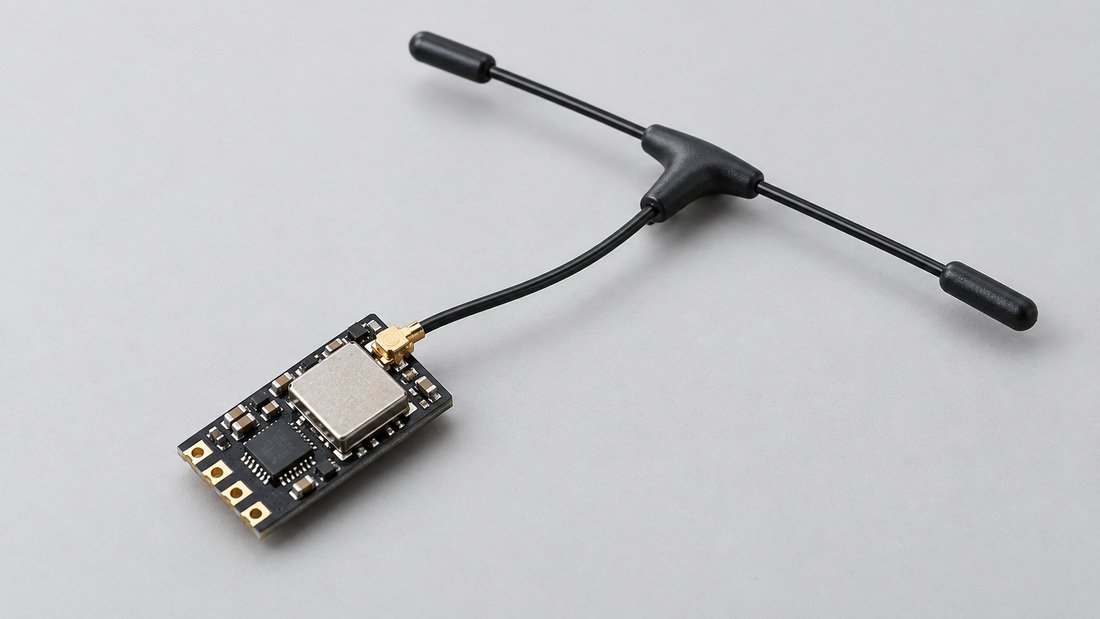
Connectors and mounting
Antenna connectors such as U.FL, IPEX and SMA are not interchangeable without adapters. Adapters add loss and a potential failure point. Choose a receiver whose connector matches your antenna and mounting plan. On a 10-inch frame, an SMA or RP-SMA pigtail can make field replacement easier than a fragile U.FL connector.
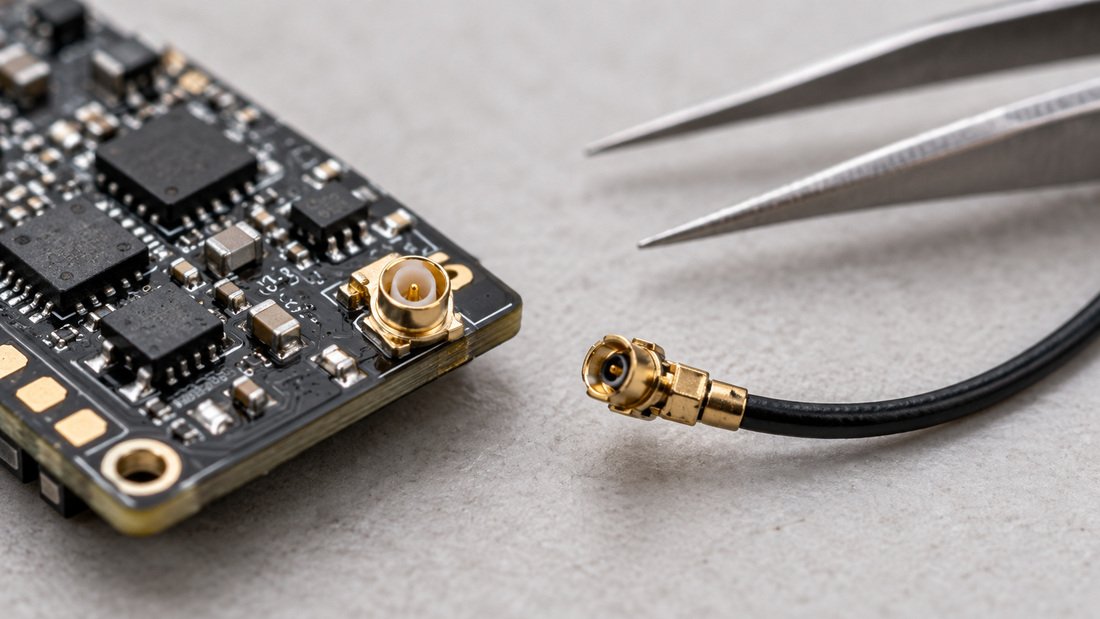
Comparison table: receiver configurations for 10-inch long-range builds
| Configuration | Typical use | Weight and space | Antenna complexity | Best for |
|---|---|---|---|---|
| 2.4 GHz single antenna | School fleets, drone soccer | Low | Low | Simple builds, easy spares |
| 2.4 GHz diversity | Long-range FPV, chase | Medium | Medium | Reliable link in mixed environments |
| 900 MHz single antenna | Rural long range | Medium | Medium | Penetration through foliage |
| 900 MHz diversity | Extreme long range | Higher | Higher | Maximum link margin |
| Dual-band | Mixed missions | Higher | Higher | Flexibility across sites |
This table is general guidance, not a ranking. Actual performance depends on transmitter power, antenna gain, flight environment and how cleanly the receiver is installed.
How to match an ELRS receiver to your flight controller and transmitter
Compatibility is where many 10-inch builds fail. Before ordering, confirm the following:
- Firmware target: the receiver must have an ELRS firmware target that matches its hardware. Check the vendor’s documentation and ELRS configurator support.
- Serial protocol: confirm whether your flight controller expects CRSF or another protocol, and which UART is free.
- Voltage range: verify the receiver’s input voltage matches your flight controller’s regulated output or battery voltage.
- Transmitter module: your handset’s ELRS transmitter modules must support the same band and packet rate.
- Telemetry: decide whether you need full telemetry, and confirm the receiver supports it.
DPF publishes compatibility information for ELRS receiver compatibility. Use it as a starting point, then verify against your own flight controller documentation.
Equipping a club or school fleet? Request a Team Kit Quote and we will help you match receivers, antennas and spares.
Common mistakes in ELRS receiver selection for 10-inch builds
- Ignoring antenna placement: mounting antennas against carbon fibre or next to the video transmitter can reduce range and reliability.
- Mixing connector types: U.FL and SMA are not the same; adapters add loss and failure points.
- Choosing the smallest receiver: on a 10-inch frame, a slightly larger receiver with better connectors and antenna options is often the smarter choice.
- Forgetting firmware: a receiver that cannot be flashed to your required ELRS version may be unusable.
- Standardising too late: buying mixed SKUs across a fleet makes spares and training harder.
Buyer checklist for clubs, schools and procurement teams
Use this checklist before you request pricing. It helps you compare quotes fairly and avoid returns.
- Confirm the frequency band and whether your local regulations permit it.
- List the flight controllers in your fleet and their available UARTs.
- Decide on antenna type and connector for each airframe.
- Confirm receiver voltage range and power source.
- Check ELRS firmware target availability and update method.
- Request documentation: pinout, wiring diagram and firmware notes.
- Ask about inspection and testing procedures for the receivers you buy.
- Confirm MOQ, lead time, warranty and return terms in writing.
- Ask for samples before a fleet order.
- Plan spare receivers, antennas and pigtails for field repairs.
Frequently asked questions
Is 900 MHz always better than 2.4 GHz for long range?
No. 900 MHz can penetrate obstacles better, but 2.4 GHz hardware is smaller, more widely available and often sufficient. The best band depends on your environment, regulations and antenna options.
Do I need a diversity receiver on a 10-inch long-range build?
Not always. Diversity can improve link reliability when one antenna is shadowed, but it adds weight and cost. If your antenna placement is clean and your range requirements are moderate, a single-antenna receiver may be enough.
Can I use the same ELRS receiver for drone soccer and long-range FPV?
Possibly, but the requirements differ. Drone soccer favours compact, durable and easily replaceable receivers. Long-range FPV favours antenna flexibility and link margin. Many clubs keep separate SKUs for each use.
How do I confirm ELRS receiver compatibility with my flight controller?
Check the receiver’s firmware target, serial protocol and voltage range against your flight controller documentation. DPF’s ELRS receiver compatibility page is a useful reference, but always verify with your own hardware.
What antenna should I pair with an ELRS receiver on a 10-inch build?
Start with a matched-band antenna that fits your connector and mounting plan. On larger frames, a vertical dipole or T-antenna mounted away from carbon fibre and power wiring is a common choice. Test before standardising.
Should I buy receivers and antennas from the same supplier?
Sourcing together can simplify compatibility and spares, but it is not mandatory. What matters is that the connector, band and firmware match. Ask for written confirmation of those details.
What should I confirm before placing a fleet order?
Confirm MOQ, lead time, warranty, return policy and documentation in writing. Ask for sample units first. For custom work, discuss your OEM project with the supplier before committing.
Conclusion and next step
ELRS receiver selection for 10-inch long-range builds is a systems decision, not a spec-sheet race. Start with band, antenna and compatibility, then standardise a small number of SKUs for your fleet. For schools and drone soccer clubs, that means prioritising durability, simple wiring and easy spares. For distributors and OEM teams, it means clear documentation and verified compatibility before volume orders.
DPF supplies ELRS receivers and related RF antennas for teams and integrators. Explore the full ELRS and RF systems range, then Request a Team Kit Quote with your fleet size, band preference and connector requirements.