Quick summary
To choose an antenna for an ELRS receiver, first match the antenna to your receiver’s frequency band and connector, then consider gain, radiation pattern, polarization and durability for your flying environment. For drone soccer clubs, schools and youth programs, a well-matched, robust antenna on every aircraft matters more than chasing maximum gain. Confirm band, connector type, form factor and any regulatory limits with your supplier in writing before ordering. This guide explains the trade-offs and gives you a practical procurement checklist.
Key Takeaways
- Match the band first: an ELRS receiver designed for 2.4 GHz needs a 2.4 GHz antenna; a sub-GHz (e.g., 868/915 MHz) receiver needs a sub-GHz antenna. Never swap them.
- Connector type is non-negotiable: u.FL/IPEX, SMA and RP-SMA are not interchangeable without adapters. Measure or check the spec before ordering.
- Diversity receivers need two antennas: plan two matched or compatible antennas per receiver, plus spares.
- Durability beats peak gain for teams: flexible, protected antennas survive student handling and repeated transport.
- Verify, don’t assume: request written confirmation of band, connector, gain and compliance from your supplier.
If you are still mapping your radio ecosystem, it helps to start with an overview of ELRS and RF systems before narrowing down to antennas.
Why Antenna Choice Matters for ELRS Receivers
A receiver is only part of the RF link. The antenna is the component that actually converts electrical signals into radio waves and back. If the antenna is mismatched in frequency or connector, performance can degrade even if the receiver itself is capable. For schools and clubs running many aircraft, a mismatched or damaged antenna is a common cause of intermittent control issues.
Band matching: 2.4 GHz vs sub-GHz
ELRS operates on different frequency bands depending on the hardware variant. A 2.4 GHz receiver requires a 2.4 GHz antenna. A sub-GHz receiver (commonly 868 MHz or 915 MHz depending on region) requires an antenna tuned for that band. Using a 2.4 GHz antenna on a sub-GHz receiver, or vice versa, is a mismatch that can severely reduce range or damage the RF chain. Always confirm the exact band of your receiver and order antennas for that band.
Before buying antennas in bulk, confirm receiver-to-antenna compatibility using the ELRS receiver compatibility resources.
Connector Types: u.FL, SMA and RP-SMA
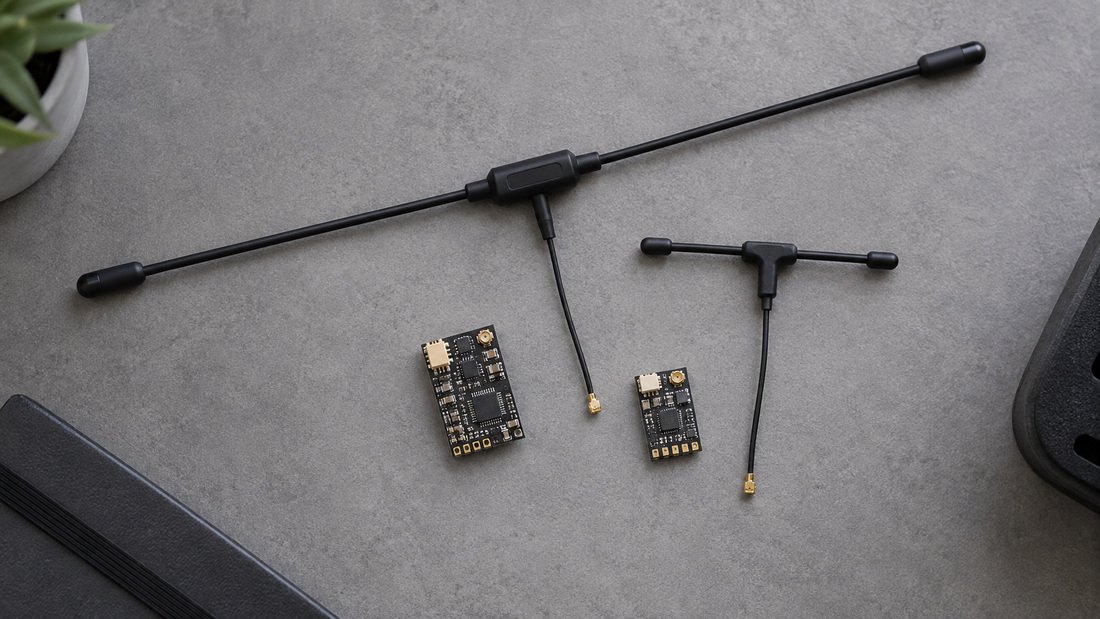
Connectors are a frequent source of ordering mistakes. u.FL (also called IPEX or IPEX MHF) is a tiny board-level connector commonly found on small receivers. SMA and RP-SMA are larger threaded connectors often used on external antennas or transmitter modules. RP-SMA has the opposite gender pin arrangement to SMA, so they do not mate without the correct adapter. If you order the wrong type, you cannot simply screw it on.
How to confirm your connector
- Check the receiver datasheet or product page for the exact connector name.
- If the receiver has a u.FL socket on the board, you need a u.FL-pigtail antenna or adapter.
- If you are mounting an antenna on an enclosure, confirm whether the bulkhead is SMA or RP-SMA.
- When in doubt, ask your supplier for a photo of the connector and a written confirmation of its type.
Some teams standardise on a common connector across all receivers to simplify spares. That is a procurement decision worth discussing with your supplier. You can review available RF antennas to see typical configurations.
Gain, Radiation Pattern and Polarization: What Really Matters
Antenna gain is often misunderstood. Higher gain does not mean better in every situation. Gain describes how an antenna focuses energy in particular directions. A higher-gain antenna focuses more energy in a narrower pattern, which can extend range in one direction but reduce coverage in others. For drone soccer, where aircraft move in a confined area and orientation changes constantly, a moderate-gain antenna with a broad pattern is often more practical.
Radiation pattern and polarization
Antennas have radiation patterns: some are omnidirectional (roughly donut-shaped coverage), others are directional. Linear polarization (vertical or horizontal) is common in ELRS. Mismatched polarization between transmitter and receiver antennas can reduce signal strength. Two linear antennas aligned in the same plane work best. In practice, for team sports, you may want to keep all antennas in the same orientation and use a consistent antenna model across the fleet.
Diversity receivers
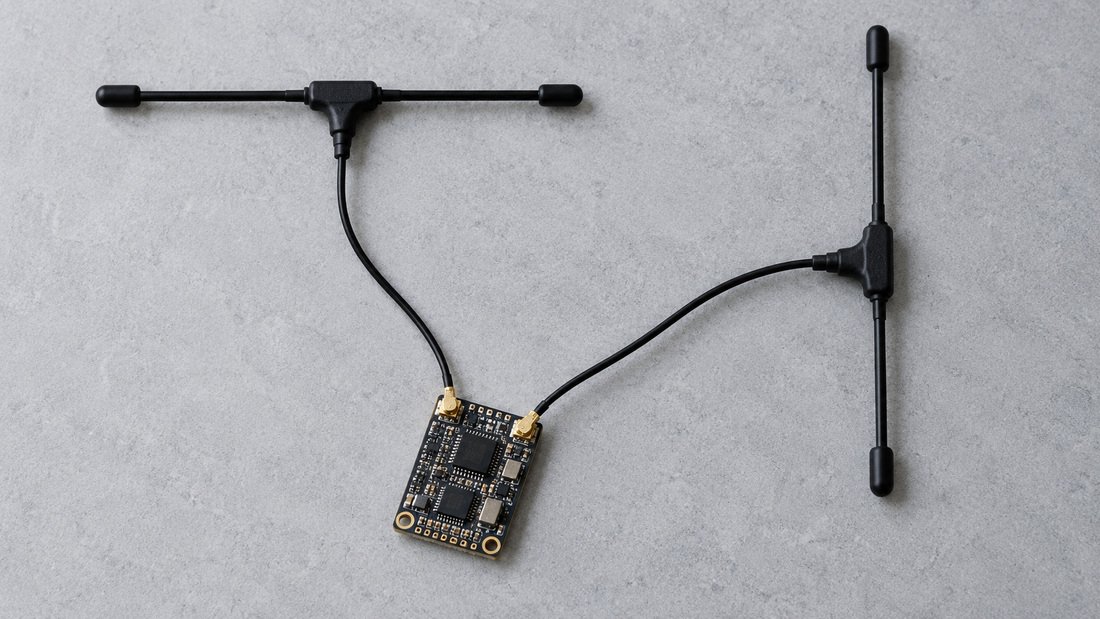
Diversity receivers use two antennas to improve link reliability by selecting or combining signals. If your receiver is diversity, you need two antennas. They do not have to be identical, but they should both be matched to the band and connector. Many teams use two identical antennas for simplicity and easier spare management.
Comparison Table: Antenna Options at a Glance
The table below compares common antenna considerations. This is general guidance; actual product specifications vary. Always confirm details with your supplier.
| Factor | Option A: Compact / u.FL whip | Option B: External SMA / RP-SMA | Option C: Diversity pair |
|---|---|---|---|
| Typical use | Small receivers, tight builds | Larger frames, ground stations | Reliability-focused setups |
| Band matching | Must match 2.4 GHz or sub-GHz | Must match 2.4 GHz or sub-GHz | Both must match receiver band |
| Durability | Fragile connector, needs protection | More robust, but can bend | Two points of failure; use flexible models |
| Installation | Direct to board, minimal space | Requires bulkhead or mount | Requires two mounts or board sockets |
| Spares planning | Order extra pigtails | Order extra antennas and adapters | Order in pairs |
| Best for | Schools, small drones | Clubs wanting quick swaps | Teams prioritising link stability |
For a broader look at receiver options that pair with these antennas, see ELRS receivers.
Practical Procurement Checklist for Teams and Schools
Use this checklist when ordering antennas for a club, school or event. It is designed to reduce mismatches and downtime.
- Inventory your receivers: list every receiver model, its band (2.4 GHz or sub-GHz) and its connector type.
- Decide on a standard: if possible, standardise on one antenna family and connector across your fleet.
- Calculate quantities: one antenna per non-diversity receiver, two per diversity receiver, plus spares (a common practice is 10–20% extra, but confirm what works for your usage).
- Check physical fit: will the antenna fit inside the frame or need an external mount? Consider strain relief.
- Confirm compliance: ask your supplier for written confirmation that the antenna meets relevant regional RF regulations for your country. Do not assume.
- Request samples: test a small batch before committing to a large order.
- Ask about documentation: request datasheets, connector photos and any available test reports.
- Plan for repairs: order spare pigtails and adapters, especially for u.FL connectors which can be damaged by rough handling.
Need help specifying antennas for a team kit? Our team can help you match antennas to your receivers. Request a Team Kit Quote to get started.
Common Mistakes to Avoid
- Buying by gain alone: higher gain is not always better; pattern and environment matter.
- Ignoring connector gender: SMA and RP-SMA are not the same. Check before you buy.
- Mixing bands: never use a 2.4 GHz antenna on a sub-GHz receiver or vice versa.
- Forgetting diversity: if your receiver has two antenna ports, using one antenna can reduce performance.
- Rough handling: u.FL connectors are delicate; train students to avoid pulling on the antenna cable.
- Assuming compatibility: always verify with your supplier rather than guessing from photos.
Buyer Checklist: Questions to Ask Your Supplier
Before placing an order, get clear answers to these questions in writing:
- What frequency band is this antenna designed for?
- What connector type does it use (u.FL, SMA, RP-SMA, other)?
- What is the gain and radiation pattern?
- Is it compatible with my specific receiver model?
- What are the physical dimensions and weight?
- Does it require an adapter or pigtail?
- What documentation is available (datasheet, test report)?
- What are the minimum order quantities, lead times and warranty terms? (Confirm these in writing.)
- Can I order samples for testing?
- Are there any regional compliance considerations?
Frequently Asked Questions
Can I use any 2.4 GHz antenna on my ELRS receiver?
Not necessarily. The antenna must match the receiver’s band and connector. A 2.4 GHz antenna with the wrong connector will not attach without an adapter. Even with an adapter, performance can vary. Always confirm compatibility with your supplier.
Do I need two antennas for a diversity receiver?
Yes, if your receiver has two antenna ports, you should use two antennas. Using only one may reduce the benefit of diversity. Both antennas should be matched to the receiver’s band and connector.
Does higher gain always mean better range?
No. Higher gain focuses energy in a narrower pattern, which can help in one direction but reduce coverage in others. For dynamic environments like drone soccer, a moderate-gain antenna with a broad pattern is often more practical.
Can I mix antenna types on a diversity receiver?
Technically you can, but it is generally simpler and more predictable to use two identical antennas. Mixing types can make troubleshooting harder and may not deliver the expected diversity benefit.
How do I know if my antenna is damaged?
Visual inspection for bent connectors, frayed cables or cracked housings is a start. If you suspect damage, swap in a known-good antenna and check link performance. Regular checks are good practice for clubs.
Are there regulatory limits on antenna gain?
Different countries have different regulations for radio equipment. Some may limit effective radiated power, which relates to both transmitter output and antenna gain. Ask your supplier for guidance and confirm local requirements before operating.
What should I confirm before ordering in bulk?
Confirm band, connector, gain, physical fit, compliance, MOQ, lead time, warranty and sample availability. Get these in writing to avoid mismatches.
Conclusion
Choosing an antenna for an ELRS receiver comes down to band matching, connector compatibility, sensible gain and durability for your environment. For schools, clubs and teams, standardisation and spares planning often matter more than squeezing out maximum range. Always verify specifications with your supplier and test samples before committing to a large order.
Ready to equip your team? Request a Team Kit Quote and tell us about your receivers and flying environment.
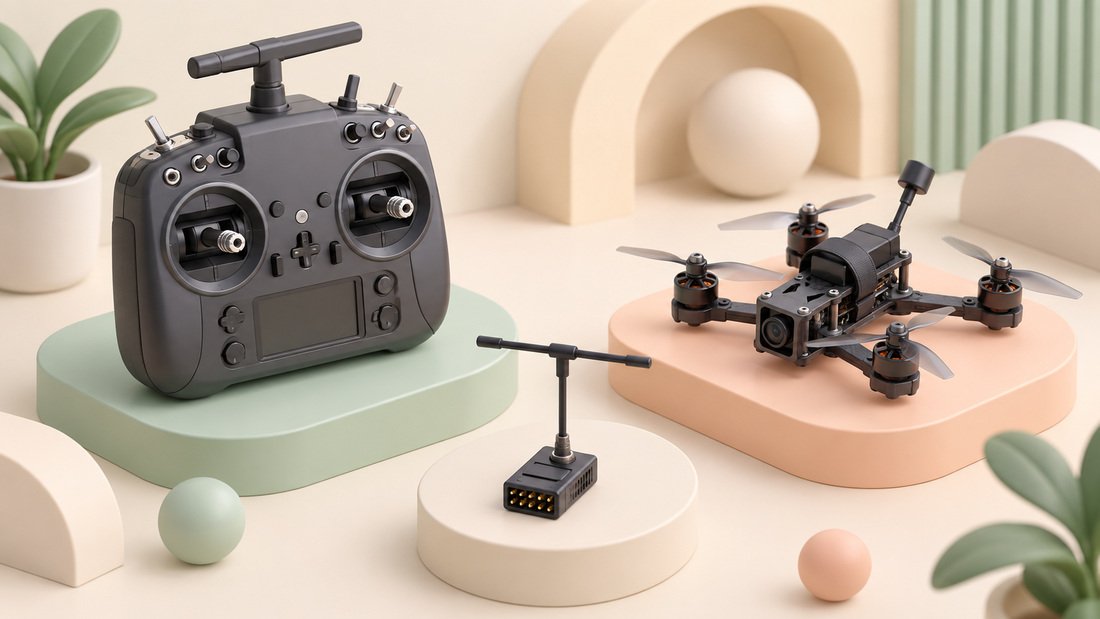
For transmitter-side considerations, see ELRS transmitter modules.