Quick summary
Drone soccer is a team sport in which players pilot small, caged quadcopters inside a protective, usually netted arena. Each team defends its own goal while trying to fly a scoring drone through the opponent’s goal, called a hoop. Matches are short and fast, normally played in rounds between teams of five, with several drones per team so substitutions are quick. Pilots fly from behind a line using first-person-view (FPV) video goggles and a handheld radio controller, or line of sight in beginner play. The structure is simple enough for a school club, yet competitive enough for leagues and tournaments.
Key Takeaways
- Drone soccer is a five-a-side indoor team sport using caged drones inside a netted arena, with goals (hoops) at each end.
- Most beginner rulesets are designed so a school can start with a single net, two hoops, spare props and a set of starter drones.
- Format details — match length, round count, team size and contact rules — vary by league, so always get the current rulebook from the organizer you plan to play under.
- Educational programs can face aviation-authority questions; in the United States, the FAA publishes specific guidance for educational drone users.
- Procurement is easier when you specify a standard drone class, spare parts, charger capacity and storage for the whole team, not just drones.
Note on scope: Rules, dimensions and safety requirements differ between leagues and countries. This article explains the common structure of the sport and what to confirm in writing with your league and supplier. It does not replace an official rulebook.
What Is Drone Soccer and How Is It Played?
Drone soccer is best understood as a soccer-like game played in three dimensions. Instead of kicking a ball, one designated drone per team acts as the ball. That drone flies, and teammates try to move it through the opposing hoop while the opposition defends. The physical contact you see is drone-to-drone, not player-to-player, because every drone sits inside a protective cage or ball-shaped bumper.
Players stay on the ground. They stand or sit behind a flight line and control their drones with radio transmitters. In league play, pilots typically wear FPV goggles so they see the camera view from their own drone, which is why the sport is often grouped with FPV flying. Beginner and school formats sometimes use line-of-sight flying so new pilots can learn orientation and control first.
The player roles on a drone soccer team
Exact role names change between leagues, but most rulesets describe two broad jobs. Attackers try to push, nudge or shepherd the ball drone toward the opponent’s hoop. Defenders block the path to their own hoop. One drone per team is usually treated as the ball for that round, and the rest of the team supports it.
Ask your league to confirm in writing how many drones may be airborne at once, whether a dedicated goalkeeper drone exists in that ruleset, and what happens when a drone is damaged or disabled mid-round.
The ball drone and the goal (hoop)
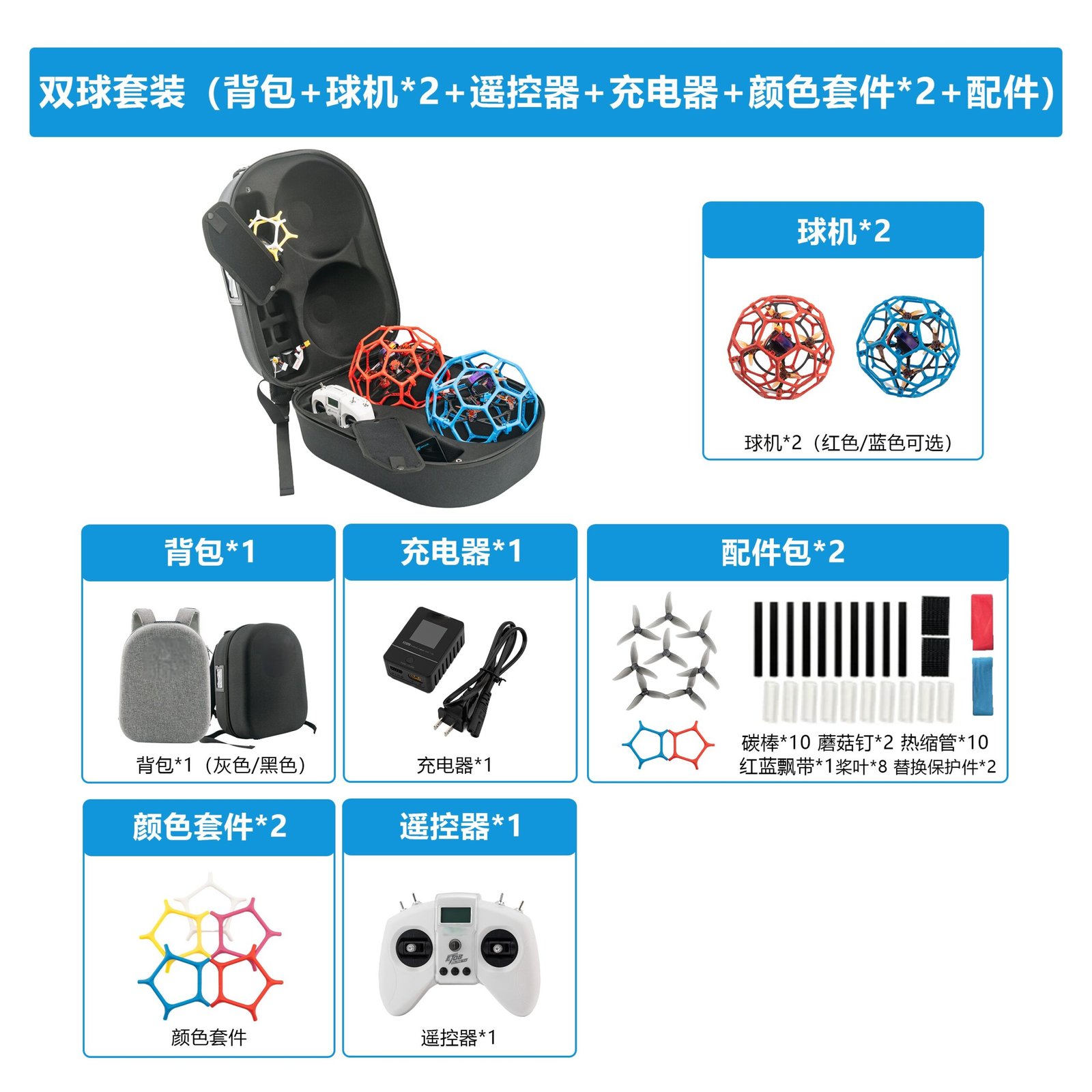
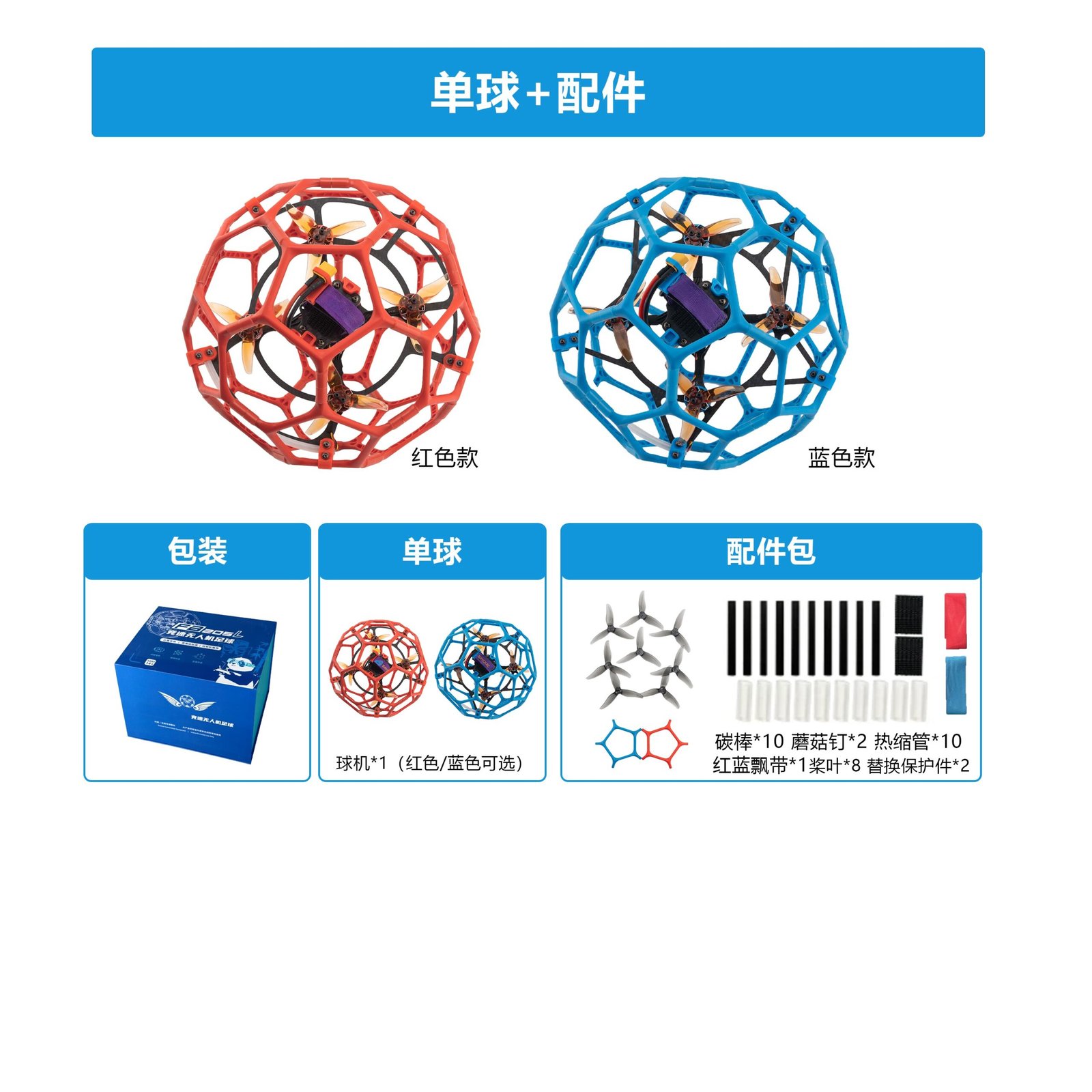
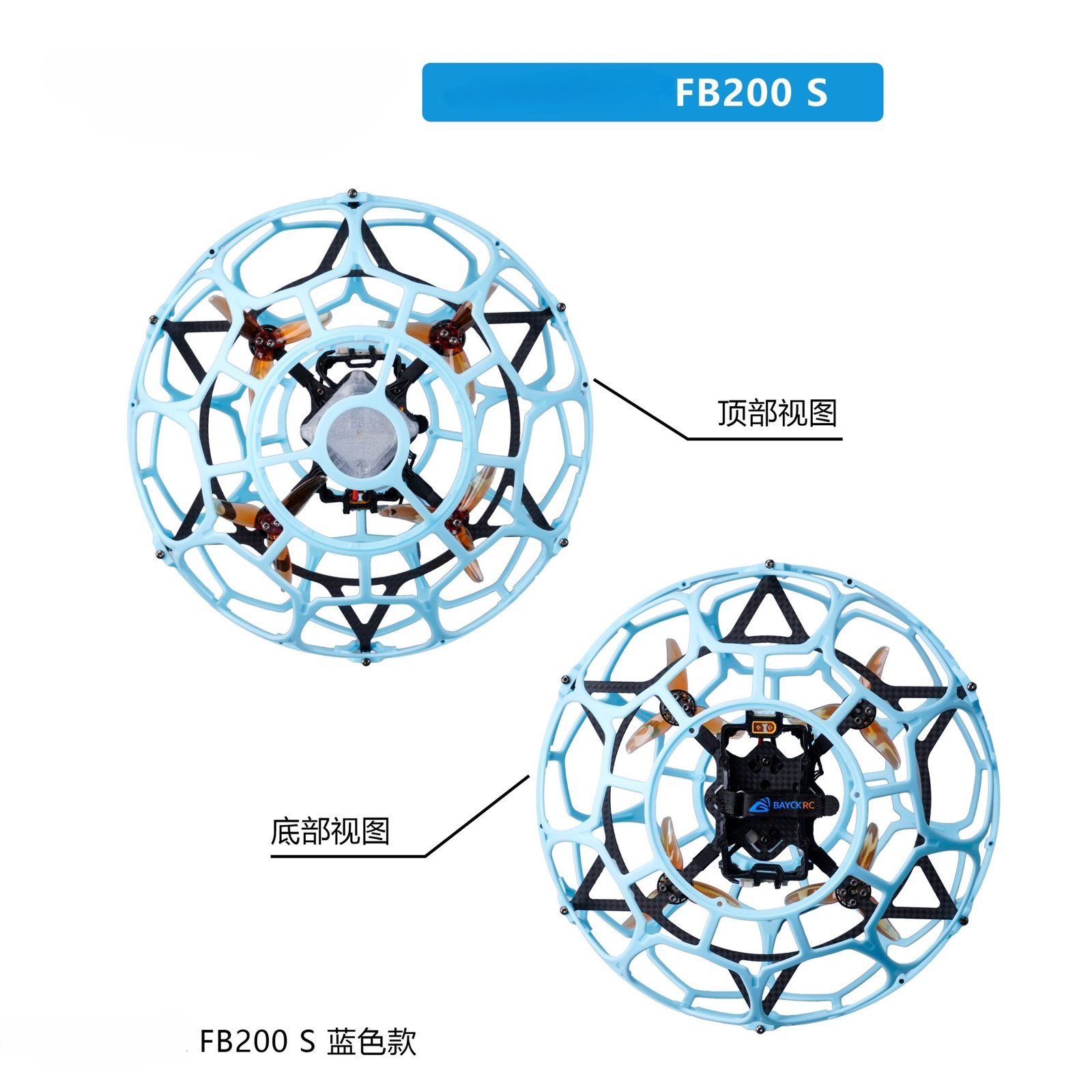
The ball is a drone fitted with a protective spherical or cage-like shell so it can survive bumps. The hoop is a ring-shaped goal, usually mounted vertically at each end of the arena. Scoring normally happens when the ball drone passes through the opponent’s hoop in a way the rules define as valid — for example, a full pass-through rather than a clip on the rim.
Because both the ball and the goal are physical hardware, drone soccer is a game of repeatable equipment as much as skill. Bent cages, cracked props and worn motors change how a team flies, which is why spare parts matter as much as the initial kit.
Drone Soccer Rules and Basics: How a Match Actually Runs
A match is normally split into short rounds. Teams reset between rounds, swap out damaged drones, and the score carries across the match. Short rounds keep the physical intensity high and let more students fly, which is a large part of why the format works in school settings.
Starting and stopping play
Referees start and stop rounds with a whistle or signal. Typical stoppages include a drone down inside the arena, a safety concern, a substitution window, or the end of the round time. Confirm with your organizer who may enter the net to retrieve a drone and whether only officials may do so.
Scoring and winning
The team with more valid goals at the end of the match wins. Some rulesets also end a match early if a team reaches a defined lead. Because these thresholds are league-specific, treat any number you see online as an example, not a rule.
Common fouls and safety calls
Typical infractions include flying outside the arena boundary, contacting another pilot’s drone in a way the rules prohibit, unsafe proximity to people, and continuing to fly after a stop signal. Penalties can range from a warning to a point awarded to the opponent or a drone being removed for the round.
Comparing Common Drone Soccer Formats
The table below is a general comparison of how the sport is commonly organized. It is guidance, not an official ruleset. Use it to ask better questions of your league.
| Element | Beginner / school club | League / tournament play |
|---|---|---|
| Flying style | Often line of sight to build control | Usually FPV goggles |
| Team size | Smaller squads, rotating pilots | Typically five-a-side with substitutes |
| Arena | One net, two hoops, gym or hall | Regulation netted arena per league spec |
| Round length | Flexible, set by the coach | Fixed by rulebook |
| Equipment pressure | Low, fewer drones in the air | High, need fast spares and repair |
| Officiating | Coach or teacher referees | Trained referees and scorekeepers |
If you are buying for a program rather than a single team, our overview of drone soccer systems and the way drone soccer competitions are organized can help you match equipment to the level you intend to play.
What Equipment Does a Drone Soccer Team Need?
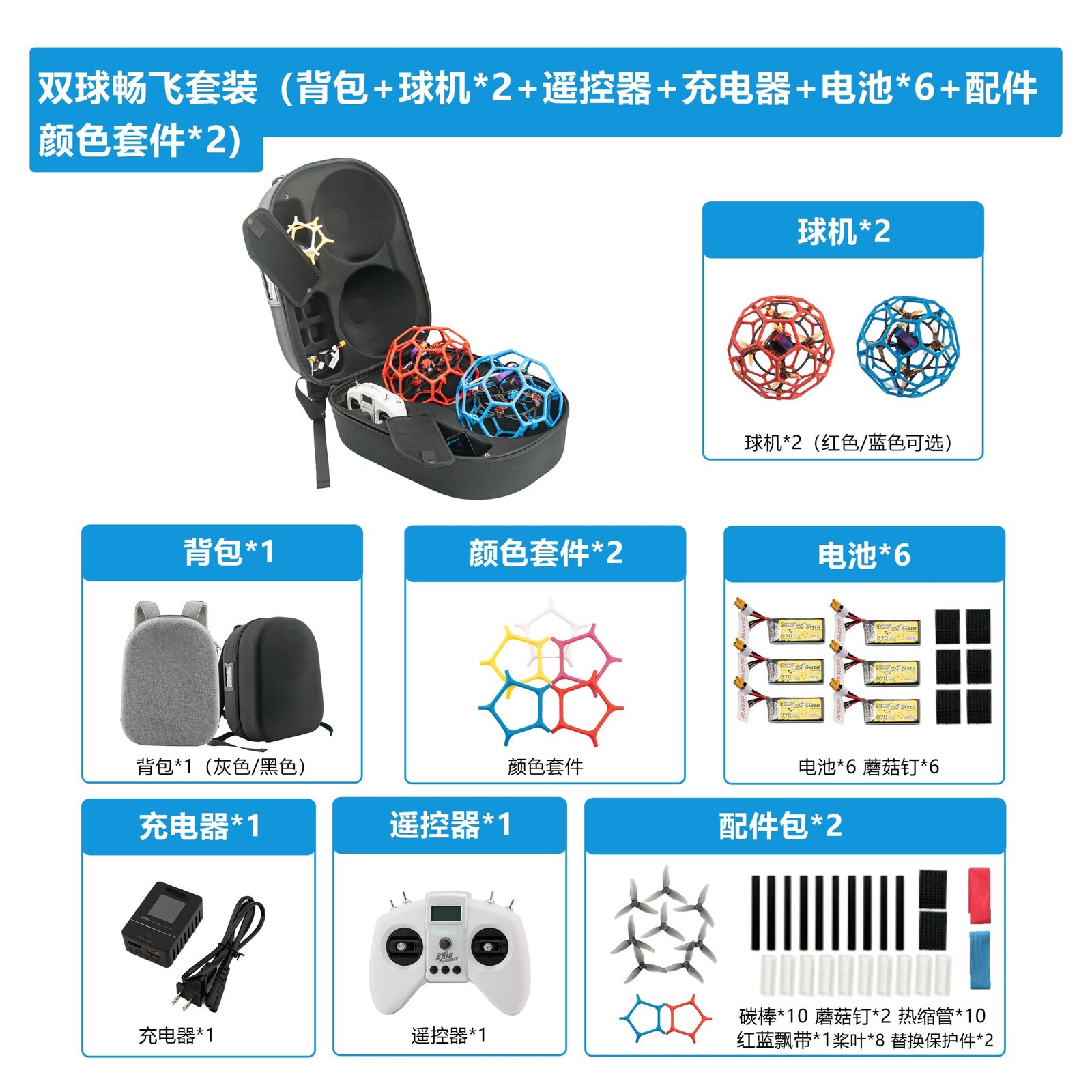
A working team needs more than drones. Budget for the arena, the goals, the drones, spares, charging and storage. Splitting the purchase into those five buckets makes it much easier to compare supplier quotes fairly.
- Arena: netting or a framed enclosure, plus the floor marking that defines the play area.
- Goals: two hoops with mounting hardware, sized to your ruleset.
- Drones: team drones plus at least one dedicated ball drone with a protective shell.
- Spares: props, cages or shells, motors, arms and batteries are the usual wear items.
- Support: a multi-port charger, battery-safe storage, a repair station and a carry case.
Drone vs ball vs goal: what breaks first
Protective shells and propellers absorb most impacts, so they tend to be the highest-turnover parts. Arms and motors fail less often but take longer to replace. Frame and cage damage is common in beginner groups. Ask any supplier which parts are considered consumables and how quickly they can be reordered.

Safety and Compliance Basics for Schools and Clubs
Indoor, netted play controls most of the physical risk, but rule compliance and aviation rules are separate topics. In the United States, the Federal Aviation Administration (FAA) publishes guidance specifically for educational users of drones.
According to the FAA’s educational users page, drones flown for educational and research purposes may be operated under the Exception for Limited Recreational Operations of Unmanned Aircraft, 49 U.S.C. § 44809, for qualifying educational organizations. Those qualifying organizations include institutions of higher education, Junior Reserve Officers’ Training Corps (JROTC) programs, and educational programs chartered by an FAA-recognized Community Based Organization.
The same FAA page notes that educational organizations which are not institutions of higher education or part of a JROTC program must be chartered by a recognized Community Based Organization to operate under § 44809; otherwise they must operate under Part 107 (14 CFR Part 107). It also explains that FAA-Recognized Identification Areas (FRIAs) are locations where drones can be flown without Remote ID, and that educational institutions — including primary and secondary schools, trade schools, colleges and universities — are eligible to request a FRIA. See the FAA educational users page for the current text: https://www.faa.gov/uas/educational_users
Two practical points follow. First, confirm whether your program falls under a recreational exception or Part 107 before your first event, because that decision affects who may fly and how. Second, because this is US-specific guidance, programs in other countries should check their own aviation authority’s rules rather than assuming the FAA position applies.
On the field, the safety essentials are simpler: a netted arena, a marked pilot line, eye protection where required, a battery charging and storage procedure, and a designated person who can stop play. Coaches working with schools and training organizations usually build these into a written session plan.
Common Mistakes When Starting a Drone Soccer Program
- Buying drones before defining the ruleset. Drone size, cage design and hoop size are tied to the league you plan to enter.
- Under-buying spares. A team that cannot replace a prop mid-match will lose rounds for equipment reasons, not skill.
- Ignoring charging capacity. Enough batteries is not the same as enough chargers and enough time between rounds.
- Treating it as only a flying club. Drone soccer is a team sport; scheduling practice for pilots, spotters and referees matters.
- Assuming aviation rules are uniform. Educational operation rules differ by jurisdiction and by how your program is structured.
Programs that also teach repair and troubleshooting tend to get more flight time per dollar, because students fix rather than wait. If that is part of your plan, it is worth pairing competition equipment with a STEM drone education and training curriculum rather than treating the two as separate purchases.
Planning a season and want equipment advice before you commit to a configuration? Talk to our team about your program requirements and we can help you map drones, spares and arena hardware to the way you intend to play.
Buyer Checklist: What to Confirm Before Ordering
Use this list as written questions. Get answers in writing before you place a purchase order.
- Which league or ruleset will we play under, and what drone and hoop dimensions does it specify?
- How many drones does each team need on the floor, and how many spares should we hold?
- Which parts are consumables, and what is the expected reorder interval?
- What is included in the kit versus sold separately (net, hoops, chargers, cases, batteries)?
- What are the stated lead times, minimum order quantities and shipping terms? Confirm these in writing; published figures can change.
- What warranty terms apply to drones, batteries and structural parts, and what is excluded?
- Is documentation, spare-part labeling or training material available for coaches?
- For distributors and OEM/ODM buyers: what customization is possible on shells, colors, packaging and branding, and what are the tooling or setup implications?
If you are setting up multiple drone soccer clubs or a district-wide program, ask for a bill of materials per team rather than a single price. That makes it obvious whether spares, charging and storage are included.
Frequently Asked Questions
Is drone soccer played indoors or outdoors?
It is most commonly played indoors or in a covered, netted arena, because the ball drone and the hoop need a controlled space and consistent lighting. Outdoor play is possible when wind and space allow, but it changes the flying difficulty significantly.
How many players are on a drone soccer team?
League play is commonly five-a-side with substitutes, though school and beginner formats often use smaller squads. Confirm the number with the ruleset you intend to compete under, because it affects how many drones and spares you need.
Do pilots fly with FPV goggles?
In many competitive formats, yes — pilots use FPV goggles to fly from their drone’s camera view. Beginner programs often start with line-of-sight flying so students build orientation and control before moving to goggles.
What happens if a drone breaks during a match?
Play is usually stopped, the drone is removed or replaced from the team’s spares, and the round resumes or continues. The exact procedure is set by the rulebook. This is the main reason spare props, shells and batteries matter more than most new teams expect.
Is drone soccer regulated?
Indoor play under a league rulebook is governed by the league, but aviation rules still apply in many jurisdictions. In the United States, the FAA publishes guidance for educational users, including how educational flights may fit under 49 U.S.C. § 44809 or Part 107, and how educational institutions can request a FRIA. Check your own authority’s rules outside the US.
Can a school start with one drone?
You can teach control and repair skills with very few drones, but you cannot play a real match. A minimum viable match setup needs a netted space, two hoops and enough drones for both sides plus at least one ball drone with a protective shell.
How do we choose between buying a kit and building our own?
Kits reduce setup time and keep equipment consistent across a team, which matters for fair practice. Building from parts can teach more engineering but adds tuning, compatibility and spares-management work. Many programs start with kits and add a build track later.
Conclusion: Learn the Rules, Then Buy to the Ruleset
Drone soccer is a caged-drone team sport played in a netted arena, with a ball drone, two hoop goals and short, restartable rounds. The rules are simple enough for a first practice, but the details — team size, round length, fouls, hoop dimensions and drone class — are set by the league you play under. That is why the first procurement step is not choosing a drone, it is confirming the ruleset and the aviation obligations that apply to your program.
Once those are clear, buy to them: enough drones for both sides, a dedicated ball drone, a realistic spares stock, charging and safe battery storage, and a storage solution for the whole team. Then confirm lead times, minimum order quantities and warranty terms in writing with your supplier before ordering.
Ready to equip a team or a multi-school program? Request a Team Kit Quote and tell us your ruleset, team size and season schedule so we can help you build the right equipment list.