Quick summary
Drone soccer balls are tested for impact safety by combining material and structural checks with controlled, repeated impact trials and post-test inspection. A ball is only considered acceptable when the outer cage, connectors and inner ball hold together, and when connections to motors and the airframe survive impacts. Professional buyers should request the reported test sequence, pass/fail criteria, sample identification and any third-party report, then confirm the exact scope in writing before ordering.
Key Takeaways
- Impact safety testing is usually a sequence: visual and dimensional check, structural inspection, controlled impact trials, then post-impact functional and damage inspection.
- Two separate impact paths matter: ball-to-ball contacts and drone-to-ground or drone-to-barrier contacts.
- Documentation is only useful if you can see the sample version, the test method, the pass/fail limit and the actual recorded result.
- Schools should treat supplier claims as questions to verify, not as facts to repeat.
- For team orders, ask for the same documentation across every batch you receive, not just the first sample.
Why impact behavior is the core safety question in drone soccer
A drone soccer ball is not a passive object. It is a protective shell and a flight structure at the same time. In BKZ-style play, the ball is the scoring device, so it is struck, it strikes other balls, and it lands after every score and every stopped rally. That is why buyers focus on impact behavior rather than appearance alone.
For schools and youth programs, impact behavior connects directly to duty of care. A cracked cage with sharp edges, a loose connector that flies off, or a motor mount that tears away can all turn normal play into an inspection and repair event. Understanding the test sequence helps you ask better questions before you buy, and helps you build a sensible inspection routine after delivery.
The typical test sequence for a drone soccer ball
Most credible impact safety testing follows a repeatable sequence rather than a single “drop it and see” moment. The exact steps and values are supplier-specific, so ask your supplier to describe theirs.
Step 1: Incoming material and component check
Before any impact test, the individual parts should be checked. This usually includes cage geometry, wall thickness or material consistency, connector fit, fastener seating and inner ball dimensions. A ball built from out-of-spec parts will fail impact tests for reasons that have nothing to do with the ball design.
This step is closely related to general quality control practice, because it is the same idea used on any drone part: verify inputs before you test outputs.
Step 2: Baseline visual and functional inspection
The assembled ball is photographed, measured and, where relevant, powered up so the baseline condition is recorded. Without a baseline record, a post-impact failure cannot be attributed to the impact test at all.
Step 3: Controlled impact trials
Controlled impact trials are the heart of impact safety testing. Suppliers may use drop tests from a fixed height, pendulum or swing impacts, or driven collisions against a rigid barrier. The important variables are the impact energy, the number of repetitions, the impact surface and the point of impact on the ball.
Ball-to-ball impacts deserve their own trials. In real play, two balls collide at speed, and that load path is different from a vertical drop. Ask specifically whether ball-to-ball contact is tested, and at what speed.
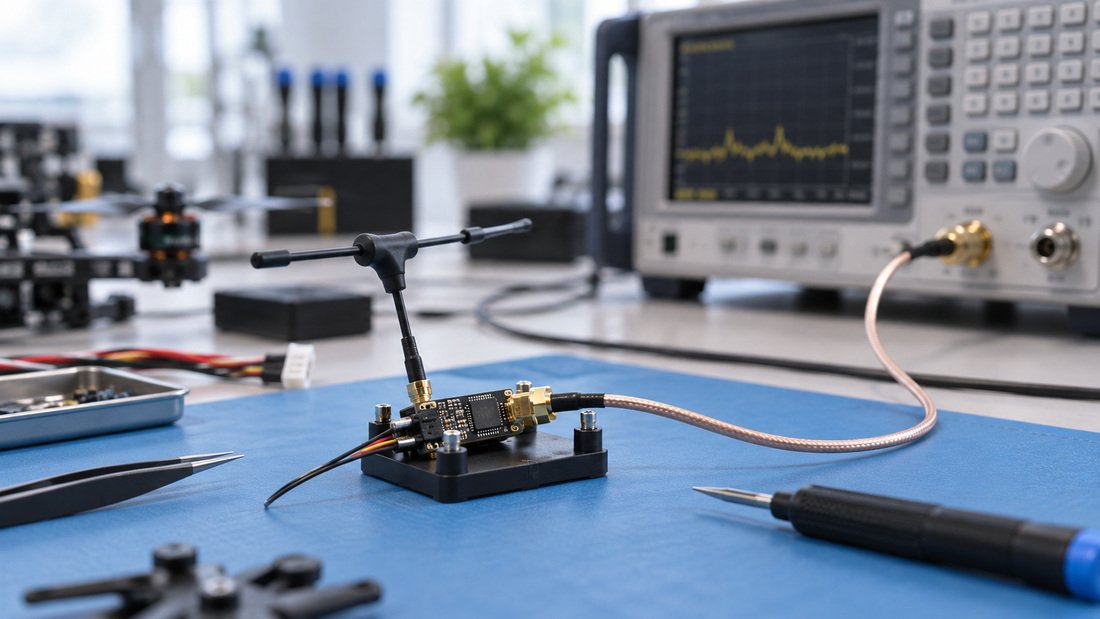
Bench-style testing of the radio and control link is often run alongside mechanical impact checks, because a ball that survives impact but loses control input is still a safety problem in a crowded gym.
Step 4: Post-impact inspection and functional check
After the impacts, the ball should be inspected for cracks, deformation, loose or missing connectors, fastener movement, and changes in the inner ball. Then it should be powered and flown or bench-tested again to confirm that control response, throttle behavior and motor function are unchanged.
Step 5: Documentation and traceability
Finally, results should be recorded against a specific sample, batch or drawing revision. Traceability is what makes a test report usable for a school purchasing file or a distributor’s compliance folder.
Common impact test methods and what each one actually tells you
Different methods answer different questions. A supplier may use one or several.
| Method | What it simulates | What it can show | What it does not prove |
|---|---|---|---|
| Fixed-height drop onto rigid floor | Landing after a score or fall | Cage and connector survival, hard-edge formation | High-speed ball-to-ball collisions |
| Repeated drop (cycle testing) | Wear across a long practice season | Fatigue cracks, loosening fasteners | Flight performance under load |
| Pendulum or swing impact | Side impact at a repeatable energy level | Shell strength at a controlled energy | Multi-point impact patterns |
| Driven collision into barrier | Full-speed flight into a wall or goal frame | Airframe and ball joint behavior | General longevity of the ball alone |
| Ball-to-ball collision | Two drones contesting the same space | Combined structural and connector behavior | Response of surrounding players’ equipment |
Buyers should note that no single method covers all scenarios. A useful test plan combines at least one landing-type test with at least one collision-type test.
From test bench to your gym floor
Impact test results are a starting point for your own acceptance process. Even a well-tested ball can arrive damaged, and a batch can drift over time. A short acceptance routine on delivery gives you evidence for warranty and replacement conversations later.
A practical routine looks like this: inspect every ball visually, test-fit connectors, spin or bench-run each drone briefly, and record serial numbers or batch codes. Keep a simple log. If a ball fails during the first practice sessions, you have a documented baseline to compare against.

What schools and clubs should ask for in writing
The single most useful step a school can take is to move from verbal assurance to written documentation. Ask for the test description, the sample identification, the criteria and the recorded outcome.
Documentation checklist
- Description of the impact test method, including drop height or impact energy.
- Number of impact cycles performed and the impact surface used.
- Pass/fail criteria stated in advance of the test.
- Identification of the tested sample: model, drawing revision, batch or serial.
- Post-impact inspection criteria for cracks, sharp edges, deformation and loosening.
- Any third-party or laboratory report, with the issuing body and scope of accreditation stated.
- Material and component declarations relevant to your jurisdiction, if required.
- The version date of the test document relative to the product you are buying.
Where a supplier references general testing and inspection capability, ask them to map that capability to this specific product, with named tests.
Questions that expose weak documentation
- Was the tested unit built to the same drawings as the units you will ship?
- Was ball-to-ball impact included, or only a single unit drop test?
- What happened at the end of the cycle test, and was anything replaced mid-test?
- Can you provide documentation specific to safety review, not only quality inspection?
Material and compliance paperwork is a separate workstream from impact testing. If you need help structuring it, see safety and compliance support.
Trade-offs buyers should understand
Impact safety is rarely free. It trades against weight, cost and flight feel.
- Stronger cage versus weight. Thicker walls or extra ribs can reduce cracking but add mass, which changes flight behavior and battery time.
- Stiffer connectors versus repairability. Rigid connectors that resist impact can be harder to remove in the field.
- Longer test cycles versus cost. More impact cycles take more time and more destroyed samples, which affects unit price.
- Documentation depth versus price. Third-party testing adds cost per model or per revision.
- Design revision versus re-testing. Any change to cage geometry or material may invalidate previous test results, so ask how revisions are handled.
There is no universally optimal balance. A training set used by beginners in a school gym has different priorities from a competition set used by experienced pilots.
Assembly-level impact behavior
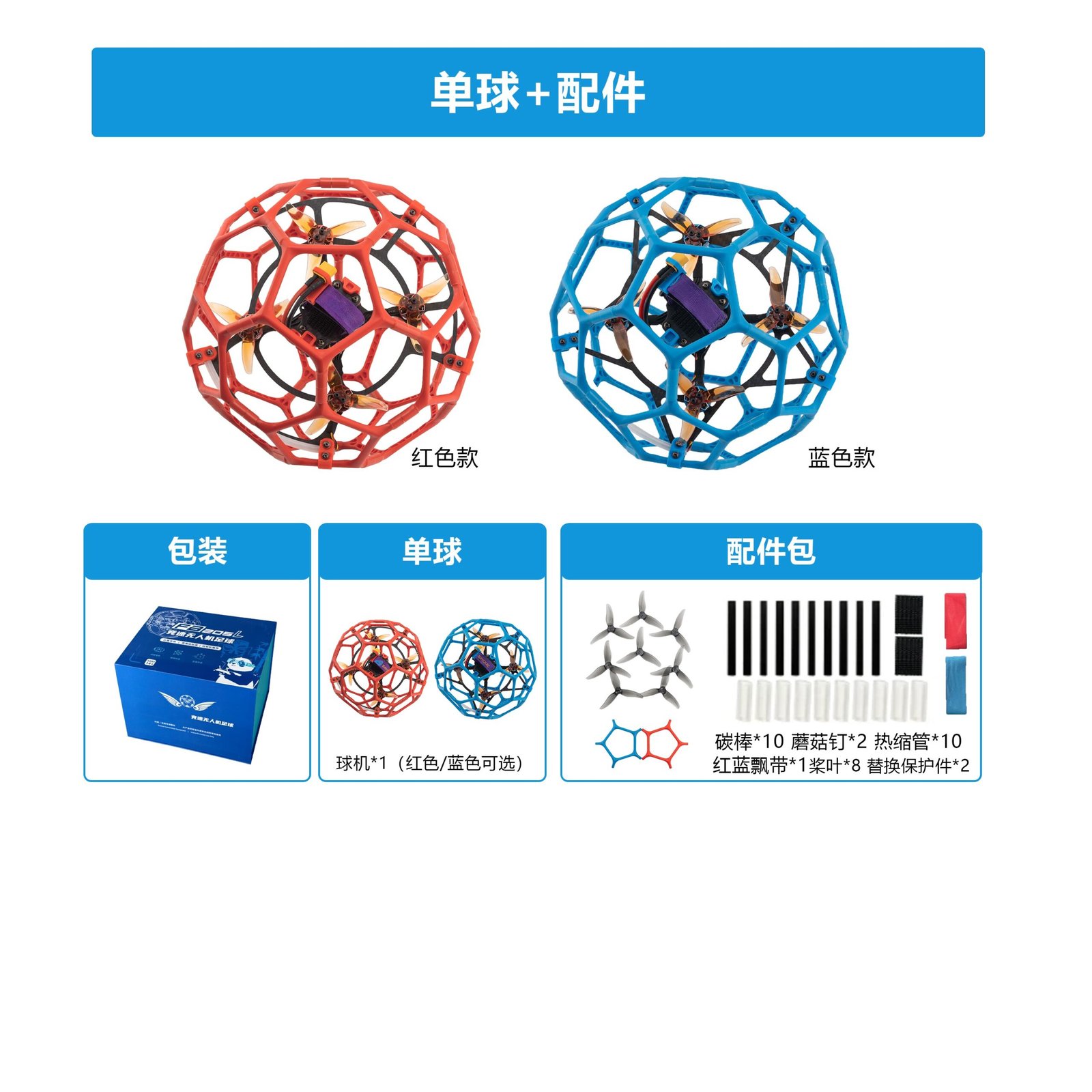
The ball itself is only one part of the impact system. In play, impact energy travels through the ball, into the motor mounts and frame, and into the battery and electronics bay. Testing a ball alone does not guarantee that the assembled drone survives the same impact.
For this reason, ask whether impact testing is performed on the complete assembly as well as on the ball. A complete-assembly test usually reveals different failure modes: bent motor shafts, cracked frame arms and loosened battery retention.
Warranty, wear and what impact testing does not cover
Impact testing supports a durability claim, but it does not automatically define what a warranty covers. In the United States, federal law governs written warranties on consumer products under the Magnuson-Moss Warranty Act. That law distinguishes between implied warranties, which arise under state law, and express warranties, which the seller writes. It also addresses how written warranties must be labeled and described.
The FTC explains that implied warranties are unwritten promises created by state law, and that implied warranties do not cover problems caused by abuse, misuse, ordinary wear, failure to follow directions, or improper maintenance. See the FTC businessperson’s guide to the federal warranty law.
This matters for schools in a practical way. A ball that survives a controlled impact test is not automatically covered if it fails after a season of ordinary wear. The scope of coverage, the duration, and what counts as misuse should all be stated in the written warranty terms. Ask to see those terms before purchase, and note that warranty rules differ between consumer sales and business-to-business transactions, and differ by country.
For the operational side of post-sale support, including spare parts planning, ask your supplier to explain their warranty and after-sales program in writing.
Common mistakes in evaluating drone soccer ball safety
- Accepting “impact tested” as a complete answer, without a method, a value or a result.
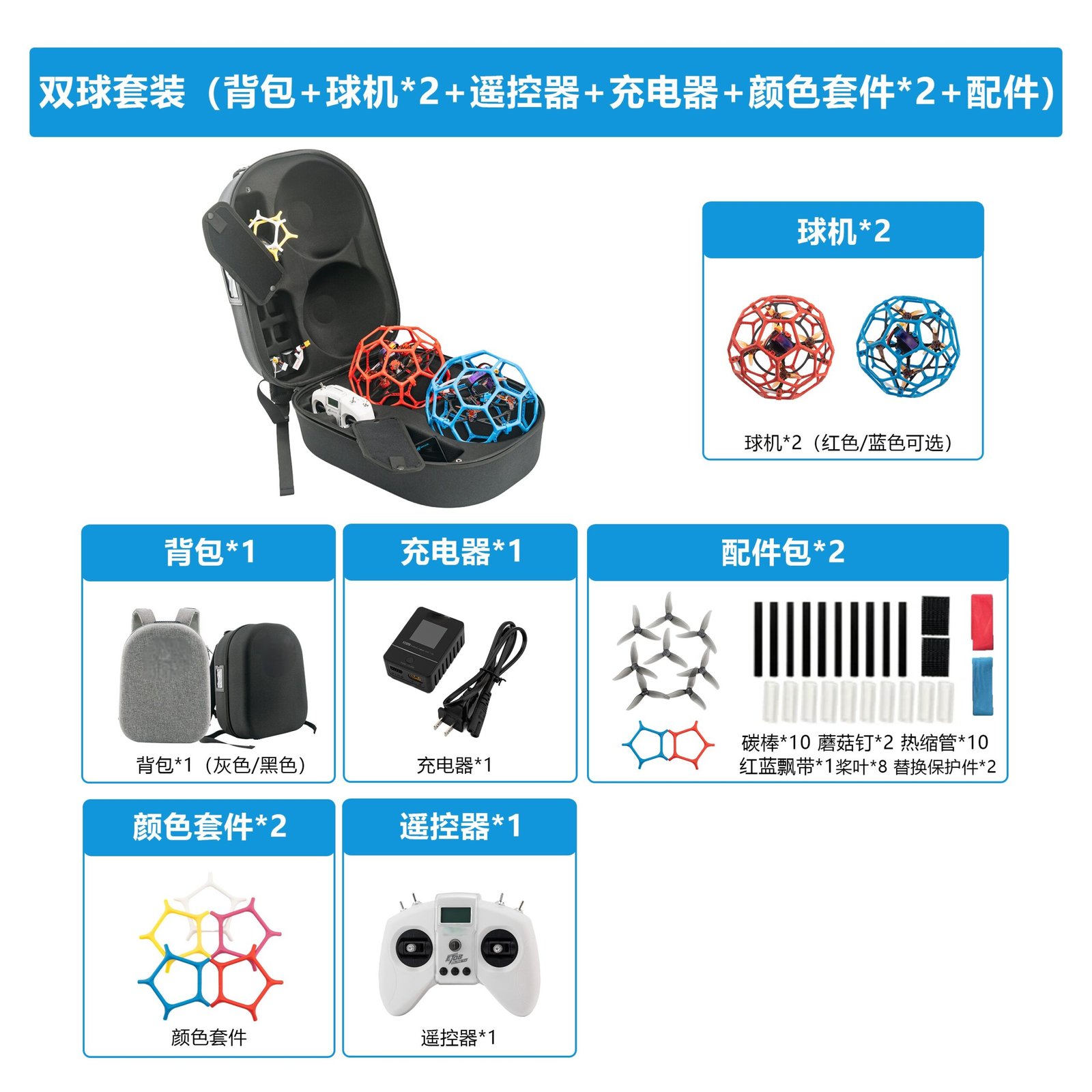
- Reviewing only a marketing photo of the ball rather than the test document.
- Assuming a test on one revision applies to a later revision.
- Testing only ball-to-ground impacts and never ball-to-ball impacts.
- Skipping delivery inspection, then trying to raise a defect issue weeks later.
- Confusing quality inspection records with safety test records.
- Assuming a consumer warranty statement applies unchanged to a bulk institutional purchase.
Procurement checklist for schools and clubs
- Define your use case: beginner training, competition, or both.
- Request the impact test method and the pass/fail criteria before ordering.
- Ask for the tested sample’s model and revision, and confirm it matches your order.
- Confirm whether ball-to-ball impact is included.
- Ask whether the assembled drone, not only the ball, was tested.
- Request written warranty terms, including duration and exclusions.
- Confirm spare part availability for the parts most likely to fail on impact.
- Set an incoming inspection routine and record batch codes.
- For distributor and OEM orders, confirm packaging, labeling and documentation language.
- Confirm all commercial terms in writing, including any quoted MOQ, lead time and price validity.
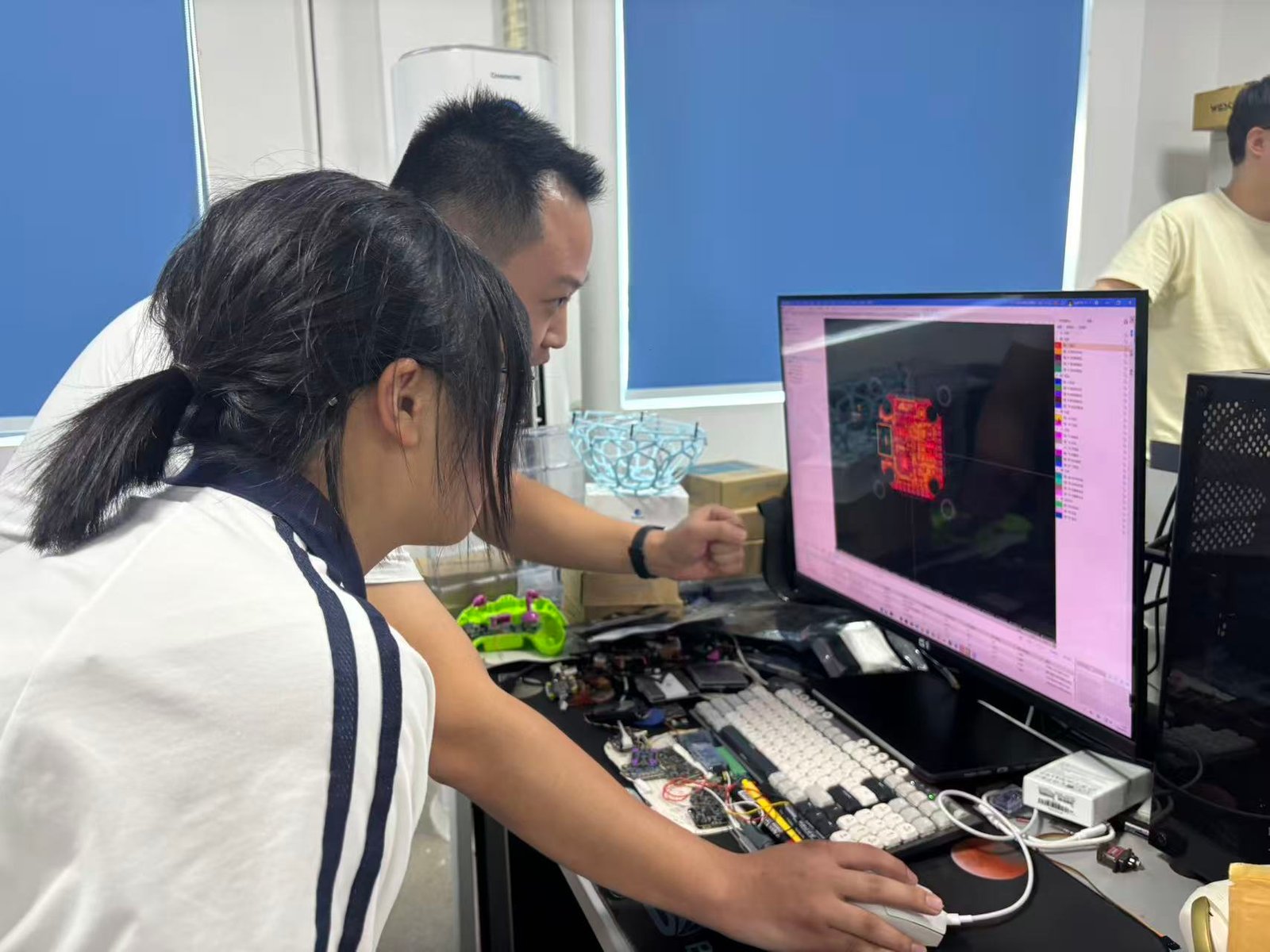
If you are planning to run a structured drilling and testing process with your own team, the same disciplines apply to testing and inspection workflows.
Frequently asked questions
Is there one international standard for drone soccer ball impact testing?
No single universal standard is applied to every drone soccer ball on the market. Buyers should ask which standard, if any, the supplier tests against, and confirm its scope. Where a supplier claims a standard, request the document and the issuing body’s name.
How many impact cycles are enough?
There is no universal number. The useful questions are what the supplier actually performed, what their pass criteria were, and whether the cycle count reflects a practice season or a single match. Ask them to explain their reasoning rather than accepting a number without context.
Should impact testing be done on the ball alone or the complete drone?
Both have value, and they reveal different failure modes. Ball-only testing isolates the shell and connector design. Complete-assembly testing shows how forces travel into the frame, motors and battery retention. Ask whether both were performed.
Does a passed impact test mean the ball is safe for a school gym?
No test result can certify safety in every environment. Impact testing provides evidence about structural behavior under defined conditions. Gym safety also depends on flight boundaries, nets, student supervision, battery handling and pre-session inspection. Treat testing as one input, not a substitute for operating rules.
What should I do if a ball cracks during the first weeks of use?
Compare the failure against your incoming inspection record and the supplier’s stated warranty terms. Because implied warranties do not cover ordinary wear or misuse, the outcome will depend on whether the failure is a manufacturing defect or the result of use. Raise it in writing with the batch code and photos.
Can I ask for the test report before placing an order?
Yes, this is a reasonable request, and it is best made in writing during the quotation stage. Some suppliers share summaries rather than full reports. If a full report cannot be shared, ask for the method, criteria and result in a signed document instead.
How does impact testing relate to warranty claims?
They are connected but separate. Impact testing describes structural behavior under controlled conditions. Warranty terms define what is covered if a product fails. Ask for both, and read the warranty exclusions carefully, especially clauses about wear, misuse and improper maintenance.
Conclusion: turn impact testing into a purchasing question
Impact safety testing for drone soccer balls is a structured process: verify components, record a baseline, run controlled impacts including ball-to-ball contact, inspect afterwards, and document the results against a specific revision. For schools and youth programs, the practical value is not the test itself but the evidence trail you can review before you commit budget.
Ask for the method, the criteria, the result and the revision in writing. Confirm warranty terms separately. Then verify every batch on arrival so that any future issue can be traced back to a documented starting point.
Ready to plan a school or club program and want to discuss documentation and configuration options? Request a School Program Quote.