Quick summary
In ExpressLRS (ELRS), the telemetry ratio is the relationship between how often your radio sends control commands and how often the receiver sends data back. It is usually written as a ratio such as 1:8, 1:16, 1:32 or 1:64. A lower second number means more frequent telemetry. A higher second number means less frequent telemetry and more airtime reserved for control. For schools and drone soccer teams, this is mainly a link reliability and latency trade-off, not a single universally correct number.
Key Takeaways
- Telemetry ratio describes how much return-path airtime is allocated to data coming back from the aircraft.
- Lower telemetry ratios give more frequent telemetry but reduce the airtime available for control packets.
- Higher telemetry ratios prioritise control link robustness and may be preferable in busy RF environments.
- Packet rate, telemetry ratio and regulatory power limits are separate settings that interact in practice.
- For drone soccer and youth programmes, choose a setting that keeps control feel consistent and telemetry useful, then verify it through bench and field testing.
- Confirm firmware, receiver and transmitter compatibility before changing ratios across a fleet.
What telemetry ratio actually controls
ExpressLRS is a bidirectional radio link. The transmitter sends control frames to the receiver. The receiver sends telemetry frames back. Telemetry ratio determines how many control frames are sent for each telemetry frame, or how the return path is scheduled relative to the outbound link.
It is not the same as packet rate. Packet rate is how often control commands are sent per second. Telemetry ratio is how the return path is shared. Changing one can affect how the other behaves in practice. Treat them as related but separate settings.
Why the ratio is expressed as 1:8, 1:16, 1:32 or 1:64
These numbers are shorthand for how often the receiver is given an opportunity to transmit telemetry. A 1:64 ratio means telemetry is sent far less often than at 1:8. That does not automatically make 1:64 better or worse. It depends on what the pilot or coach needs to see and how congested the radio environment is.
What telemetry data is typically carried
Telemetry can include link quality, received signal strength, flight-controller sensor data, GPS data and other status information. The exact contents depend on the receiver, flight controller, firmware version and how the model is configured. If your team depends on a specific telemetry item, verify it is supported in your exact configuration before relying on it.
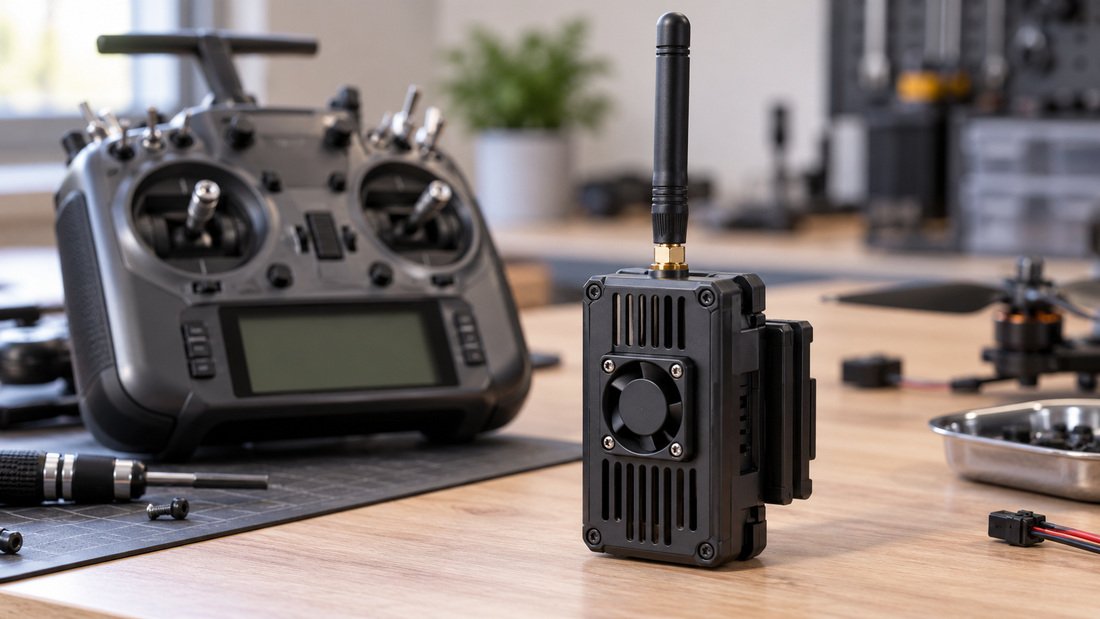
How telemetry ratio affects range, latency and link reliability
Every radio link has finite airtime. Airtime is shared between control frames and telemetry frames. When you allocate more airtime to telemetry, you leave less for control. When you allocate less to telemetry, you give control more room.
In practice, lower telemetry ratios can feel more responsive for telemetry-driven tasks, such as watching live sensor values or using telemetry for feedback. Higher telemetry ratios can improve control link robustness in congested environments because more of the schedule is dedicated to outbound control packets.
Range
Range is influenced by many factors: transmit power, antenna selection, receiver sensitivity, orientation, interference and the environment. Telemetry ratio is one variable among many. Do not assume that one ratio will double your range. If range is the priority, first review antennas, power settings and receiver placement. Then test ratio changes in a controlled way.
Latency
Telemetry ratio can influence how quickly telemetry updates arrive, but it is not the only latency source. Packet rate, processing time and the flight controller also contribute. If your team needs low-latency control feel, focus on the full chain rather than a single setting.
Link reliability in crowded RF environments
Indoor sports halls, school gyms and event venues can be crowded with Wi-Fi and other 2.4 GHz or sub-GHz traffic. In these spaces, robust control can matter more than frequent telemetry. Higher telemetry ratios may help by reserving more airtime for control. Verify this with your own equipment, because local conditions vary.
Telemetry ratio compared with other ELRS settings
The table below is a general comparison of common settings. It is not a rulebook. Always confirm behaviour with your own firmware and hardware.
| Setting | What it controls | Typical effect when increased | Typical effect when decreased |
|---|---|---|---|
| Telemetry ratio | Share of airtime for return-path telemetry | Less telemetry, more control airtime | More telemetry, less control airtime |
| Packet rate | How often control frames are sent | Faster control updates, more airtime used | Slower control updates, more airtime available |
| Transmit power | Radio output power | More range potential, more interference risk | Less range potential, less interference risk |
| Antenna selection | Radiation pattern and gain | More directional reach | More compact or omni-directional coverage |
| Firmware version | Feature set and behaviour | Varies; may add options or change defaults | Varies; may lack newer features |
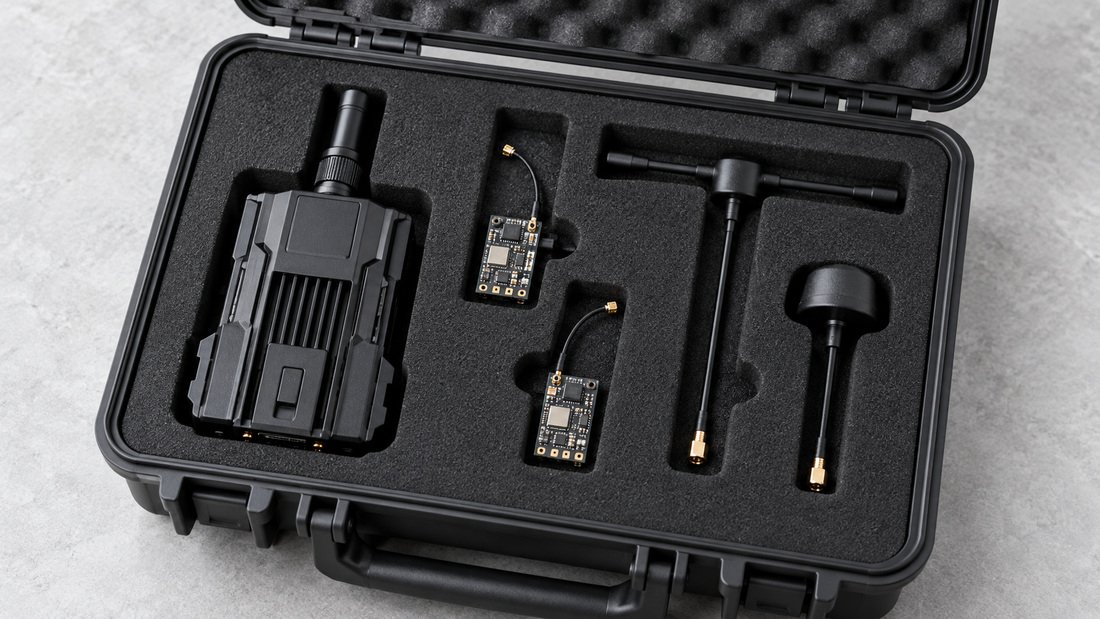
Choosing a telemetry ratio for drone soccer and youth programmes
Drone soccer is a fast, indoor team sport. Pilots need predictable control, and coaches need a link that behaves the same way across many airframes. Telemetry is useful for battery voltage, link quality and basic status, but it is rarely the primary reason a team flies.
For many youth programmes, a moderate telemetry ratio that provides useful status data without starving the control link is a sensible starting point. The exact number depends on your packet rate, your venue and how much telemetry your team actually uses.
What to consider before changing ratios across a fleet
- Whether all transmitters and receivers run compatible firmware versions.
- Whether the ratio is set on the transmitter, the receiver or both, depending on your firmware.
- Whether your radio handset or external module supports the setting you plan to use.
- Whether students or coaches will need to change the setting in the field.
- Whether your event rules or venue impose any radio restrictions.
A practical approach to testing
Change one variable at a time. Keep a written record of packet rate, telemetry ratio, power setting and antenna type. Test in the same venue with the same airframes. Compare control feel and telemetry usefulness. Do not rely on a single flight.
Common mistakes when working with ExpressLRS basics
- Assuming a lower telemetry ratio is always better. More telemetry can reduce control airtime.
- Changing telemetry ratio and packet rate at the same time, making results hard to interpret.
- Assuming telemetry ratio alone determines range. Range depends on antennas, power, environment and receiver sensitivity.
- Ignoring firmware compatibility across a mixed fleet of transmitters and receivers.
- Relying on remembered settings rather than documenting them per airframe.
- Expecting identical behaviour indoors and outdoors without testing.
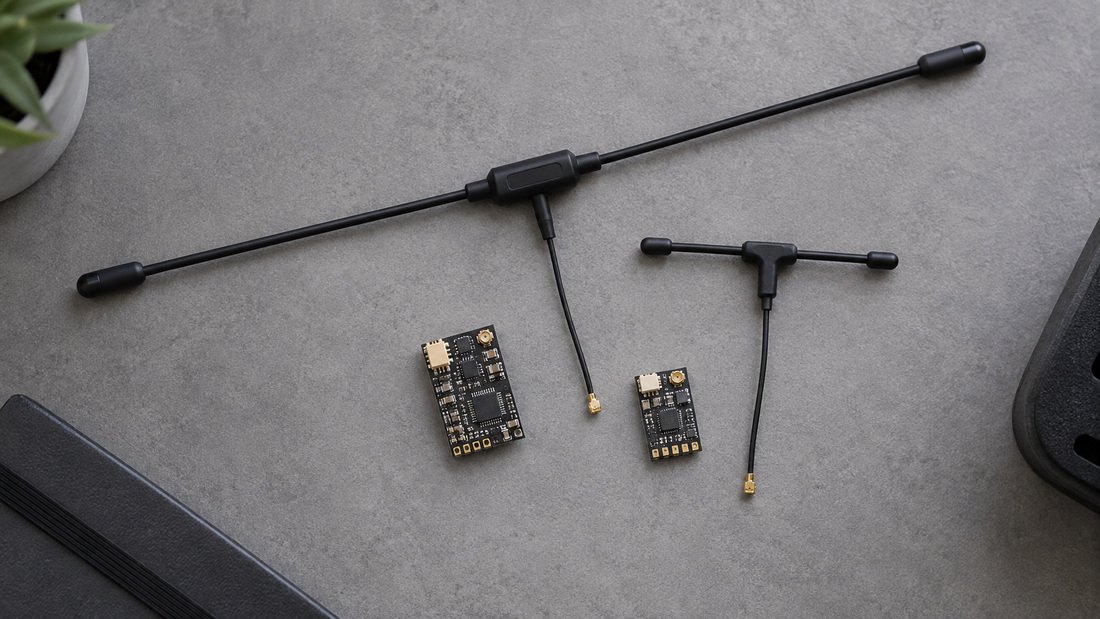
Procurement checklist for teams and programme managers
Use this checklist when specifying ELRS equipment for a school, club or event. It focuses on what to confirm in writing with your supplier.
- Confirm the receiver and transmitter module families you plan to standardise on.
- Confirm firmware compatibility between the transmitter module, receiver and your radio handset.
- Confirm which telemetry ratio and packet rate options are available on the firmware you will run.
- Confirm antenna connector types and what antennas are included or required.
- Confirm whether receivers are supplied with antennas, cables and mounting hardware.
- Confirm the documentation and support resources available for coaches and students.
- Confirm warranty terms, replacement policy and spare-part availability in writing.
- Confirm minimum order quantities, lead times and shipping terms in writing.
- Confirm whether custom labelling, packaging or firmware presets are available for your programme.
For unverified commercial terms, ask your supplier to confirm them in writing before you commit to a fleet purchase. Avoid relying on verbal assurances.
Where DPF fits into an ExpressLRS programme
Drone Parts Factory supplies ELRS receivers and ELRS transmitter modules for teams, schools and event organisers. Antenna selection is also part of the link, so review RF antennas alongside your radio settings. For compatibility questions, the ELRS receiver compatibility resources can help you check combinations before ordering.
If you are specifying equipment for a team kit, it helps to define the telemetry ratio and packet rate you intend to use, then confirm that your chosen receiver and transmitter module support that configuration.
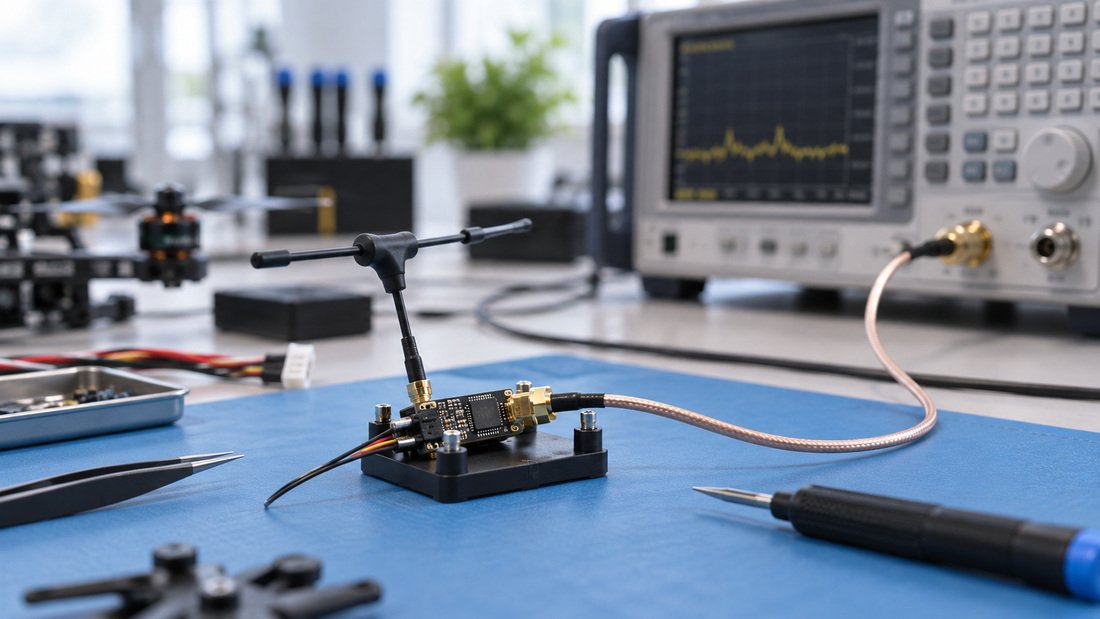
Planning a team fleet or event order? Request a Team Kit Quote and tell us your airframe count, radio handsets and intended settings.
Frequently asked questions
Does a lower telemetry ratio improve control latency?
Not necessarily. Lower telemetry ratios allocate more airtime to telemetry, which can reduce airtime for control. Control latency depends on packet rate, processing and the whole link chain. Test your specific setup before assuming a change will help.
What telemetry ratio should a drone soccer team use?
There is no single recommended number. Start with a moderate ratio that gives useful battery and link status data, then test in your venue. Document the setting per airframe and keep it consistent across the team where possible.
Can telemetry ratio affect range?
It can influence how airtime is shared, but range is mainly determined by transmit power, antennas, receiver sensitivity, orientation and interference. Treat ratio as one variable among many, not a range switch.
Is telemetry ratio the same as packet rate?
No. Packet rate is how often control frames are sent. Telemetry ratio is how the return path is scheduled relative to control frames. They are separate settings that interact in practice.
Do I need to set telemetry ratio on both transmitter and receiver?
It depends on your firmware and hardware. Some configurations handle the setting on the transmitter side, while others may require matching settings. Check your firmware documentation and confirm compatibility across your fleet.
Can changing telemetry ratio break my link?
Incorrect or incompatible settings can cause link issues. Change settings gradually, test on the bench and in a safe area, and keep a record of working configurations. If a setting causes problems, revert to a known working configuration.
Where can I verify compatibility before buying?
Check manufacturer firmware documentation and compatibility resources. For DPF product combinations, see the ELRS receiver compatibility page and confirm details with our team before ordering.
Conclusion
Telemetry ratio is one of the core ExpressLRS basics: it controls how airtime is shared between control and telemetry. Lower ratios give more telemetry, higher ratios give more control airtime. For drone soccer teams and youth programmes, the right choice is the one that keeps control predictable and telemetry useful in your actual venue.
Document your settings, test one change at a time and confirm compatibility before rolling out a configuration across a fleet. If you are planning a team kit, Request a Team Kit Quote and share your airframe count, radio handsets and target settings so we can help you specify the right combination.