Quick summary
F4, F7, H7 and AT32 are labels for the microcontroller family used on an FPV flight controller. F4, F7 and H7 come from STMicroelectronics (STM32); AT32 chips come from Artery. In general, F4 is the low-cost legacy tier, F7 is the mid-tier workhorse, H7 is the high-performance tier, and AT32 is an alternative mid-to-high tier. None of these are firmware names: Betaflight is flight controller software, and per the official documentation, “nearly every flight controller out there has a Betaflight target.” The real differences are CPU headroom, available pins and ports, cost, and long-term supply.
Key Takeaways
- The letter and number name the microcontroller family, not the board brand, firmware or quality level.
- F4 is usually enough for basic 5-inch freestyle, trainer and drone-soccer builds where cost and simplicity matter.
- F7 is the most common middle option for mixed team fleets that need more UARTs and sensors.
- H7 and AT32 give more processing headroom and peripherals for advanced or future-proof builds.
- For schools and clubs, buy-by-compatibility and spares availability usually beats chasing the newest chip tier.
- Ask suppliers for documented chip identity, Betaflight target, port list and change-notification terms — do not assume them.
What Are F4, F7, H7 and AT32 FPV Flight Controllers?
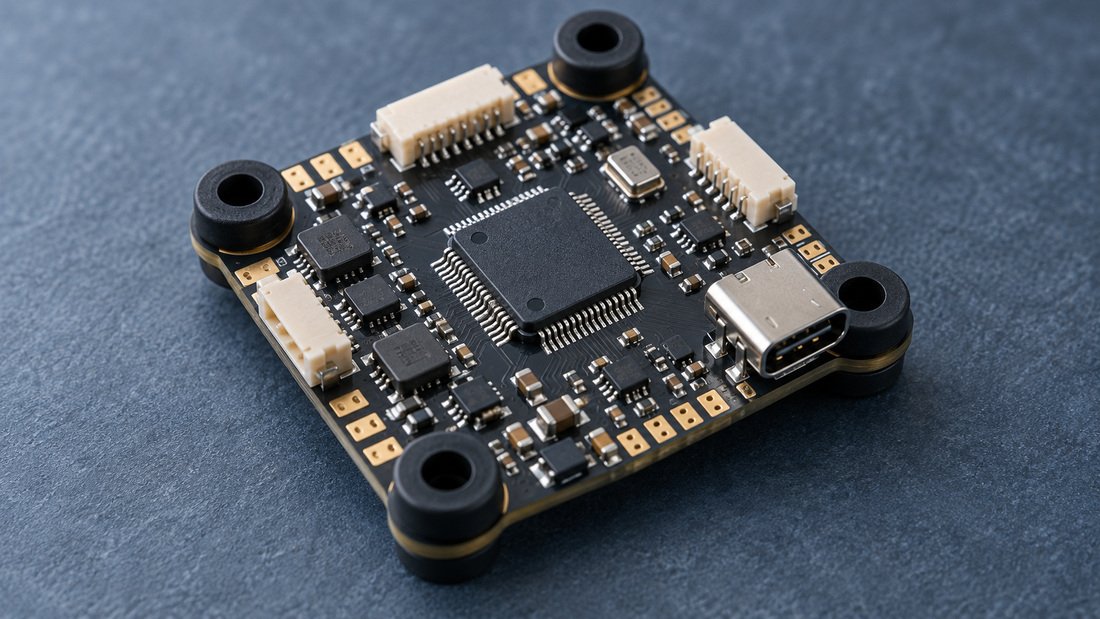
A flight controller is, in Betaflight’s own words, “basically a computer that reads the sensors (gyro, accelerometer, GPS, etc…), computes the desired actions to take, sends the commands to the ESC to control the motors, generate thrust, and keep the quadcopter in the air.” The microcontroller is the chip running that software.
Historically, per Betaflight’s documentation, the first flight controller software (Multiwii) “ran on 8-bit microcontrollers,” then the ecosystem “move[d] to more powerful microcontrollers” with Baseflight and Cleanflight on 32-bit chips. Today, F4, F7 and H7 are STM32 32-bit families, while AT32 is a compatible alternative family from Artery. When a listing says “F7 flight controller,” it usually means the board carries an STM32F7-class MCU.
Why the Confusion Exists
Three separate layers get mixed together in marketing copy:
- Chip tier — F4, F7, H7 or AT32; a hardware fact you can verify from the MCU marking or the schematic/BOM.
- Firmware — for example Betaflight; software you flash onto the board.
- Board vendor/design — layout, gyro choice, voltage regulation and connector quality.
A high-tier chip on a poorly laid-out board can underperform a well-designed mid-tier board. For team buyers, board quality and consistency across a batch often matter more than the chip letter.
F4, F7, H7 and AT32: Practical Comparison
The table below is general, order-of-magnitude guidance for typical FPV boards, not a specification for any product. Exact clocks, memory sizes, pin counts and supported features vary by specific part number and board design — always confirm against the actual datasheet and Betaflight target.
| Attribute | F4 (STM32F4-class) | F7 (STM32F7-class) | H7 (STM32H7-class) | AT32 (Artery) |
|---|---|---|---|---|
| Typical market position | Entry / legacy, still widely used | Mainstream mid-tier | High-performance | Alternative mid-to-high tier |
| Relative CPU headroom | Lowest of the four | Moderate | Highest of the STM32 options | Often positioned above F4, near F7/H7 depending on part |
| Typical team use case | Trainers, spare fleet boards, simple drone-soccer builds | General club fleets, mixed freestyle/race builds | Advanced builds, sensor- or feature-heavy setups | Cost-sensitive builds needing more headroom than F4 |
| Firmware support | Broad Betaflight target coverage | Broad Betaflight target coverage | Available on many current targets; confirm per board | Varies by board and Betaflight version — confirm per target |
| Relative cost | Usually lowest | Usually mid | Usually highest | Often competitive with F4/F7; confirm with supplier |
| Supply-risk consideration | Mature; long-available | Mature; long-available | Newer; continuity should be discussed with supplier | Second-source option; discuss continuity and firmware roadmap |
| Main trade-off | Firmware feature ceiling | Balance of cost and capability | Cost and complexity | Ecosystem familiarity and firmware availability |
Think of the choices as tiers, not a ranking of quality: F4 is the economy tier, F7 the mainstream tier, H7 the performance tier, and AT32 an alternative tier that can sit between them depending on the exact part.
Why the Microcontroller Tier Matters for Teams and Schools
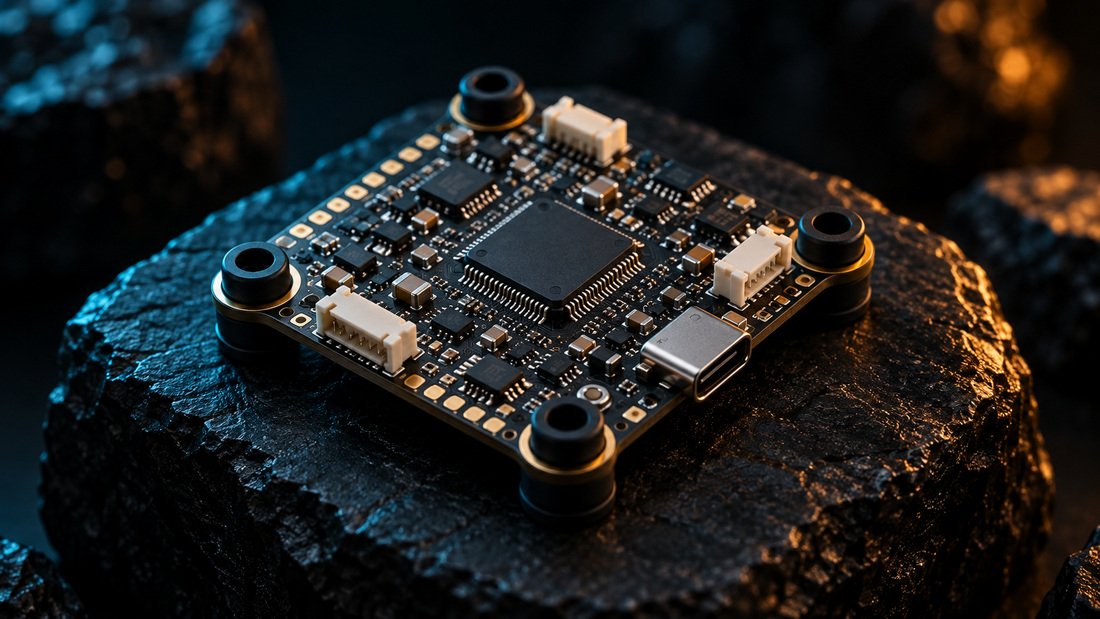
Fleet buyers are not optimizing a single pilot’s dream build. They are managing dozens of airframes that must be identical, repairable and predictable across a season. Chip tier affects three things that directly hit operations: how many peripherals you can connect, how easy it is to standardize firmware, and how replacement supply behaves over time.
Peripherals, Ports and Sensors
Betaflight notes wide sensor and peripheral support, including gyro, accelerometer, magnetometer, barometer and GPS, plus OSD for “pretty much any video system, be it analog or digital.” Higher-tier chips generally offer more UARTs and processing headroom for running these together — useful if you want GPS rescue, telemetry and on-screen data at once. If your program only needs basic acro flight and an OSD, an F4-class board may cover it.
If you need to match the controller to the rest of the power and video chain, review our flight controllers and electronic speed controllers pages for the categories available.
Firmware Uniformity Across a Fleet
The Betaflight documentation states it supports receiver protocols including “CRSF, Ghost, FPort, SBUS, Spektrum” and ESC protocols where “the main one used on nearly everything is DShot.” For a club, the practical rule is: choose a board whose Betaflight target and protocol support you can document, then keep one firmware version and one tune across the whole training fleet. Mixing chip tiers across airframes means more configuration differences and more coach time lost to setup.
Cost, Spares and Season Planning
F4-class boards are typically the cheapest to replace, which matters when a youth program expects a percentage of airframes to be damaged each term. H7-class boards usually cost more, so a spare-parts budget should be planned accordingly. AT32 can be attractive when a supplier offers it at a competitive price with a stable target, but firmware support should be confirmed in writing rather than assumed.
Planning a full team kit? DronePartsFactory supplies FPV electronics for clubs, schools and drone-soccer programs, and we can help you match flight controllers to the rest of your platform. Request a Team Kit Quote with your build list and fleet size.
How to Choose the Right Tier for Your Program
Choose the lowest tier that meets your flight, sensor and firmware requirements, then verify spares and documentation. Escalating to a higher tier without a concrete need usually adds cost and configuration complexity without improving the student experience.
- Start with requirements, not chip names. List the sensors, receiver protocol and video system each airframe must support.
- Match by firmware target. Confirm the exact board revision has a maintained Betaflight target.
- Standardize one SKU per role. Trainer, race and drone-soccer airframes can share the same controller if requirements overlap.
- Budget spares per airframe. A spare-parts ratio is more useful than a single unit price.
Common Mistakes
- Assuming a higher-tier chip automatically means a better board — layout, gyro and voltage regulators also matter.
- Buying mixed tiers for one fleet and creating configuration drift.
- Treating “AT32” as universally supported without checking the specific Betaflight target.
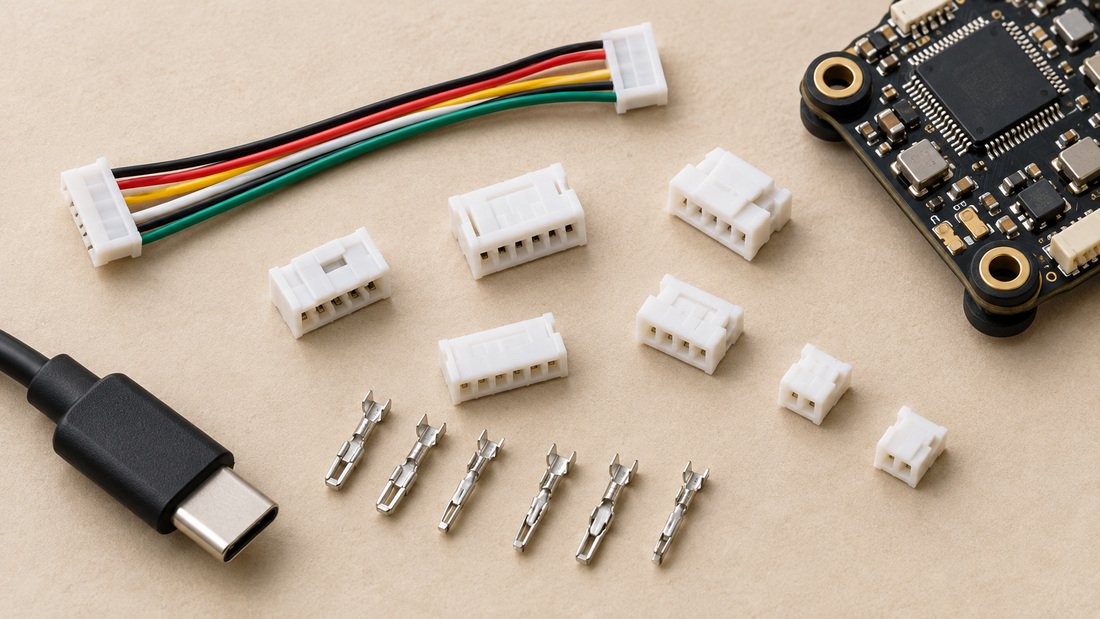
- Ignoring connector and wiring compatibility when replacing boards mid-season.
- Ordering a batch without confirming firmware version, config files and documentation.
Buyer Checklist for Flight Controller Procurement
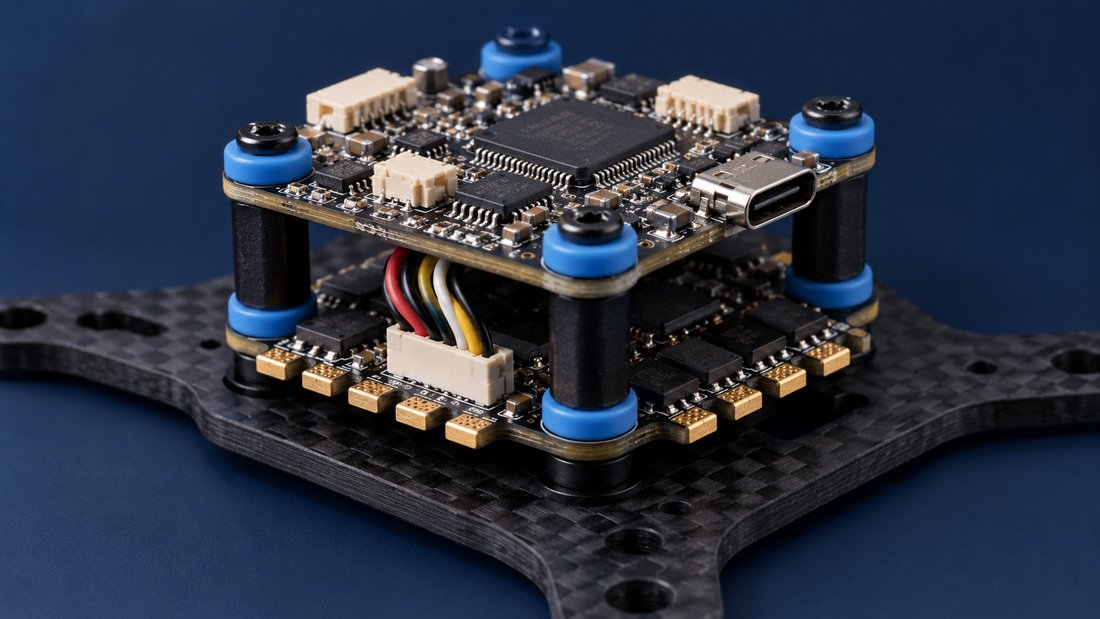
Use this list before confirming any order. Items marked “confirm with supplier” are commercial or technical details you should verify in writing rather than infer from a listing.
- Exact MCU part number, not just “F4” or “H7” (confirm with supplier).
- Betaflight target name and the minimum firmware version supported (confirm with supplier).
- Available UARTs, motor outputs and sensor ports, documented per board revision.
- Supported receiver protocols (for example CRSF, SBUS) and ESC protocols (for example DShot).
- Input voltage range and BEC outputs, matched to your ESC and video system.
- Physical dimensions, mounting pattern and connector type for drop-in replacement.
- Sample unit for bench verification before committing to a fleet-size order.
- Batch consistency: whether all units in one order share the same board revision.
- Spare-parts availability and replacement lead times (confirm with supplier).
- Documentation: pinout diagram, wiring guide and stock configuration files.
- Change-notification process if the board revision or firmware requirement changes.
- Price breaks, MOQ and packaging for kit assembly (confirm with supplier).
Boards rarely ship alone. Match them with FPV electronics such as FPV video receivers and check the FPV DVR options if your program records flights for training review.
Frequently Asked Questions
Is a higher-tier chip always better?
No. A higher tier can add processing headroom and ports, but board layout, gyro choice and power design also determine how well it flies. Buy the tier that meets your documented requirements.
Can I run Betaflight on F4, F7, H7 and AT32 boards?
Betaflight documents broad target coverage and states that “nearly every flight controller out there has a Betaflight target.” Coverage is per board, not per chip family, so confirm the exact target for the exact revision you intend to buy.
Which tier is best for drone soccer and school programs?
Many programs can standardize on F4- or F7-class boards, because cost, repairability and fleet uniformity usually outweigh raw processing power. If your rules or sensors demand more, document why before moving up a tier.
What is the difference between STM32 and AT32?
STM32 is STMicroelectronics’ microcontroller family (F4, F7, H7 and others). AT32 is Artery’s family. They are different silicon from different vendors, even when board layouts look similar; firmware support and long-term availability should be confirmed separately.
Does the chip tier change receiver or ESC compatibility?
Compatibility is mainly a firmware and board-design matter. Betaflight lists receiver protocols such as CRSF, Ghost, FPort and SBUS, and ESC protocols where DShot is “the main one used on nearly everything.” Confirm the specific board supports the protocol your radios and ESCs use.
How many spare flight controllers should a club stock?
There is no universal number. Estimate from past damage rates, season length and repair turnaround, then confirm replacement lead times with your supplier so a single failure does not ground an airframe for weeks.
Can DronePartsFactory supply controllers matched to our existing fleet?
We supply flight controllers and FPV electronics for team, school and OEM/ODM programs. Share your current board details, firmware target and fleet size, and we can confirm what we can match. Exact terms are confirmed in your quote.
Conclusion
F4, F7, H7 and AT32 describe the microcontroller behind an FPV flight controller, and they map to cost and capability tiers: F4 for economy builds, F7 as the mainstream balance, H7 for performance headroom, and AT32 as an alternative option. For clubs, schools and drone-soccer teams, the winning strategy is to define requirements first, confirm the firmware target and board revision, then standardize one controller across the fleet with spares planned in.
Next step: send DronePartsFactory your fleet size, firmware target and the airframes you fly. We will confirm the controller options we can match and follow up with written commercial terms. Request a Team Kit Quote.