Quick summary
A school-grade drone should pass a set of repeatable impact tests, not just one. In practice that means: a drop test onto a hard floor from the height a student would realistically hold it, a collision or wall-impact test at moderate speed, a repeated-crash durability test, a cage or propeller-guard impact check, a battery-retention test, and a post-impact functional and temperature check. The aim is simple: after a normal classroom crash, the drone still flies, nothing sharp or hot is exposed, the propeller stays inside its guard, and the battery stays put. Ask your supplier for the actual test method, pass criteria and report, not just the word “tested.”
Key Takeaways
- One drop test is not enough. Schools need a small test suite covering drop, collision, repeated crash, guard integrity, battery retention and post-impact function.
- Test conditions matter more than the test name. Height, floor type, orientation, speed, battery state and number of cycles all change the result.
- Impact resistance and child-safety compliance are different things. A tough drone still needs toy/electrical safety compliance if it is used by younger students.
- Ask for the test method and pass/fail criteria in writing, plus photos or video of the actual unit, not a marketing summary.
- Match the test level to the age group and venue: primary-school indoor programs need stricter edge, guard and battery-retention checks than supervised teen racing clubs.
- Warranty wording is separate from durability testing. In the US, consumer warranty law sets baseline rules for written warranties, but it does not replace impact testing.
Why school drones need impact testing at all
Classroom drones crash constantly, and that is the point. Drone soccer teams intentionally bump, block and knock balls off course. Beginners drop transmitters, land hard and fly into nets and walls. Durability is therefore not a premium feature; it is the baseline requirement that decides whether a program runs a full season or spends it waiting for spares.
Impact testing is also a safety issue, not only a cost issue. A cracked propeller guard, a loosened battery or a deformed cage turns a routine crash into an injury risk or a fire risk. Testing exists to prove the design fails safely when it fails at all.
For buyers, this sits inside the wider topic of testing and inspection: the documented, repeatable evidence that a batch matches the sample you approved.
The core impact test suite for a school-grade drone
Below is a practical suite. Treat the parameters as defaults to discuss with your supplier, not as universal standards. The specific values must be agreed in writing for your product, age group and market.
1. Single drop test (hand height, hard floor)
Drop the fully assembled drone, power off and then powered on, from roughly student hand height onto a hard indoor floor such as tile or concrete. Test multiple orientations: flat, on a corner of the cage, and on the motor arms.
Pass criteria normally include: cage and guards remain attached, no sharp edges or exposed wiring, propellers stay inside the guard, motors still spin freely, and the frame shows no crack that grows after a second drop. Record the exact height and surface, because a drop onto gym flooring tells you far less than a drop onto tile.
2. Collision / wall impact test
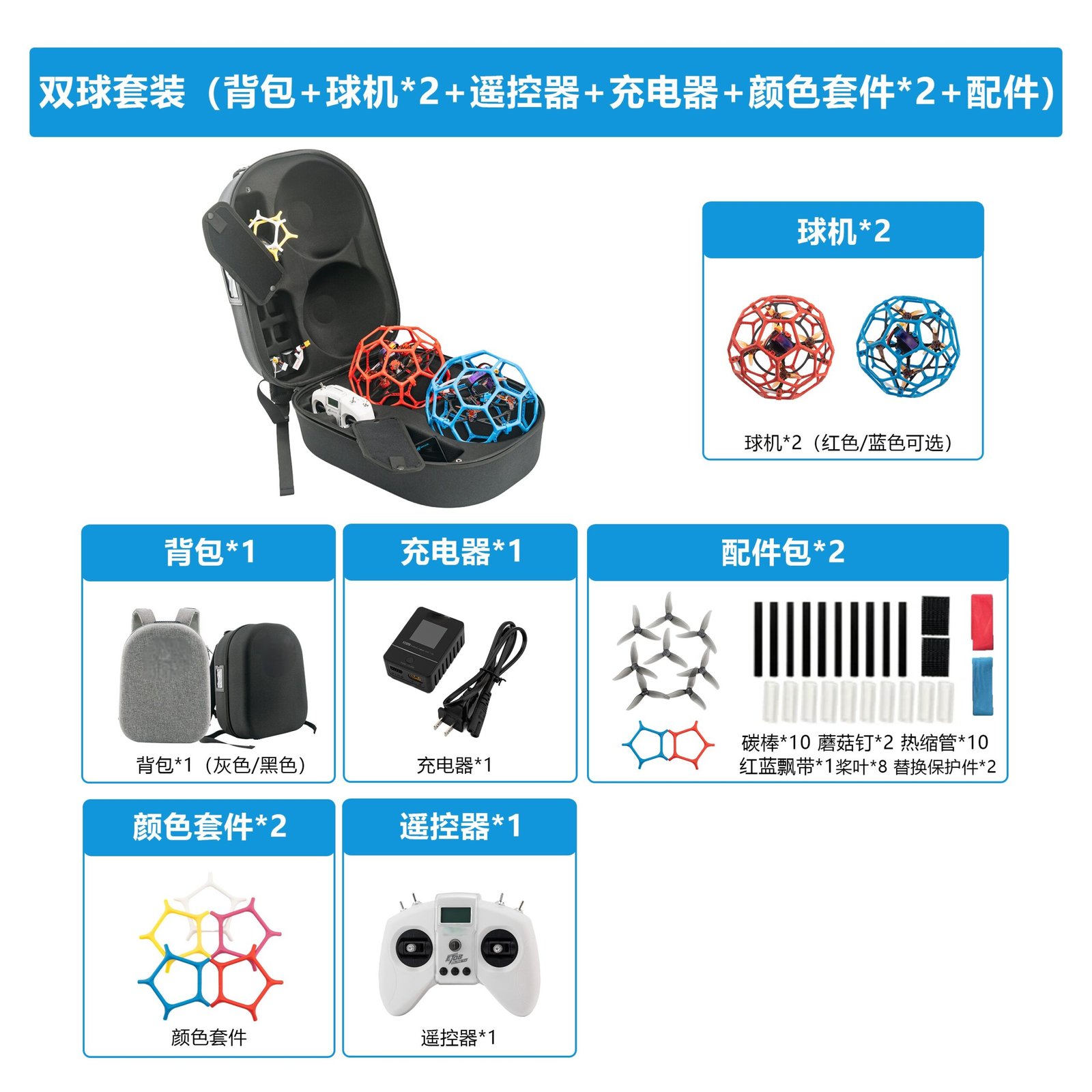
Fly or propel the drone into a flat vertical surface at the speed a beginner or drone soccer player would realistically produce indoors. Repeat from several approach angles and on different sides of the airframe.
What you are checking is not cosmetic damage but whether the impact transfers to the battery, flight controller or camera. A drone that survives a wall hit but shifts its battery 3 mm is not a passing design.
3. Repeated-crash durability test
A single drop proves almost nothing about a season. A repeated-crash test cycles the same unit through a defined number of drops and collisions, checking after each round whether the frame, guards, motor mounts and connectors still meet the same pass criteria.
This is the test that reveals fatigue: hairline cracks at motor mounts, guards that loosen, screws that back out, connectors that develop intermittent contact. Ask how many cycles were run and whether any parts were replaced mid-test.
4. Propeller guard and cage impact test
For drone soccer and indoor training, the cage or guard is the primary safety barrier. Apply a defined impact to the guard itself, including a side load and a corner load, then confirm the propeller cannot escape the protected volume and cannot contact the guard material.
Also check that guard deformation does not reach the propeller tips. A guard that bends inward can contact a spinning propeller and shatter it, which is worse than a guard that simply cracks.
5. Battery retention and connector test
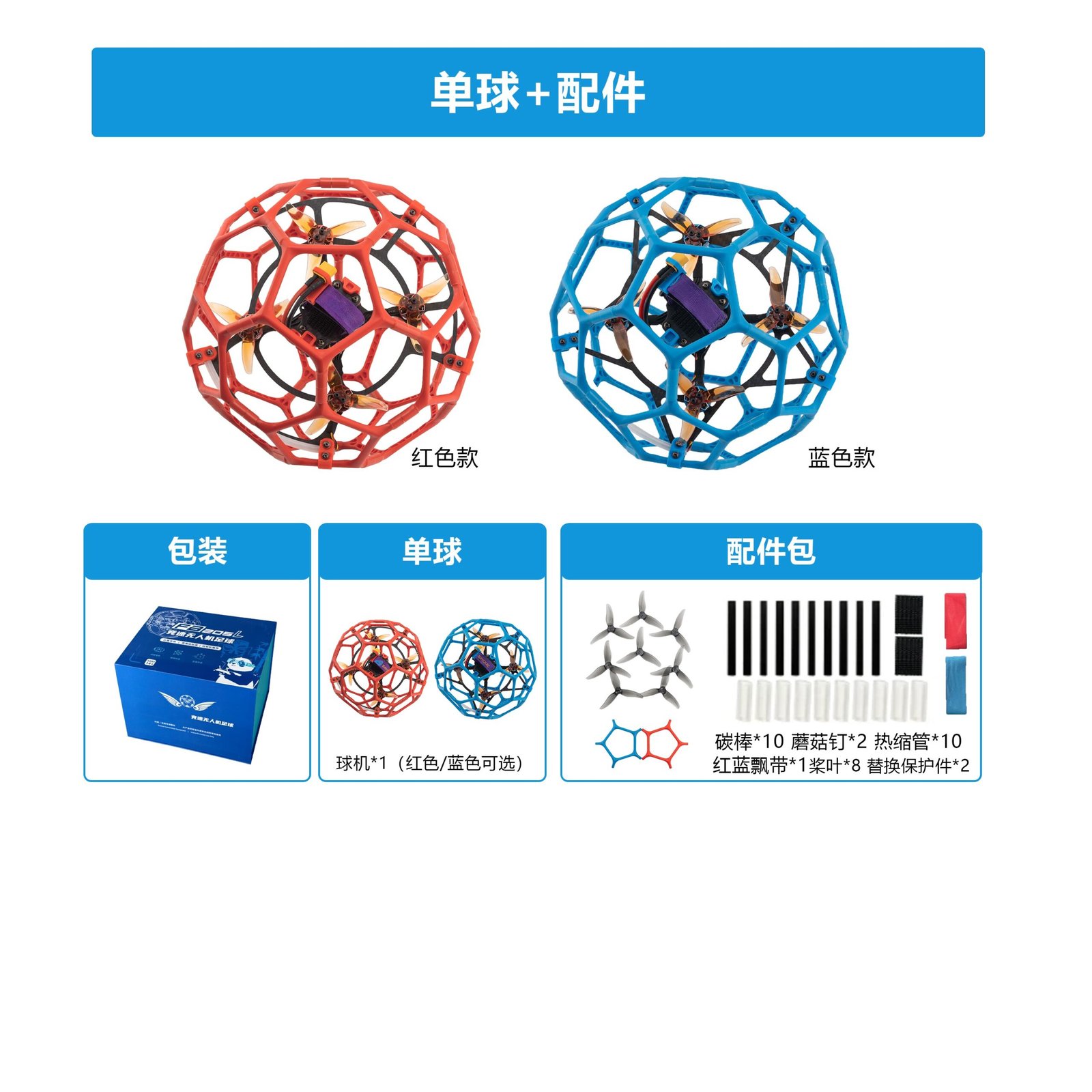
Impact is the moment a battery is most likely to move. Test that the retention mechanism holds the pack in place after drop and collision, that the connector does not partially disconnect, and that no impact creates a short or a hot connector.
After each impact, check pack temperature, connector condition and whether the drone still powers on normally. Any intermittent power loss after impact should be treated as a fail, even if the drone later flies.
6. Post-impact functional and thermal check
Every impact test should finish with the same sequence: visual inspection, motor spin check, hover or short flight, control response check, and a temperature check on the battery and motors. A drone that passes visually but drifts, vibrates or heats abnormally has failed the real test.
Comparison: what each test catches and what it misses
| Test | What it catches | What it can miss |
|---|---|---|
| Single drop, hard floor | Brittle cage material, weak clips, sharp edges after breakage | Fatigue, repeated-crash wear, connector loosening over time |
| Collision / wall impact | Energy transfer to battery, camera and flight controller | Slow cracking, guard deformation that appears only after heat cycles |
| Repeated-crash durability | Hairline cracks, screw loosening, intermittent connectors | Rare high-energy impacts that exceed the test condition |
| Guard / cage impact | Propeller escape, guard-to-propeller contact, protective volume integrity | Material ageing, UV or chemical exposure in long-term storage |
| Battery retention | Pack movement, partial disconnection, heat at the connector | Long-term cell degradation unrelated to impact |
| Post-impact function | Drift, vibration, thermal faults, control errors | Faults that appear only after many flights following the damage |
Trade-off: more testing means higher unit cost and longer development time. A club buying a handful of units may accept a shorter suite; a school district buying for several sites should not. Decide the suite before you negotiate price, because retrofitting testing later is more expensive than designing for it.
Safety compliance is not the same as durability testing
Impact testing answers “does it survive?” Compliance testing answers “is it allowed to be sold for this user group?” Keep them separate in your specification.
Depending on the market, age grading and product classification, relevant frameworks may include toy safety standards, electrical safety requirements for low-voltage equipment, battery transport and safety rules, and radio equipment requirements. Which ones apply depends on the country, the age of the intended user and how the product is classified. Ask your supplier which standards they have tested against, for which markets and under which classification, and request the reports rather than a claim.
For programs that need to document this properly, structured safety and compliance support is usually faster than assembling evidence after the purchase order.
A short note on warranty wording (US context)
Durability testing and warranty are related but not interchangeable. In the United States, the federal Magnuson-Moss Warranty Act governs warranties on consumer products, and the FTC’s business guidance explains that sellers make implied warranties automatically, that implied warranties generally cannot be disclaimed if a written warranty is offered (state law variations apply), and that implied warranties do not cover problems caused by abuse, misuse, ordinary wear, failure to follow directions or improper maintenance.
That last point matters for schools: a drone used outside its stated limits may not be covered even if it passed impact testing. See the FTC guidance at https://www.ftc.gov/business-guidance/resources/businesspersons-guide-federal-warranty-law. This is US consumer law, not a global or B2B rule; if you buy outside the US or as a business, confirm the applicable terms in your own jurisdiction and contract.
When you compare suppliers, read the warranty and after-sales program alongside the test report, and ask what specifically voids coverage: crash damage, water exposure, modified firmware, use outside the stated age group.
Planning a school or club program? Tell us your age group, venue and expected crash volume, and we will help you define the right impact-test expectations for your drone soccer units before you commit to a purchase order.
Common mistakes when evaluating school drone durability
- Accepting “drop tested” as a specification. Without height, surface, orientation, battery state and pass criteria, the phrase is marketing, not evidence.
- Testing only the airframe. Guards, battery retention, screws and connectors are the parts that actually fail in classrooms.
- Testing one sample once. A single unit proves a prototype, not a production batch.
- Confusing impact resistance with child safety. A tough drone can still fail edge, electrical or material requirements for younger users.
- Ignoring the repair path. A drone that survives crashes but cannot be fixed cheaply with spare parts still drains a program budget.
- Assuming warranty covers crash damage. Read the exclusions, including abuse, misuse and ordinary wear.
- Over-specifying for the youngest users, then over-buying. Match the test level and price to the actual program, not to a hypothetical worst case.

Procurement checklist: what to request in writing
- Test plan: which impacts are tested, at what height or speed, on which surfaces, and in which orientations.
- Pass criteria: the exact conditions that count as a pass and as a fail for each test.
- Sample size and production link: how many units were tested, and whether the tested configuration matches the batch you will receive.
- Repeat testing method: how many cycles, and whether parts were replaced mid-test.
- Battery and connector checks: retention method, post-impact temperature limits and continuity checks.
- Guard and cage integrity: the defined protective volume and the load applied to the guard.
- Compliance documents: which standards were tested, for which markets and age classifications.
- Spare parts and repair flow: which components are user-replaceable and how spares are ordered.
- Warranty terms and exclusions: duration, coverage, exclusion list and claim process.
- Change notification: how you will be told if a component, material or supplier changes after approval.
Items 1, 2 and 3 belong in your quality control agreement, not in a chat thread. If a supplier cannot answer them in writing, treat that as a real signal about the rest of the program.
Frequently asked questions
How many drop tests should a school drone pass?
There is no universal number. A practical approach is a defined drop set across several orientations, followed by a repeated-crash cycle that reflects a term of use in your venue. The number matters less than whether the method, height, surface and pass criteria are documented and repeatable.
At what height should a school drone be drop tested?
Use a height that reflects real student handling, typically hand height for the age group rather than an arbitrary large number. State the height in the specification, because results change quickly with height, and confirm the exact value with your supplier for your product.
Is a collision test the same as a drop test?
No. A drop test is vertical, gravity-driven and usually free-fall. A collision test is horizontal or angled and driven by flight speed. They stress different parts: drops load the cage and mounts, collisions load the battery, electronics and camera mounts.
Does passing an impact test mean the drone is child-safe?
No. Impact testing shows durability. Child-safety and electrical safety compliance is a separate evaluation against the standards and age classifications that apply in your market. Ask for both, and ask which standard and classification was used.
Does a warranty cover crash damage after these tests?
Usually not automatically. In the US, the FTC’s guidance on the Magnuson-Moss Warranty Act notes that implied warranties do not cover abuse, misuse, ordinary wear, failure to follow directions or improper maintenance. Crash damage is often treated as one of these. Confirm the exact exclusions in writing for your market and contract type.
How do we check that production units still match the tested sample?
Use a defined inspection routine at batch level, with agreed sample sizes and checkpoints on the components most likely to change: cage material, guard thickness, battery retention hardware and connectors. Document the approval sample and require notification of any change.
Should we test every unit or a sample?
Destructive impact testing is normally done on samples, not on every unit. Non-destructive checks such as visual inspection, motor spin, connector seating and short flight checks can be applied more broadly. Agree which checks are per-unit and which are batch-level.
What if the supplier only provides a marketing claim?
Ask for the test method, the pass criteria and the report or media from the actual test. If those are not available, treat the durability claim as unverified and factor that into pricing, spare parts planning and warranty expectations.
Conclusion: buy evidence, not adjectives
A school-grade drone should survive the way students actually use it: dropped from hand height, crashed into walls and nets, bumped repeatedly in drone soccer play, and then expected to fly again. The test suite that proves this is not complicated, but it must be specific. Height, surface, orientation, speed, cycles, pass criteria and post-impact checks all need to be written down.
Combine that with the compliance documents relevant to your market and age group, a clear spare-parts and repair path, and warranty terms you have actually read. Then compare suppliers on evidence rather than adjectives.
Next step: send us your program details, age group, venue and expected crash volume, and we will help you build the impact-test and inspection requirements into your drone soccer order.