Quick summary
Drone soccer kits should carry a clear age grading that reflects both the product’s safety classification and the developmental readiness of the player. In practice, most organized drone soccer programs are designed for participants aged roughly 10 to 18, with many school leagues starting at age 10–12 and competitive teams extending to 18. The kit’s age grade is not just a marketing label: it interacts with children’s product and sports equipment rules, which vary by country. Buyers should confirm the intended age range, the product’s regulatory category, and the specific compliance documents before purchasing for a school or youth program.
Key Takeaways
- Age grading for drone soccer kits combines two things: the regulatory classification of the product and the practical readiness of the player.
- Many drone soccer programs target ages 10–18, but the exact starting age depends on league rules, school policy, and the kit’s design.
- Children’s product and sports equipment rules are not the same. A product can be a sports item in one market and a children’s toy in another.
- Battery-powered kits add shipping and handling obligations that are separate from age grading.
- Procurement teams should request written confirmation of age grading, intended use, and compliance documents rather than relying on catalog descriptions.
What does age grading mean for a drone soccer kit?
Age grading is the manufacturer’s stated age range for which a product is intended. For drone soccer kits, it serves two purposes. First, it tells schools and clubs whether the kit is designed for their student age group. Second, it signals how regulators and customs officials may classify the product.
In many jurisdictions, a product marketed for children under a certain age is treated as a children’s product. That triggers additional safety, labeling, and testing expectations. A sports equipment classification may carry different obligations. The same drone soccer kit can fall into different categories depending on how it is marketed, who it is sold to, and what the packaging says.
This is why age grading is not a single number you can copy from one market to another. It is a decision that should be documented and defensible.

What age range do most drone soccer programs use?
Drone soccer is a team sport where players fly enclosed drones through hoops and score goals. Because it involves hand-eye coordination, spatial awareness, and rule-following, most youth programs set a minimum age rather than a maximum.
Common patterns include:
- Primary or elementary levels: Ages 10–12, often with simplified rules and close supervision.
- Middle school levels: Ages 12–14, with standard competition formats.
- High school and open leagues: Ages 14–18, including regional and national competitions.
These ranges are illustrative, not universal. Different leagues, countries, and school districts set their own eligibility rules. Some programs include older participants in open divisions. The key point is that the program age range and the kit’s age grade should align.
If a school plans to use a kit with students younger than the manufacturer’s stated age grade, that decision should be reviewed against local requirements and the school’s own risk policies.
Why the starting age varies
The starting age depends on three factors: the physical size of the drone and controller, the cognitive demands of the game, and the supervision ratio the program can provide. A kit designed for older players may have controls that are harder for younger students to handle. A kit designed for younger players may not meet the durability needs of a competitive team.
How do children’s product and sports equipment rules interact?
This is the core compliance question. Children’s product rules and sports equipment rules are separate regulatory frameworks, and a drone soccer kit may touch both.
A children’s product is generally defined by the intended user’s age—often under 12 or under 14, depending on the jurisdiction. Such products typically face requirements for safety testing, labeling, and warnings. Sports equipment, by contrast, is often regulated differently, with attention to performance standards, protective design, and adult supervision expectations.
A drone soccer kit sold to a school for a youth league could be viewed as a children’s product in one market and as sports equipment in another. The classification can depend on the marketing language, the age grade on the packaging, and whether the product is sold directly to consumers or to institutions.
Comparison: children’s product vs. sports equipment framing
| Aspect | Children’s product framing | Sports equipment framing |
|---|---|---|
| Primary trigger | Intended for children under the local age threshold | Intended for organized sport or training |
| Typical focus | Safety testing, small parts, labeling, warnings | Performance, durability, supervision, facility rules |
| Age grade role | Determines whether children’s rules apply | Guides eligibility and supervision level |
| Documentation | Test reports, declarations, tracking labels | Spec sheets, conformity documents, league approvals |
| Common buyer | Parents, schools, youth programs | Clubs, leagues, event organizers, schools |
This table is a general guide. Specific obligations depend on the destination country and the product’s actual design and marketing. Buyers should verify requirements with a qualified compliance professional or the relevant authority.
What to confirm in writing
Because classification can change with marketing and packaging, procurement teams should ask suppliers to confirm:
- The intended age range and whether the product is marketed as a children’s product.
- The regulatory category the supplier uses for the destination market.
- Which safety standards, if any, the product has been tested against.
- Whether labeling and warnings are included for the target market.
For a broader view of how classification decisions are documented, see the export control and product classification resource.
How do batteries affect age grading and shipping?
Drone soccer kits are battery-powered, so age grading is not the only compliance consideration. Lithium batteries are subject to transport rules that apply regardless of the user’s age.
The US Federal Aviation Administration notes that lithium batteries must undergo safety testing and that all lithium ion batteries can overheat and undergo thermal runaway, which can occur without warning due to damage, overcharging, or improper packing. For air travel, spare lithium ion batteries must be carried in carry-on baggage only, with terminals protected from short circuit, and lithium ion batteries are generally limited to 100 watt hours (Wh) per battery, with some larger batteries allowed under specific conditions. See the FAA guidance at https://www.faa.gov/hazmat/packsafe/lithium-batteries.
For schools and clubs, this matters in two ways. First, if staff or teams travel with spare batteries, they need to follow carrier rules. Second, if the program imports kits, the battery shipping documentation should be part of the procurement package.
For more on documentation and transport, see the battery shipping compliance page.
Common mistakes when setting age grades
- Copying a competitor’s age grade. Age grading should reflect the specific product, its marketing, and the destination market—not a rival’s catalog.
- Assuming sports equipment is exempt. Sports framing does not automatically remove children’s product obligations.
- Ignoring the marketing language. Phrases like “for kids” or “youth drone” can influence classification.
- Forgetting battery rules. Age grading and battery transport are separate but both matter for school programs.
- Relying on verbal assurances. Ask for written confirmation and supporting documents.
- Using one age grade globally. Different markets may have different thresholds and expectations.
Procurement checklist for schools and clubs
Use this checklist before finalizing a drone soccer kit purchase:
- Confirm the program’s participant age range and supervision capacity.
- Request the supplier’s stated age grade in writing.
- Ask whether the kit is classified as a children’s product, sports equipment, or both in your market.
- Request available safety test reports, declarations of conformity, and labeling samples.
- Verify battery documentation, including watt-hour ratings and shipping paperwork.
- Check whether spare parts and replacement components carry the same age guidance.
- Review the supplier’s ability to support school purchase orders, invoices, and bulk delivery.
- Confirm lead times and shipping terms in writing rather than assuming standard terms.
- Ask how the supplier handles firmware, controller, and radio compatibility for your region.
- Document who is responsible for local compliance if the kit is imported.
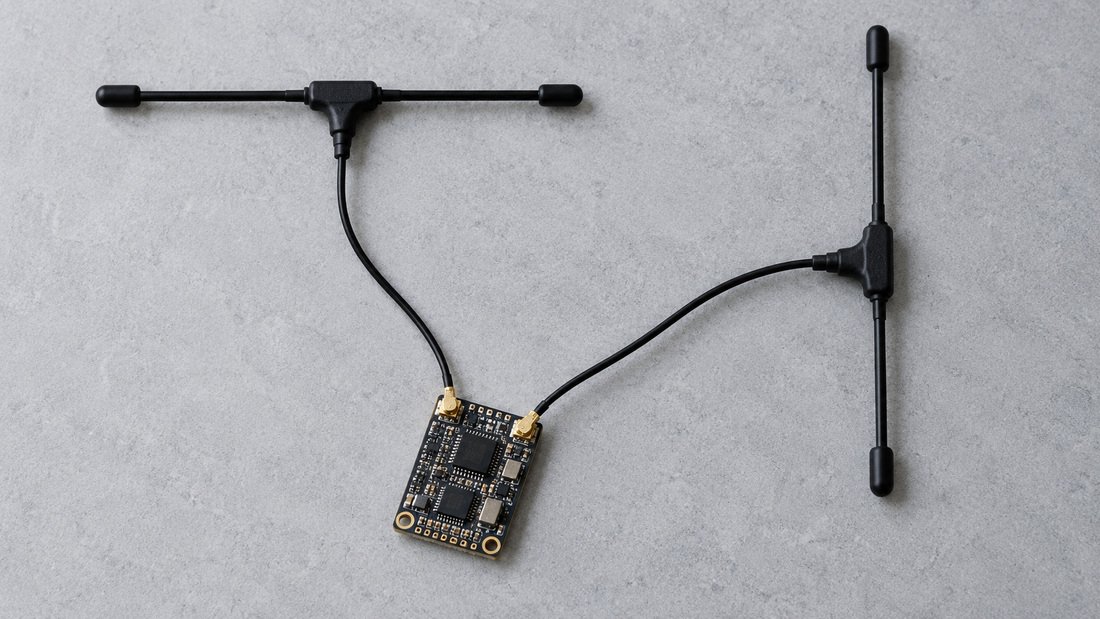
Radio components such as ELRS (ExpressLRS) receivers and transmitters are part of many drone soccer setups. Their regional compliance is separate from age grading but should be confirmed for the destination market.
Trade-offs to weigh
There is no single correct age grade. Buyers balance several trade-offs:
- Younger access vs. compliance burden. A lower minimum age may broaden program reach but can trigger additional children’s product requirements.
- Competitive performance vs. durability. Kits built for older, competitive players may be less forgiving for beginners.
- Standardization vs. flexibility. A single kit for all ages simplifies purchasing but may not fit every group.
- Cost vs. documentation. More complete compliance documentation can add cost but reduces risk for schools.
Mid-article CTA
If you are planning a school or youth drone soccer program, our team can help you review kit options and the documentation your institution needs. Request a School Program Quote to start the conversation.
Frequently asked questions
1. Is drone soccer suitable for children under 10?
Many organized programs start around age 10, but suitability depends on the specific kit, supervision, and local requirements. If you plan to include younger children, confirm the product’s age grade and review it against your school’s policies.
2. Does a drone soccer kit count as a children’s product or sports equipment?
It can be either or both, depending on the market, the intended user age, and how the product is marketed. Ask the supplier for their classification rationale and confirm it for your destination country.
3. Do I need different age grades for different countries?
Potentially yes. Age thresholds and children’s product definitions vary by jurisdiction. A single global age grade may not satisfy every market’s expectations.
4. What documents should I request from a supplier?
Request the stated age grade, intended-use statement, available test reports, declarations of conformity, labeling samples, and battery documentation. Confirm all terms in writing.
5. How do lithium battery rules affect school drone programs?
Battery transport rules apply to spare batteries and can affect travel and shipping. The FAA provides guidance on lithium battery safety and air transport at https://www.faa.gov/hazmat/packsafe/lithium-batteries. Check with your carrier and shipper for specific requirements.
6. Can a school use a kit with students outside the stated age range?
That is a program and policy decision. If the school considers it, document the rationale, supervision plan, and any local requirements. The manufacturer’s age grade is one input, not the only one.
7. Does age grading affect warranty or returns?
Warranty and return terms are commercial matters that vary by supplier and market. Ask for the specific policy in writing rather than assuming coverage for out-of-range use.
Conclusion and next step
Age grading for drone soccer kits is a practical and regulatory decision. It should align the kit’s design and marketing with the age of the players and the rules of your market. For schools and youth programs, the safest approach is to confirm the intended age range, classification, and supporting documents in writing before purchase.
To discuss your program’s needs, review kit options, and request documentation, Request a School Program Quote.