Quick summary
Mounting the battery in a drone soccer ball means fixing a small LiPo pack inside the cage’s inner frame, on the tray built for it, so the pack cannot shift when the ball spins, lands or takes a hit. Secure it with the frame’s strap or moulded clip, keep the pack near the ball’s centre of gravity, and route the power lead away from props and cage struts. The exact tray, strap and connector depend on your ball’s frame design, so treat any generic method as a starting point and check it against the parts you actually own.
Key Takeaways
- The battery lives on the inner frame, not on the outer protective shell, and must be locked against movement in every axis.
- Centre-of-gravity position matters more than perfect symmetry; a ball that is nose-heavy or tail-heavy will roll and drift in flight.
- Straps and clips are wear items. Inspect them as often as you inspect propellers.
- Connector type, cell count and capacity are decided by the frame and electronics you bought, not by a universal standard.
- For clubs and schools, standardising one battery tray and strap across the whole fleet speeds up turnarounds between matches.
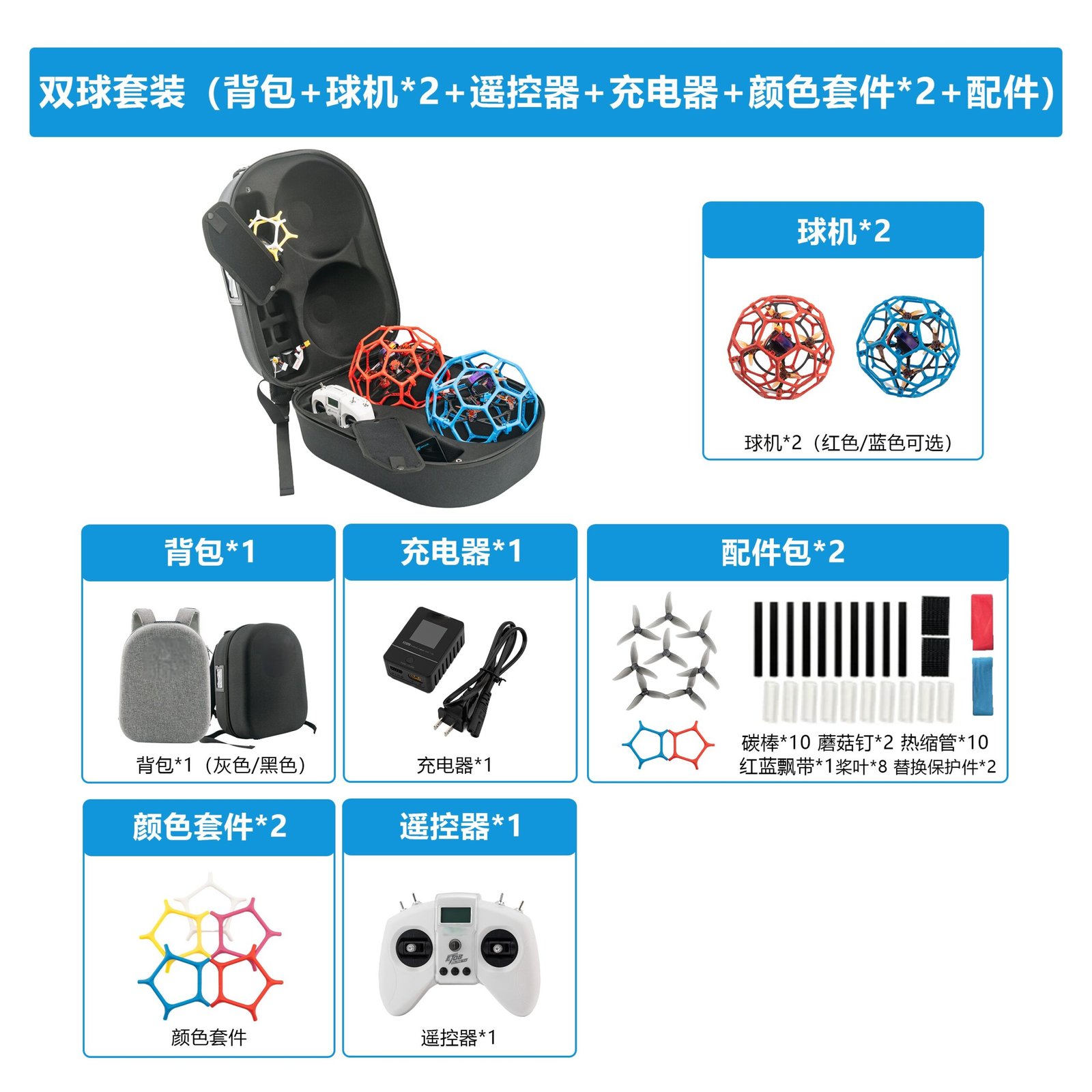
What is the drone soccer ball cage and structure?
The drone soccer ball cage and structure is the combination of an outer shell and an inner frame that together hold a small quadcopter inside a sphere. The outer shell absorbs impacts and rolls; the inner frame carries the motors, flight controller, electronic speed controllers (ESCs) and the battery. Understanding which part does what is the first step to mounting a battery correctly.
A drone soccer ball is not a rigid box. It is a sprung structure: the shell flexes on impact and the inner frame holds the mass. If the battery is strapped to a flexing shell, the pack will move relative to the motors and the ball’s balance will change mid-game. That is why manufacturers generally design the battery mount on the inner frame, even when the pack is inserted through an opening in the shell.
Because propulsion, control and power hardware all sit inside a small volume, the layout is a compromise. A slightly larger battery may give longer flight time but can push the centre of gravity off-centre. Most club-level balls are designed around one or two recommended pack sizes; deviating from those sizes is possible but usually costs flight time or handling quality.
If your club is comparing complete balls against self-built units, it helps to see how the inner frame relates to the rest of the airframe. Our overview of drone frames explains the frame conventions used across small multirotors, which largely carry over into drone soccer balls.
How the battery mount is usually arranged
Most drone soccer balls use one of three battery mounting arrangements: a moulded tray with a hook-and-loop strap, a slot with a retaining clip or bar, or a strap-only mount on the frame plate. Each has trade-offs in weight, security and service speed.
Tray with hook-and-loop strap
The pack sits in a shallow tray so it cannot slide sideways, and a hook-and-loop strap pulls it down onto the tray. This is the most common arrangement because it tolerates small variations in pack dimensions. The tray sets the position; the strap sets the clamping force. If the strap is loose, the pack can still slide fore and aft inside the tray, which changes the centre of gravity during a match.
Slot with retaining clip or bar
The pack slides into a slot and a clip, bar or latch closes over it. This is faster to change between points and gives a very repeatable position, because the slot defines both depth and fore-aft location. The trade-off is tighter dimensional tolerance: a pack that is a millimetre or two too thick may not seat, and a worn clip may release in a hard landing.
Strap-only mount
Some frames omit the tray and rely on one or two straps bearing directly on the frame plate. This saves weight and is simple, but it demands more care from the person changing the battery, because nothing locates the pack except tension. On strap-only mounts, add a piece of grip tape or a foam pad under the pack to stop sliding.
Comparison: battery mounting methods
| Method | Position repeatability | Changeover speed | Weight | Best for | Main risk |
|---|---|---|---|---|---|
| Tray + hook-and-loop strap | High, if the tray fits the pack | Medium | Medium | Most club and school fleets | Strap stretch over time |
| Slot + retaining clip/bar | Very high | Fast | Medium to high | Competition teams with many swaps | Dimensional tolerance and clip wear |
| Strap-only on frame plate | Low to medium | Medium | Low | Lightweight builds, experienced handlers | Pack shifting on impact |
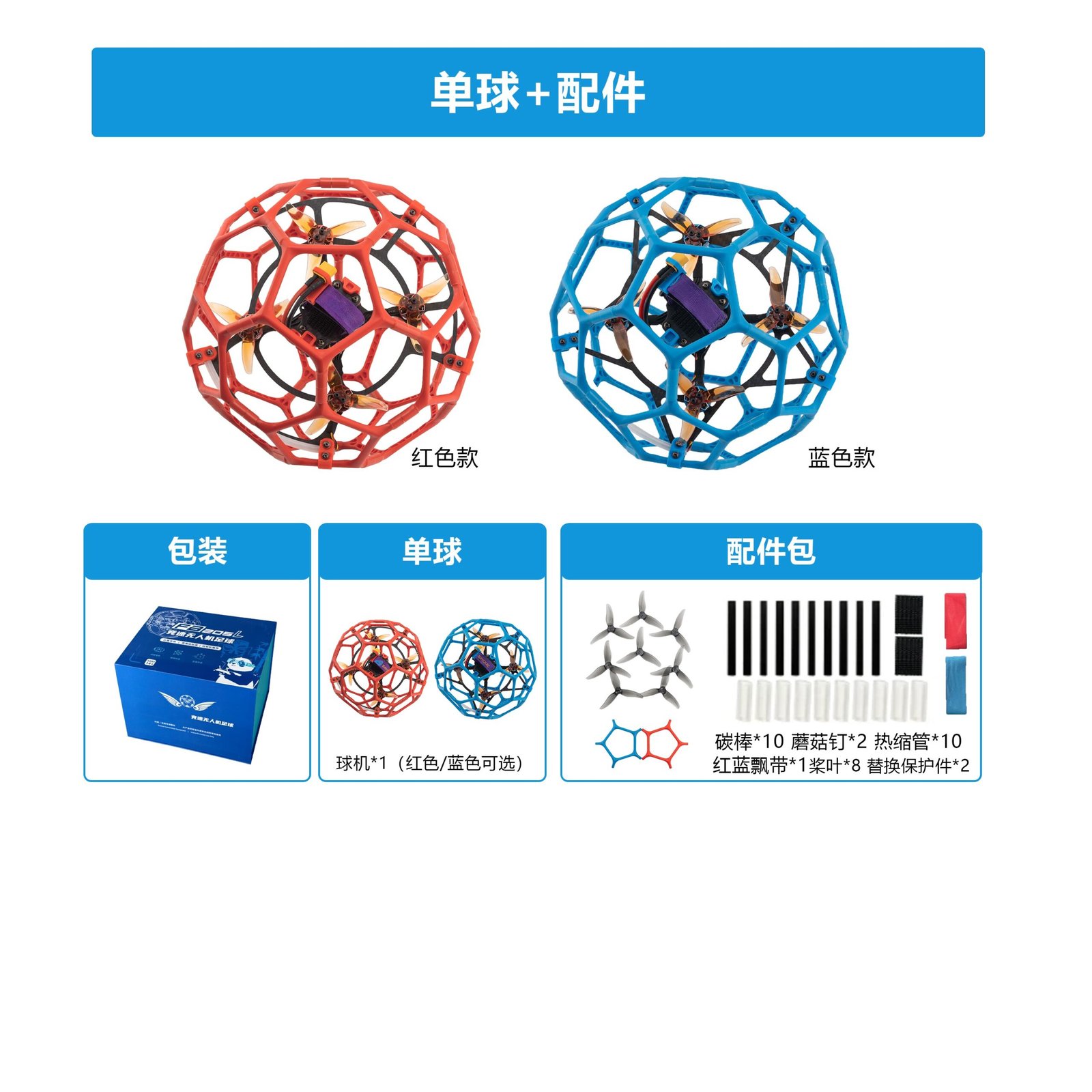
Step-by-step: mounting the battery
Work through these steps with the power disconnected and the ball resting on a bench. The sequence matters: position first, then secure, then route, then balance-check.
1. Confirm pack, tray and connector compatibility
Before anything else, check that the pack physically fits the tray or slot and that its connector matches the ball’s power lead. Do not force a pack into a slot. If you are changing cell count or capacity, read the electronics documentation for your ball first, because the power system was designed around a particular voltage.
2. Place the pack for centre of gravity
Set the pack in the tray in the position that puts the assembled ball’s centre of gravity at the geometric centre of the sphere. A practical bench method: balance the fully assembled ball (with battery fitted) on a thin rod or the edge of a table, and move the pack forward or back by a few millimetres until the ball sits level. Mark that position on the tray with a small piece of tape so every subsequent pack goes in the same place.
3. Secure with the strap or clip
Tighten the strap until the pack cannot move when you push it with a finger, but do not compress the pack. LiPo cells are not designed to be crushed. If a clip is used, confirm it clicks into its closed position and cannot be knocked open by the shell flexing.
4. Route the power lead
Route the lead so it cannot reach a propeller, cannot be pinched between shell and frame on impact, and has a small service loop so the connector can be pulled apart without tugging on the solder joint. Keep the lead away from the ESCs and power board, where heat builds up.
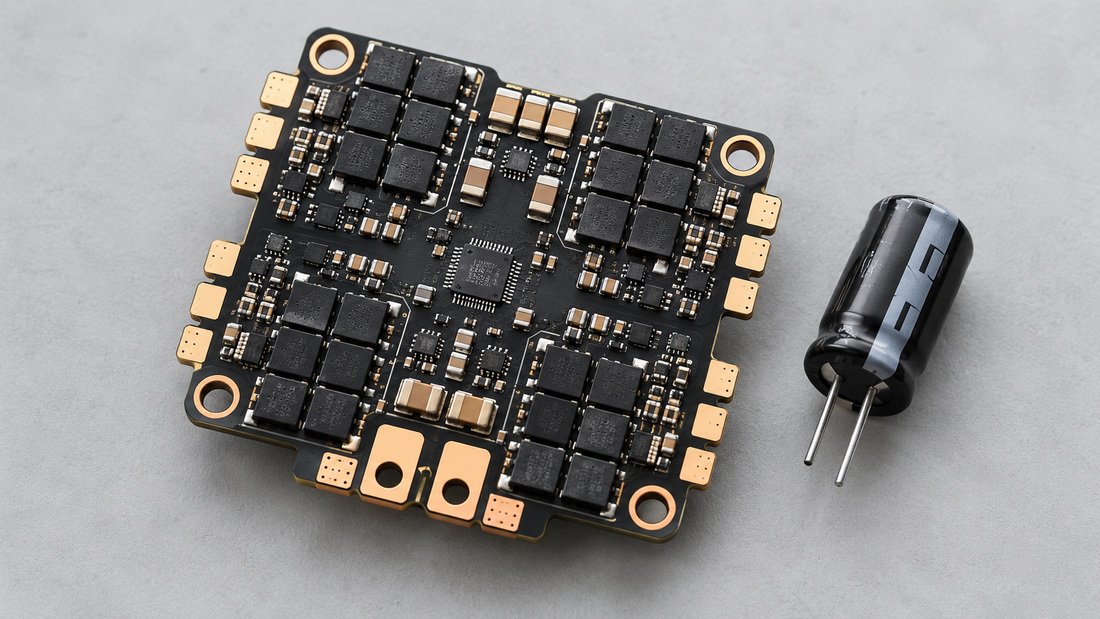
5. Balance and spin-check
With the ball assembled, check that it rolls without a pronounced heavy side and that the pack stays put when you shake the ball gently. Then, with propellers removed or the ball restrained, do a brief power check to confirm the connector seats fully and the lead does not pull taut under load.
If your club is also specifying motors, ESCs and power distribution together, our propulsion combo kits page shows how those parts are normally bundled, which is useful when you are planning a fleet rather than a single ball.
Common mistakes clubs make
These are the errors that show up most often when a club builds or services a fleet of drone soccer balls.
- Strapping to the outer shell. The shell is designed to flex. The battery should be on the inner frame.
- Ignoring centre of gravity. A pack placed for convenience rather than balance makes the ball drift and roll, and no amount of tuning fully fixes it.
- Over-tightening. Clamping a LiPo pack hard enough to dent it is a safety problem, not a security improvement.
- Reusing stretched straps. Hook-and-loop loses grip with age and dust. Replace worn straps before they fail mid-match.
- Mixing pack sizes across a fleet. If every ball has a different pack, every ball handles differently and spare-part management becomes guesswork.
- Leaving the lead loose. An unsecured lead can chafe against a frame edge or reach a propeller.
Much of this is standard small-multirotor practice. Betaflight, the open-source flight controller firmware used on most FPV quadcopters, notes that the flight controller reads sensors such as the gyroscope and accelerometer, then commands the ESC to drive the motors; the battery mount sits in that same mechanical chain, so a pack that shifts will show up as unstable flight. You can read the official overview at https://betaflight.com/docs/wiki/getting-started.
Buyer checklist for battery mounting parts
Use this list when specifying balls, spare trays or replacement parts. Where a specification is not published, ask the supplier to confirm it in writing before you order.
- Which battery tray or slot design does the ball use, and is the tray sold as a separate spare?
- What pack dimensions (length, width, thickness) and capacity does the tray accommodate?
- What connector type does the ball’s power lead use, and is it a standard connector or a proprietary one?
- Is the retention method a strap, a clip, a bar or a combination, and are the straps available as consumable spares?
- Does the documented centre-of-gravity position assume a specific pack size and mounting position?
- Are replacement straps, clips and tray hardware listed in the published spare-parts range, and what are the ordering terms?
- What handling and charging guidance does the supplier provide for the packs they recommend?
- For fleet orders, can the supplier confirm consistent tray geometry across batches? Ask for this in writing.
Battery handling is also a safety topic, not just a performance one. Ask your supplier for their guidance on pack inspection, charging and disposal, and follow your own organisation’s safety policy. Just as importantly, do not assume a warranty term, return window or service policy carries over from one market to another; consumer rules in one country are not automatically the terms of a business-to-business order elsewhere.
For clubs maintaining a mixed fleet, it is worth keeping a stock of the small parts that fail first. Our drone soccer replacement parts range covers the components teams typically reorder, and the protective shells page is relevant if shell deformation is what is disturbing your battery position.
Ready to standardise battery mounting across a squad? Request a Team Kit Quote and tell us your ball model, squad size and the spare parts you replace most often.
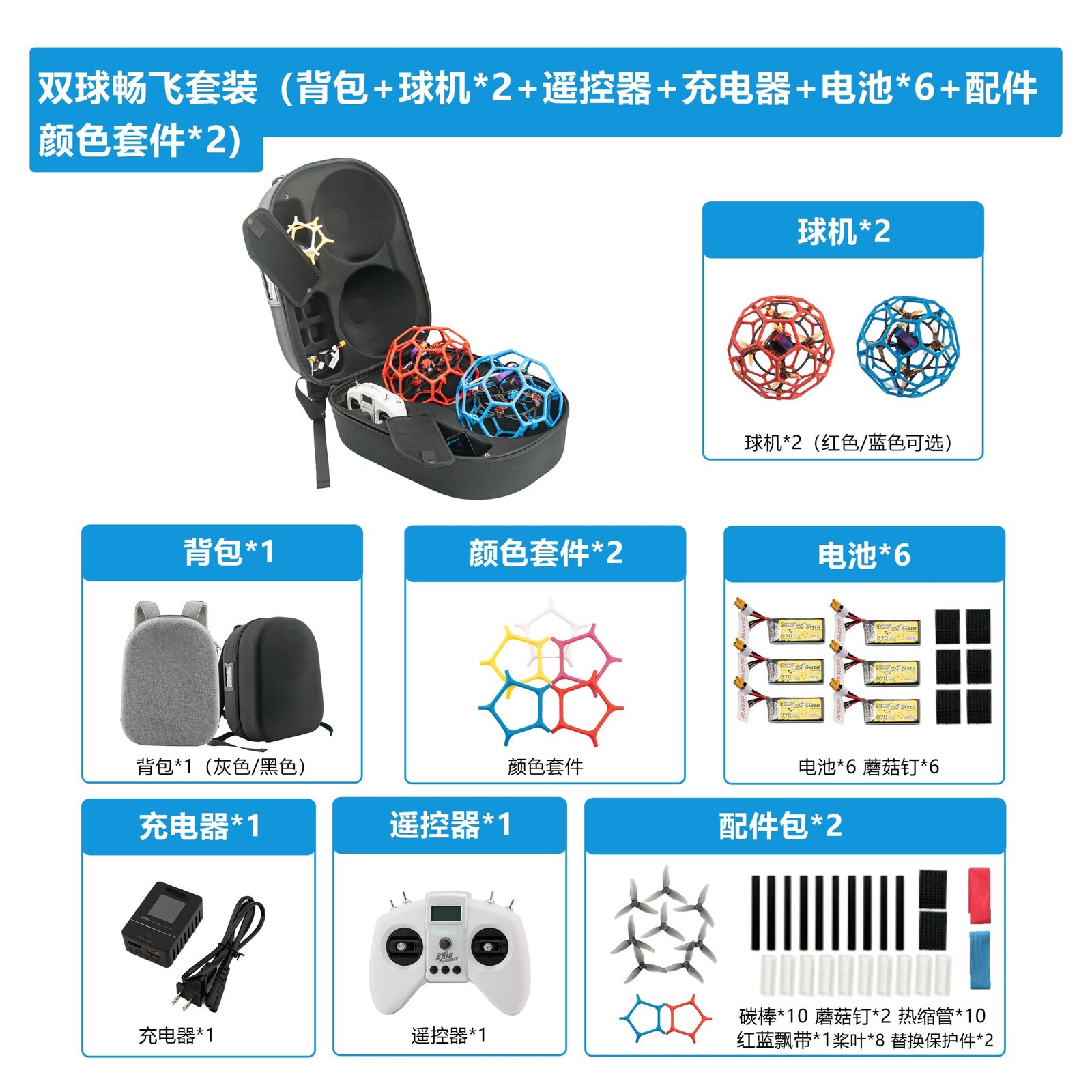
Frequently asked questions
Should the battery be mounted inside the cage or on the shell?
Inside the cage, on the inner frame. The outer shell is designed to flex and absorb impacts; mounting a pack to it means the pack moves relative to the motors, which changes balance and can damage the lead. If your ball’s design appears to mount the pack on the shell, confirm the intended arrangement with the supplier.
Does battery position really change how a drone soccer ball flies?
Yes. Any mass offset from the sphere’s centre shifts the centre of gravity, and the ball will tend to roll or drift toward the heavy side. Getting the pack as close to centred as possible is one of the cheapest handling improvements available, and it costs nothing but a few minutes on the bench.
How tight should the battery strap be?
Tight enough that the pack cannot slide or lift when you push it with a finger, but not so tight that the pack is visibly compressed. If the strap leaves indentations on the pack, it is too tight. If the pack moves at all, it is too loose.
Can I use a larger battery for longer flight time?
Sometimes, but check two things first: whether the tray or slot physically accepts the pack, and whether the ball’s electronics and documented centre-of-gravity position allow the extra mass and size. Extra capacity usually means extra weight, which can reduce agility and increase impact loads on the frame. Confirm the supported pack specification with your supplier rather than assuming.
How often should battery straps and clips be replaced?
There is no universal interval. Treat them as wear items and inspect them at the same time you inspect propellers and frame joints. Replace any strap that has lost its grip or has frayed edges, and any clip that no longer latches positively. Many clubs replace straps on a fixed schedule during a season; agree that schedule with your team and record it.
Are all drone soccer ball batteries interchangeable?
No. Connector type, cell count, capacity and physical dimensions vary between ball designs. Even where two balls use the same connector, a pack that fits one tray may not fit another. Standardising on one supplier’s pack and tray combination across a fleet is usually the simplest way to avoid mismatches.
What should I confirm with a supplier before ordering battery mounting parts?
Ask for the tray or slot dimensions, the supported pack specification, the connector type, the centre-of-gravity assumptions, spare-part availability for straps and clips, and the commercial terms that apply to your order type. Ask for all of this in writing, because published specifications and business-to-business terms can differ by product and region.
Conclusion
Mounting the battery in a drone soccer ball is a small job with an outsized effect on how the ball flies. Keep the pack on the inner frame, locate it at the ball’s centre of gravity, secure it without crushing it, and route the lead clear of props and pinch points. Then treat the tray, strap and clip as service items, not permanent fittings.
For clubs, associations and schools, the bigger win is consistency. When every ball in the fleet uses the same tray geometry, the same pack size and the same retention method, changeovers get faster, spares get simpler and handling stays predictable across the squad. That is a specification decision you make once, not a task you repeat at every match.
To plan that specification, share your ball model, squad size, current pack type and the parts you wear out most. Request a Team Kit Quote and our team can help you build a spares and mounting-parts list that fits how your club actually operates.