Quick summary
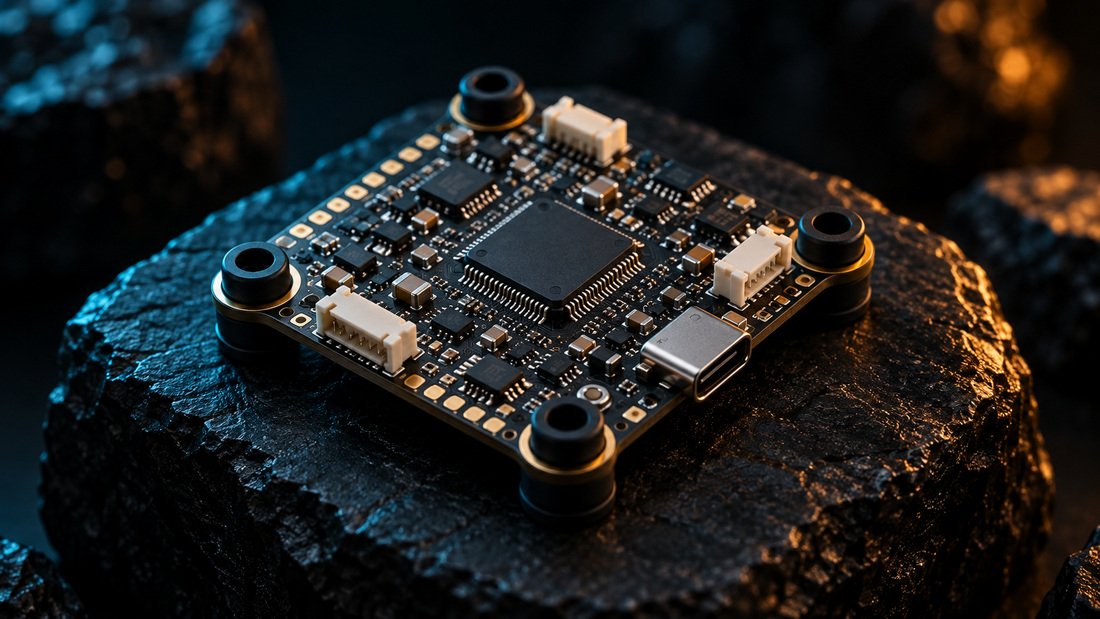
A barometer on an FPV flight controller measures atmospheric pressure to estimate altitude, so it matters whenever your aircraft needs height information without relying only on GPS. Betaflight lists the barometer among supported sensors used for altitude measurement, alongside gyro, accelerometer, magnetometer and GPS. For schools, drone soccer teams and clubs, a barometer is useful but not essential for basic line-of-sight flying; it becomes more valuable for altitude hold, GPS rescue and OSD altitude readouts.
Key Takeaways
- A barometer gives the flight controller a pressure-based altitude estimate that works without satellite lock, though it drifts with weather and air pressure changes.
- Betaflight supports barometers as part of its wider sensor set for altitude measurement, as described in its getting-started documentation.
- For drone soccer and indoor school programs, the barometer is a secondary feature; gyro and accelerometer performance matters more for stable, repeatable flight.
- For outdoor club flying, long-range and GPS rescue use cases, a barometer adds a useful altitude reference and OSD data.
- Buyers should confirm barometer model, firmware support and calibration procedure in writing rather than assuming every board includes one.
Why a Barometer Is Included on Some FPV Flight Controllers
A barometer is a small pressure sensor that estimates altitude by measuring air pressure. Higher altitude generally means lower pressure, so the sensor converts pressure readings into a height estimate. It is one of several sensors a flight controller can read.
Betaflight’s documentation describes the flight controller as a computer that reads sensors such as the gyro, accelerometer, GPS and others, then computes commands for the ESC (electronic speed controller) to control the motors. It specifically notes that a barometer can be used for altitude measurement, alongside the gyroscope for basic acro flight, the accelerometer for self-levelling, the magnetometer for global heading and GPS for rescue and information.
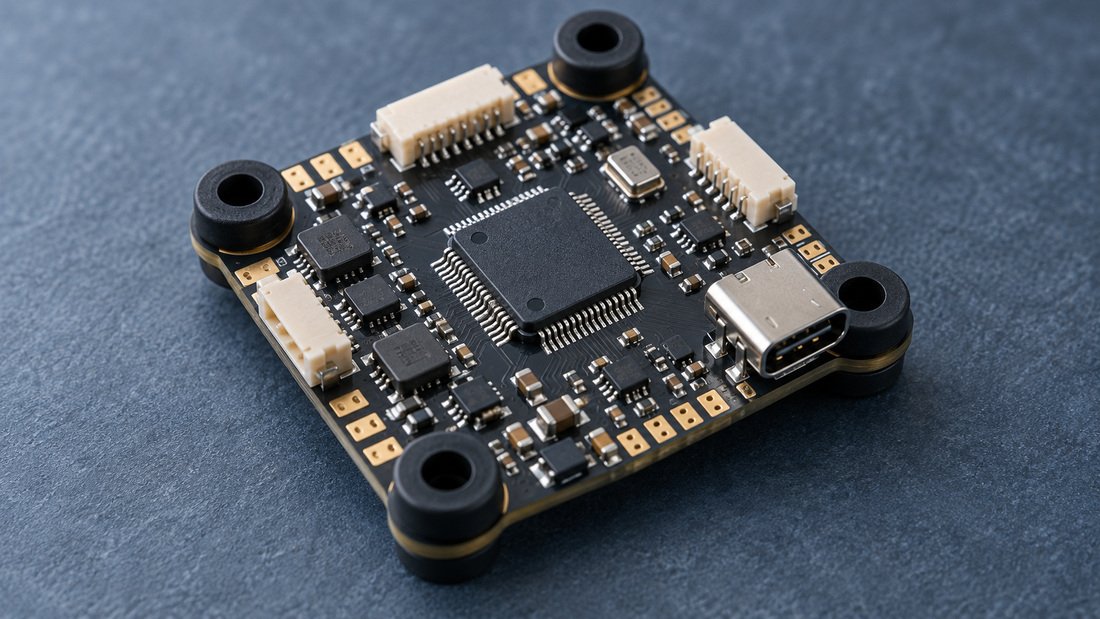
That context matters: the barometer is not the primary sensor for stabilisation. The gyro does most of the work in acro mode, and the accelerometer supports self-levelling. The barometer is an additional input used for altitude-related functions and for on-screen display information.
Where the Barometer Fits in the Sensor Stack
Think of the flight controller as reading several layers of information. The gyro measures rotation rates for stabilisation. The accelerometer measures acceleration and orientation for self-levelling. The magnetometer provides heading. The GPS provides position and can support GPS rescue. The barometer provides a pressure-based altitude estimate.
In Betaflight, the OSD (on-screen display) can show a wide range of information, including battery voltage, current draw, GPS coordinates, speed, flight timers and artificial horizons. Altitude from a barometer can therefore appear in the pilot’s view, which helps with situational awareness during a flight session.
When a Barometer Actually Matters
A barometer matters most when you need altitude information without depending on GPS, or when you want a second altitude reference for OSD and rescue functions. It matters least for indoor, low-altitude, line-of-sight flying where the pilot is visually managing height.
Drone Soccer and Indoor Team Programs
Drone soccer is typically flown indoors, in a bounded arena, at low altitude and at close range. In that environment, the pilot and team are usually controlling height visually, and GPS is often unreliable indoors. A barometer can still provide an altitude readout, but it is not the sensor that determines whether the drone flies predictably.
For team programs, the priorities are usually consistent gyro behaviour, reliable firmware, durable connectors and easy servicing between matches. A barometer can be a useful extra, but coaches and procurement staff should not treat it as a substitute for good basic sensor performance.
Outdoor Club Flying, Long Range and GPS Rescue
Outdoor flying at varying altitudes is where altitude data becomes more useful. Betaflight notes that it is expanding into GPS rescue and autonomous flight, and that GPS is used for GPS rescue and information. A barometer can contribute an altitude estimate to the OSD and to altitude-aware flight modes, though the exact behaviour depends on firmware version and configuration.
Clubs flying in hilly terrain, at different elevations across the season, or with members who appreciate altitude telemetry will get more value from a board that includes a barometer.
Cinematic and Media Use
Betaflight describes cinematic rigs among the aircraft it supports. For smooth altitude changes and stable framing, altitude information can help the pilot maintain a consistent height. Again, the barometer is a supporting sensor, not the primary stabilisation source.
Comparing Barometer-Equipped and Non-Barometer Boards
The table below summarises practical differences for team and club buyers. It is general guidance, not a specification of any particular DPF product.
| Consideration | Board with barometer | Board without barometer |
|---|---|---|
| Altitude estimate without GPS | Pressure-based estimate available | Relies on other sources or pilot judgement |
| OSD altitude readout | Can display altitude | Limited or no altitude field |
| Indoor drone soccer use | Extra data, not essential | Usually sufficient for arena flying |
| Outdoor and long-range use | Useful secondary altitude reference | May be adequate if GPS is fitted |
| Cost and complexity | Often slightly higher | Simpler and often lower cost |
| Maintenance and calibration | Needs correct firmware configuration and occasional calibration checks | Fewer sensor-related checks |
For related electronics, see our overview of FPV electronics and the wider range of flight controllers.
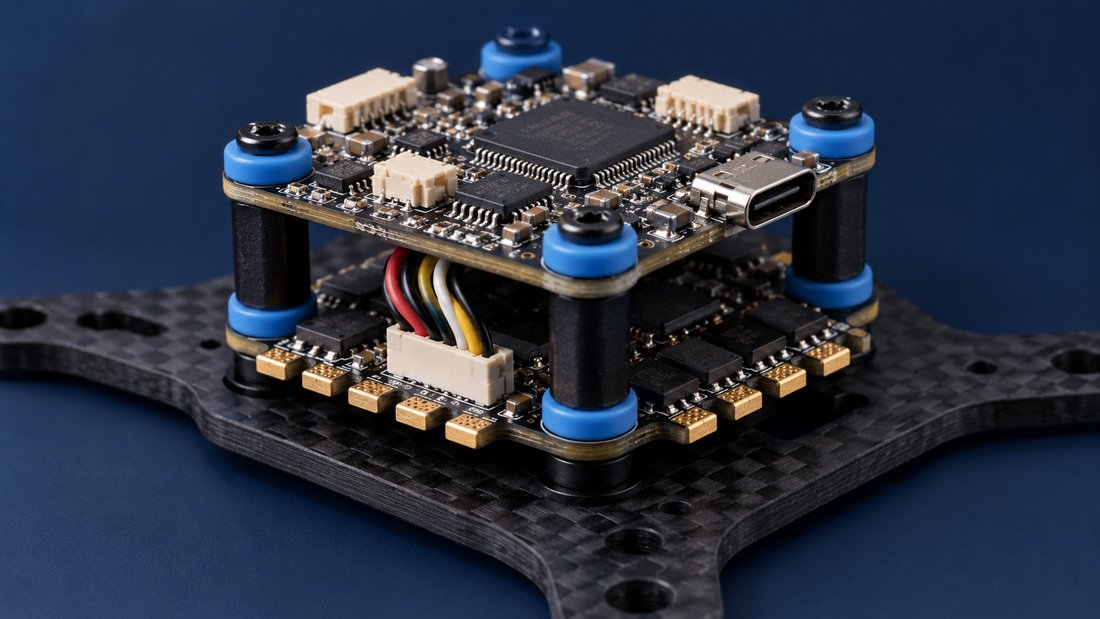
How the Barometer Works in Practice
A barometer in practice converts pressure readings into an altitude figure that the flight controller can display and, in some configurations, use for altitude-related flight behaviour. Its accuracy is affected by weather, temperature and local pressure changes, so it should be treated as an aid rather than an absolute measurement.
Calibration and Drift
Because atmospheric pressure changes with weather and with the specific location and day, barometer altitude readings can drift over time. Pilots often zero or calibrate the barometer at the start of a session. Teams should build a short pre-flight check into their routine, especially when flying across different days or locations.
Betaflight’s documentation and hardware support pages are the right place to confirm how a specific board’s barometer should be configured and whether the firmware version in use supports it. As the documentation notes, manufacturers support their hardware, and pilots own their builds.
Firmware Support
Not every firmware version or target necessarily exposes every sensor. Betaflight states that it runs on flight controllers from a considerable number of manufacturers, and that support for each board comes from its manufacturer. Before buying a batch of boards for a club or school, confirm that the barometer is supported by the intended firmware target and that the vendor can provide the relevant documentation.
Interference and Placement
Pressure sensors can be affected by airflow, prop wash and enclosure design. A board with a barometer may use a small opening or foam cover to protect the sensor. Teams should avoid blocking that opening during repairs or when fitting frames and stacks.
Common Mistakes When Choosing a Flight Controller for Teams
Many buying mistakes come from treating the barometer as the headline feature rather than one sensor among several. The following are common practical errors.
- Assuming every FPV flight controller includes a barometer; confirm the sensor list in writing.
- Buying for altitude features while ignoring gyro quality, connector durability and firmware support.
- Forgetting that indoor drone soccer generally does not depend on GPS or barometer accuracy.
- Not checking whether the club’s existing firmware and configurator workflow support the board.
- Overlooking spare parts and serviceability, which matter more for club fleets than for a single build.
Procurement Checklist for Clubs, Schools and Distributors
Use this checklist to structure a request for quotation or a sample evaluation. It separates what you can ask any supplier from what you must confirm with DPF specifically.
- Confirm the exact sensor list for each board variant, including whether a barometer is fitted.
- Ask which firmware targets and versions are supported, and request documentation.
- Request the recommended calibration procedure for the barometer if fitted.
- Confirm connector types and stack compatibility with your existing frames and ESCs (electronic speed controllers).
- Check whether the board supports the receiver protocols and OSD features your team uses.
- Ask for sample units for bench testing and a small pilot program before a fleet order.
- Request written confirmation of commercial terms, including lead times, warranty and MOQ, rather than relying on general marketing claims.
- Confirm spare-parts availability and the process for reporting faults.
For receiver and video components, see our FPV video receivers and FPV DVR pages.
Middle CTA
Planning a fleet for a school program, drone soccer club or event? Contact us to discuss your requirements and we can help you compare options.
Frequently Asked Questions
Does every FPV flight controller have a barometer?
No. Barometers are common on some boards and absent on others. Betaflight supports a wide variety of sensors, but the actual sensor set is determined by the hardware manufacturer. Always confirm the sensor list for the specific board variant.
Is a barometer required for drone soccer?
Generally no. Drone soccer is typically flown indoors at low altitude in a bounded arena, where the pilot manages height visually. A barometer can provide an altitude readout but is not the primary requirement for stable flight.
Can a barometer replace GPS for altitude hold?
A barometer provides altitude information without GPS, but it is affected by weather and pressure changes. GPS provides position and supports GPS rescue. Many aircraft use both for different purposes. Confirm how your firmware version handles altitude in the modes you intend to fly.
Why does barometer altitude drift during a session?
Atmospheric pressure changes with weather, temperature and location. That causes pressure-based altitude estimates to drift over time. Calibrating or zeroing the barometer at the start of a session is a common practice.
Does Betaflight support barometers?
Betaflight’s documentation lists the barometer among the sensors it can use for altitude measurement. Support for a specific board comes from its manufacturer, so check the board documentation and firmware target.
What should a club ask a supplier before buying flight controllers?
Ask for the sensor list, supported firmware targets, connector and stack compatibility, calibration guidance, sample availability and written commercial terms. A short bench test before a fleet order reduces risk.
Is a barometer useful for indoor school programs?
It can provide an altitude readout for teaching and OSD familiarity, but it is not essential. Schools should prioritise reliable basic flight behaviour, durable hardware and ease of repair.
How does the barometer relate to the ESC?
The flight controller reads sensors and sends commands to the ESC to control motor thrust. The barometer contributes altitude information; the ESC executes motor commands. For more on that side of the stack, see electronic speed controllers.
Conclusion
The barometer on an FPV flight controller is a useful supporting sensor, not the defining feature of a good board. It adds pressure-based altitude information that can appear in the OSD and support altitude-related functions, and Betaflight’s documentation acknowledges it within the broader sensor set. For indoor drone soccer and school programs, gyro behaviour, firmware support, durability and serviceability matter more. For outdoor clubs and long-range flying, the barometer is a worthwhile extra to confirm and evaluate.
The practical next step is to request samples and a written specification for the boards you are considering. Request a Team Kit Quote to start a conversation about your club, school or event requirements.