Quick summary
Thrust-to-weight ratio (TWR) for a drone soccer ball is calculated by dividing the total maximum thrust of all motors by the all-up weight (AUW) of the fully assembled ball. Measure AUW in grams with a scale, then sum the per-motor thrust figures from your brushless motor or propeller test data at your intended battery voltage. A common target for stable, responsive drone soccer flight is a TWR of roughly 2:1 or higher, but the right value depends on ball size, cage drag, and the rules your club follows.
Key Takeaways
- Use the formula total thrust ÷ all-up weight = TWR, with everything measured in the same units (grams or kilograms).
- All-up weight includes the ball, cage, frame, motors, propellers, battery, flight controller, ESC, receiver, and any lights or payloads.
- Motor thrust data is only comparable at the same propeller and battery voltage, so verify test conditions before you calculate.
- A higher TWR generally means faster climbs and quicker recovery after hits, but it also increases current draw and heat.
- For school and club fleets, standardize one motor, propeller, and battery combination so spare parts and tuning stay consistent across the team.
Why thrust-to-weight matters in drone soccer
Drone soccer balls are enclosed, impact-prone aircraft. They need enough excess thrust to accelerate, climb, and recover after collisions, but too much power can make the ball twitchy and hard for new pilots to control. TWR turns those vague goals into a number your team can test and compare.
The calculation also helps procurement. If you know the target TWR and the measured AUW, you can shortlist brushless motors with suitable thrust at your chosen propeller and voltage rather than buying on guesswork.
How to calculate thrust-to-weight ratio step by step
The core formula is simple: TWR = total maximum thrust of all motors ÷ all-up weight. The work is in collecting accurate inputs. Follow these steps in order.
Step 1: Weigh the fully assembled ball
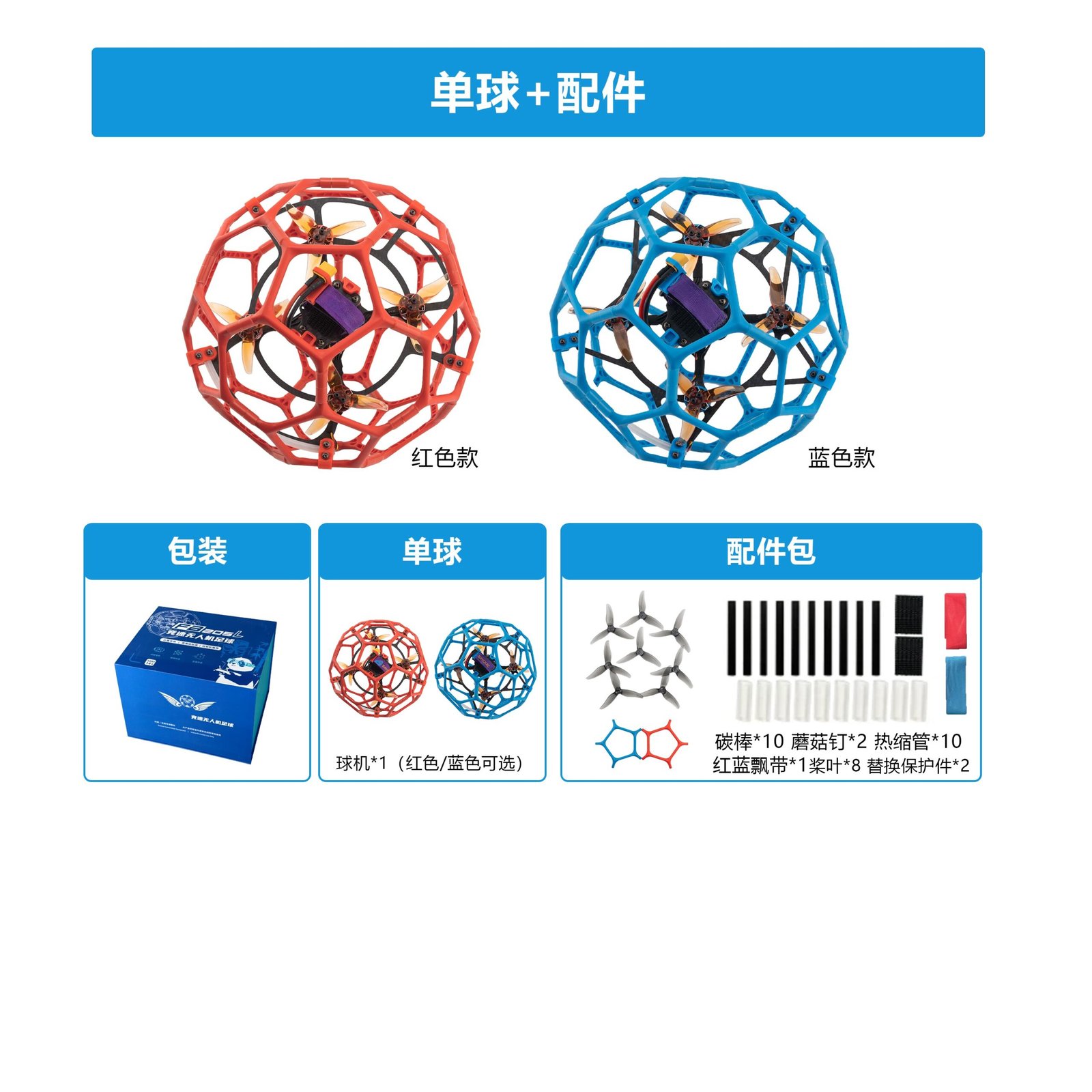
Use a kitchen or postal scale accurate to at least one gram. Weigh the ball exactly as it will fly, including the battery, cage, propeller guards, fasteners, and any LEDs or transponders. Record the value in grams. If your club uses multiple battery sizes, weigh each configuration separately because battery mass changes TWR significantly.
Step 2: Count and identify your motors
Most drone soccer balls use four brushless motors, though this varies by class and design. Confirm the motor count and the exact motor model, since thrust figures are specific to each brushless motor and its KV rating.
Step 3: Find per-motor thrust at your operating voltage
Use thrust data from the motor or propeller manufacturer measured at the same propeller size, pitch, and battery voltage you plan to use. Thrust at 3S is not comparable to thrust at 4S, and a larger propeller can change thrust substantially.
Step 4: Multiply and divide
Multiply per-motor thrust by the number of motors to get total thrust. Then divide total thrust by all-up weight. For example, if each of four motors produces 200 g of thrust at your chosen voltage and the ball weighs 320 g, total thrust is 800 g and TWR is 800 ÷ 320 = 2.5. Treat this as an illustrative example, not a recommended specification.
Step 5: Verify with a bench or hover test
Published thrust figures are usually measured on a thrust stand at a fixed voltage. Real aircraft see voltage sag, airflow interference inside the cage, and added drag. A static thrust test or a controlled hover test on a tether can confirm whether your calculated TWR matches reality. Compare current draw as well, because that determines ESC and battery requirements.
What counts as all-up weight
Missing components are the most common cause of over-optimistic TWR estimates. Include everything that flies:
- Outer ball shell and cage structure
- Frame and motor mounts
- Brushless motors and propellers
- Electronic speed controllers (ESCs) and power distribution
- Flight controller, receiver, and wiring
- Battery
- Lights, buzzers, or scoring hardware
- Fasteners, tape, and any repairs
For fleet planning, weigh a representative production unit rather than a prototype that may have extra or missing parts.
Target TWR ranges for drone soccer
There is no single universal target because ball classes, cage designs, and competition rules differ. Use the following as general guidance for setting a starting range, then tune to your own rules and pilot skill.
| TWR (approx.) | General flight feel | Typical trade-off |
|---|---|---|
| Below 1.5 | Sluggish climb, limited recovery | May struggle with cage drag and hits |
| 1.5–2.0 | Stable, forgiving for beginners | Less punch for fast direction changes |
| 2.0–3.0 | Responsive, common club range | Higher current draw and heat |
| Above 3.0 | Very aggressive | Harder to control, more stress on components |
These bands are illustrative. Confirm any competition-specific limits with your league or event organizer before finalizing a build.
How brushless motor choice changes the ratio
Brushless motors are the primary lever for TWR. KV rating, stator size, propeller pairing, and battery voltage all interact. A higher-KV motor spins faster at a given voltage, which can raise thrust with the right propeller, but it also tends to draw more current and generate more heat.
Selecting brushless motors is therefore a matching exercise, not a single-number decision. The propeller load, ESC current rating, battery discharge capability, and ball weight all need to line up. For guidance on pairing motors with propellers and batteries, see our resources on motor, propeller and battery matching and motor and propulsion matching.

Power system components that affect usable thrust
Motors produce thrust, but the rest of the power chain determines whether that thrust is available in flight.
ESCs and current headroom
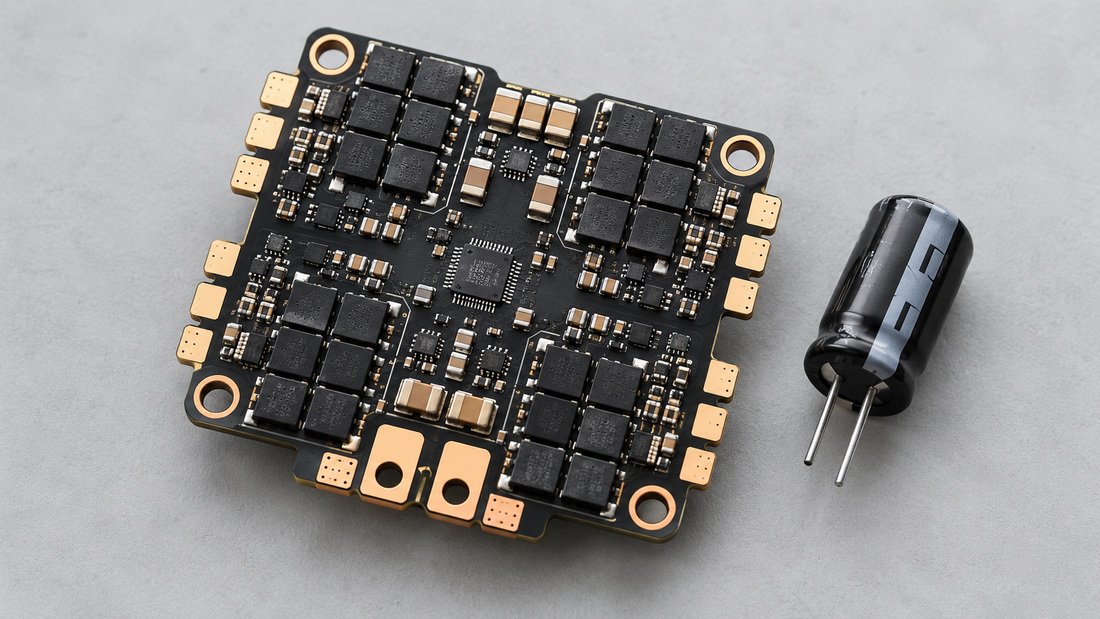
Electronic speed controllers must handle the motor’s peak current with margin. Undersized ESCs can overheat or cut out during aggressive maneuvers. Four-in-one ESC boards are common in compact builds because they save weight and wiring.
Battery voltage and sag
Thrust falls as battery voltage sags under load. A battery that is too small for the current draw will reduce effective thrust mid-flight, so calculated TWR based on a fresh pack can overstate real performance.
Propellers
Propeller diameter and pitch change both thrust and current draw. Always use thrust data measured with the exact propeller you intend to fly.
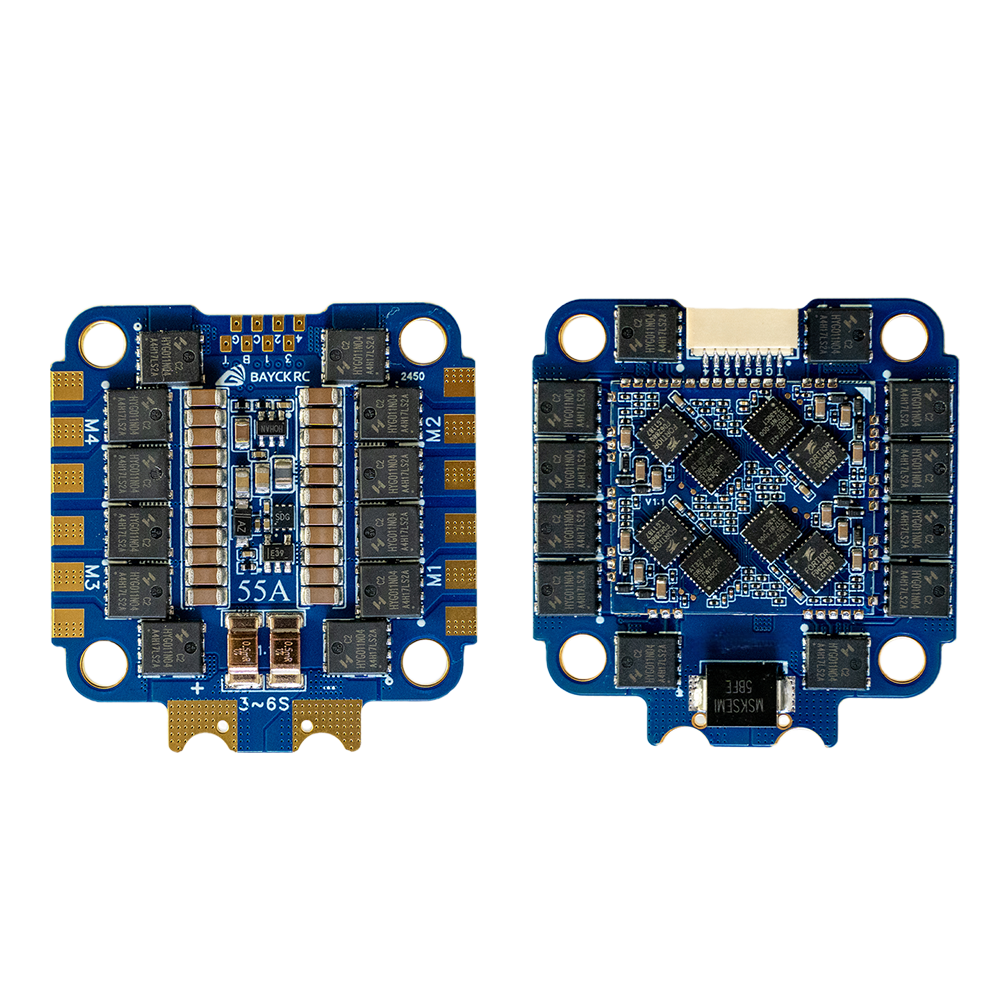
If your team is sourcing complete power trains rather than individual parts, propulsion combo kits can simplify matching and spare-part planning. Clubs that prefer to specify motors individually can review FPV motors.
Planning a team fleet? Share your ball weight, motor count, propeller size, and target voltage with our team, and we can help you review motor options and propulsion combinations. Request a Team Kit Quote.
Common mistakes when calculating TWR
- Using bare airframe weight. Skipping the battery, cage, or fasteners inflates TWR.
- Mixing voltage bases. Comparing 3S thrust data with a 4S build produces wrong numbers.
- Ignoring propeller differences. Thrust figures are propeller-specific.
- Treating peak thrust as continuous. Sustained hover and repeated hits stress the system differently than a short burst.
- Forgetting voltage sag. A marginal battery reduces real-world thrust.
- Over-powering beginner teams. Very high TWR can slow skill development and increase crash damage.
Procurement checklist for clubs and schools
- Confirm the ball class and any competition rules that limit weight, voltage, or motor size.
- Record the measured all-up weight of a representative assembled ball.
- Define a target TWR range with your coaches and pilots.
- Collect motor thrust data at the exact propeller and voltage you will use.
- Check ESC current rating and battery discharge capability against expected peak current.
- Ask suppliers for thrust test conditions, not just a headline number.
- Request written confirmation of motor dimensions, mounting pattern, connector type, and KV.
- Plan spare motors, propellers, and ESCs as a percentage of fleet size.
- Standardize one propulsion combination across the fleet for easier tuning and inventory.
- Verify any warranty, lead time, minimum order quantity, and customization terms in writing before ordering.
Battery shipping and handling note for teams
Drone soccer clubs frequently travel to events, which raises questions about lithium batteries. In the United States, the FAA states that spare (uninstalled) lithium ion and lithium metal batteries must be carried in carry-on baggage only, with terminals protected from short circuit, and that lithium ion batteries are limited to 100 watt-hours (Wh) per battery unless airline approval is obtained for larger sizes. Many airlines apply stricter limits. Verify current rules with your carrier before travel: FAA PackSafe: Lithium Batteries. This guidance is US-focused and may not apply in other jurisdictions.
Frequently asked questions
What is a good thrust-to-weight ratio for a drone soccer ball?
Many clubs aim for roughly 2:1 or higher, but the suitable value depends on ball size, cage drag, and league rules. Beginners often fly better with lower TWR, while experienced pilots may prefer more punch. Treat any single number as a starting point and test.
Do I calculate TWR with one motor or all motors?
Use total thrust from all motors divided by all-up weight. Multiply per-motor thrust by the motor count first.
Can I use thrust data from the motor listing?
Only if the data was measured with the same propeller and battery voltage you plan to use. Ask the supplier to confirm the test conditions.
Does battery voltage change thrust-to-weight ratio?
Yes. Higher voltage generally increases motor speed and thrust, which raises TWR, but it also increases current draw and heat. Voltage sag under load reduces real thrust.
How does cage drag affect my calculation?
Static thrust data does not include airflow losses inside a cage. Real hover performance is usually lower than the calculated figure, which is why a test flight or thrust-stand measurement is useful.
Should our school standardize one motor for the whole fleet?
Standardizing a single brushless motor, propeller, and battery combination simplifies tuning, spares, and student training. It also makes TWR calculations directly comparable across the fleet.
Can Drone Parts Factory help match motors to our ball design?
Yes. Share your all-up weight, motor count, propeller size, battery voltage, and target TWR, and our team can review propulsion options. Confirm all commercial terms, lead times, and customization details in writing before ordering.
Conclusion
Calculating thrust-to-weight ratio for a drone soccer ball comes down to two accurate numbers: total motor thrust at your operating voltage, and the fully assembled all-up weight. Divide thrust by weight, aim for a range that suits your pilots and rules, and verify with a real test. Because brushless motors, propellers, ESCs, and batteries interact, the strongest fleet strategy is to standardize one well-matched propulsion combination and buy spares accordingly.
Next step: gather your ball weight and target TWR, then Request a Team Kit Quote with those figures so we can help you shortlist suitable motor and propulsion options.