Quick summary
A carbon fiber drone soccer ball cage is generally more impact resistant than plastic or aluminum alternatives because carbon fiber reinforced polymer offers a high strength-to-weight ratio and absorbs energy through controlled flex. However, real-world durability depends on layup design, wall thickness, mounting points, and how the cage is integrated with the frame and protective shell. For teams, the practical answer is that a well-designed carbon fiber cage can survive repeated collisions in typical drone soccer practice and competition, but no cage is indestructible. Buyers should request impact test data, field feedback, and written specifications rather than assume a material alone guarantees performance.
Key Takeaways
- Carbon fiber cages are strong and light, but impact resistance is a system property—design, mounting, and shell integration matter as much as the material.
- Drone soccer ball cage and structure choices affect flight feel, repair cost, and safety; heavier cages reduce agility, while flexible designs may absorb hits better.
- Ask suppliers for specific impact test methods, drop heights, and field failure reports—material claims without data are not enough.
- Inspect cages after every session for cracks, delamination, loose fasteners, and deformed mounting holes.
- For team programs, standardize on a cage and replacement parts supply that matches your fleet and repair workflow.
What Makes a Carbon Fiber Cage Impact Resistant?
A carbon fiber cage resists impact through a combination of high tensile strength, stiffness, and the ability to distribute loads across a woven or layered structure. Unlike homogeneous plastics, carbon fiber reinforced polymer (CFRP) is anisotropic—its properties differ by direction—so the layup orientation and fiber volume determine how it reacts to a hit.
The cage also relies on geometric design: rounded edges, reinforced mounting bosses, and intentional flex zones can redirect impact energy away from critical joints. In drone soccer, the ball cage surrounds the drone and is the first point of contact with other drones, the goal frame, and the floor.
Material properties vs. real-world performance
Carbon fiber’s reputation comes from aerospace and motorsport, where controlled layups and quality control are strict. In drone soccer, cages are often thin-walled and weight-optimized, so impact resistance depends heavily on manufacturing consistency. A cage that is too stiff may transfer shock to the frame; a cage that is too flexible may deform and contact the propellers.
Teams should treat impact resistance as a trade-off between stiffness, weight, and repairability. No single specification number tells the whole story.
How impacts occur in drone soccer
Typical impacts include drone-to-drone collisions, hits against goal frames, and hard landings. The energy of each impact varies with speed, angle, and mass. A cage that performs well in one scenario may not perform well in another. That is why field testing with your own team’s flying style is more informative than a generic claim.
Carbon Fiber vs. Other Cage Materials: Comparison
The table below compares common materials used for drone soccer ball cages and structures. Values are qualitative and intended for general guidance; always confirm specific product data with your supplier.
| Material | Impact resistance | Weight | Stiffness | Repairability | Typical trade-offs |
|---|---|---|---|---|---|
| Carbon fiber reinforced polymer (CFRP) | High when well designed; can crack or delaminate under extreme point loads | Low | High | Moderate; often requires replacement rather than field repair | Higher cost; brittle failure mode possible |
| Glass fiber reinforced polymer (GFRP) | Moderate to high; more forgiving but heavier | Medium | Medium | Moderate | Lower cost; less stiff |
| Engineering plastics (e.g., polycarbonate, nylon) | Moderate; may bend or scuff rather than crack | Medium | Low to medium | High; some parts can be straightened or replaced cheaply | Lower stiffness; may deform permanently |
| Aluminum alloys | Moderate; dents and bends | High | High | Moderate; bending can weaken | Heavier; can transfer shock to frame |
For a broader look at frame options, see drone frames and propulsion combo kits that teams often pair with protective structures.
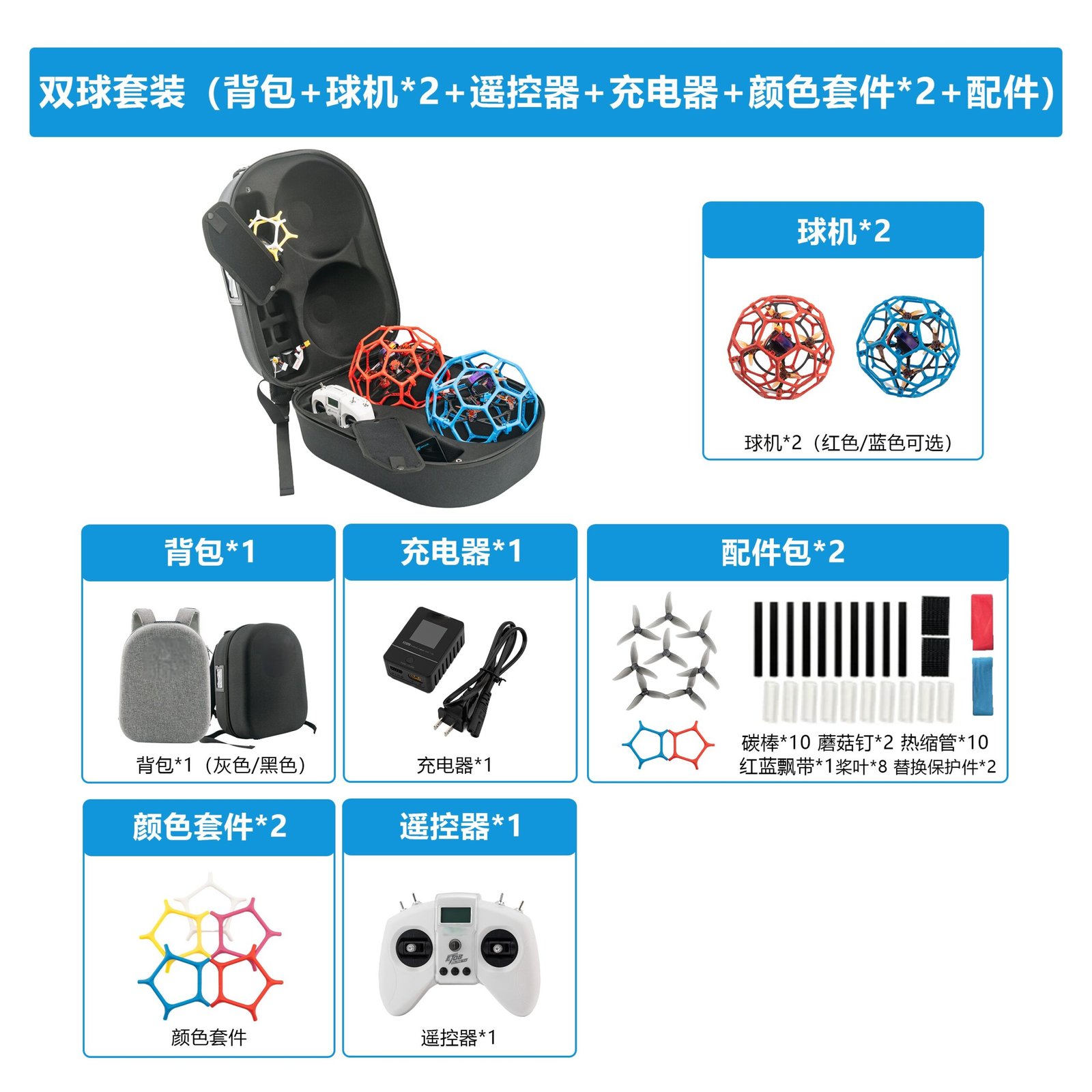
Design Factors That Affect Impact Resistance
Impact resistance is not just about the material—it is about how the entire drone soccer ball cage and structure is engineered. The following factors are worth discussing with any supplier.
Wall thickness and layup
Thicker walls and optimized fiber orientation can improve impact resistance, but they add weight. A cage that is too heavy reduces acceleration and flight time. Ask for the nominal wall thickness and layup schedule if available.
Mounting and integration
Mounting points are often the weakest link. Reinforced bosses, metal inserts, or compliant mounts can prevent cracks from propagating into the cage. Check how the cage attaches to the frame and whether fasteners can loosen over time.
Shape and energy absorption
Rounded shapes and strategic flex can absorb impact energy. Sharp corners concentrate stress. In drone soccer, the cage also protects the propellers and internal electronics; a cage that deforms too much may allow contact with moving parts.
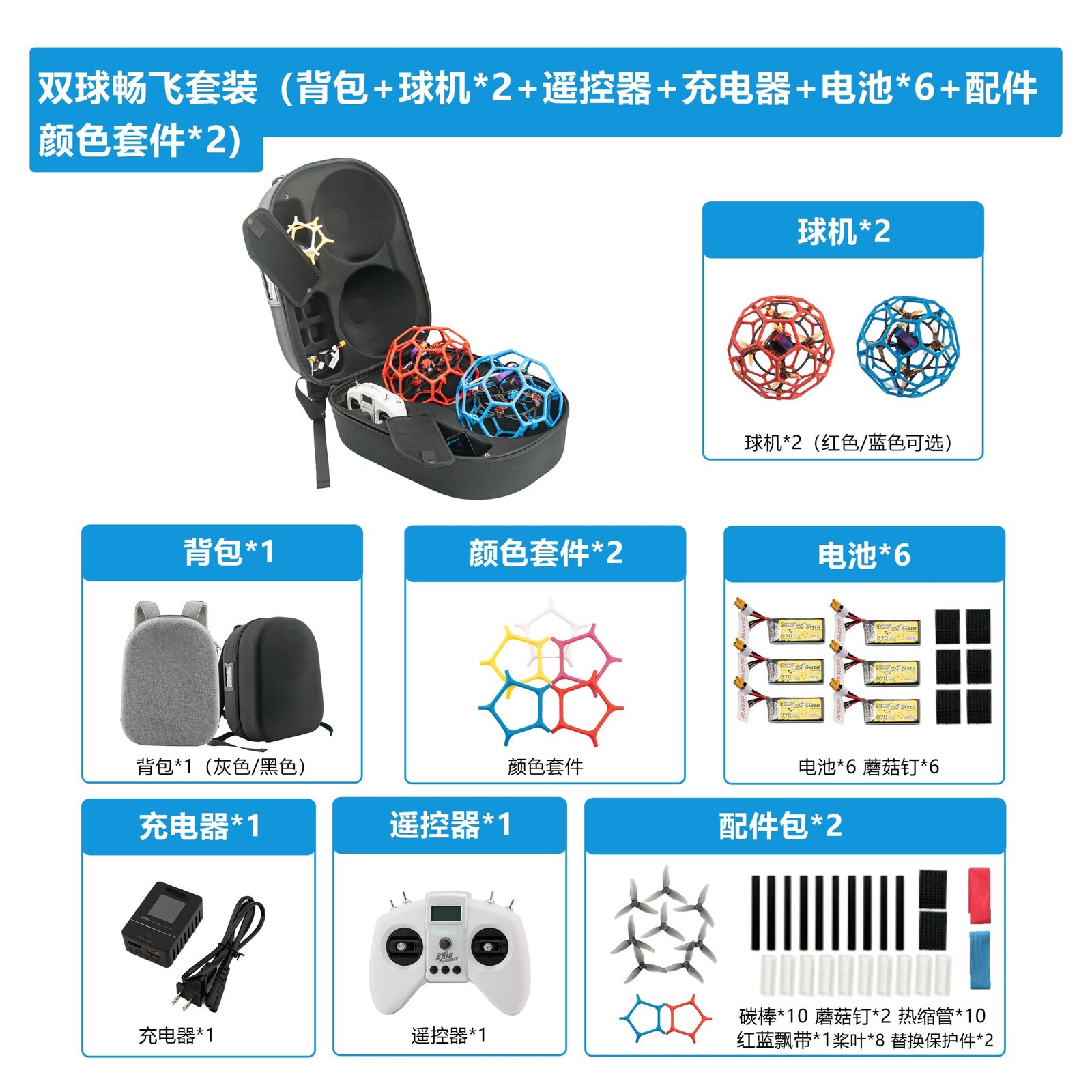
For replacement structures and protective shells, explore drone soccer replacement parts and protective shells.
Practical Procurement Checklist
Use this checklist when evaluating cages or full drone soccer systems. It separates general guidance from what you should confirm in writing with a specific supplier.
- Material specification: Request the fiber type, resin system, and nominal wall thickness. Confirm whether the cage is carbon fiber, glass fiber, or a hybrid.
- Impact test data: Ask for test method details (e.g., drop test height, impactor mass, number of cycles) and whether testing was done on the complete assembly or the cage alone.
- Field feedback: Request references from clubs or programs using the same cage design. Ask about typical failure modes and replacement frequency.
- Repair and replacement: Clarify whether damaged cages can be repaired or must be replaced, and confirm spare part availability.
- Compatibility: Confirm the cage fits your frame, motor size, and propeller guards. Check mounting hole patterns.
- Safety documentation: Ask for any available safety guidance, such as inspection intervals and retirement criteria.
- Commercial terms: Request lead times, minimum order quantities, warranty terms, and pricing in writing. These vary by supplier and are not assumed here.
For a full system view, review drone soccer replacement parts and discuss integration with your existing fleet.
Need help outfitting a team? DPF supports schools, clubs, and distributors with drone soccer components and frames. Request a team kit quote to discuss your requirements.
Common Mistakes When Choosing a Cage
Teams often focus on the cage material alone and overlook system-level factors. Avoiding these mistakes can extend equipment life and reduce downtime.
- Assuming carbon fiber is indestructible: Carbon fiber can crack or delaminate under high point loads. It is strong but not immune to damage.
- Ignoring mounting quality: Poorly reinforced mounting holes are a common failure point. Check for metal inserts or reinforced bosses.
- Buying without spare parts: Without replacement cages or shells, a single crack can sideline a drone. Stock critical spares.
- Overlooking weight: A heavier cage may be more robust but reduces flight performance. Balance durability with agility.
- Skipping inspection routines: Regular checks catch cracks and loose fasteners before they cause failures.
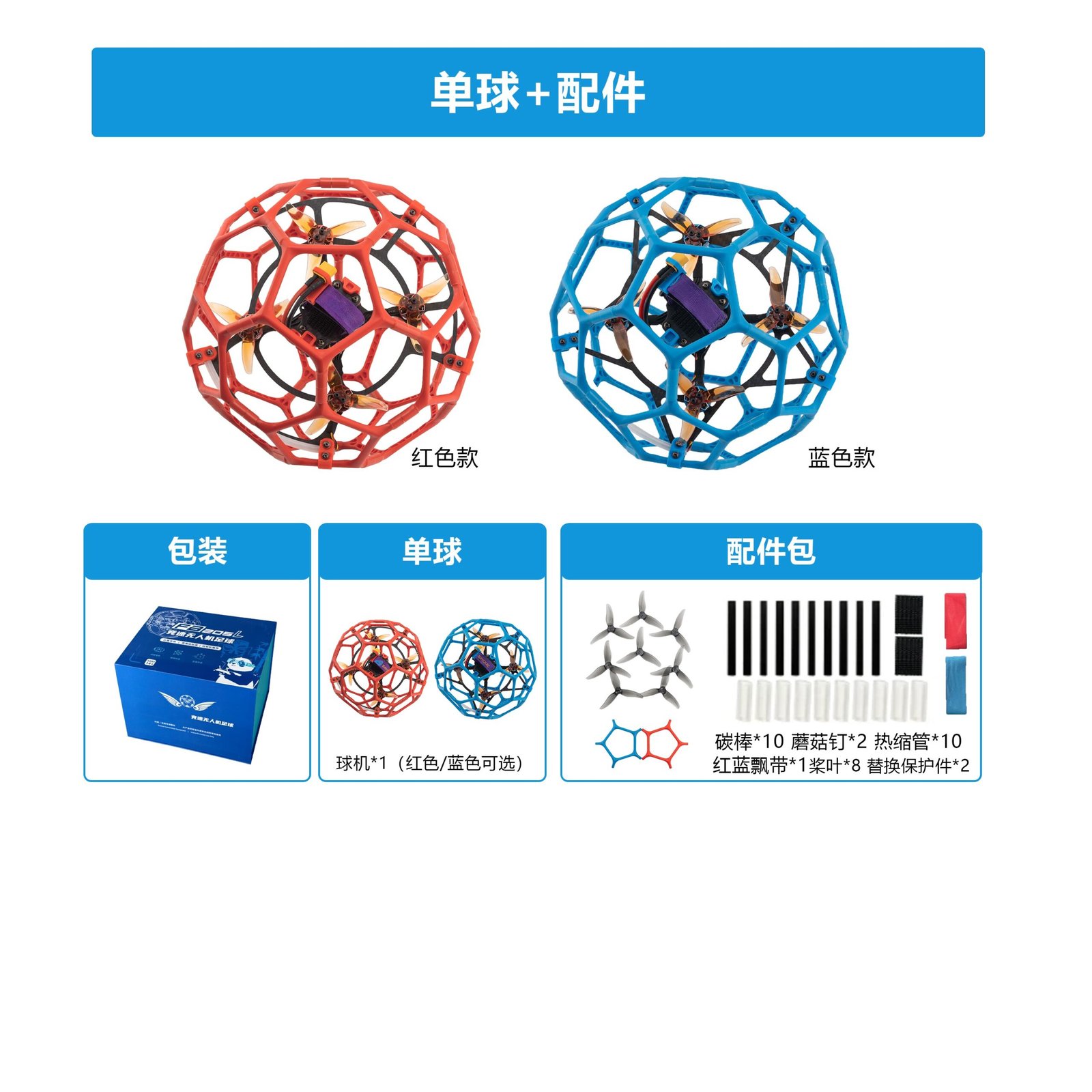
Inspection and Maintenance Guidance
Impact resistance is maintained through care. After each session, inspect the cage for visible cracks, whitening (a sign of fiber damage), loose fasteners, and deformation around mounting points. Retire any cage with through-thickness cracks or delamination.
Store drones in protective cases and avoid stacking heavy equipment on cages. Follow any manufacturer inspection guidance. If no guidance is supplied, establish your own interval based on usage intensity—for example, weekly for high-contact practice and before each competition.
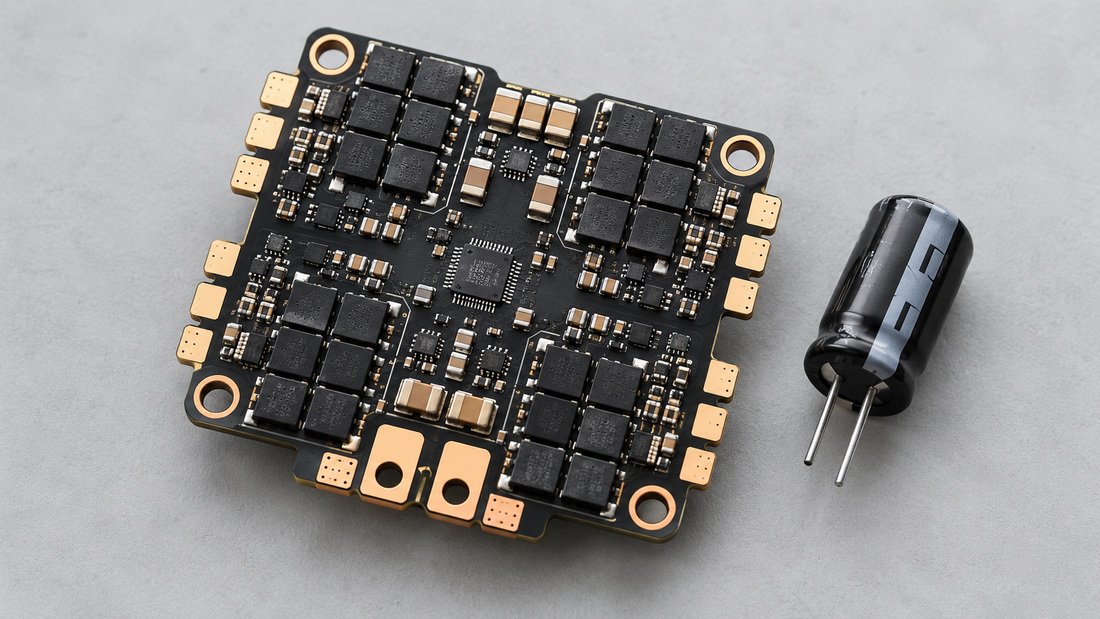
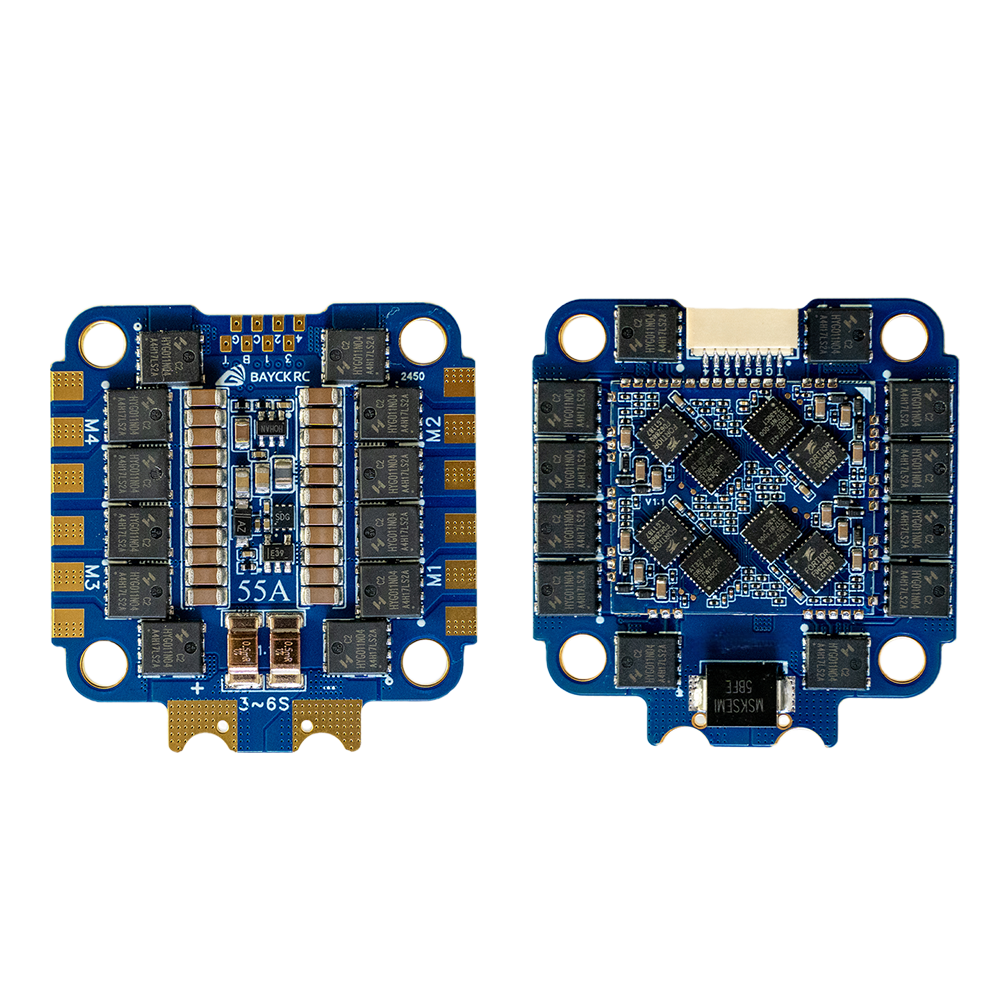
Electronic components such as ESCs (electronic speed controllers) also benefit from secure mounting and protection; see related propulsion combo kits for matched components.
Frequently Asked Questions
1. Is a carbon fiber cage stronger than a plastic cage?
Carbon fiber generally offers higher strength-to-weight ratio than common plastics, but impact resistance depends on design. A well-designed plastic cage with flex zones can outperform a poorly made carbon fiber cage in certain impacts. Ask for test data for the specific product.
2. Can a carbon fiber cage be repaired?
Field repair of carbon fiber is possible with appropriate resin and patches, but structural integrity may be compromised. For competition, replacement is usually safer. Confirm repair guidance with your supplier.
3. How often should cages be replaced?
There is no universal interval. Replacement depends on impact frequency, inspection findings, and manufacturer guidance. Establish a routine inspection schedule and retire cages showing cracks or delamination.
4. Does cage weight affect flight performance?
Yes. Added weight reduces acceleration and flight time. Choose a cage that balances durability with the agility needed for drone soccer maneuvers.
5. What should I ask a supplier before buying?
Request material specifications, impact test methods, field references, spare part availability, compatibility details, and written commercial terms including lead times and warranty. Avoid relying on general claims without documentation.
6. Are carbon fiber cages safe for indoor use?
Safety depends on the complete system, including propeller guards and cage integration. Carbon fiber can produce sharp splinters if broken, so inspect regularly and replace damaged cages. Follow event organizer safety rules.
7. Can I use the same cage across different drone soccer models?
Not necessarily. Mounting patterns and dimensions vary. Confirm compatibility with your specific frame and motor configuration before purchasing.
Conclusion
A carbon fiber drone soccer ball cage and structure can offer excellent impact resistance when properly designed and integrated, but it is not indestructible. Teams should evaluate the whole system—material, design, mounting, and maintenance—and request evidence rather than assumptions. For clubs and programs, standardizing on a cage design with available spare parts and clear inspection guidance reduces downtime and long-term cost.
To equip your team or discuss distributor and OEM needs, request a team kit quote and confirm specifications in writing with DPF.