Quick summary
Choosing drone propellers for drone soccer balls means matching blade count, diameter and pitch to the motor, the duct (the protective ring around the ball) and the battery, then treating propellers as a consumable that gets replaced far more often than motors. The correct propeller for most school and club BKZ-style balls is the one the cage was designed around: it fits without rubbing, keeps current draw inside the motor and ESC rating, and is stocked as a cheap spare rather than an upgrade.
Key Takeaways
- Fit and clearance come first: a propeller that fouls the duct or cage destroys the ball’s handling and often the motor and ESC with it.
- Ducted and caged balls behave differently from open-propeller quadcopters, so a propeller that is excellent on a bare racing frame is not automatically correct inside a ball.
- Pull the ball’s original propeller specification from your team’s maintenance records or ask the manufacturer; it is usually a small-diameter, low-pitch, three-blade or two-blade component.
- Treat propellers as a high-turnover spare with a defined replacement interval per match or practice block, not as a one-time purchase.
- Buy sample propellers, measure them yourself, and confirm every commercial term in writing before a team kit order.
Start with the ball, not the propeller
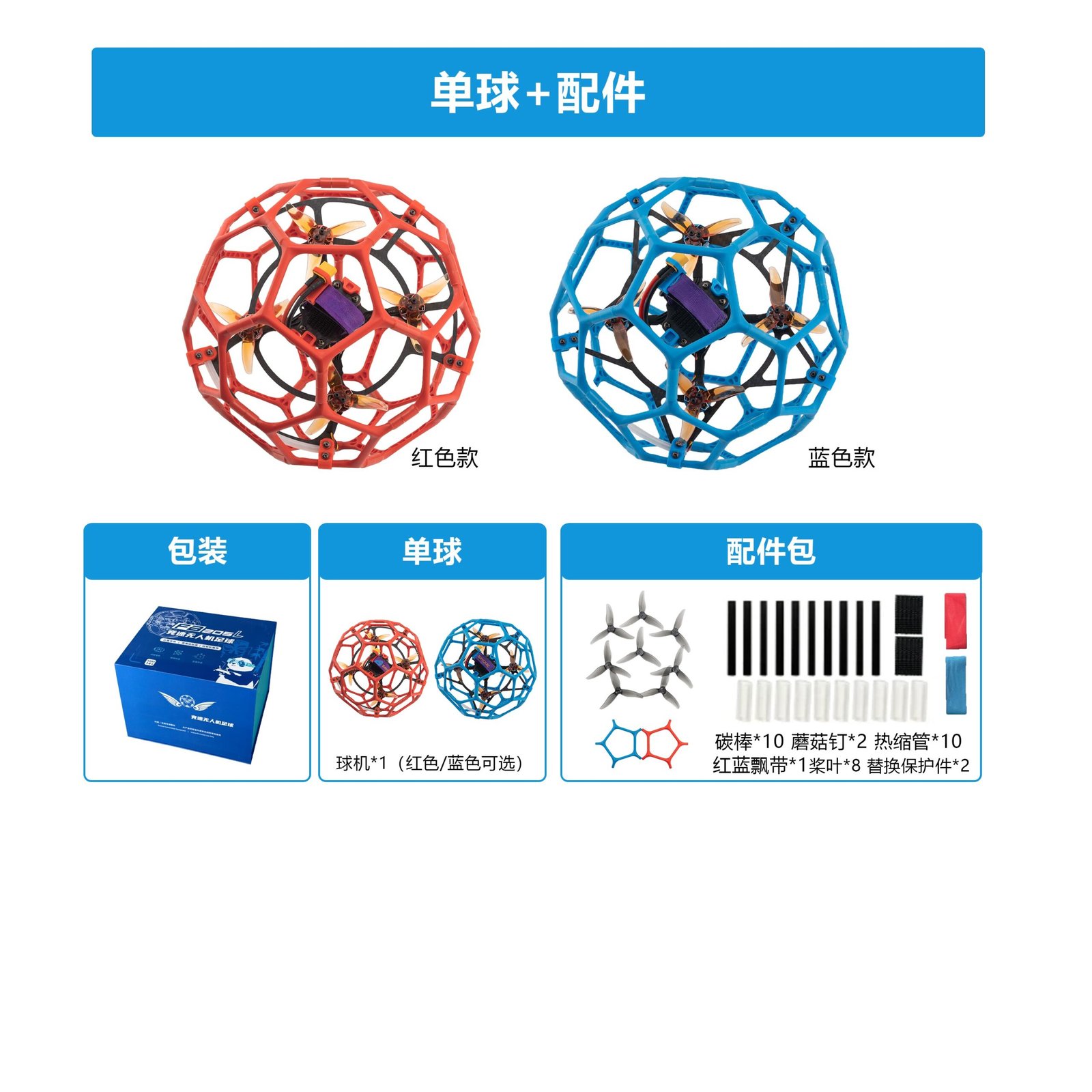
Drone soccer is played with a ball-shaped, caged or ducted drone that must survive collisions. The propeller is inside that protection, so the air it moves is constrained by the duct and the shell. That single fact changes nearly every selection decision compared with a free-flying quadcopter.
Before comparing propeller options, establish three facts about your specific ball: the maximum propeller diameter that physically clears the duct, the motor’s stator size and KV rating, and the battery cell count the class is allowed to run. If you do not know these, you are guessing, and guessing is expensive when a club buys 30 balls’ worth of the wrong blade.
What a drone soccer propeller actually has to do
In an open quadcopter, thrust is mostly limited by the propeller’s ability to accelerate free air. Inside a ducted or caged ball, the duct wall constrains the flow, which typically improves static thrust at low speed but also makes tip clearance critical. A blade tip that runs too close to the duct creates noise, vibration and turbulence; a blade tip that touches creates a stalled motor and a burnt ESC.
Static thrust and hover behaviour
Competition drone soccer is dominated by short bursts of acceleration, hovering inside a goal zone and rapid direction changes at low airspeed. That profile rewards static thrust and smooth throttle response more than top-end efficiency. Low-pitch propellers generally trade top speed for control and current headroom, which suits this use case.
Durability under impact
Propellers in a ball take repeated knocks. Glass-fibre-reinforced nylon is a common engineering choice for sport applications because it resists shattering better than very brittle materials, but the exact compound and flex behaviour is a supplier claim you should verify by requesting material data. Do not assume “durable” on a datasheet means “survives our practice hall” — test it.
Ducted (caged) versus open propellers: a comparison
The table below compares the general engineering trade-offs. It is guidance for framing your questions, not a specification for any particular ball.
| Factor | Ducted / caged ball propeller | Open-propeller racing quadcopter |
|---|---|---|
| Tip clearance | Critical — tip-to-duct gap drives noise, vibration and safety | Less critical, but blade flex still matters |
| Thrust character | Good static thrust at low airspeed | Optimised for high airflow and top speed |
| Blade count | Commonly 2 or 3 blades for control and low current draw | 2 to 5 blades depending on tuning goal |
| Damage mode | Impact damage from wall, goal, or opponent contact | Crash damage from ground and gate strikes |
| Replacement frequency | High — a spares-heavy consumable | Moderate to high depending on pilot |
| Tuning priority | Stability and throttle predictability | Peak response and speed |
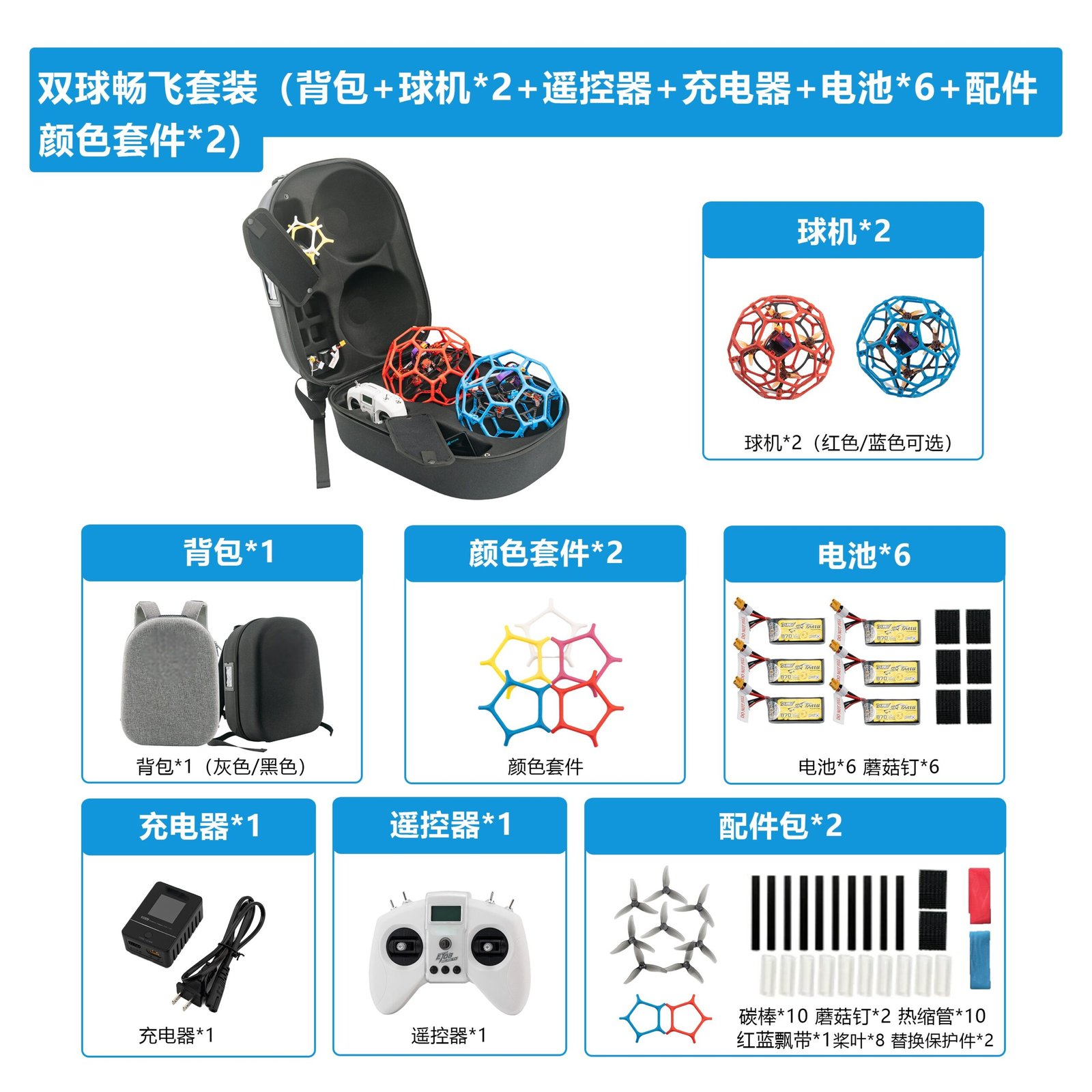
If your program also flies conventional FPV frames alongside the ball platform, keep the two propeller inventories separate. A good resource for the open-aircraft side of that fleet is our overview of FPV motors.
Blade count: how many blades do you need?
Blade count is a trade-off between smoothness, current draw and response. More blades generally give smoother, quieter thrust at a given diameter but draw more current; fewer blades are more efficient and sharper in response but can feel rougher.
For school and club drone soccer, the practical answer is usually dictated by the original ball design, because the motor, ESC and battery were sized around that blade count. Changing blade count without re-checking current draw is one of the most common ways clubs cook ESCs.
Pitch and diameter: the numbers that matter
Propeller size is written as diameter × pitch in inches (for example, a 3×2 propeller is 3 inches across with a 2-inch pitch). Diameter sets the disc area and therefore how much air you can move; pitch sets how far the blade would advance in one revolution if there were no slip.
Higher pitch means more speed potential and more current draw. Lower pitch means gentler current draw and smoother control. In a ducted ball, diameter is usually constrained hard by the cage, so pitch becomes the main tuning lever — but only within what the motor and ESC can safely carry.
Reading a propeller label
A label such as “3×2×3” typically means 3-inch diameter, 2-inch pitch, 3 blades. Confirm this convention with your supplier, because not every factory uses it identically. Ask for a drawing or measured dimensions rather than relying on the name alone.
Matching propellers to motor, ESC and battery
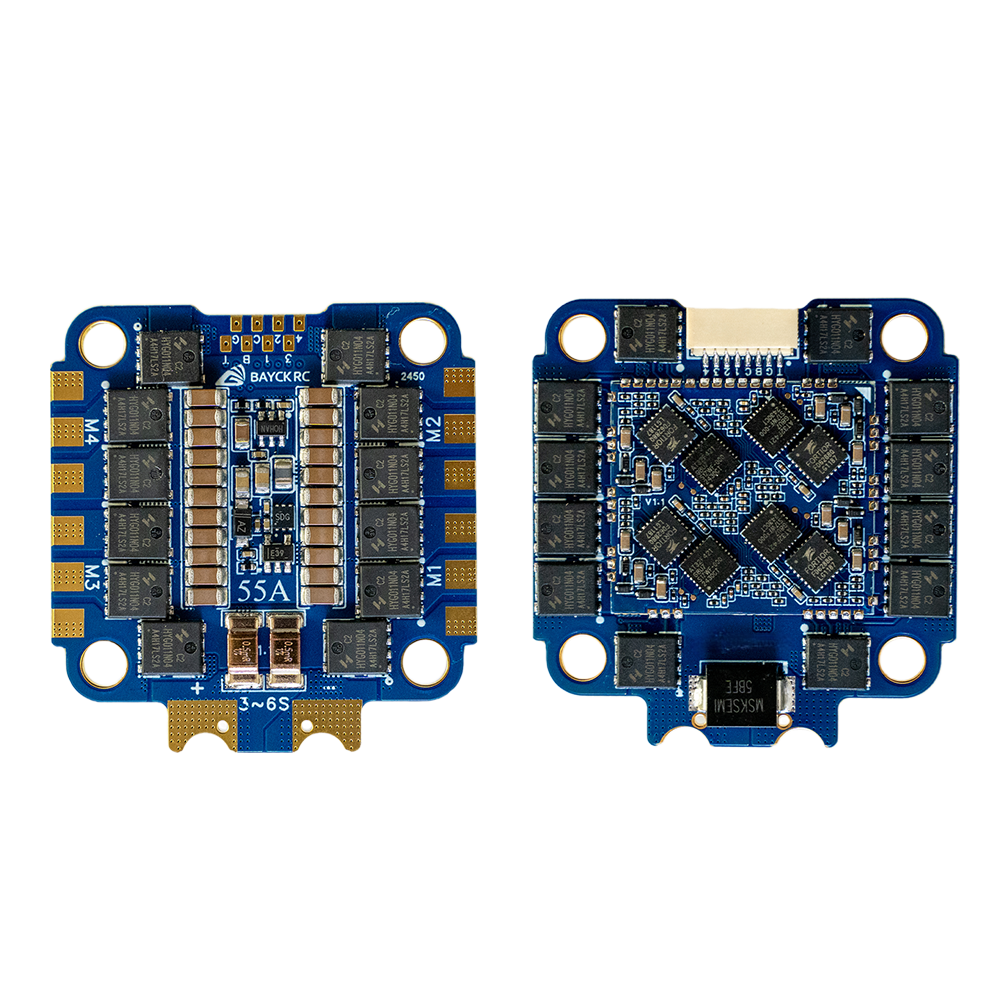
A propeller is one part of a propulsion system. Changing it changes the load on the motor, the current through the ESC and the demand on the battery. Get this wrong and the failure is usually thermal, not mechanical.
Lithium-ion and lithium-polymer packs are capable of overheating and entering a process called thermal runaway, which can occur without warning if a battery is damaged, overheated, exposed to water, overcharged or improperly packed, and can also occur on its own due to manufacturing defects, according to the FAA’s lithium battery guidance. That guidance is written for air passengers, but the underlying risk description is a useful reminder for clubs charging and storing packs between sessions.
When you change a propeller, verify three things: measured current at full throttle, ESC temperature after a full practice block, and motor temperature. If any of these rise beyond what your ball’s documentation allows, the propeller is too aggressive for that power system.
Where to look for matching help
Matching propeller to motor to battery is a system question rather than a parts-list question. Our motor, propeller and battery matching resource is a starting point for framing the variables, and for supplier-led programs there is a dedicated motor and propulsion matching service.
Ready to standardise the propulsion spares list your teams actually consume? Talk to our team about a drone soccer kit and spares quote and we will work through the specification with you.
Common mistakes clubs make
- Buying on diameter alone. Two 3-inch propellers can have different pitch, hub height and blade profile, and can behave completely differently inside a duct.
- Upgrading pitch without upgrading the ESC. A higher-pitch blade can push current past the ESC rating and end a session with a burnt board.
- Mixing propeller brands within one fleet. Inconsistent handling between balls makes coaching and fair play harder.
- Running damaged blades. A chipped or bent blade adds vibration that fatigues motors and loosens fasteners.
- Treating propellers as a one-off purchase. They are consumables; running out mid-tournament is a planning failure.
- Ignoring transport and storage. Deformed blades from being crushed in a kit bag are effectively pre-damaged.
Buyer checklist for a drone soccer propeller order
Use this as a written brief when you approach suppliers. Confirm each point with the factory rather than assuming a generic catalogue figure applies to your ball.
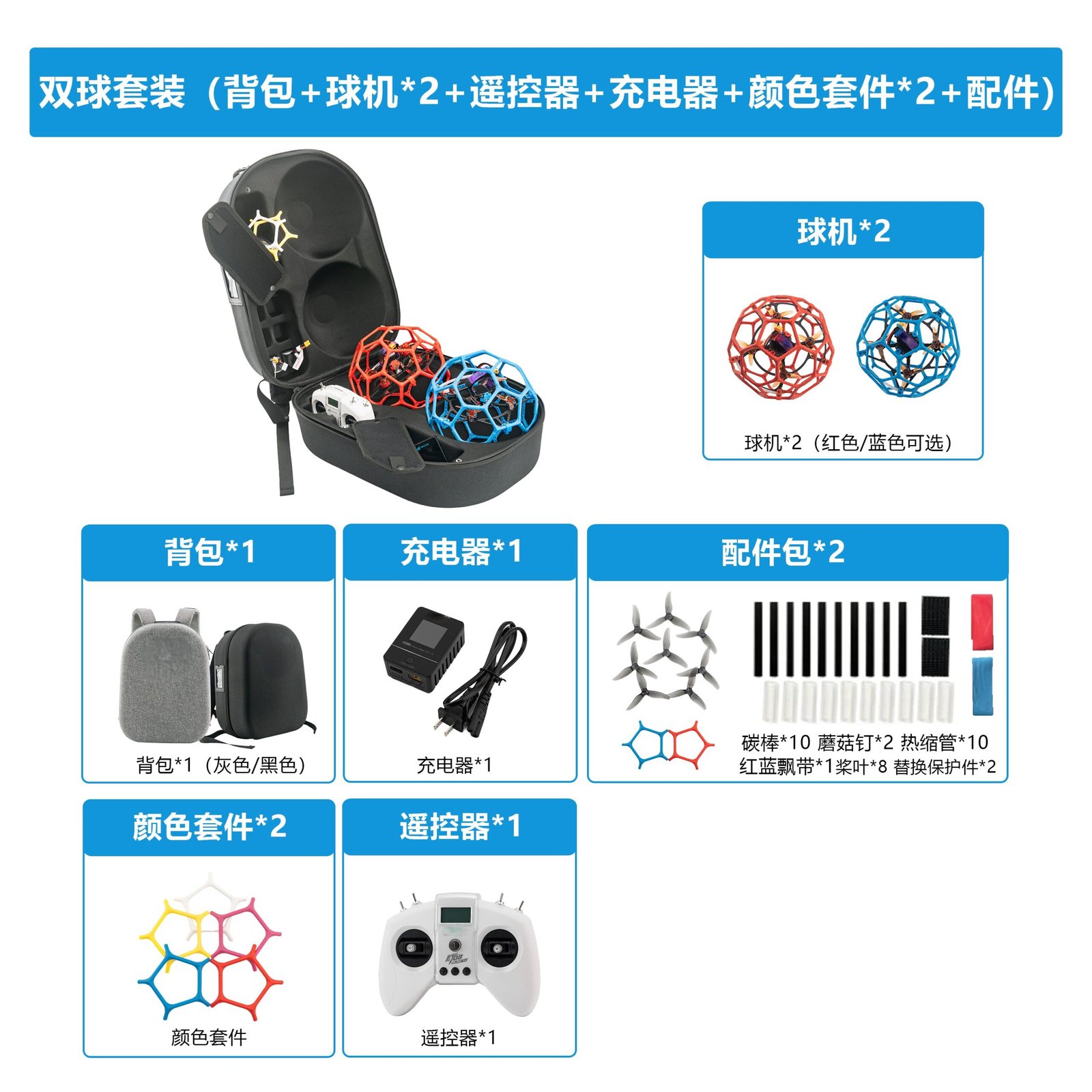
- The exact propeller diameter, pitch and blade count your ball class was designed for.
- Measured dimensions or a drawing, not just a marketing name.
- Material and reinforcement type, plus any available material data sheet.
- Hub bore diameter and mounting hole pattern compatibility with your motor shaft.
- Tip-to-duct clearance figure from the ball manufacturer, and how the propeller meets it.
- Colour options, if you need clockwise and counter-clockwise pairs visually distinguished.
- Balanced pairs supplied together, with the balancing method stated.
- Packaging that protects blades in transit and in the club’s storage box.
- Sample quantity for bench and crash testing before a fleet-wide order.
- Spare ratio: how many propellers per ball per season you intend to hold.
Testing a new propeller before you commit
Bench and hall testing does not require a laboratory. A simple, repeatable routine will tell you whether a propeller belongs in your fleet.
- Inspect the blades for flash, warp and balance marks straight out of the box.
- Fit to a single reference ball and check tip clearance by eye and with a feeler gauge if one is available.
- Run a short hover in a netted area and listen for new noise or vibration compared with your current blade.
- After the flight, touch-check motor and ESC temperature against your normal baseline.
- Log the results against the propeller part number so future purchasing decisions are evidence-based within your own program.
This is your own evidence, not a manufacturer claim. Documenting it is what turns propeller selection from guesswork into a repeatable club standard.
Frequently asked questions
What size propellers do drone soccer balls use?
There is no single industry-wide size; it depends on the ball’s cage diameter, motor and class rules. Small ducted balls typically use small-diameter, low-pitch propellers of two or three blades. The authoritative answer for your equipment is the ball manufacturer’s specification or the original propeller part number on your fleet.
Can I use standard FPV propellers in a drone soccer ball?
Sometimes, if diameter, pitch, hub and blade count match the ball’s design and the tip clears the duct. Often they do not. FPV propellers are optimised for free-air flight, while ball propellers operate inside a duct and are frequently chosen for control and current headroom rather than top speed.
How often should propellers be replaced?
Replace on condition rather than on a fixed calendar: any chip, crack, bend, or persistent vibration is grounds for replacement. Beyond that, set a club spares ratio based on your own usage logs. We cannot give a universal interval because it depends on your practice intensity, flying surface and pilot skill.
Does a higher pitch propeller make a drone soccer ball faster?
Higher pitch can increase top speed potential, but it also increases current draw and heat. In a controlled, ducted platform, the gains are often smaller than expected and the risk to the ESC is real. Change pitch only after confirming the motor and ESC can carry the extra load.
How do I check whether a propeller fits my ball’s duct?
Ask the ball manufacturer for the maximum permissible propeller diameter and the specified tip clearance. Then measure the sample propeller yourself. A blade that looks close in a photo may touch once it flexes under load.
What should I confirm in writing before ordering a team kit?
Propeller specification and tolerances, material, packaging, sample terms, order quantity, price, expected lead time, warranty terms and returns policy. Suppliers may state these differently, so put every term you rely on into the purchase documentation rather than accepting a verbal assurance.
Should every ball in a club use the same propeller brand?
Standardising is strongly recommended for fairness, coaching consistency and spares simplicity. If you must mix, track which ball carries which propeller so handling differences are not mistaken for pilot skill or equipment faults.
Conclusion
Choosing drone propellers for drone soccer balls is a compatibility exercise, not a performance shopping trip. Establish the ball’s diameter limit, motor and ESC ratings and battery class, reproduce the original blade specification, then test one sample before committing the club to a fleet order. Keep propellers in your budget as a consumable, and standardise across every ball you own.
If your program is building or refreshing a fleet, a consolidated propulsion combo kit can reduce the number of separate part numbers you have to manage while keeping the motor, ESC and propeller matched by design.
For schools, clubs, associations and distributors specifying drone soccer equipment, start with the exact propeller dimensions and spares ratio you need, and we will help you assemble a kit list. Request a Team Kit Quote.