Quick summary
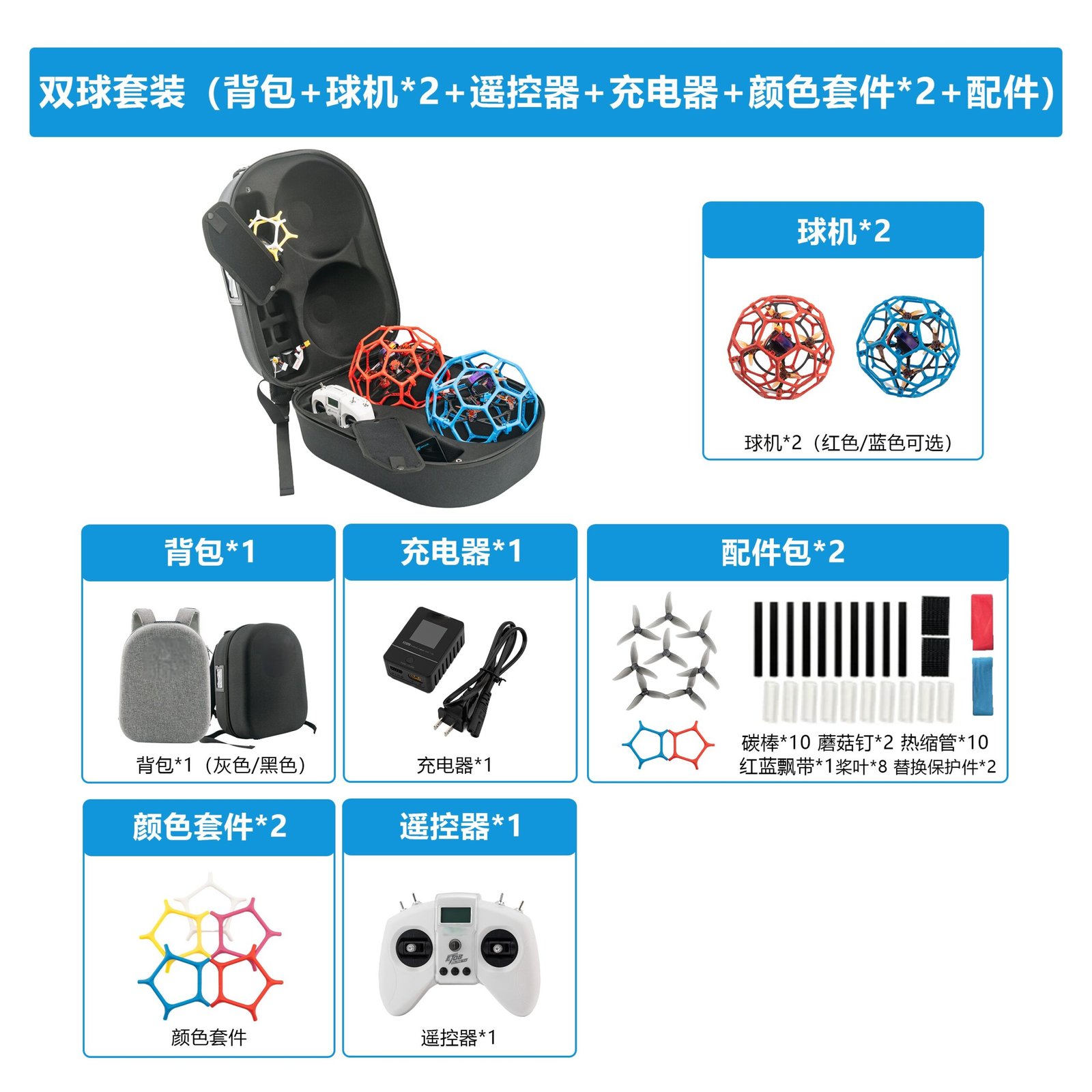
In drone soccer, the ball cage is the outer protective sphere that surrounds the drone and is the part that actually scores goals. The 200 mm vs 205 mm difference is only 5 mm (about 0.2 in), so it does not change flight physics in any dramatic way. What it changes is compliance with the ruleset your league follows, goalkeeper clearance at the goal ring, and spare-part standardization across a club fleet. For most teams the single most important factor is which size your governing body or school league mandates, not the 5 mm itself.
Key Takeaways
- A 5 mm difference is roughly 2.5% of the cage diameter and is usually imperceptible to pilots during normal flight.
- Ruleset compliance matters far more than the measurement itself; some leagues specify a nominal cage diameter, others measure the assembled ball.
- Cage size interacts with the goal ring, goalkeeper clearance and referee inspection, so verify both cage and goal dimensions together.
- Mixing 200 mm and 205 mm cages in one fleet complicates spare parts, storage and referee checks. Standardize where possible.
- Request written confirmation of measured diameter, tolerance and material before ordering a school or club kit.
What the drone soccer ball cage actually does
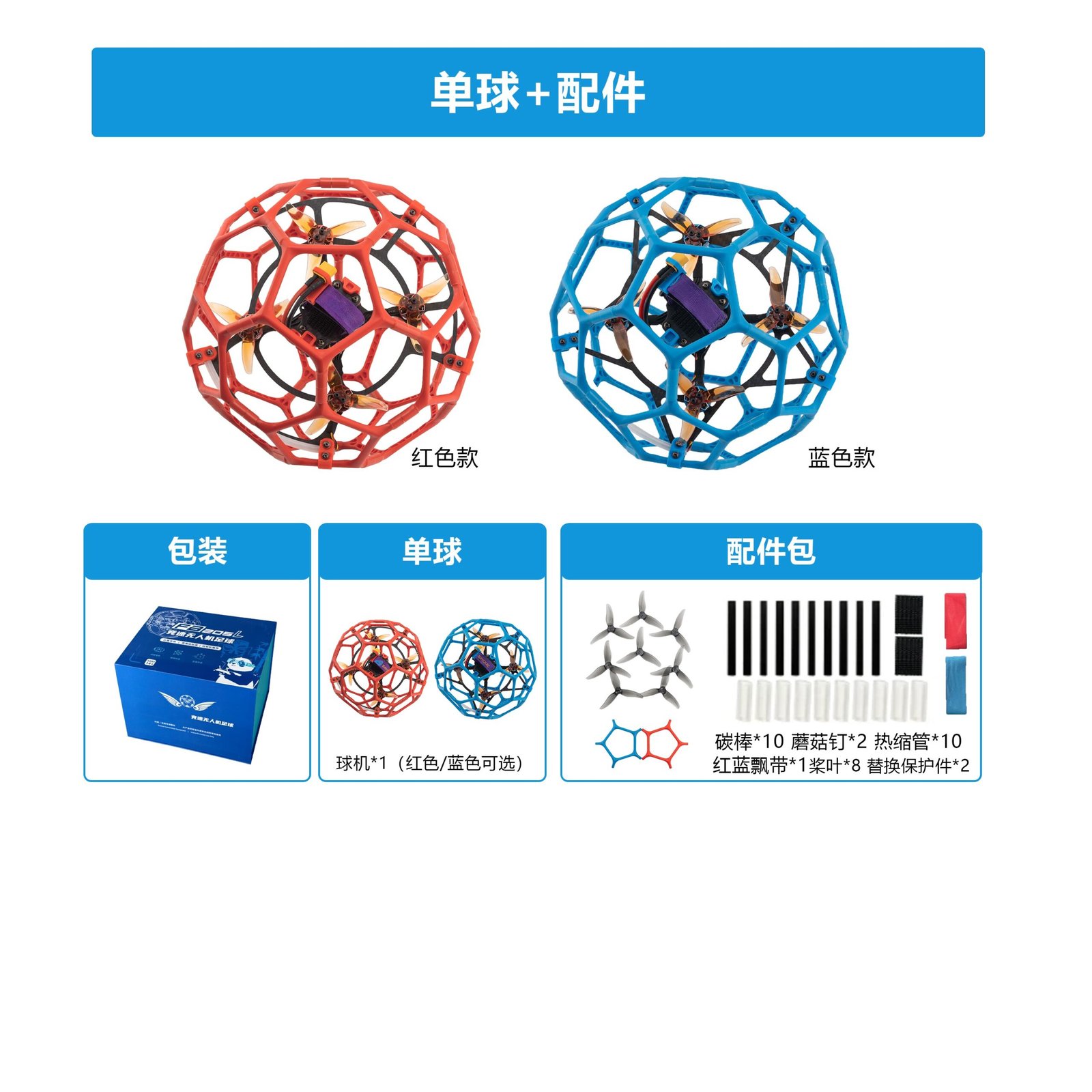
The cage — sometimes called the protective shell or ball — is the scoring surface of a drone soccer drone. It absorbs impacts with other drones, the goal ring and the floor, and it protects the propellers and internal electronics. The protective shells are therefore a wear item that clubs replace regularly, not a permanent part of the airframe.
Because the cage is the contact surface, its diameter, wall thickness, material and mounting pattern determine how the drone behaves in collisions and how easily it passes through the goal. The internal drone — frame, motors, flight controller and battery — is largely independent of the 5 mm difference.
How the cage connects to the rest of the drone
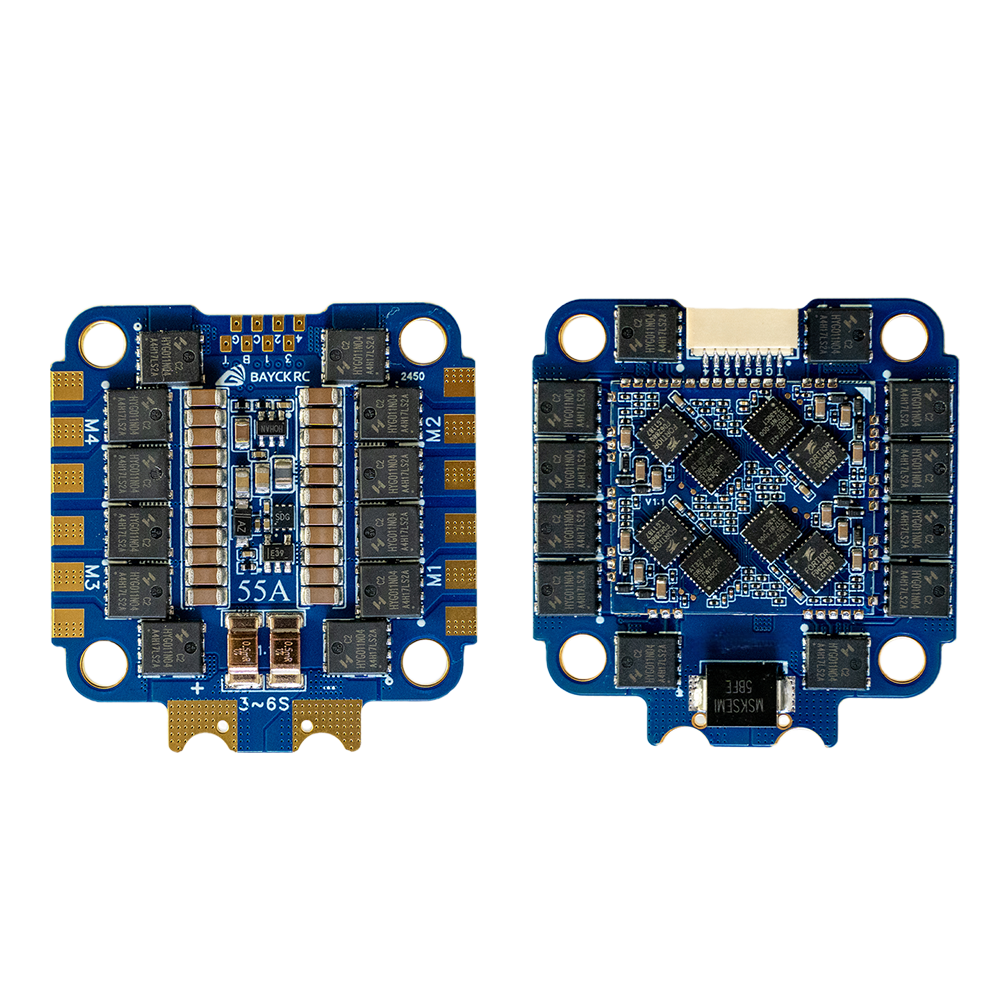
The cage mounts to a frame, which carries the motors, ESC and flight controller. In most drone soccer designs the flight controller runs Betaflight or similar firmware; Betaflight is flight controller software for multi-rotor craft that reads sensors such as the gyro and accelerometer and sends commands to the ESC to control motor thrust (Betaflight documentation). None of that changes between a 200 mm and 205 mm cage — the flight electronics are the same.
That is an important procurement point: cage diameter is a mechanical and rules question, not an electronics question. If you are rebuilding drones for a new season, you can often keep the drone frames and electronics and replace only the shell.
200 mm vs 205 mm: what actually changes on the field
Below is a practical comparison for club coaches, league organizers and school program managers. Figures are general guidance based on the geometry of a 5 mm difference; confirm your own league’s measurement method before relying on any of them.
| Factor | 200 mm cage | 205 mm cage | Why it matters |
|---|---|---|---|
| Nominal diameter | 200 mm | 205 mm | 2.5% larger; both are within normal manufacturing tolerance ranges of each other if tolerances are loose |
| Goal-ring clearance | Slightly tighter | Slightly more margin | Matters if your goal ring is near the minimum allowed opening |
| Referee inspection | Must pass the league’s gauge | Must pass the league’s gauge | A 205 mm ball may fail a strict 200 mm maximum check |
| Weight (typical shell) | Slightly lighter | Slightly heavier | Small effect on acceleration and battery duration |
| Spare-part logistics | One SKU | Separate SKU | Mixing sizes doubles the parts you must stock |
| Storage and transport | Marginally more compact | Marginally larger | Relevant for school carts and team cases |
Will pilots notice 5 mm?
In most cases, no. A 5 mm change in a 200 mm sphere is about the thickness of a few coins. Pilots generally notice changes in weight, motor power and propeller choice more than a small diameter change. If your team reports that a new ball “feels different,” check weight, balance and shell stiffness before blaming the diameter.
Does it change scoring or goalkeeping?
Scoring depends on the ball passing through the goal ring, not on 5 mm of cage diameter. However, if your goal ring is built to a tight tolerance, a ball at the upper end of a 205 mm range could be closer to the ring edge than a ball at the lower end of a 200 mm range. Coaches who run goalkeeping drills may notice slightly different deflection angles, but this is second-order compared with player skill and drone tuning.
Ruleset compliance: the real decision driver
If your league specifies a cage diameter, that specification governs. Do not assume that 5 mm of extra size is harmless; some inspection gauges are pass/fail. Ask your league or school athletics association for the exact wording: is it a nominal size, a maximum, a minimum, or a measured range with tolerance?
Drone soccer formats vary by country and age group. Before you buy a full team kit, request the current rulebook in writing and compare the cage clause with the goal-ring clause. If the rulebook is silent on exact diameter, ask the organizer how referees will measure and what tolerance they will accept.
Questions to send your league before ordering
- Is the required cage measurement nominal, maximum, minimum or a range?
- How is the ball measured — across the widest point, with or without compression?
- Is there a weight limit for the assembled ball?
- Are replacement shells allowed to come from a different supplier than the original drone?
- What goal-ring inner diameter is used at your events?
Fleet standardization for clubs and schools
For a club with dozens of drones, standardization usually beats squeezing out 5 mm of performance. A single cage size means one spare SKU, one inspection routine and fewer arguments at check-in. If you already own a mix, label each shell with its measured diameter.
Spare-parts and budget implications
Cages crack, scuff and lose shape. Budget for replacement shells as a consumable each season. Buying a single size keeps drone soccer replacement parts simple, and it lets you train new coaches on one inspection standard. If you are building drones from scratch, propulsion combo kits can reduce the number of separate components you must track.
For procurement teams comparing quotes, ask suppliers to state the measured diameter, tolerance, material and mounting pattern for the shell. Do not accept a nominal figure alone; a nominal 200 mm ball can measure 198–202 mm depending on material and molding, and a nominal 205 mm ball can overlap that range.
Planning a new season? If you are specifying cages, frames and power systems for a team kit, our team can help you match components to your league’s rules. Request a Team Kit Quote and include your rulebook’s cage and goal-ring clauses.
Common mistakes when choosing cage size
- Buying on diameter alone. Weight, material and mounting pattern affect durability more than 5 mm of diameter.
- Assuming all leagues use the same number. Rulesets differ by country, age group and organizer.
- Ignoring the goal ring. A ball that passes inspection can still behave differently if the ring is tight.
- Mixing sizes without labeling. Unlabeled shells slow down repairs and referee checks.
- Treating a nominal size as exact. Always ask for measured diameter and tolerance.
Buyer checklist
- Confirm your league’s exact cage clause in writing.
- Confirm goal-ring inner diameter and any tolerance.
- Request measured diameter, weight and material for each shell SKU.
- Check the mounting pattern against your existing drone frames.
- Decide whether to standardize on one size for the whole fleet.
- Order a small sample batch before a full team kit.
- Confirm spare-shell availability for the season, not just the first order.
- Ask how the shell is packed and whether it ships assembled or flat.

Frequently asked questions
1. Is a 205 mm cage legal if my league says 200 mm?
That depends entirely on the league’s measurement method and tolerance. If the rule is a strict maximum of 200 mm, a 205 mm ball may fail inspection. Ask the organizer in writing before you buy.
2. Does a bigger cage make the drone slower?
A slightly larger shell can add a small amount of weight and drag, but 5 mm is a minor factor compared with motor choice, propeller and battery. Tune and test before drawing conclusions.
3. Can I use the same frame with either cage size?
Often yes, if the mounting pattern matches. Confirm the mounting points, screw spacing and shell thickness with your supplier, since these are not standardized across all drone soccer designs.
4. How do I measure a drone soccer ball correctly?
Measure across the widest point of the assembled ball, with no compression, and repeat at several angles. Record the largest figure. Ask your league whether they measure the bare shell or the assembled ball.
5. Are replacement cages available separately?
Yes, protective shells are typically sold as spare parts. Availability, colors and minimum order quantities vary by supplier — request current details in writing.
6. Does cage diameter affect the flight controller or ESC?
No. Flight controllers such as those running Betaflight read sensors and command the ESC to control motors (Betaflight documentation); cage diameter is a mechanical and rules variable, not an electronics one.
7. What should schools buy for a first season?
Start with the size your league mandates, buy a small sample batch, and standardize spares on one SKU. Ask for written confirmation of measured diameter, tolerance and material before committing to a full team kit.
Conclusion
The 200 mm vs 205 mm question is rarely about flight performance. It is about rules compliance, goal-ring fit, referee inspection and spare-part logistics. Confirm your league’s exact wording, request measured dimensions and tolerance from suppliers, and standardize your fleet where you can. If you are equipping a club, school or association, start by sending us your rulebook clauses and fleet size so we can help you specify cages, frames and power systems that match your competition format.
Next step: Request a Team Kit Quote.